How Many Panels Are in a Webtoon Episode?
Most webtoon episodes run about 40 to 70 panels. We counted a real chapter by shot size and story beat to show why the rhythm matters more than the number.

Most webtoon episodes run somewhere between 40 and 70 panels. Comics writer Mike Exner III says each episode of his webtoon MoonRise is “anywhere from 50 to 60 (sometimes shorter, rarely longer) panels”, and storyboard artist Hashimoto Lion says storyboard pay is “usually based on around 70 panels per episode.” Exner puts it in print terms: an episode is a little more than half the panels of a monthly comic book issue.
There’s no rule, though. WEBTOON’s own note to its creators says, “Some series have more than 40 panels an episode, while others only have four.” Readers don’t count anyway. They feel the rhythm: how often the camera moves, where the story slows down, and what the last panel leaves them with.
We counted one real chapter: 46 panels
The Last Morsel is an AI comic on FicPal about Alex, a barista who survives the end of the world as the only person without a Class. Its Chapter 1 has 23 pages of one to three panels each, 46 panels in all, right inside the usual range.
We tagged every panel by shot size (wide, medium or close) and by the job it does in the story. Webtoons are read as one long scroll on a phone (here’s how that differs from manga), so the panel is what you count, not the page.
Seven of the 46 panels are wide, and they sit where you need to know where you are: the ruined city and the wave of light on pages 1 and 2, the zombie horde on page 7, the fall into the void on pages 15 and 16, and the empty street at the end. Only three are close-ups, saved for moments that matter: another survivor’s Class screen, the glitch up close, and Alex’s face when his own Class finally arrives.
- Wide 7
- Medium 36
- Close 3
Hook5 panels
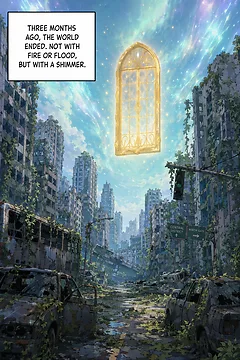 Page 1: wide.
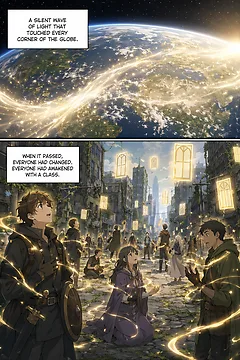 Page 2: wide, wide.
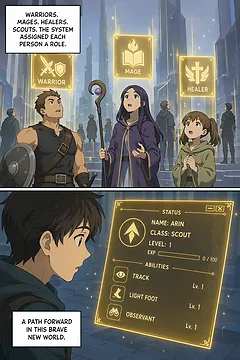 Page 3: medium, close.
Setup11 panels
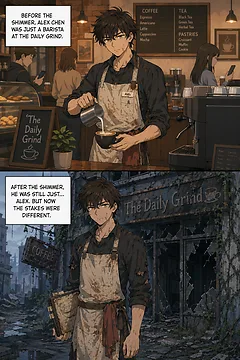 Page 4: medium, medium.
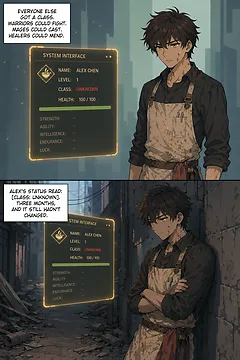 Page 5: medium, medium.
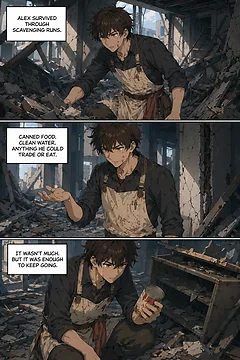 Page 6: medium, medium, medium.
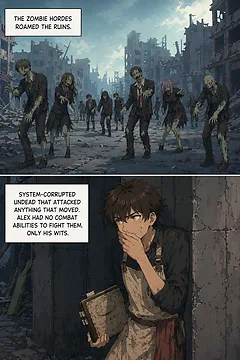 Page 7: wide, medium.
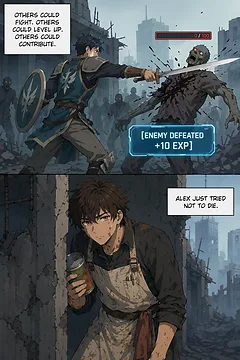 Page 8: medium, medium.
Quiet6 panels
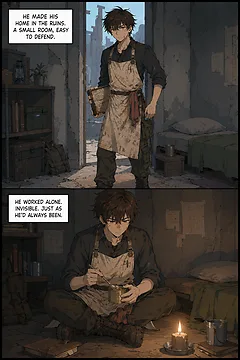 Page 9: medium, medium.
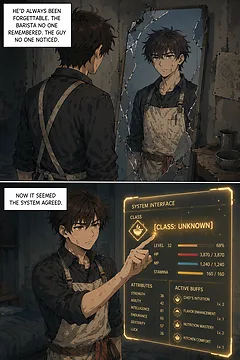 Page 10: medium, medium.
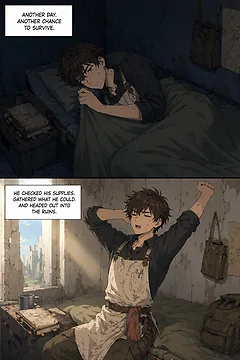 Page 11: medium, medium.
Trigger8 panels
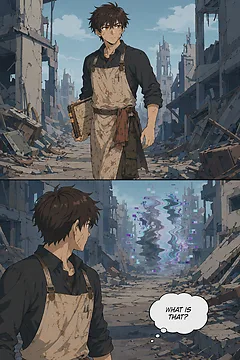 Page 12: medium, medium.
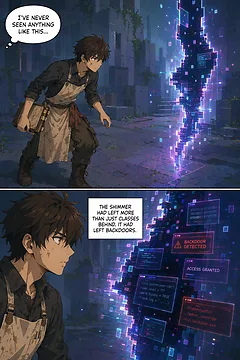 Page 13: medium, close.
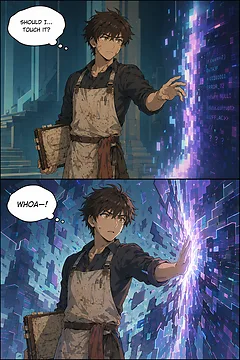 Page 14: medium, medium.
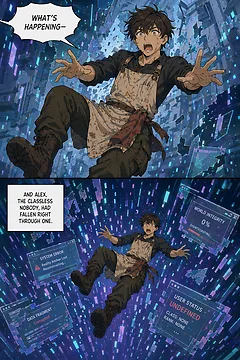 Page 15: medium, wide.
Reveal12 panels
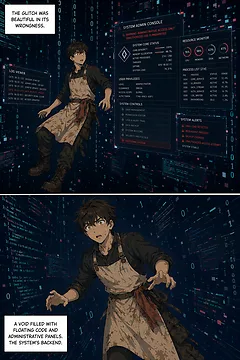 Page 16: wide, medium.
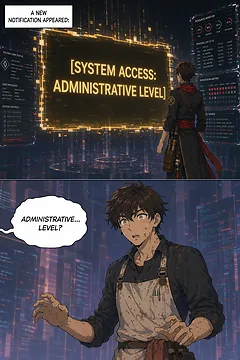 Page 17: medium, medium.
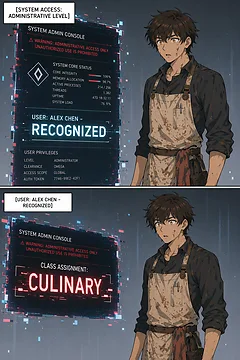 Page 18: medium, medium.
 Page 19: medium, close.
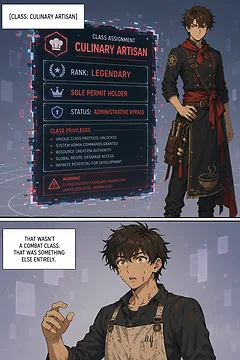 Page 20: medium, medium.
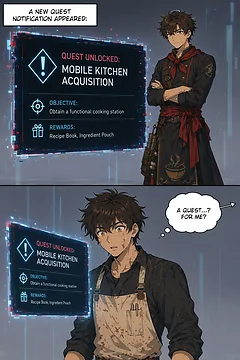 Page 21: medium, medium.
Turn4 panels
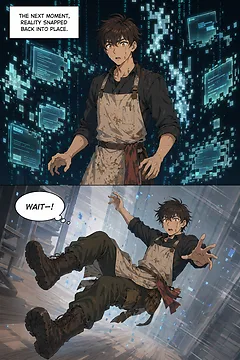 Page 22: medium, medium.
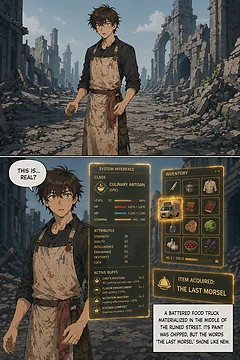 Page 23: wide, medium.
The beats aren’t equal either. The hook takes five panels and the turn takes four, while the setup and the reveal get the most room. Open and close fast, and spend your panels where the reader has something to understand.
Mix wide, medium and close shots
Each shot size does one job. A wide shot shows where we are and how big the danger is. A medium shows people acting and talking, which is why most panels end up as mediums, and a close-up shows what someone feels or which small thing matters.
Too many mediums in a row is where our chapter sags. Pages 17 to 21 are ten panels of Alex and his glowing System screens, and nine of them are mediums. It’s the flattest stretch to scroll through, even though it holds the reveal. The one break is the close-up of his shocked face on page 19.

If you’re drawing a run like that, break it more often: cut to his hand on the screen, or pull out wide to show how small he is in the void. You can run the same check on your own script. Write W, M or C next to each panel and read down the column. Four or five of the same letter in a row is a run worth breaking, unless the scene is meant to feel stuck.
The phone screen sets the pace as well. Creator tadhanau points out that webtoons “either have a single panel shown on screen or two panels,” so the reader takes in at most two shots at a time and feels every change between them. For what makes a face and a bubble readable at that size, see what a webtoon needs to work on a phone.
Give quiet beats room between the big ones
Pages 9 to 11 are the quietest in the chapter. Alex eats from a can by candlelight, looks at himself in a broken mirror and goes to sleep. Nothing happens, and you feel how alone he is, so when a glitch flickers in the street on page 12, it lands.
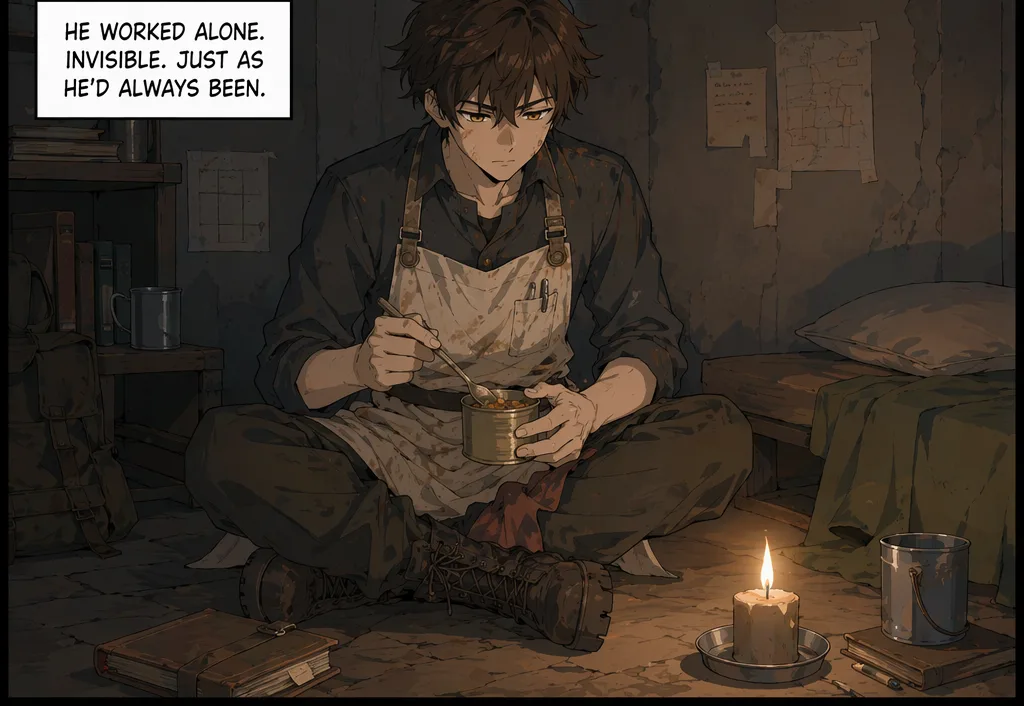
In a scroll, white space works like time. A short gap reads as the next instant, and a long one reads as a pause or a cut to later. Hashimoto Lion, who storyboards webtoons for a living, said of his first try at one: “The space between the panels was the hardest part.”
So give quiet beats long gaps and few words, and keep the short gaps for action. Place the quiet beat right before the thing that breaks it. In our chapter it takes 6 of the 46 panels, and the glitch shows up on the very next page.
Draw a fight one beat per panel
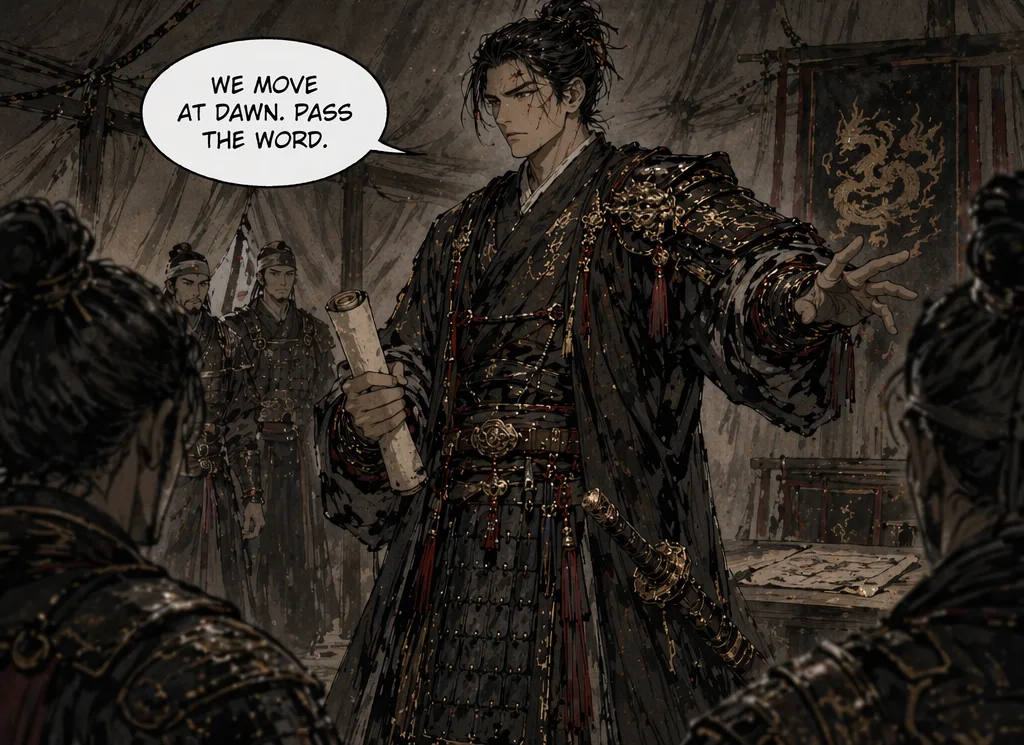
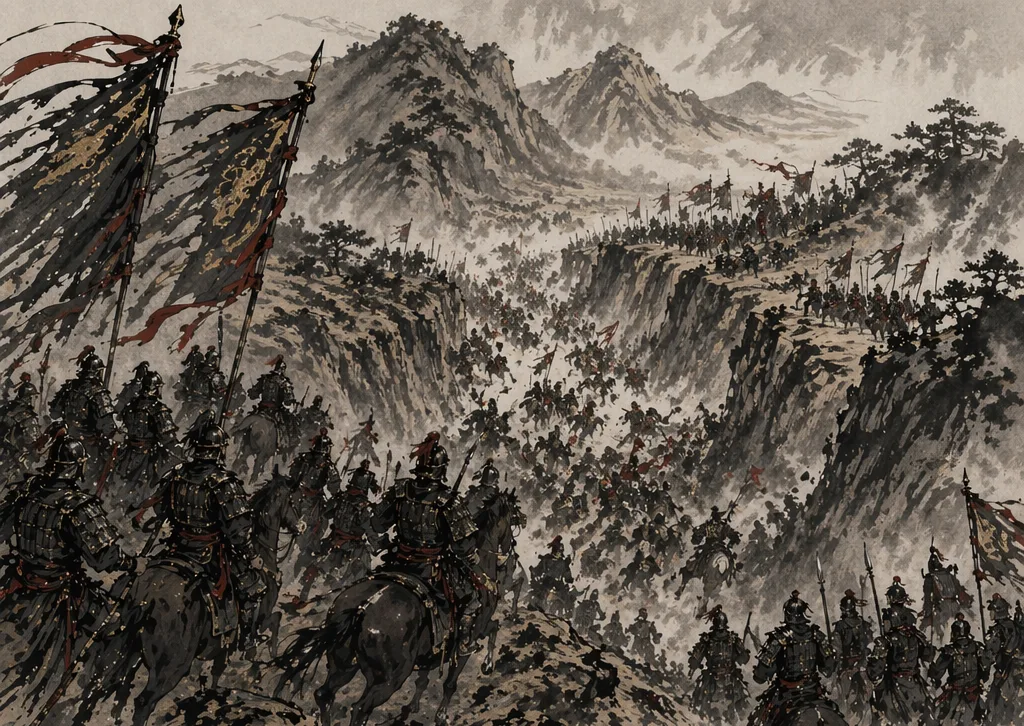
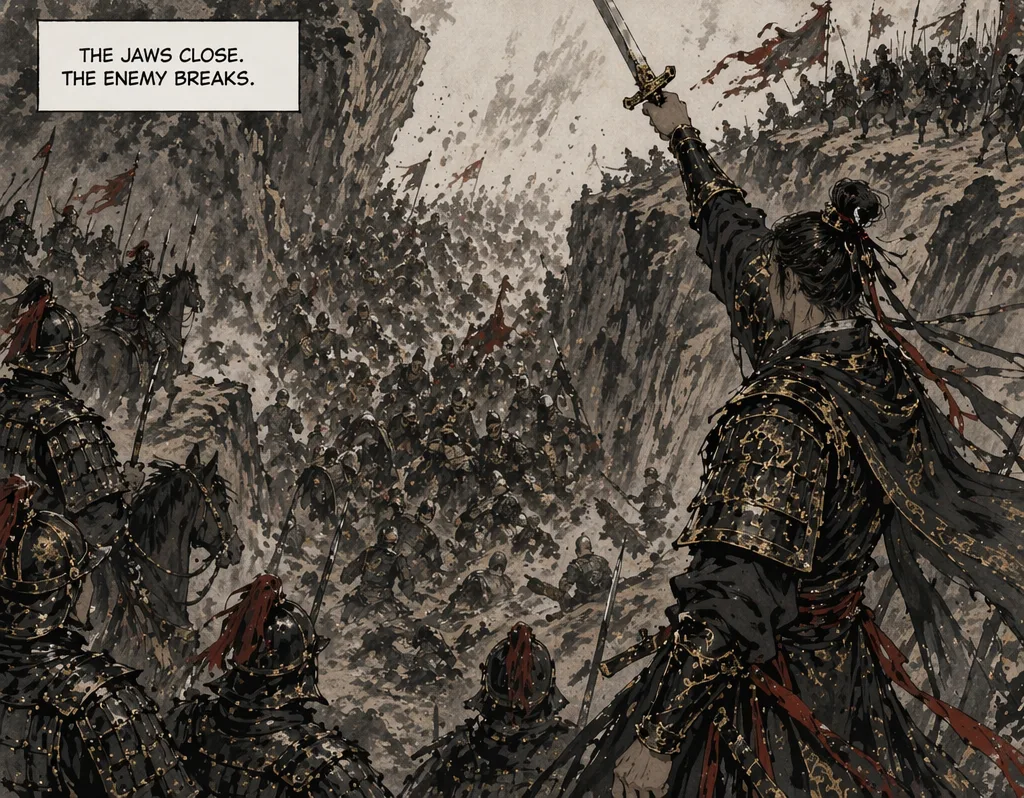
A fight reads as motion when every panel is one beat caused by the one before it. Pei Zhaoyue Does Not Kneel is an ink-wash court drama with no duels: Zhaoyue wins wars from a cold room by writing the orders a stand-in general carries out. The first skirmish in its Chapter 5 still follows the rule, in four panels.
1 · The orderYou know an attack is coming before anyone moves.
2 · The chargeThe widest frame in the run: the army pours into the ravine.
3 · The trap shutsThe camera moves in behind the general as the jaws close.
4 · The aftermathThe stillest panel: one man, the smoke and a single line.
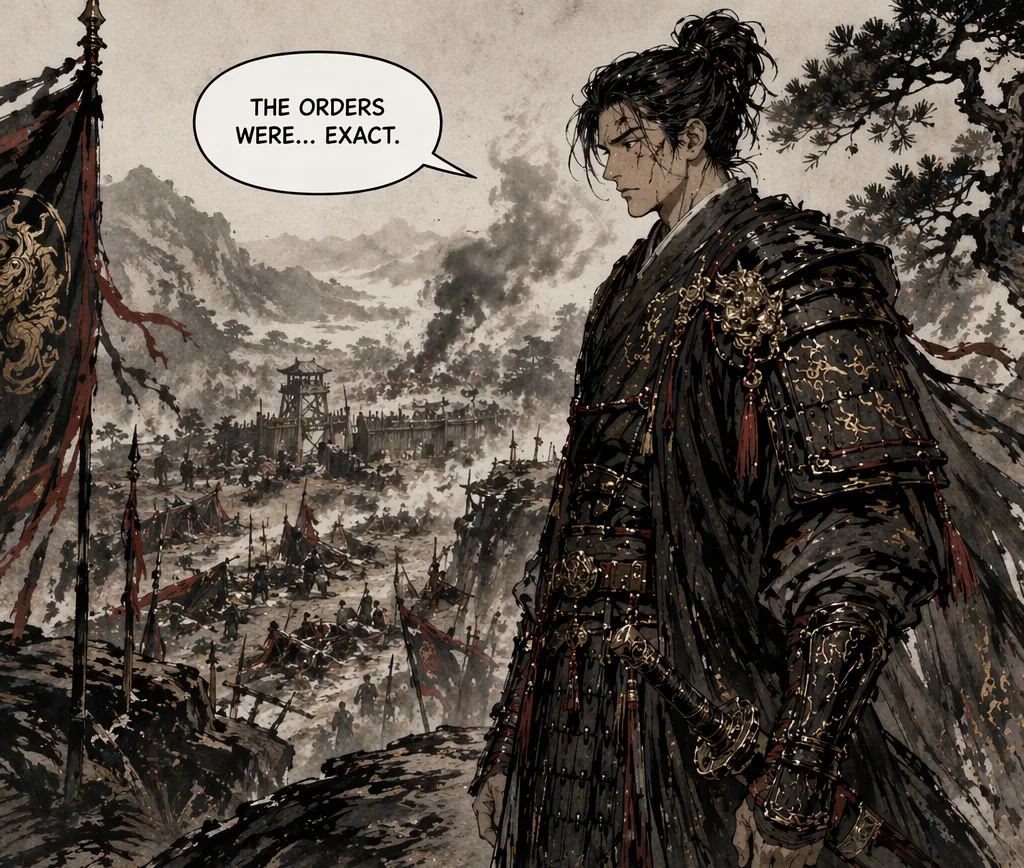
None of the four panels repeats a beat. The order tells you what’s coming, so the wide charge reads at a glance. Then the camera moves in for the result and holds still on one man for the cost.
A one-on-one duel follows the same rule at closer range, usually as wind-up, strike, impact and recoil: the shoulder drops, the blade moves, it lands, someone staggers back. Skip the wind-up and the strike comes from nowhere. Skip the recoil and the next scene starts before the hit has landed.
Give each beat its own panel in the script, the way a webtoon script lays one moment per panel, and keep each fighter on the same side of the frame for the whole exchange so the reader never has to stop and work out who is who.
End the episode on the turn
An episode’s last panel should change what the reader expects. The Last Morsel does it on page 23: Alex is back in the ruins, and his new status screen says he owns a food truck called The Last Morsel.
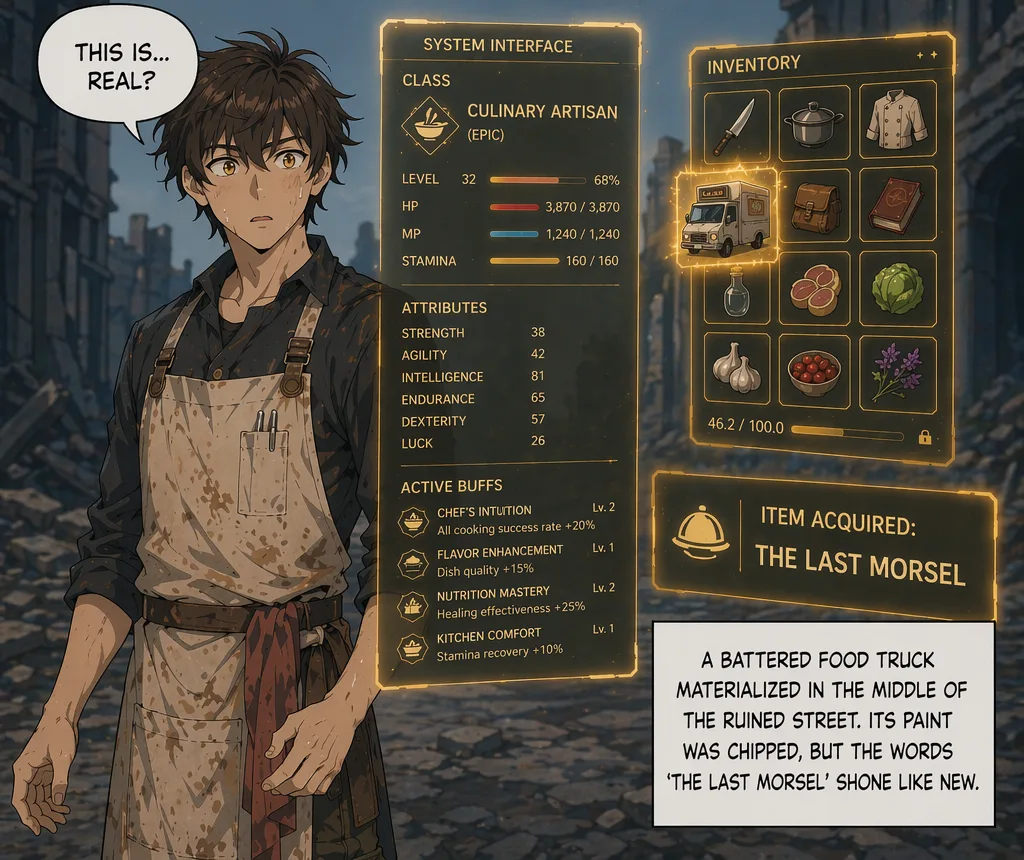
The chapter opened on whether a nobody can survive. Its last panel swaps that for a new question, what a cook does at the end of the world, and the only way to find out is the next episode. Put the turn in the final panel and stop there, because a recap or a quiet walk home after it gives the reader a place to put the phone down.
To find your turn, ask what the reader knows on the last panel that they didn’t know on the first. If the answer is nothing, the turn hasn’t happened yet, so end a page later or bring the turn forward.
On FicPal, Chapter 1 runs about 22 pages of one to three panels and is planned to end on a major plot beat, with Chapter 2 locked until a reader unlocks it. Your first comic is currently free on the 80 signup credits, and each chapter after that currently costs 50 purchased credits. If you want a premise with a turn already in it, start from these manhwa plot ideas.
Questions people ask.
Is a manhwa chapter the same length as a webtoon episode?
Usually, yes. Manhwa that run on scrolling apps are published as episodes, so the same rough range of 40 to 70 panels applies. Manhwa printed as books are counted in pages instead.
How long does one webtoon episode take to make?
It depends on the team. Storyboard artist Hashimoto Lion says he can now storyboard around 70 panels, one episode, in about two days. Line art, color and lettering come after that.
Does a full-screen splash count as one panel?
Yes. A tall panel that fills the screen is still one panel, and it's a good spot for a wide shot or a big reveal. Page 1 of The Last Morsel is a single panel of the ruined city.
Make one yourself
Get a Chapter 1 drawn from your premise
Paste your premise and FicPal outlines the whole story, then draws and letters Chapter 1.