How to Start a Webtoon: What Episode 1 Has to Do
Episode 1 has three jobs: show what your lead wants, promise the genre and end on a turn. Plan it from the last panel back, and bank episodes before you post.

To start a webtoon, decide what Episode 1 has to do before you draw a panel of it. It has three jobs: show your lead wanting something, show the reader what kind of story this is, and end on a turn that makes Episode 2 feel necessary. Plan it backwards from that last panel, and have a few episodes finished before you post the first one.
What Episode 1 has to do
An opening episode doesn’t need your world’s history or the full cast, only those three jobs done where a reader can see them.
The Confession Ledger is an AI comic on FicPal about Ai Wenruo, a sixteen-year-old auditor in a black-glass tower where people sign their sins into ledgers and forget them. Here are the first and last pages of its Chapter 1.
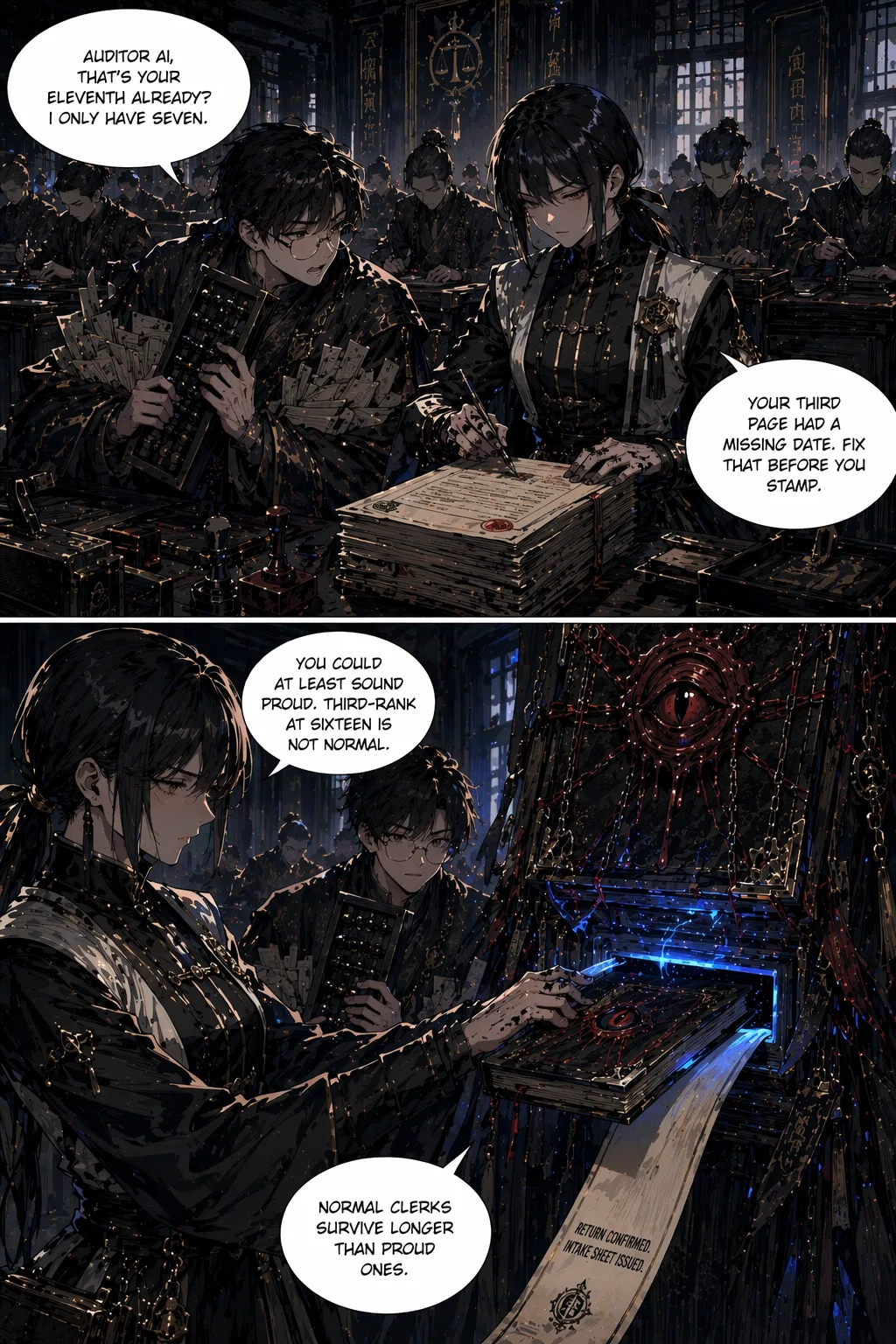
“Normal clerks survive longer than proud ones.”
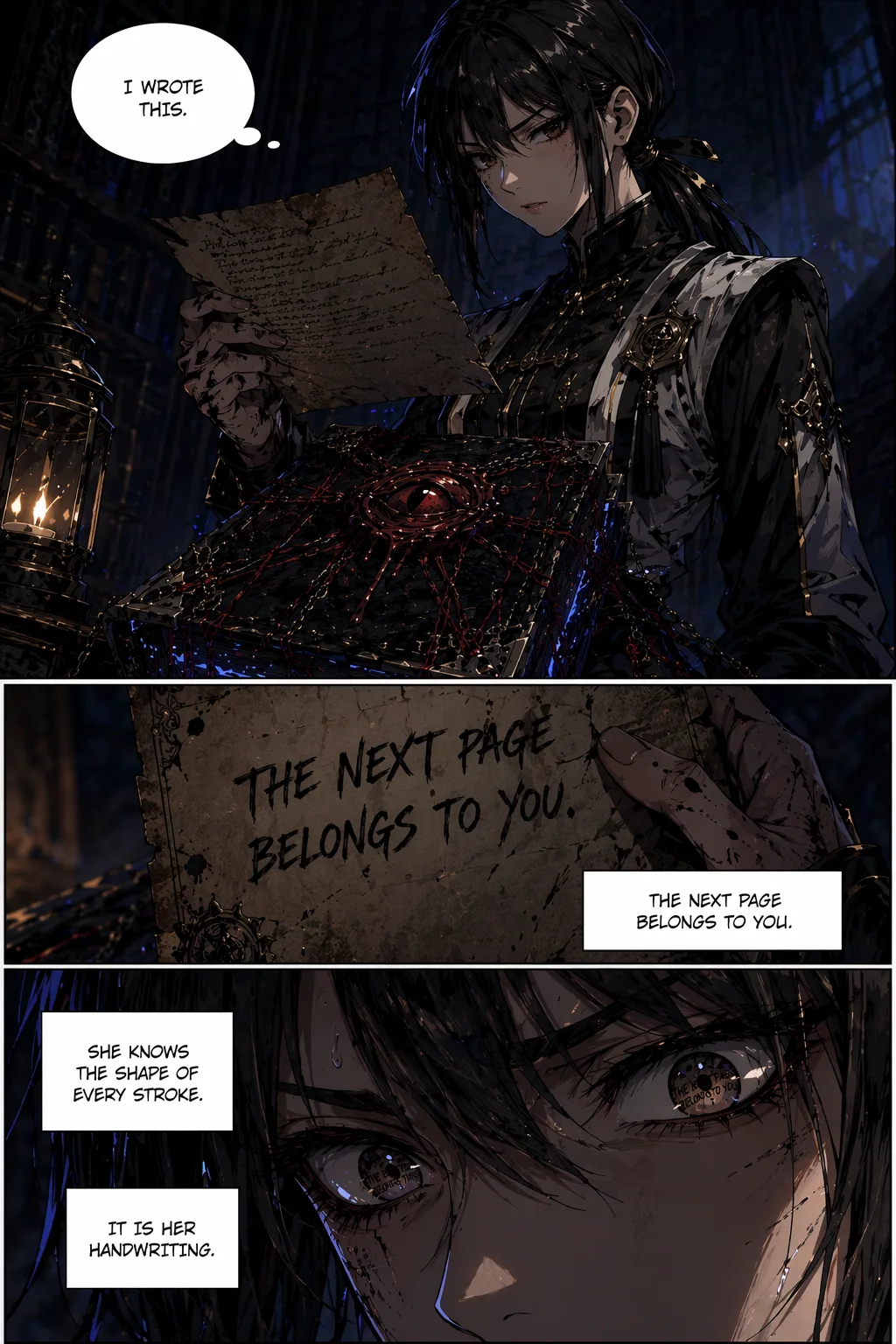
“The next page belongs to you.”
Page 1 shows the want and the genre’s promise together. The clerk at the next desk teases Wenruo for making third rank at sixteen, and she answers with her rule for staying alive. In the next panel she feeds a page into a ledger with a red eye, and it prints a glowing slip. Nobody explains the Bureau, and you don’t need them to.
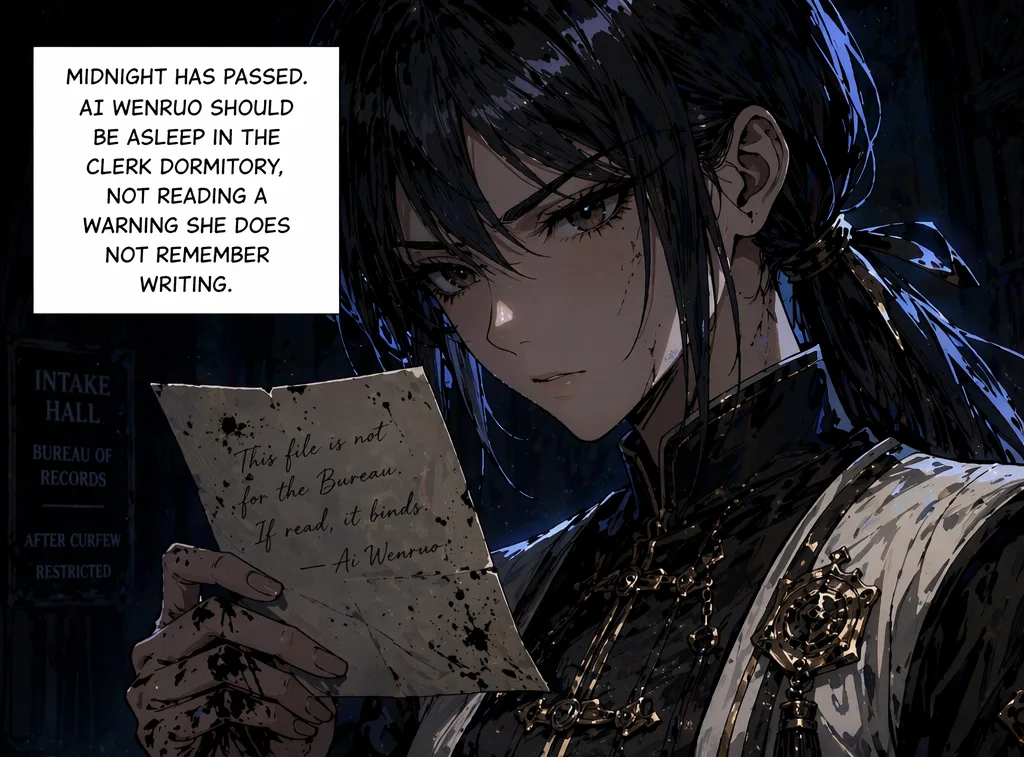
On page 16, the last one, she finds a note in her own handwriting that she doesn’t remember writing. She can’t stay a normal clerk with her own hand in the ledger, and the only way to find out what she wrote and forgot is Episode 2.
Plan Episode 1 backwards from its last panel
If you write a first episode from the top down, it tends to fill up with setup and stop wherever the pages run out. Start from the last panel instead, and each earlier page has one job: getting the reader there.
Write the last panel first
Put it in one sentence: what does the reader know on the last panel that changes the story? For The Confession Ledger it’s “Wenruo finds a warning in her own handwriting that she doesn’t remember writing.”
Put the want it breaks on page 1
Ask what your lead would have to want for that ending to cost them, then show the want on page 1. Wenruo wants to stay a normal clerk, and she says so in her first scene. The same page shows her catching a missing date on a coworker’s form, so when the last page says she knows every stroke of her own hand, you already believe it.
Make every scene between a step toward the turn
Each scene should bring the want closer to breaking. In this chapter the same discovery gets worse twice before the end: on page 7 a receipt for poisoned ink carries her signature, and on page 13 she recognizes her own hand on the note that sealed away the file on a death.
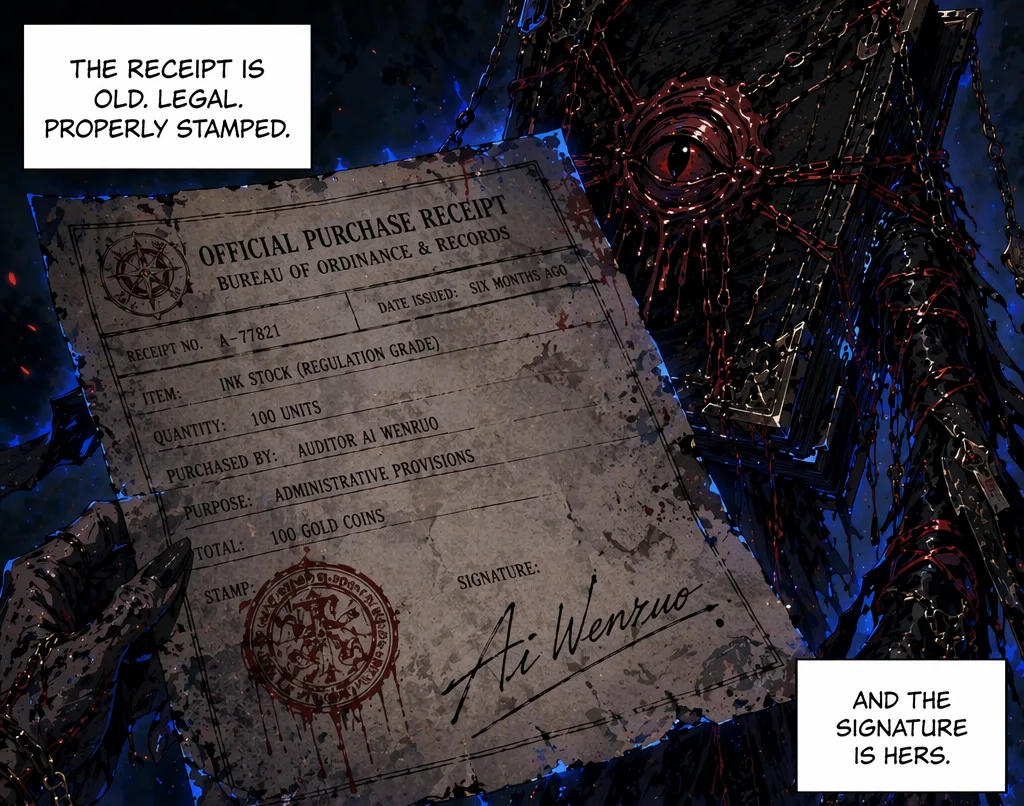
“And the signature is hers.”
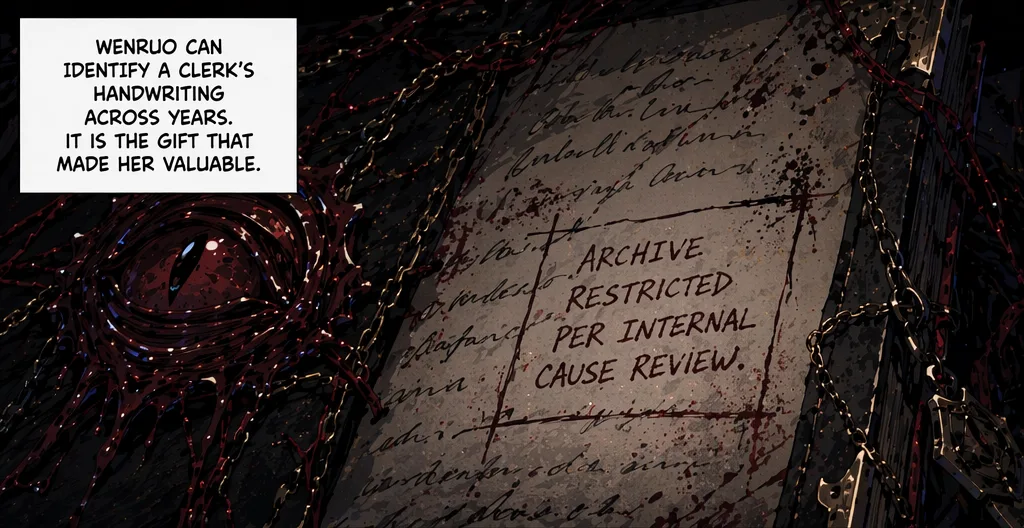
“Wenruo can identify a clerk’s handwriting across years.”
Anything that isn’t a step toward the turn can wait for later episodes. This chapter teaches one rule of its world, how a confession works, and Wenruo spells it out on page 3 while she takes one.
Then stop on the turn. Page 16 ends on her eyes and the words “It is her handwriting,” with nothing after them. For how to build that last panel and how many panels an episode usually runs, see how many panels are in a webtoon episode. Once the scenes are in order, write them up in this webtoon script format.
Bank episodes before you post the first one
Have six episodes finished before you post the first one. WEBTOON’s creator handbook recommends launching a series with three, because readers get the prompt to subscribe after they’ve read three. Its scheduler notice recommends a buffer of three more, so you can stay on schedule and take breaks.
Set your update day by timing one full episode, script to finished file, and choosing a day you could keep in a slow month. A buffer only lasts if you finish episodes as fast as you post them.
Banking pays off a second way. By the time Episode 3 is done you know your story better, and you can still sharpen Episode 1’s want before anyone reads it.
Launching with three also means Episode 1 isn’t judged alone. Its turn has to carry readers into an Episode 2 that’s already there, the way The Confession Ledger’s Chapter 2 opens right on Chapter 1’s turn.
Where to post and what to set up first
WEBTOON Canvas, the open side of the WEBTOON app, lets anyone post a series. If any of your art is made with AI, check the rules of wherever you post first, because they differ from one site to the next.
Before launch day, write a series summary of 500 characters or less, as the handbook asks, with the same want and promise as page 1 and your update day. Then make a thumbnail that shows your lead and your art style.
FicPal plans the way this guide does: it outlines the whole story first and plans each chapter to end on a major plot beat, so you can watch a premise reach its turn before you spend months drawing it. The 80 signup credits currently cover one comic with its Chapter 1, and each further chapter currently costs 50 purchased credits.
Questions people ask.
Should Episode 1 be a prologue?
Only if the prologue is a scene with your lead wanting something in it. A prologue that just explains the world pushes the want later, and a new reader has nobody to follow yet. If your story needs one, keep it short and post Episode 1 on the same day.
Do I need the whole story finished before I post?
No. You need the ending of your first season or arc and the turn at the end of each episode in it. The rest can change as you go, as long as it doesn't undo a turn you've already posted.
Can I start a webtoon if I can't draw?
Yes. Plenty of webtoons are made by a writer and an artist working together, and the writer's job is the planning in this guide.
Make one yourself
See a Chapter 1 that ends on a turn
Paste a premise and FicPal draws and letters a Chapter 1 from it. It's usually ready in about ten minutes.