Common Manhwa Tropes and What Each One Promises
Twelve common manhwa tropes, from the villainess to the murim return, the promise each one makes, and a real chapter that keeps it page by page.

Manhwa tropes are the setups readers choose a story by: the villainess, the regression, the contract marriage, the cold duke. Each one is a promise. When a heroine wakes up at seventeen remembering how she died, you know before page five that she'll refuse that ending, and you read on to see how she does it.
A good chapter keeps the promise in a few beats you can point to, and the art signals the trope before anyone says it out loud.
Common manhwa tropes, and what each one promises
| Trope | What it promises |
|---|---|
| The villainess | She wakes up as the villain of a novel she read, knows the scene where she dies, and spends the story steering around it. |
| Regression | The lead returns to her own younger self with the first life's ending in her head, and this time she won't let it happen. |
| The extra | Stuck in a novel as a nameless side character, she plans to stay out of the plot, and the plot comes for her anyway. |
| Contract marriage | Two people sign a marriage with an end date and a rule against feelings, and the feelings arrive before the date. |
| The cold duke | The man the whole empire fears turns gentle for exactly one person, and you get to watch. |
| The obsessive male lead | His devotion has an edge. He'd tear the world apart for her, and the story asks if she wants that. |
| The villain family's daughter | A small child lands in the family everyone fears and wins them over one meal at a time. |
| Revenge | Betrayed by the people she trusted most, she comes back to take everything from them, one chapter at a time. |
| The academy | The school ranks everyone in public, so the student nobody rated will climb past the ones who laughed. |
| The murim return | A martial artist who died at the top, or at the bottom, wakes up young in the murim world and does it right this time. |
| The system | A weak lead gets a game screen of stats and quests, and every chapter promises growth you can count. |
| Hidden strength | The quiet one is far stronger than anyone knows, and the payoff is the moment they find out. |
Most stories stack two or three of these: a regressed heroine out for revenge, or a villainess in a contract marriage with the cold duke.
A trope is a promise the first chapter has to keep
A regression story promises that she knows the ending, that time is short and that she'll act on what she knows. Chapter 1 has to pay a first installment on all of it.
If she spends ten pages unsure what happened to her, readers leave. If she shrugs and walks back into the old life, they feel cheated.
The villainess makes the same promise from a different door. She read her ending; the regressor lived hers. Either way, she knows how her story ends and refuses it. Here is that promise kept in four pages of a regression chapter.
The regression promise, beat by beat, in a real chapter
She Remembered the Wrong Life is a regression romance on FicPal, which the AI wrote and drew from a premise. Yun Sora dies at thirty-seven in a cold marriage and wakes at seventeen, one day before the engagement tea. Chapter 1 runs 23 pages, and four of them carry the whole promise.
Page 2: she wakes up with the ending in her head
The genre doesn't make you wait.
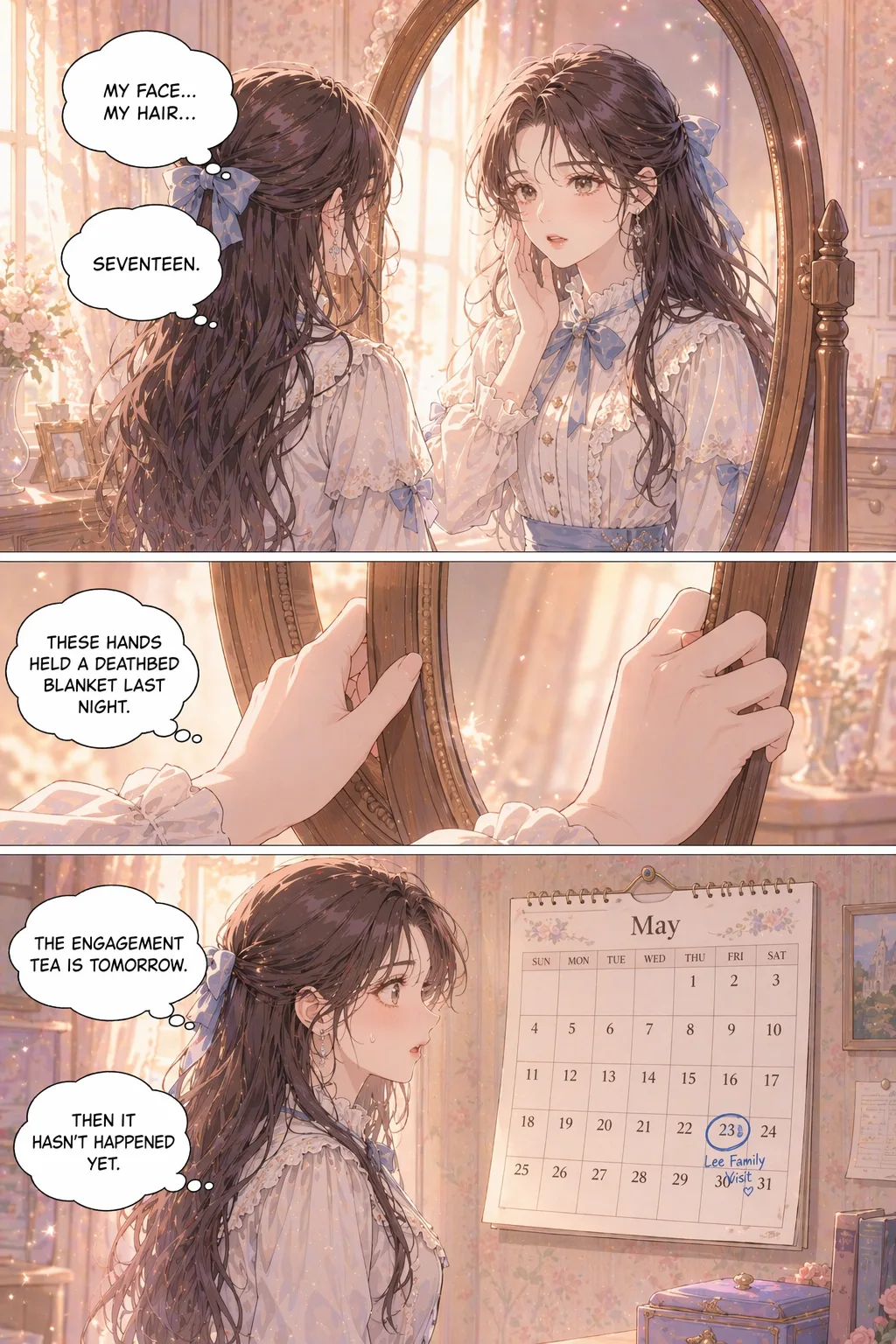
- “Seventeen.” One word names the reset while she touches her face in the mirror.
- Her hands held a deathbed blanket “last night.” The old life is one night old.
- The engagement tea is tomorrow, so the clock is already running.
She Remembered the Wrong Life, Chapter 1, page 2.
Page 3: the ending she refuses
Next the story shows the ending she's running from, so you feel what's at stake.
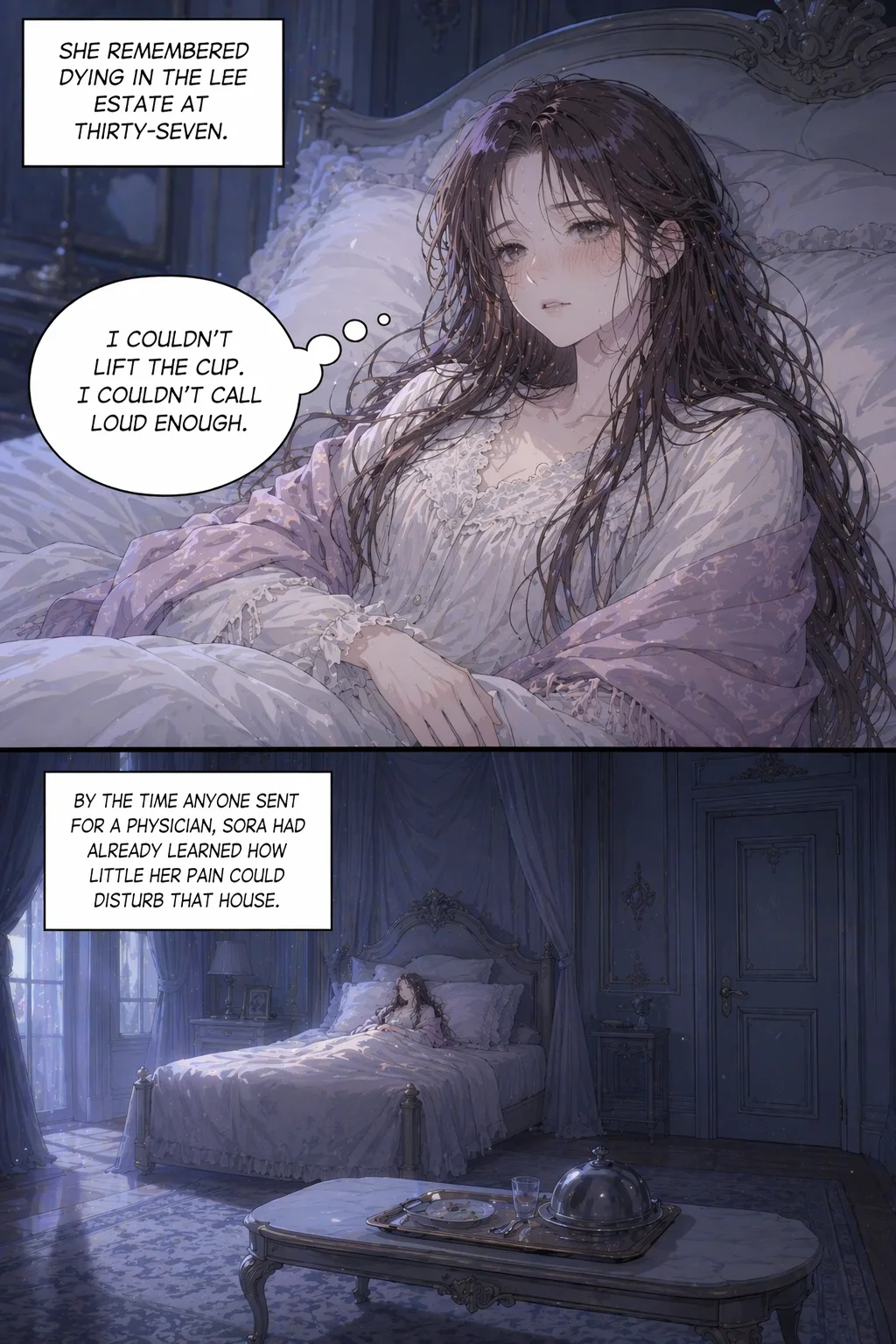
- The caption states the ending plainly: she died in the Lee estate at thirty-seven.
- Cold blue and violet. The first life gets its own palette, so you always know which life you're in.
- A far, wide shot: a small figure in a big bed, a tray on the table, nobody else in the room.
Page 7: she acts on what she knows
After four pages of memories, the warm light comes back and she starts giving orders. This is the beat readers came for.
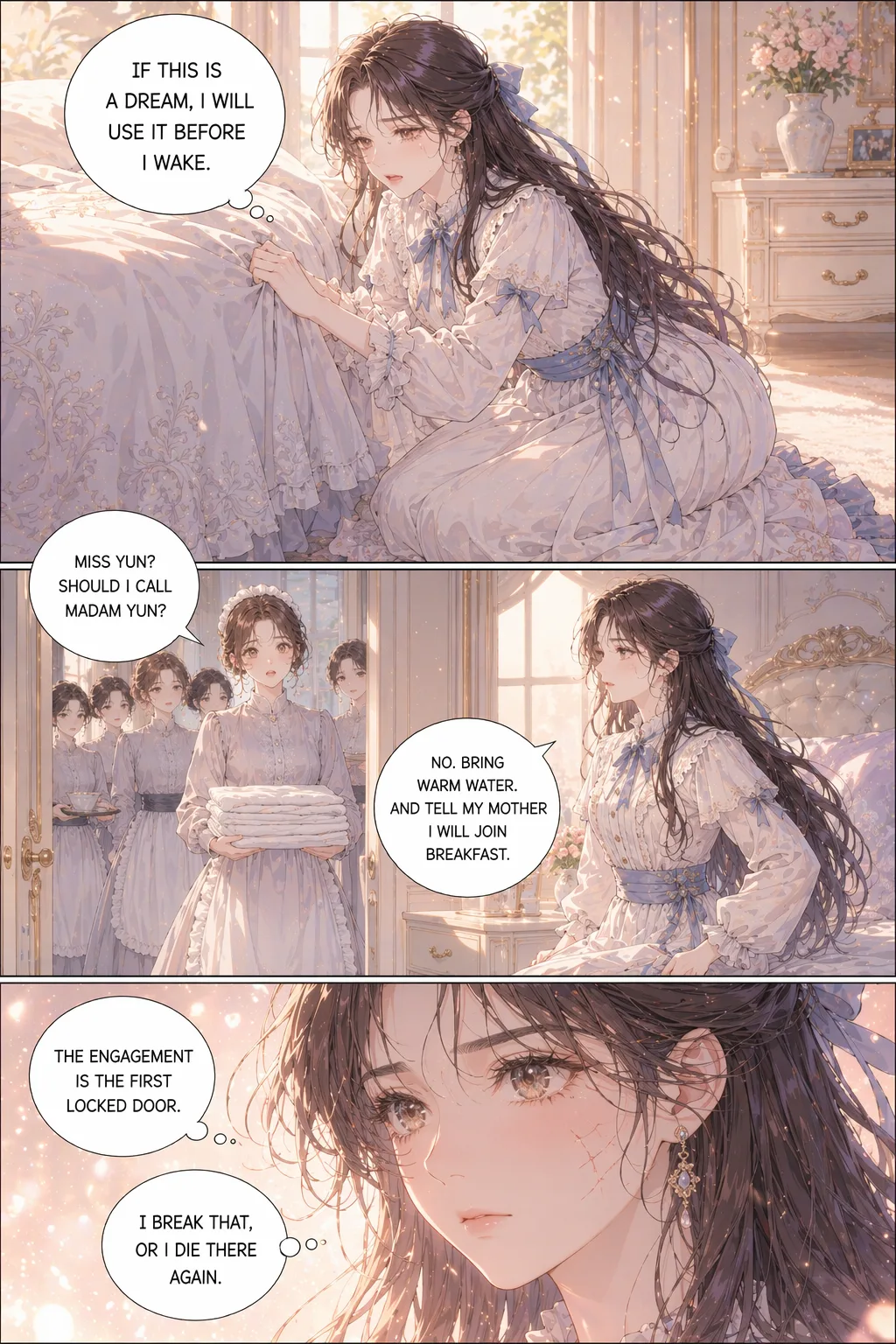
- “If this is a dream, I will use it before I wake.” The second chance is something to spend, fast.
- Out loud she's calm and practical: warm water, and tell my mother I'll join breakfast.
- The panel tightens to her eyes for the refusal: break the engagement, “or I die there again.”
Page 22: the promise gets a question
By page 18 she has won, and her family sends word that the match can't go ahead. Then the man she remembers as cold turns up in the courtyard looking lost.
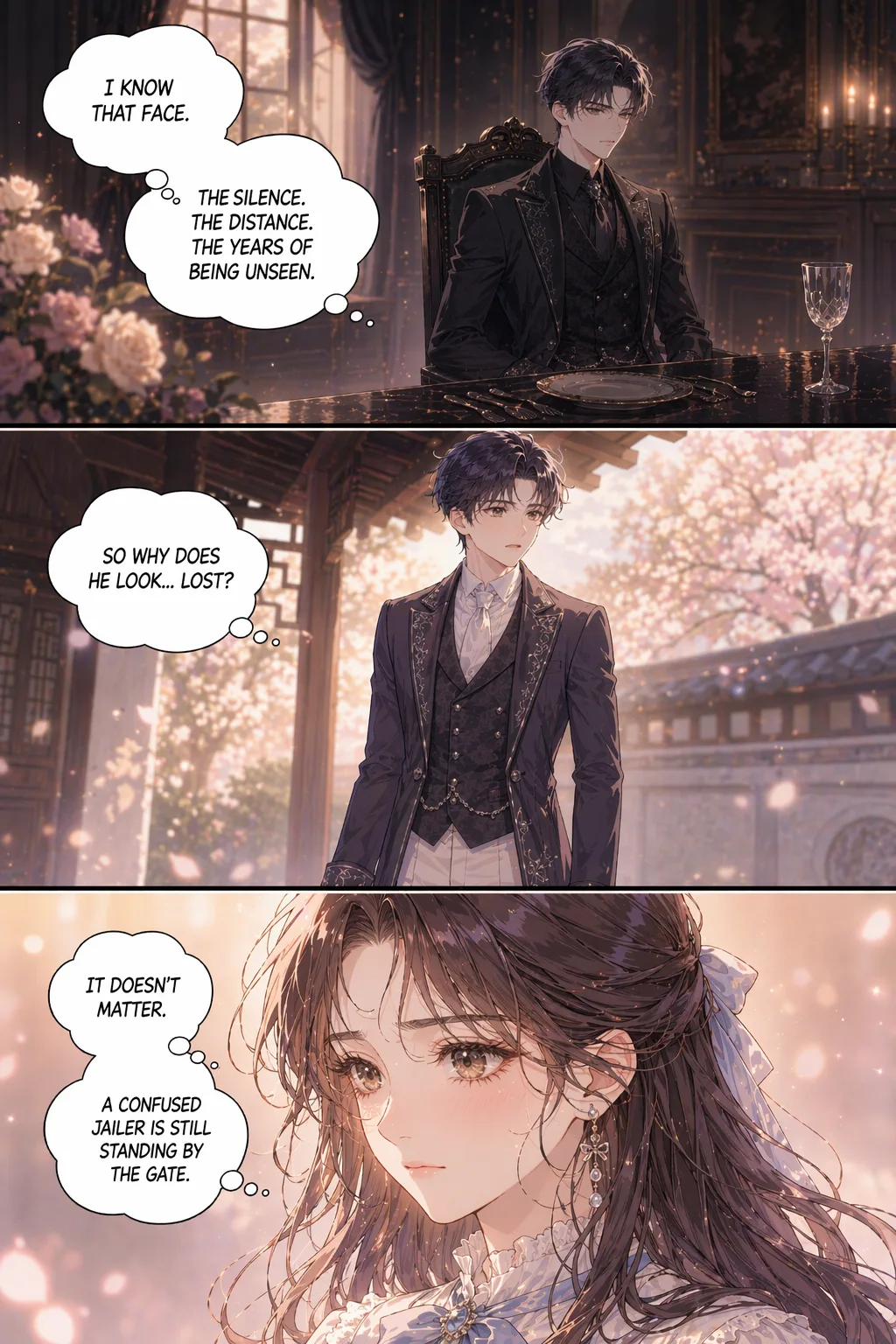
- Memory: the husband in black at a dark table, eyes down.
- Now: the same man in spring light. “So why does he look... lost?”
- She keeps her version anyway: “A confused jailer is still standing by the gate.”
She still refuses the old ending, so the promise holds. The chapter adds one question, whether she remembered that life right, and leaves it open for Chapter 2. Ending on a turn like this has its own craft, covered in how many panels go in a webtoon episode.
The visual habits that signal each trope
Readers spot a trope from the art before the dialogue confirms it. The second and third crops below come from I Was the Final Boss in Her Last Life, where a regressor transfers into an academy and swears to protect a classmate this time.
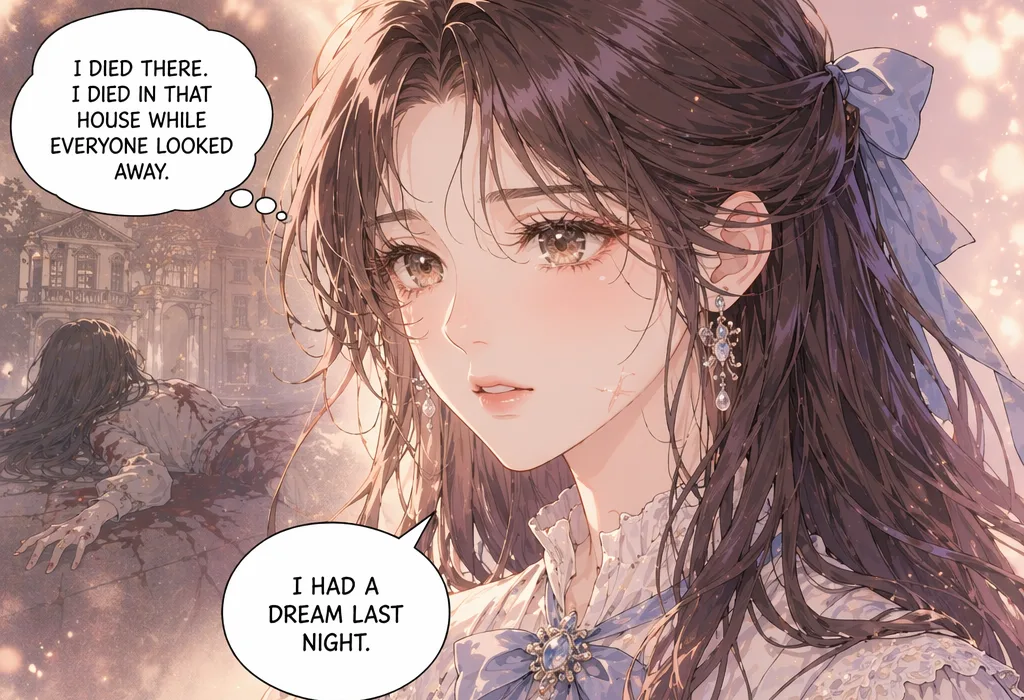
- The thought bubble holds what the regressor knows: “I died there.”
- The speech bubble says the version she can share: “I had a dream.”
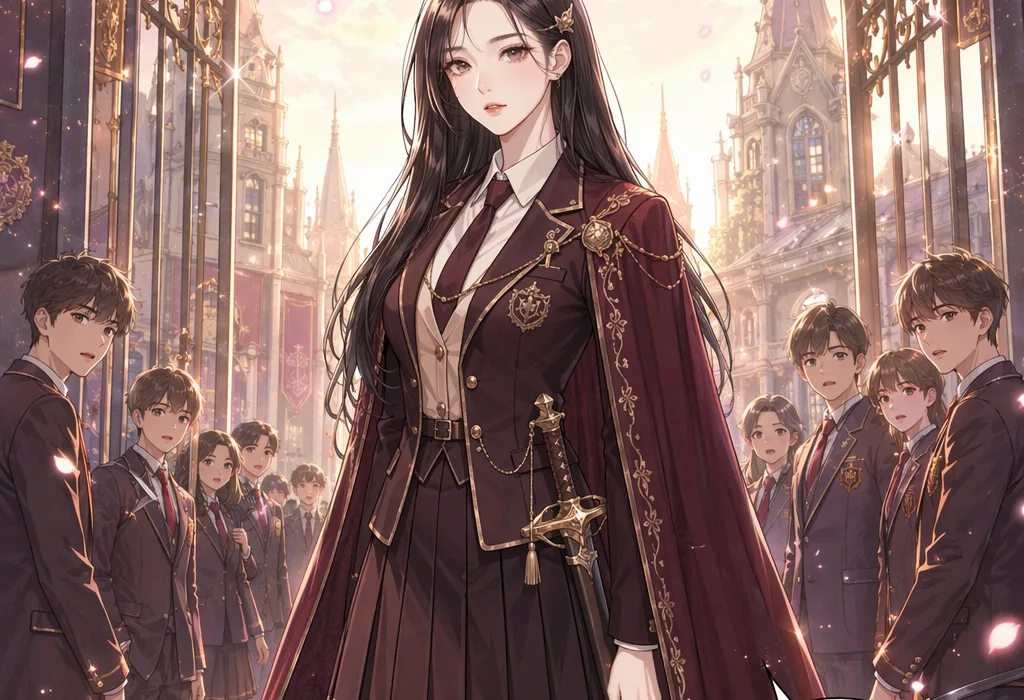
- The entrance: centred, tall in the frame, in a cape. The frame treats her as the most important person there.
- Every head turns. This is how a noble heroine or a transfer student arrives.

- A heartbeat drawn into the art announces the romance line.
- Tears and a smile in a fall of petals. For her, it's a reunion.
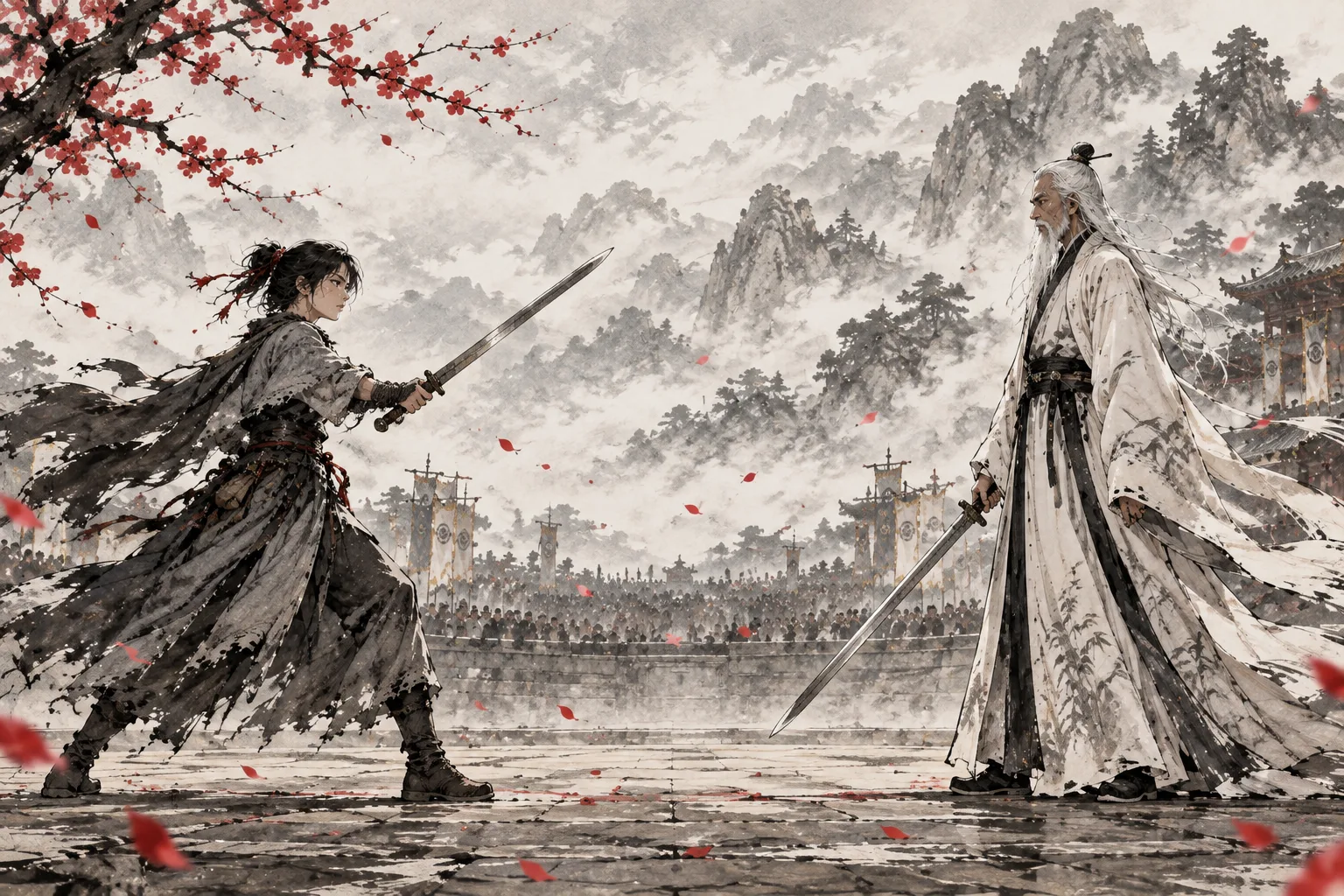
Other tropes have their own tells. The cold duke wears black against a pastel world, and the system's status window floats over the panel like a game screen. In martial stories, how far a body can go is what separates wuxia, murim and xianxia, which our duel drawn three ways shows.
Write the promise into your premise
If you're writing a trope story, put the promise in your first lines: what ending the lead knows, how long she has, and what she does about it in Chapter 1.
On FicPal you paste that premise into Describe it, and the AI writes the outline and the dialogue from it. Your first comic runs on the free signup credits; each further chapter currently costs 50 purchased credits. For setups to start from, and the one detail that makes an idea ready, see manhwa plot ideas.
Questions people ask.
What's the difference between regression, reincarnation and transmigration?
Regression sends a character back into their own younger body, in their own life. Reincarnation means being born again as someone new, often in another world. Transmigration, also called possession, drops a character into someone else's body partway through their story, very often a novel's villainess or a side character.
What do ML, FL and SML mean?
Male lead, female lead and second male lead. Readers use the short forms all the time in comments and reviews, so you'll see a cold-duke ML or a regressor FL described that way.
Why are so many manhwa heroines villainesses?
The label hands her a known bad ending to escape and permission to be bold, since everyone in the story already expects the worst of her. Readers get a heroine who schemes and talks back without losing any of their sympathy.
Is it bad to use tropes in my own comic?
No. Readers search for tropes by name and pick stories by them. A trope goes stale when a story makes the promise and then stalls, so the work is keeping it in a way only your lead could.
Make one yourself
Write a premise that names the ending your lead refuses
Paste your idea into the box below, and the AI plans the story and draws Chapter 1.