How to Make a Comic With AI, Starting From the Premise
To make a comic with AI you write a premise and the AI does the rest. We wrote one idea three ways to see what a premise has to name.
To make a comic with AI, you write a premise and the AI does everything after it. It plans the story, draws a cover, makes a reference image of each character, then draws and letters the pages. The premise is the part that steers most, and the AI keeps what you decide in it and makes up the rest. You also pick an art style, a length and a language, and you can edit any page afterward.
To see how much that matters, we wrote one idea, a palace food taster who can taste lies, three ways: two lines, about 250 words, and an 8,000-character pile of notes. Two lines left nearly everything to the AI. The 250 words, which settled what the lead wants, how the cast looks and where Chapter 1 ends, got the chapter we had in mind. The long notes kept their details, including the ones we hadn't decided.
What happens after you press Make my comic
On FicPal you start in Describe it. The premise box takes 40 to 8,000 characters, and under it you pick an art style from 12 looks (or let the story suggest one), a length, series or short story, and optional tone words. More options adds a box for names, things to avoid and anything else, up to 2,000 characters, plus a language and a genre. A pitch preview sketches your idea before you spend anything. Then press Make my comic and the drawing room takes over, with six stages: Story, Script, Cover, Cast, Pages and Ready.
Story and Script write it. Story is the title, the cast and their looks, and an outline of every chapter, and Script is Chapter 1 page by page with all of its dialogue. You watch both appear as they're written, and you can't edit the plan while it runs, but you can change any page's script in the editor afterward. If you start from a list of titles you love, the AI writes the premise first.
Everything else is drawn from that plan: the cover, then one reference image per character look (Cast), then the pages, each drawn from the references of whoever is on it. Pages start landing while the script is still being written, and Ready is the last step, when the lettering is in and the chapter goes up. Our 250-word premise came to 40 images: the cover, 16 references and 23 pages.
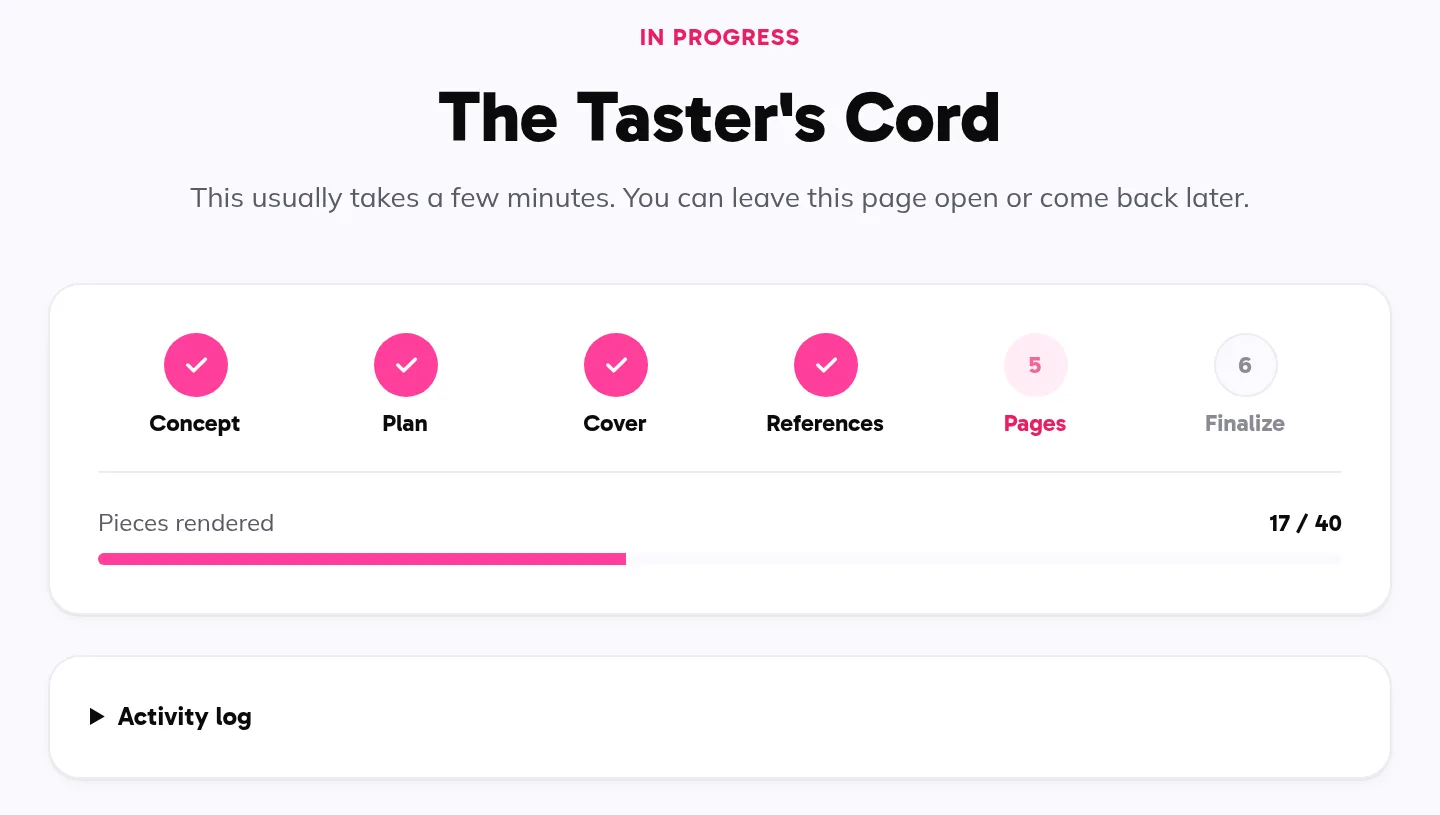
Chapter 1 is usually ready in about ten minutes, and the rest of the outline waits as locked chapters.
One idea, three premises, and what each one made
All three got the same notes on tone: “A palace mystery, not a battle story. No romance in Chapter 1. No blood or gore: show the poisoning with a dropped cup and a collapsed consort.” The two-line version was:
A palace food taster who can taste lies is ordered to test the Empress's tea after the Emperor's favourite consort collapses. The tea says the Empress is innocent.
PremiseThe 250-word version
Lan Yue is nineteen and the newest food taster in the Inner Palace. Nobody knows her secret: she can taste lies. Anything cooked or served by someone who is lying tastes of rust; honest food tastes of nothing at all. She wants one thing: to keep her head down for two more years, until she has saved enough silver to buy her little brother out of his debt contract at the imperial stables.

Then the Emperor's favourite consort collapses at a garden tea party, and every finger points at the Empress, whose own pot poured the tea. Grand Eunuch Gao, who holds her brother's contract, orders Lan Yue to taste what is left in front of the whole court and confirm the Empress's guilt. She drinks, and the tea tastes clean. The Empress did not lie.

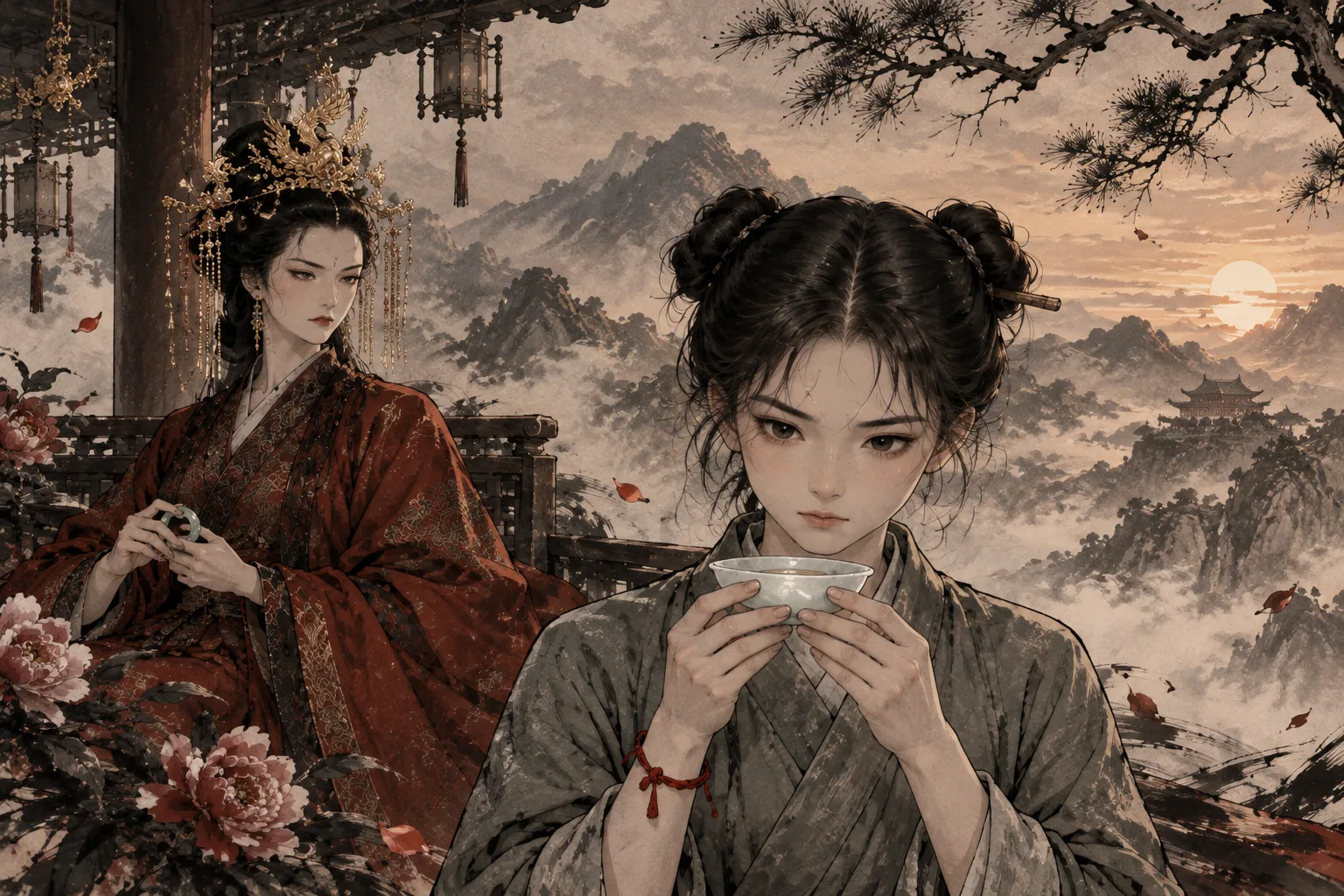
How the cast looks: Lan Yue is small and sharp-eyed, with a round face, a thin pale scar through her left eyebrow, hair in a plain double bun with one wooden pin, a grey-green servant's robe and a red taster's cord tied at her wrist. Empress Wei is tall and severe, late thirties, in crimson robes and a gold phoenix crown, and turns a jade ring when she is afraid. Grand Eunuch Gao is round and smiling, with powdered skin, a black tasselled hat, purple robes and a folding fan. Captain Shen of the palace guard is young and broad, in black lamellar armour, with a burn scar along his jaw.

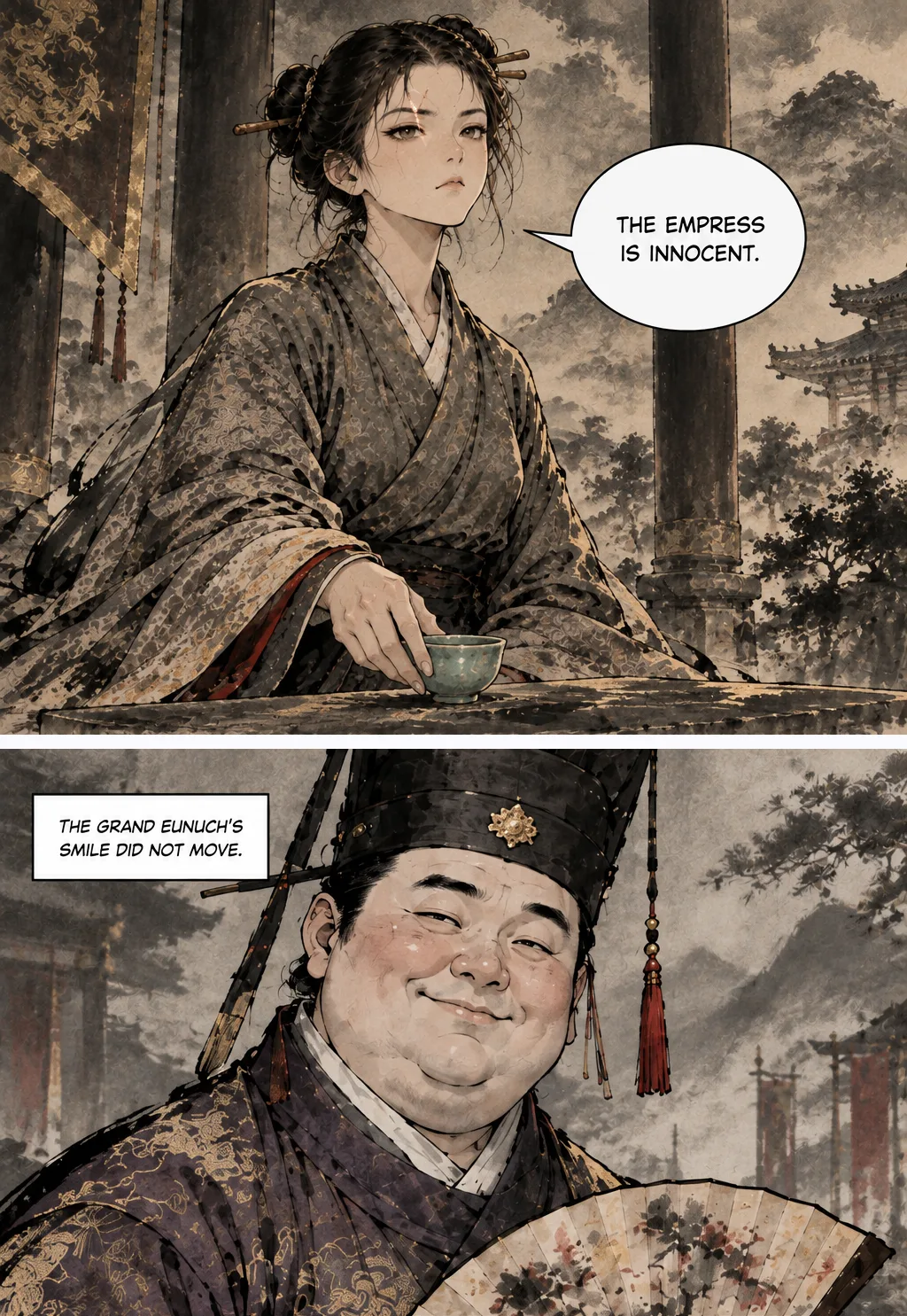
Chapter 1 ends when Lan Yue says out loud, "The Empress is innocent," and the Grand Eunuch's smile does not move.
The 8,000-character version is the kind of notes file writers keep: a world, rules for her power, ten characters, a ten-chapter arc and loose ideas, a few of them still undecided.
ExcerptThe 8,000-character notes
PLOT, FIRST ARC (chapters 1-10ish)
1. The Peony Tea. Show the palace, the tasters, her power. [...] She says the Empress is innocent. (Or does chapter 1 end before she answers? Or after, when Gao smiles? I keep changing this.)

[...]

RANDOM NOTES / IDEAS
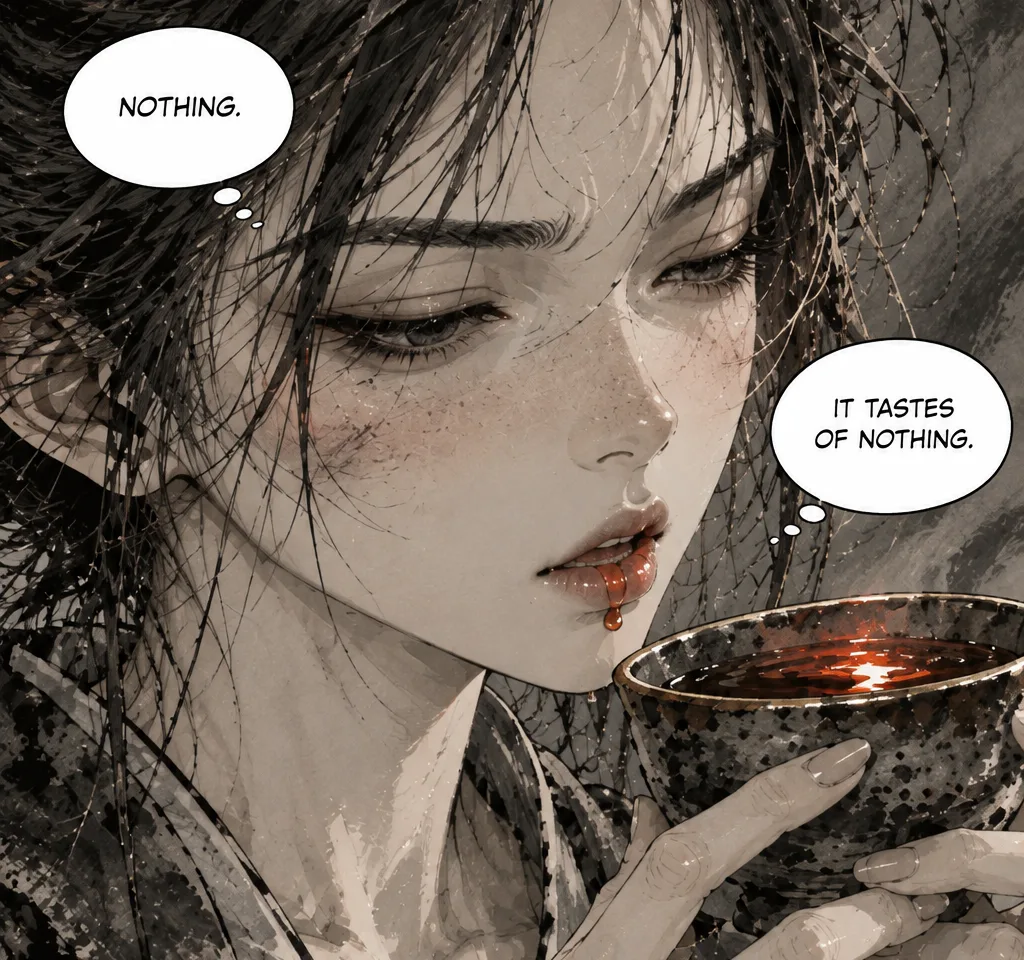
- Visual motif: a drop of tea on her lip when she tastes, show a rust-red tint when something is a lie (but only she sees it, it's not real).
In the two-line version, the taster became Baek Yeon, 22, and a Chinese-style court got Korean names. Page 1 opens on a banquet while she introduces herself, and Chapter 1 ends on a thought: a taste is not proof.
The 250-word version came back the way it was written. The cover lines up the four people it describes, page 1 opens on her secret and her brother's debt, and the chapter builds for 17 pages toward the line it asked for. It's public, so you can read its Chapter 1.
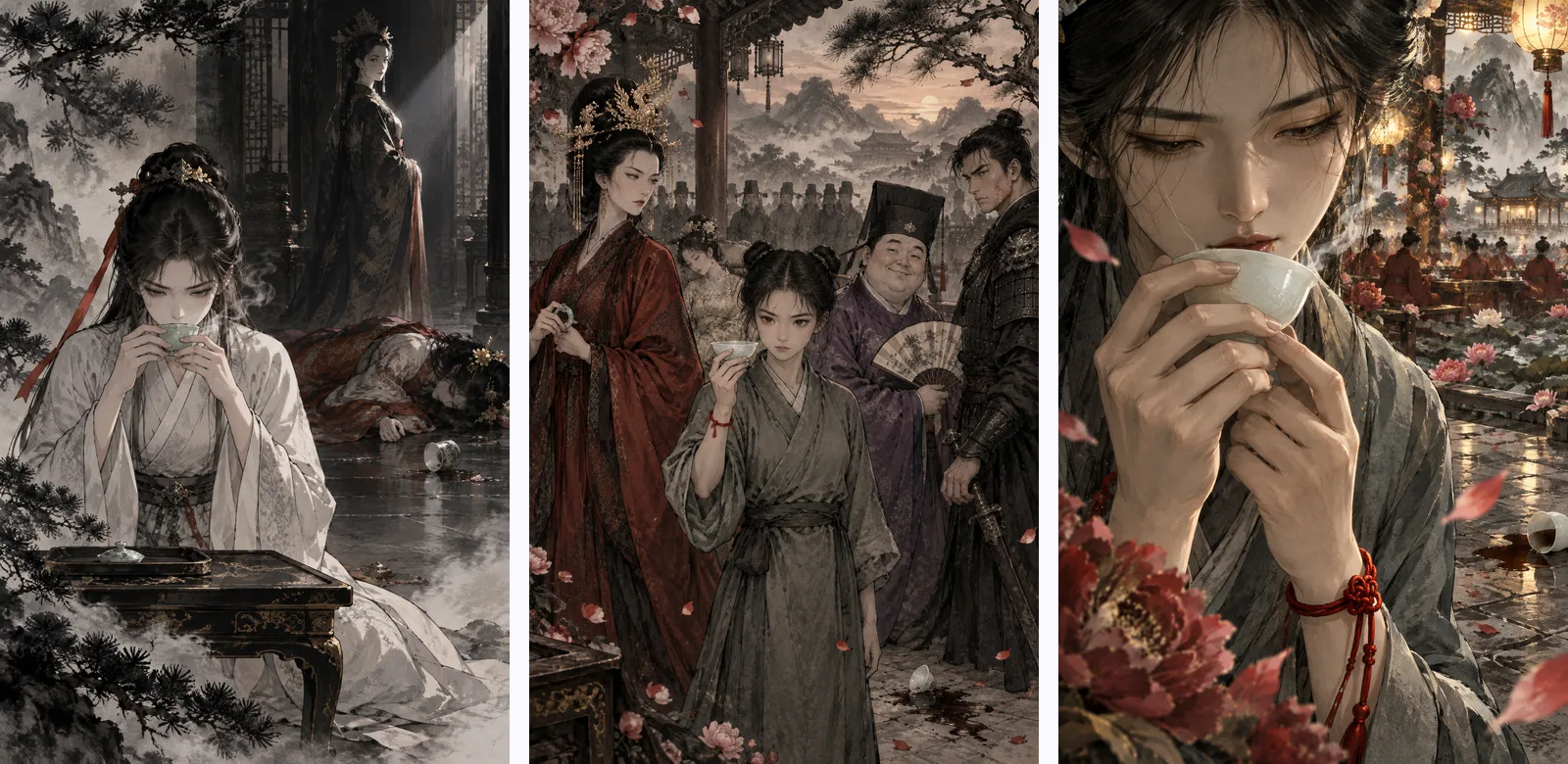
The 8,000-character version kept more than we expected: the same looks, her count of 41 silver taels out of the 60 she needs, and the crane painted on Gao's fan. Where the notes hadn't decided, the AI decided for them. About the ending they said “I keep changing this,” so it picked one: the verdict lands on page 12 of 22, and the rest is aftermath.
A loose note went in too: a rust-red tint on her lip whenever she tastes a lie. The AI painted it on page 9, where the tea is honest, and there it looks like blood.
What your premise should name
Aim for four short paragraphs, about 250 words in all: who the lead is and what they want, what starts Chapter 1, how the cast looks, and where Chapter 1 ends. Then use the Tone chips and the “Names, things to avoid, anything else” box under More options for limits.
Say what the lead wants
Give one want the reader can hold onto, with a number or a deadline if you can: two more years, enough silver to buy her brother out of his contract. Both longer versions put that want on page 1. The two-line one had none to show.
Describe each character who matters
Give age, build, hair, one outfit and one thing they always have: a red cord at the wrist, a jade ring, a folding fan. Each reference image is made from that description, so this is where you set the faces.
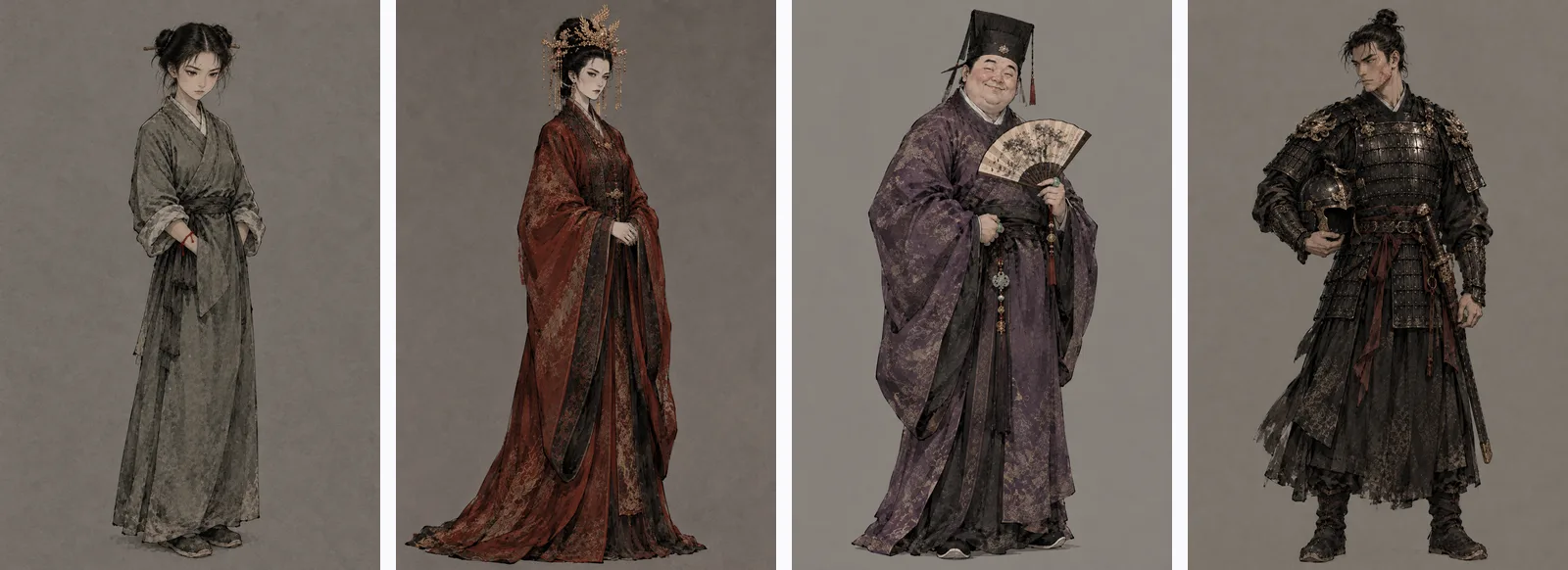
Anyone you don't describe gets designed for you. In the two-line version, the palace women came out with nearly one face. Keeping characters consistent goes into why that happens.
Name where Chapter 1 ends
Write the last line and the reaction to it. Ours was: Chapter 1 ends when Lan Yue says out loud, “The Empress is innocent,” and the Grand Eunuch's smile does not move. The AI built the chapter toward that moment, added five pages of fallout and closed on the same caption.
Leave the ending out and the AI may stop before your hook. The Poisoned Vow, a one-line premise on the site, ends its Chapter 1 at a door, with the twist its premise promised only hinted at. How webtoon episodes end on the turn explains why that last beat matters.
Put your limits in the notes
Use the Tone chips for mood and the “Names, things to avoid, anything else” box for hard limits. All three versions got the same limits as notes, and they held in the story: no version has romance in Chapter 1, and each shows the poisoning as a dropped cup and a collapse. The drawing was looser, and some of the spilled tea came out red enough to read as blood. If a limit matters, say how to show it, as ours did with the cup.
Cut what you haven't decided
The AI treats everything in your notes as settled. An ending you keep changing, or a visual idea you only jotted down, can land in Chapter 1. If your notes are really a novel draft, turning a novel into a comic covers what to cut.
Here's the 250-word version as a template to fill in.
TemplateYour four paragraphs
[Name] is [age] and [what they do, and where]. Nobody knows [their secret or power, with its one rule]. [They] want one thing: [the want, with a number or a deadline].

Then [the event that starts Chapter 1]. [Someone with power over them] orders [Name] to [the act that forces a choice]. [What they find out, and what it means for them].

How the cast looks: [Name] is [age, build, face], with [hair], [one outfit] and [one thing they always carry or wear]. [One sentence like this for each character who matters.]

Chapter 1 ends when [Name] [says or does the turn], and [the reaction you want the reader to remember].

Tone and limits: [genre and mood in a few words]. No [what to keep out of Chapter 1]. [How to show anything violent].
Getting a manhwa look, and what you can't control
Every FicPal comic comes out in webtoon form: one vertical scroll, one to three panels per page. It's lettered in English or another Latin-script language, such as Spanish, Portuguese, French or Indonesian, and other scripts are written in English for now. The look is yours to pick from 19 styles, from Ink wash and Romance manhwa to Neon noir and Gothic ink, or you can leave it open and the story suggests one. “Describe my own” adds your visual notes on top of the closest style.
We left the style open for all three palace versions, from 163 characters to 8,000, and all three got the same Chinese ink-wash look, even though the long one described the art it wanted.
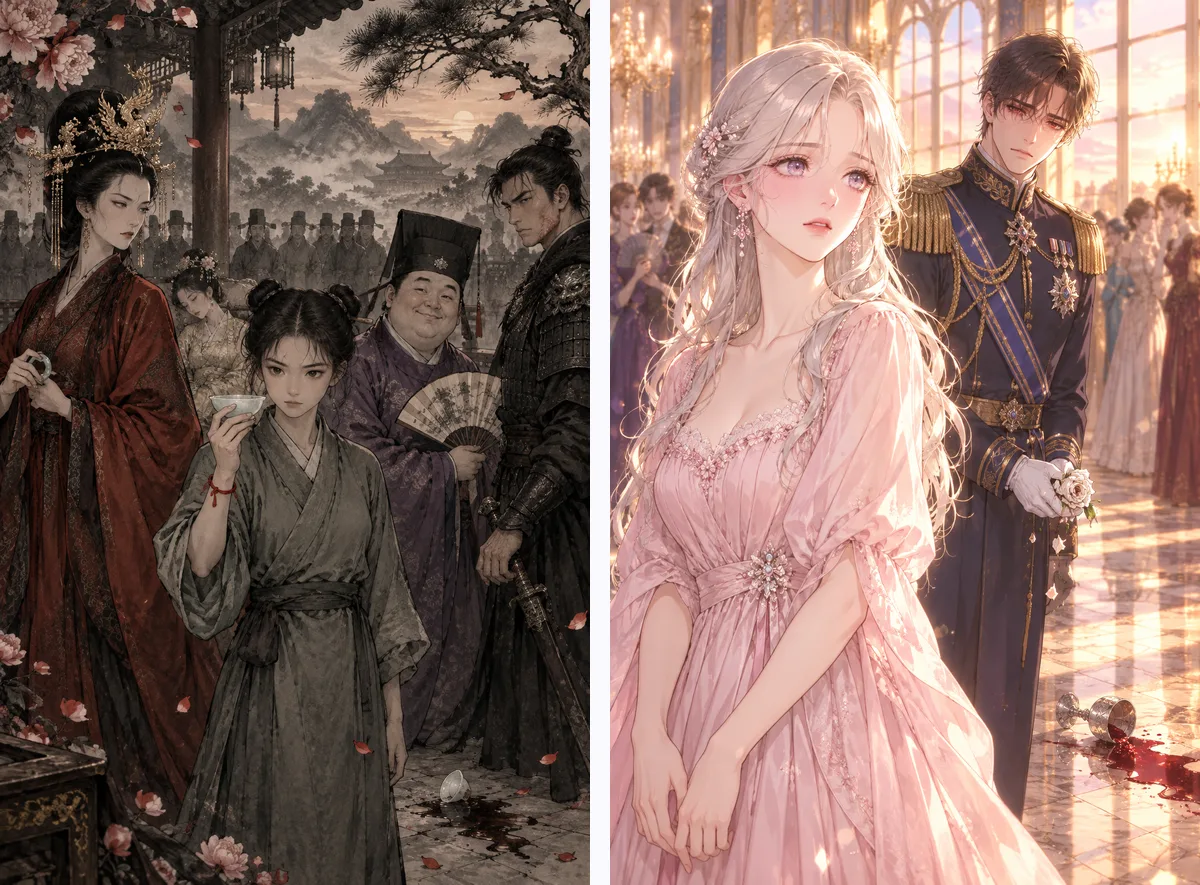
So to get a Korean webtoon look, pick Romance manhwa, Dark action manhwa or Clean webtoon, and write a story that belongs in one: a regressor, a villainess, a hunter ranking, an office romance in Seoul. These manhwa plot ideas are a good place to start.
Once it's drawn, you can change it. Open the comic in your Studio and fix a page by describing what's wrong, re-roll it, retype any line of dialogue for free, reorder pages or try a new cover. Speech and captions on new comics are an editable layer over clean art, while sound effects stay in the art. Your first few page fixes are free, and after that each one costs credits. The AI still writes the outline and the first draft of the dialogue. Your premise and ideas stay yours, but new comics are public until you set them to unlisted or private, and FicPal's Terms make no promise of commercial rights to the art. The editor downloads any page as a PNG, and its desktop-only Pro level zips a whole chapter.
The 80 credits you get at signup currently cover your first comic, through Chapter 1. Each further chapter currently costs 50 purchased credits, and any signed-in reader can pay for the next one, which then opens for everyone.
If you're still choosing a tool, the best AI comic generators are sorted by what each one hands you. If you're ready, write the four paragraphs, paste them into the Describe it box and press Make my comic.
Questions people ask.
Can AI make a whole comic on its own?
It can plan a story, keep a cast recognizable, and draw and letter every page of a chapter from a written premise. It can't guess which version of your idea you meant, so most of the deciding happens in the premise, before you press the button, and the rest in the editor afterward.
What if I don't have a premise yet?
Type one line and press Help me write it, or start from "From stories I love" and type 1 to 10 novels, manga or webtoons you like, plus optional notes. The AI writes an original concept aimed at the same readers and is told not to copy their names, worlds or plots. Everything after that works the same way.
Can I upload my own character art?
No. The create page takes words, not images, so describe the character in words, the way the cast paragraph of the template does.
What happens if my comic doesn't finish?
The credits are refunded automatically, and you can submit the same premise again.
Make one yourself
Write your premise and get Chapter 1
Say what the lead wants, how the cast looks and where Chapter 1 ends, then let FicPal plan and draw it.