How to Make a Character Reference Sheet for a Comic
What goes on a character reference sheet: the full figure, a turnaround, faces, colors and one signature item, one sheet per outfit. Free template included.

A character reference sheet is the page you check every comic page against. It shows the character head to toe from the front, side and back, a row of their faces, their colors and the one item they always carry. You make one sheet per outfit, because a costume change can change nearly everything on it.
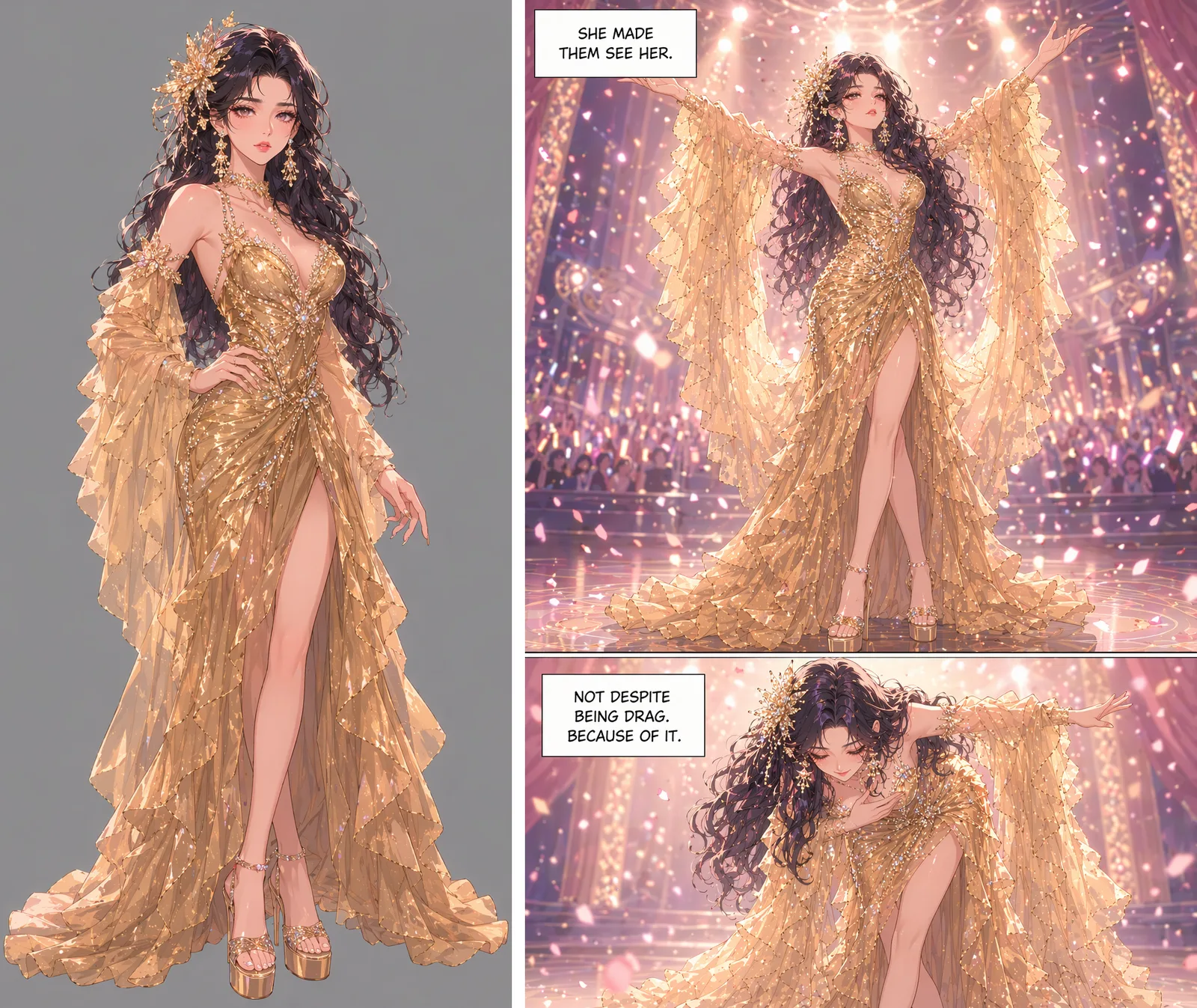
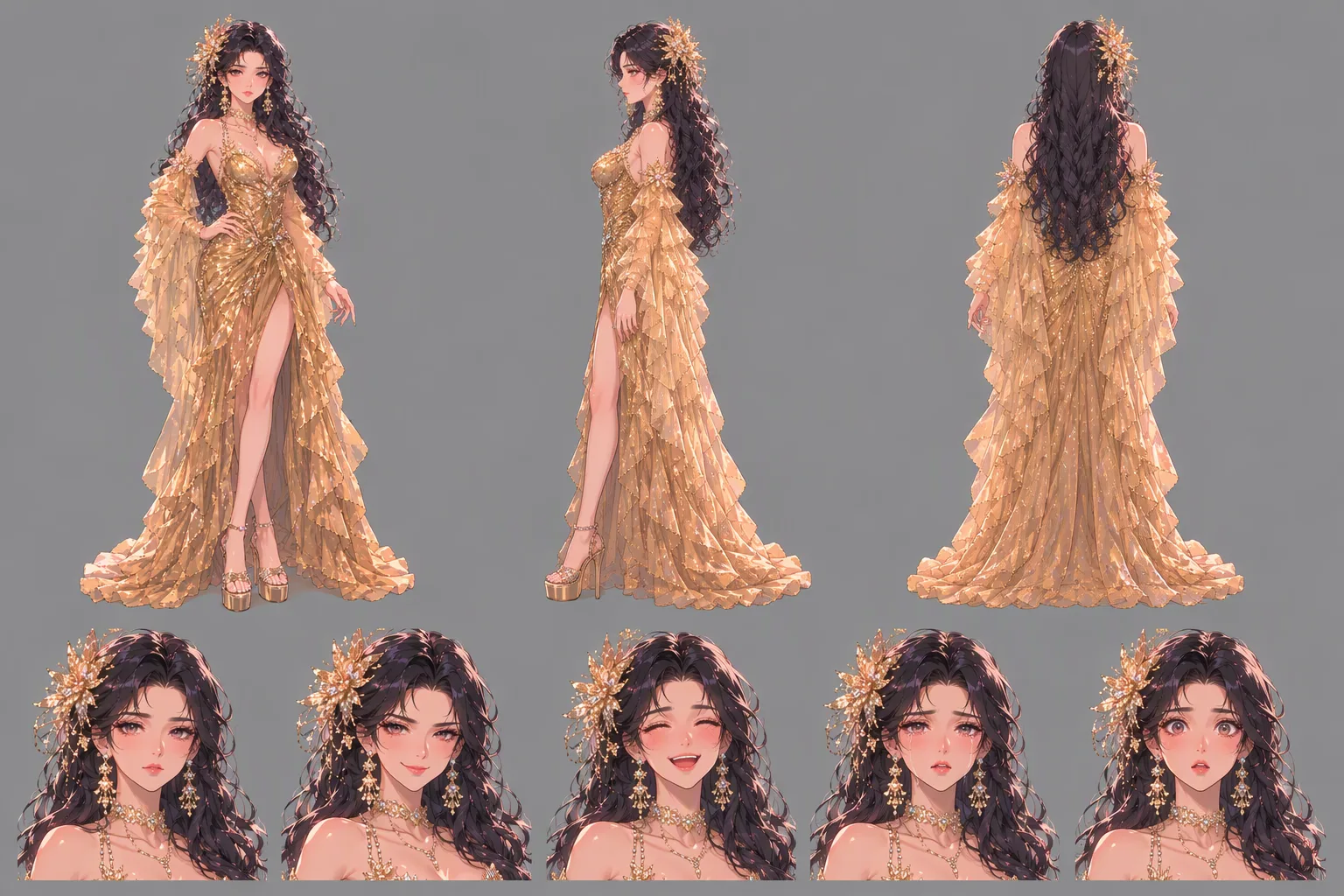
The examples below come from House Estrela, Seoul Branch, a drag competition comic on FicPal. Its pages were drawn from reference images of its lead, Yoon Ha-rin. Set a page beside its reference and you can see what each part of a sheet does, and what happens when one is missing.
What a reference sheet is for
A comic draws the same person hundreds of times, from new angles and in new light, and each drawing is a new chance for something to drift. The sheet stays fixed. When a page is finished, you hold it beside the sheet and ask one question: does this match?
Compare with the sheet, never with the page before it, or small slips copy forward. The same rule is how you keep characters consistent in AI comics.
Animation studios call this a model sheet, and a drawing that strays from it is "off-model". Comic artists say reference sheet, character sheet or ref sheet. A turnaround sheet and an expression sheet are two parts of the same page.
What goes on a reference sheet
The full figure, shoes included
Draw the character head to toe, standing straight, in plain even light, so their proportions and base colors are easy to read. Write their height next to it.
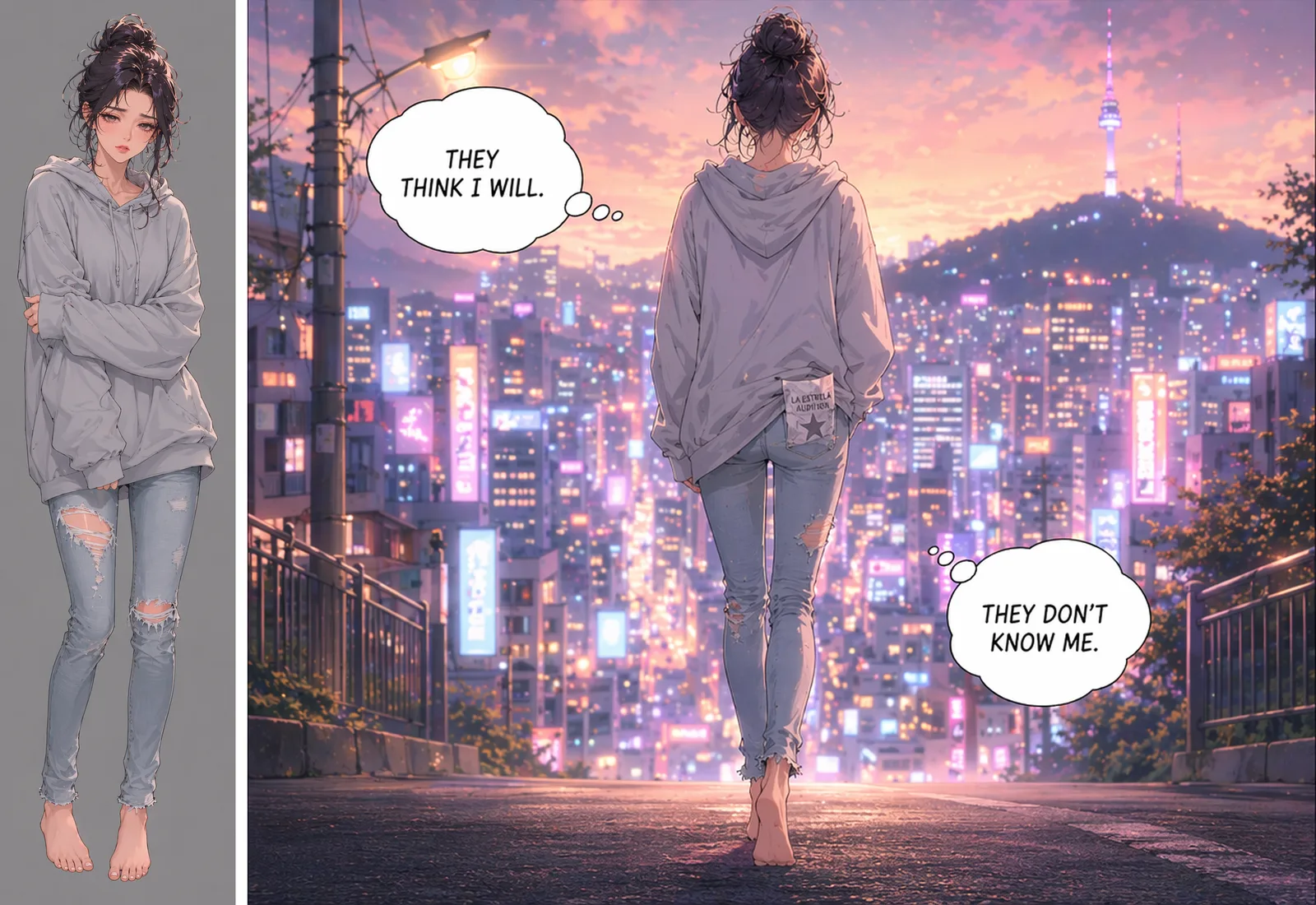
Whatever the figure leaves out, the pages will guess at or copy literally. Ha-rin's off-stage reference shows her barefoot, so in Chapter 1 she walks barefoot through an airport parking garage, down a rainy street and along a road above Seoul at night. Draw the shoes, the socks and the bag she always has, even if a scene rarely shows them.
A turnaround: front, side and back
A single portrait settles one angle. The first time a scene turns her around, someone has to invent the back of that gown, and every later page has to agree with that first guess.
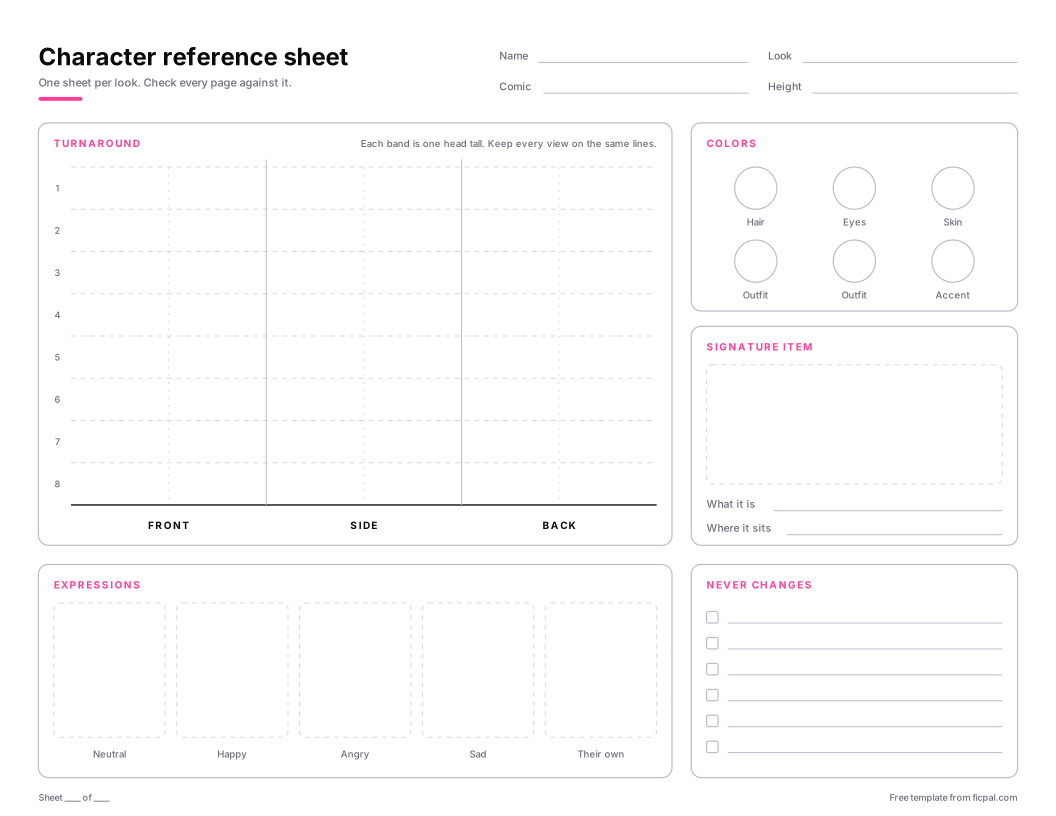
A turnaround settles it in advance: front, side and back at the same size, feet on one baseline, with guide lines running across all three so the waist and knees sit at the same height in every view. Check which side things are on, too. A hair ornament worn on her right shows on the left of the front view and on the right of the back view.
Faces and expressions
Faces drift most when a character cries or shouts and their features stretch. Add a row of head-and-shoulders close-ups: a calm face plus the four or five expressions the story leans on. Ha-rin's story swings from fierce to fragile, so her row above includes a stage smile, a laugh and tears.
Keep the eye shape, nose and jaw the same across the row, so only the expression changes.
Colors
Add flat swatches for skin, hair, eyes and each part of the outfit, with a color code or paint name beside each one. Pages get lit by stage lights, sunsets and neon, so the sheet, drawn in plain light, records the true colors. Ha-rin's hair is black with a violet sheen, which is worth knowing before a pink spotlight hits it.
One signature item
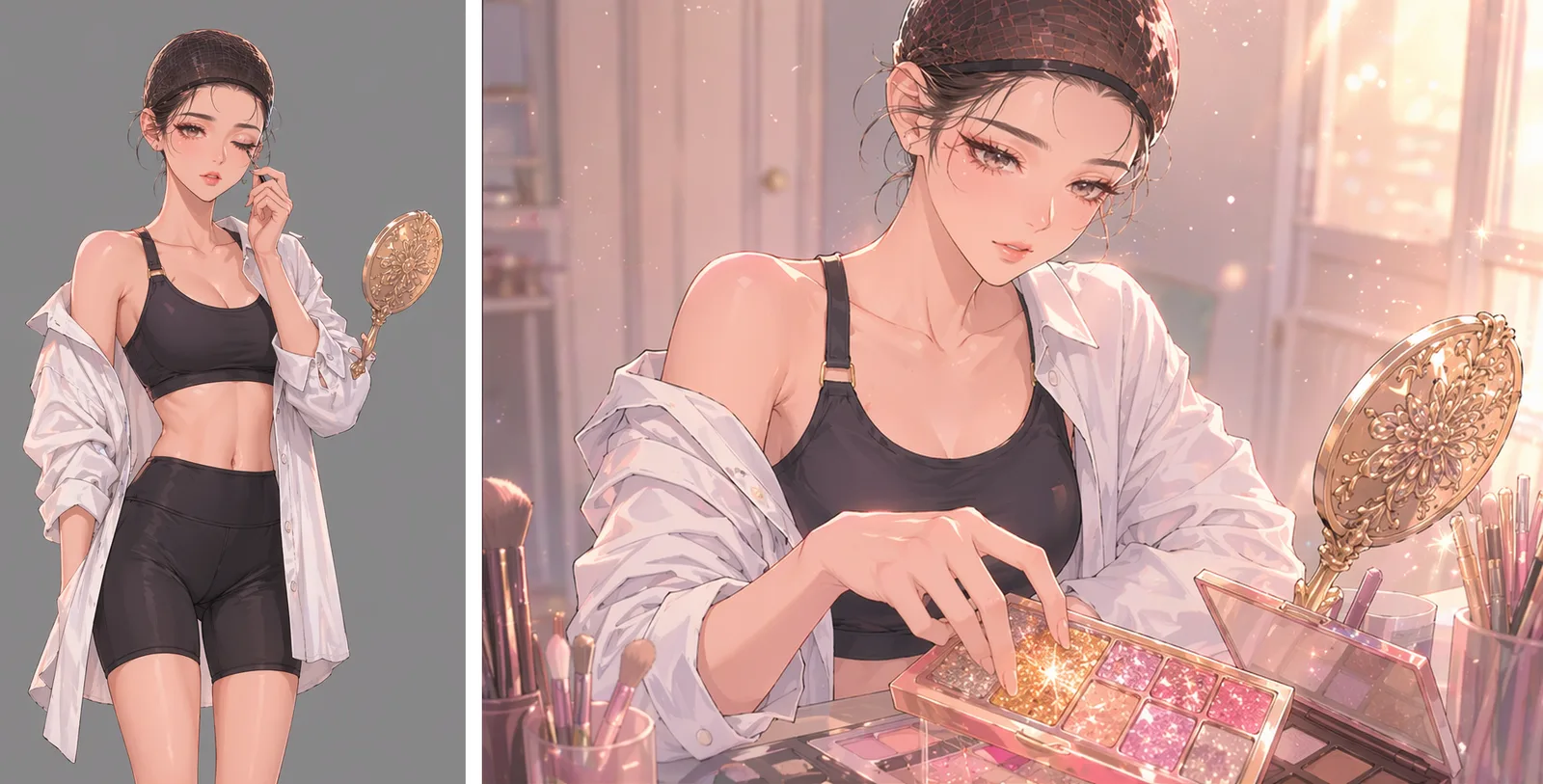
Give each look one object that identifies it at a glance, and note where it sits and which hand holds it. Ha-rin's rehearsal reference carries an ornate gold hand mirror, and the same mirror sits on her table on both rehearsal pages of Chapter 3. A reader scanning a busy panel looks for that object, so a missing or changed one stands out.
Make one sheet per outfit
One sheet can't hold every look. Ha-rin has three, and below the neck they share almost nothing: a hoodie, ripped jeans and a messy bun off-stage, a wig cap and practice clothes at rehearsal, and a gold gown with a long curly wig on stage. Her face changes too, from bare and tired to fully made up.

Give each look its own sheet, and keep a short list of what never changes across all of them: eye color, the jaw, a scar or a mole, height. Copy that list onto every sheet, so a new outfit can't quietly bring a new face with it.
FicPal works the same way. Before it draws any page, it makes one reference image per character look and draws each page from the ones that scene needs. You can't upload your own art, so you describe the cast in words in your premise. If a sheet comes out wrong, the editor's Cast tab lets you change the description and redraw it. How to make a comic with AI shows what that premise should name.
A free reference sheet template and a prompt
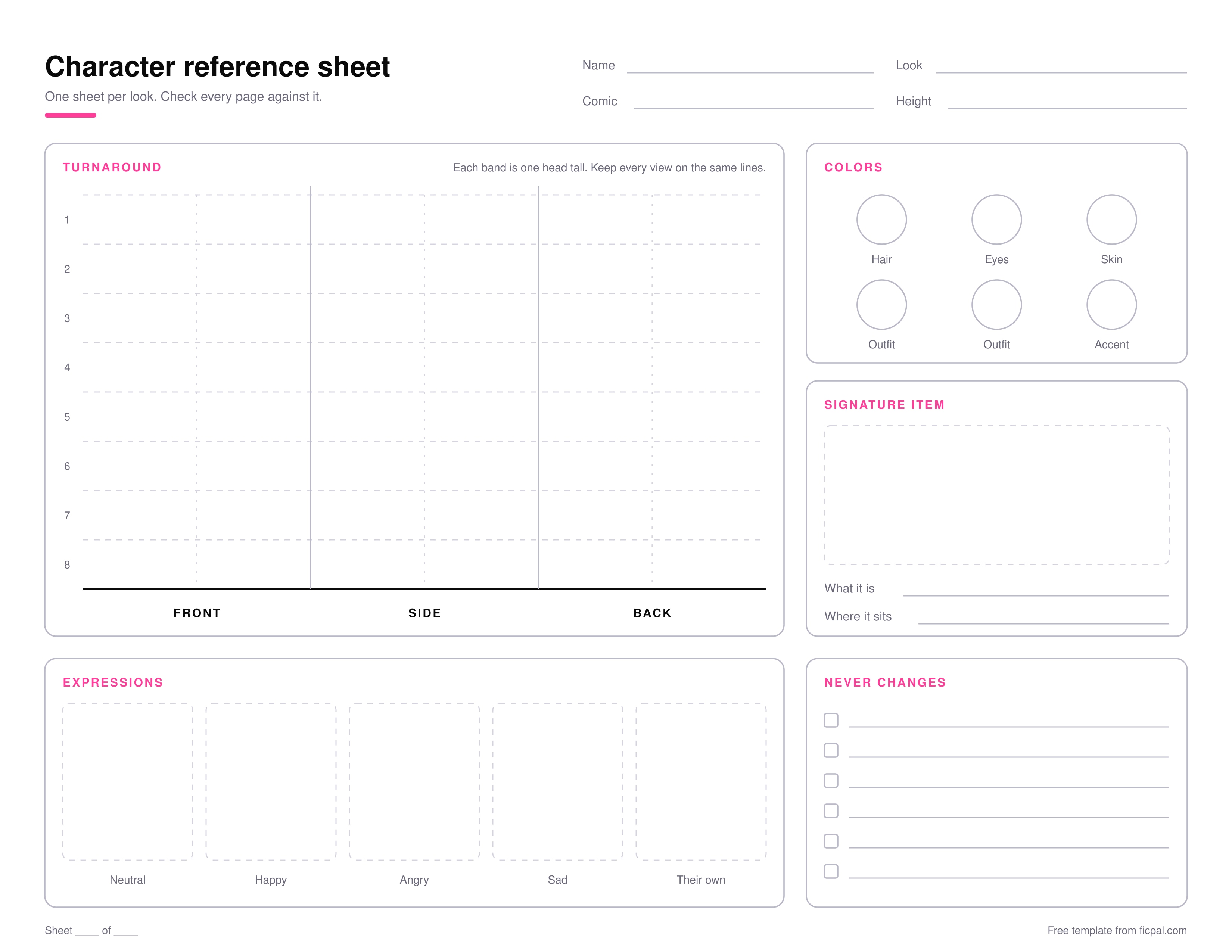
The template has head-height guide lines across the front, side and back views, five expression boxes, six color swatches, a box for the signature item and a list of what never changes. Print one per look, or draw over it in any app. If someone else draws the pages, send the sheets along with a script laid out panel by panel.
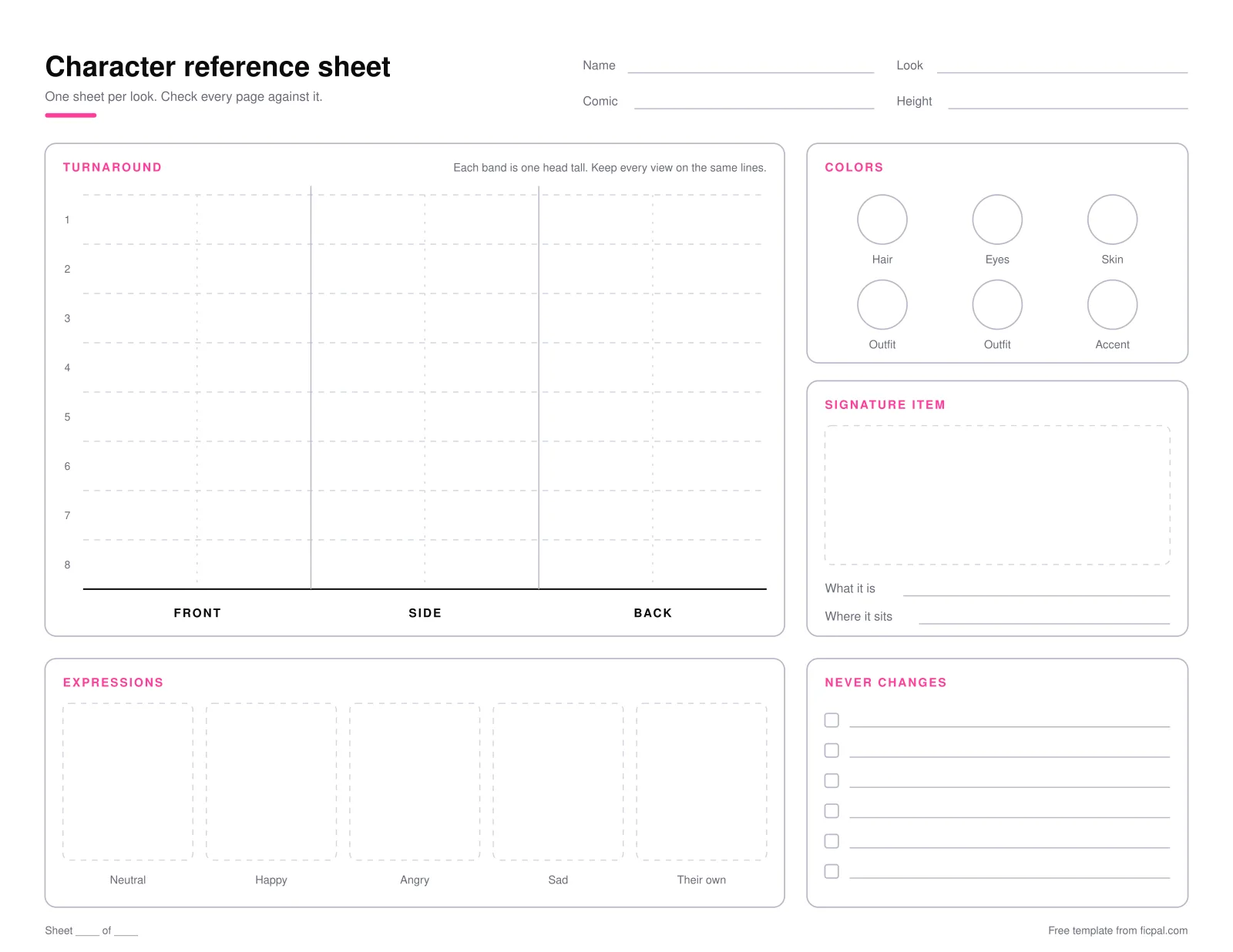
Download the template as an SVG to print at any size or open in a vector app, or as a large JPG (3300 by 2550 pixels) for Procreate, Clip Studio Paint and other drawing apps.
If you make the sheet with an AI image tool, start from one finished portrait you like and ask for every view in a single image, so they all come from the same picture. Then check the sheet itself before page one. If the side view lost an earring or the back view moved the hair ornament, fix it first, because every page will copy the mistake.
PromptCharacter sheet prompt
Character reference sheet of the person in the attached image, in exactly the same art style, line work and coloring as the image.
Same face, hair, outfit and colors in every view. Add nothing, remove nothing.
Outfit: [one line naming every piece, including shoes, jewelry and the signature item].

Wide horizontal layout on a plain light gray background.
Top two thirds: three full-body standing views side by side at the same scale, feet on one shared baseline, heads at the same height. Left: front view. Middle: side view in profile. Right: back view.
Bottom third: one row of five head-and-shoulders close-ups of the same face, same size: calm, happy, angry, sad, [their signature expression].

Clean, even lighting. No text, letters, labels, arrows, guide lines, boxes or color swatches anywhere in the image.
You don't need to draw to make a comic people finish, but you do need to decide what the reader sees, and the sheet is where those decisions go. If drawing isn't your route, making a comic without drawing compares the other ways in.
On FicPal, the 80 credits you get at signup currently cover your first comic, and each chapter after it currently costs 50 purchased credits.
Questions people ask.
What is an OC reference sheet?
OC stands for original character, so an OC ref sheet is a reference sheet for a character you invented. It's what artists usually ask for when you commission art of that character. It holds the same parts as any other sheet, plus a note on anything the artist must not change.
Do side characters need a reference sheet?
Anyone who appears on more than a few pages does. A side character can get a lighter sheet: one full-body front view, one face and their colors. Extras who appear once don't need one.
Should a reference sheet be in color if my comic is black and white?
Draw the figures in the comic's own style, so line art for a black and white comic. Still record the colors as swatches, because covers and promo art usually need them.
What size should a reference sheet be?
Big enough that a face in the expression row is easy to read. Letter or A4 turned sideways works for print, and about 3,000 pixels wide works on screen.
Make one yourself
Give your characters a comic
Describe your cast and their looks in a premise. FicPal makes a reference image for each look before it draws Chapter 1.