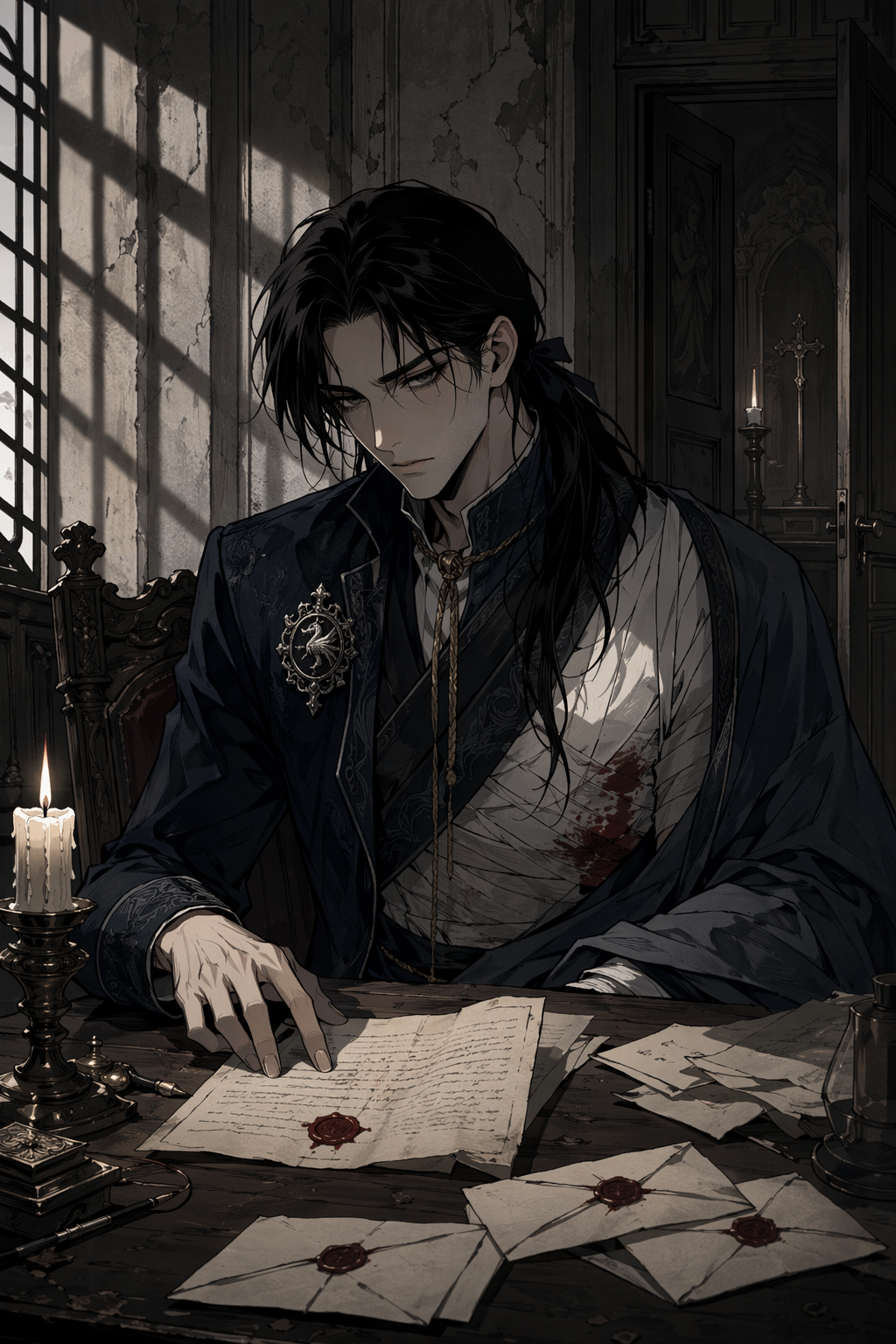
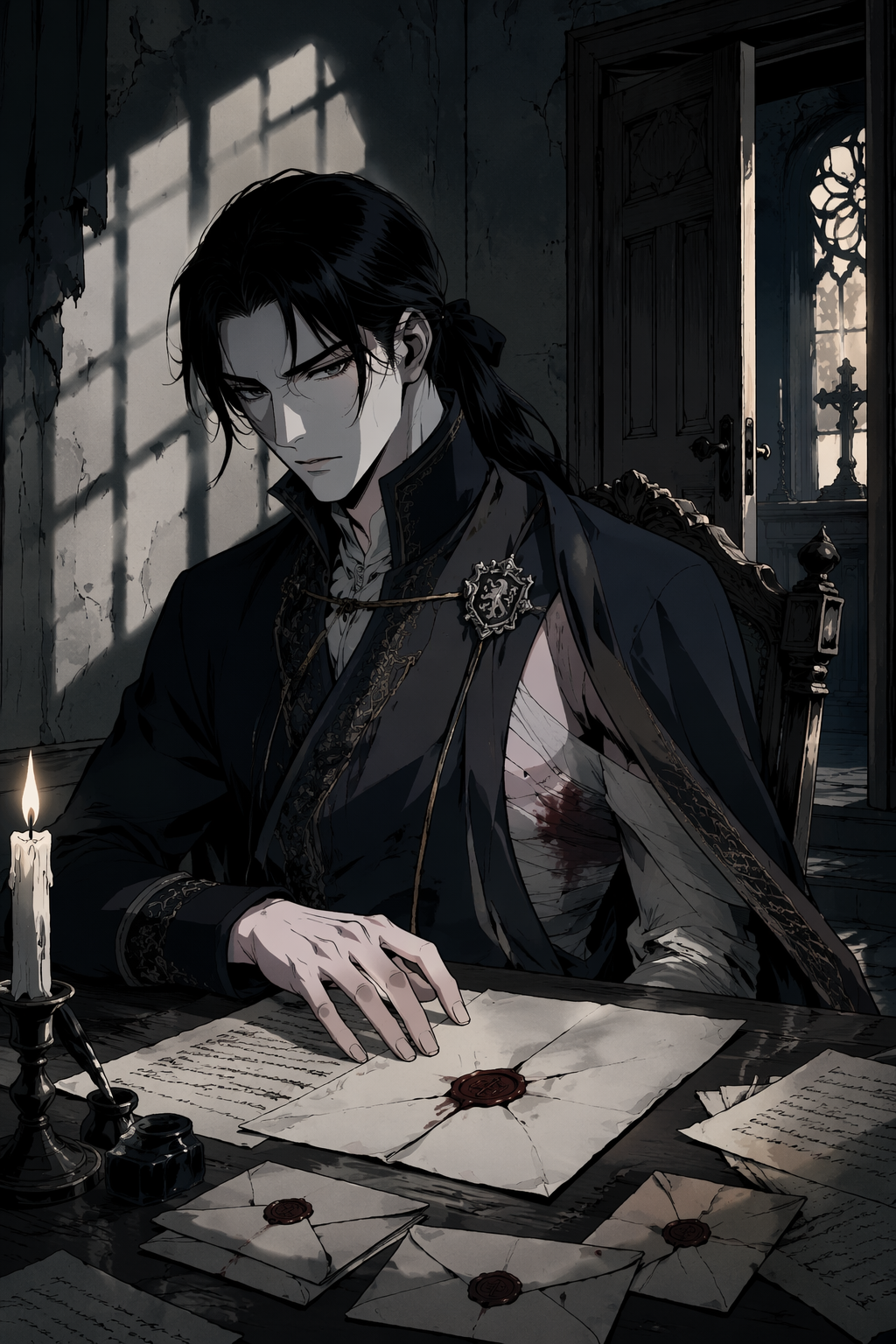
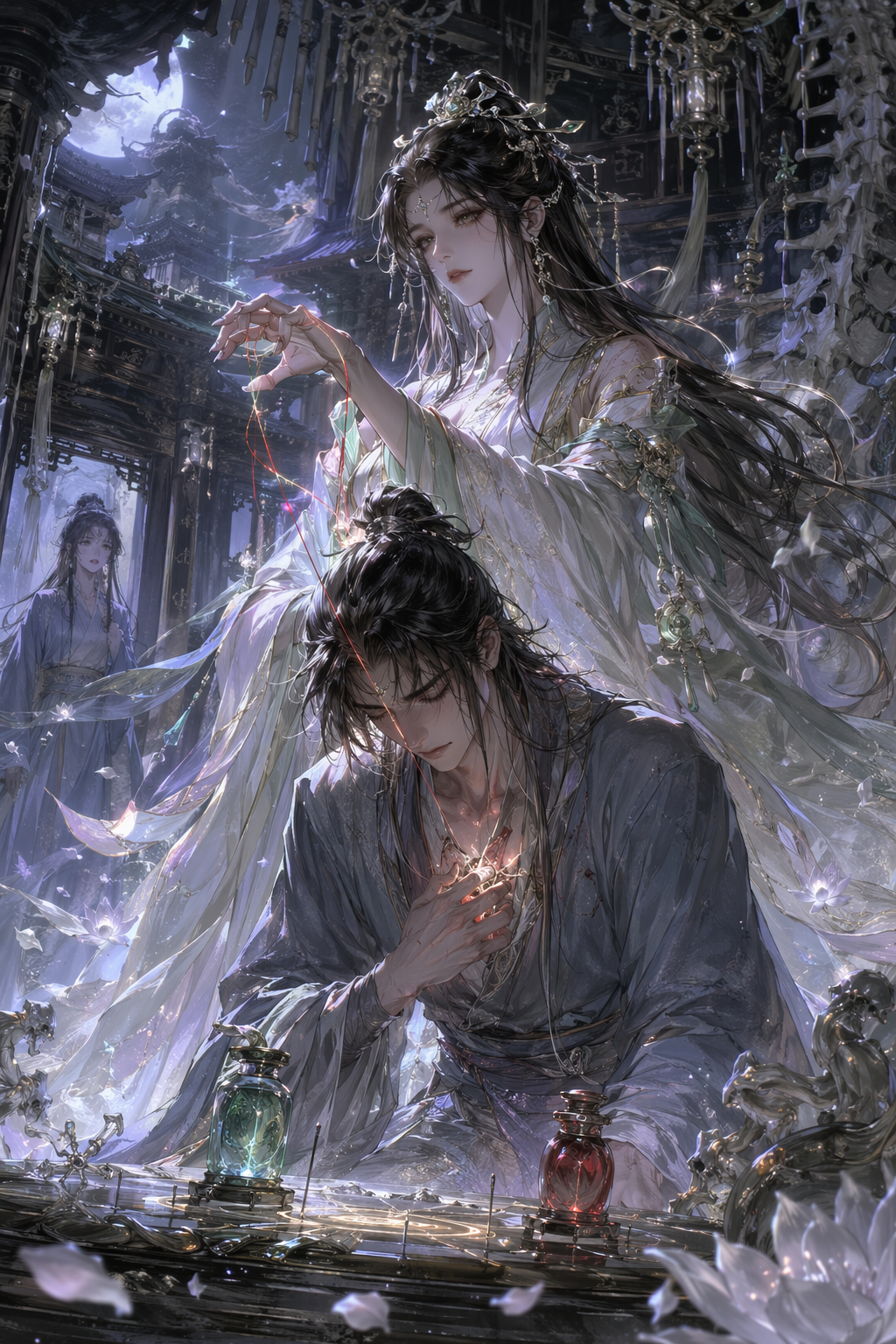
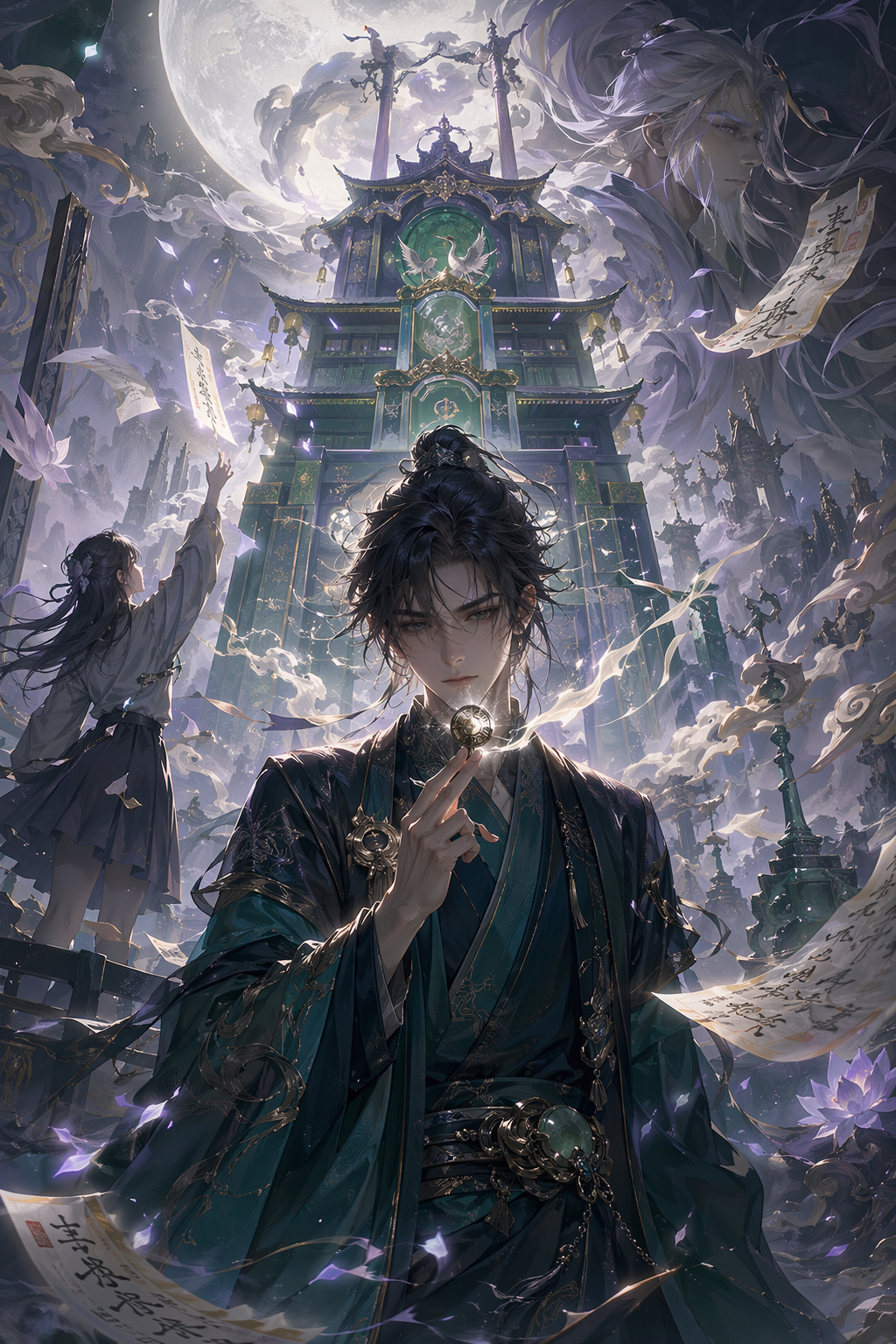
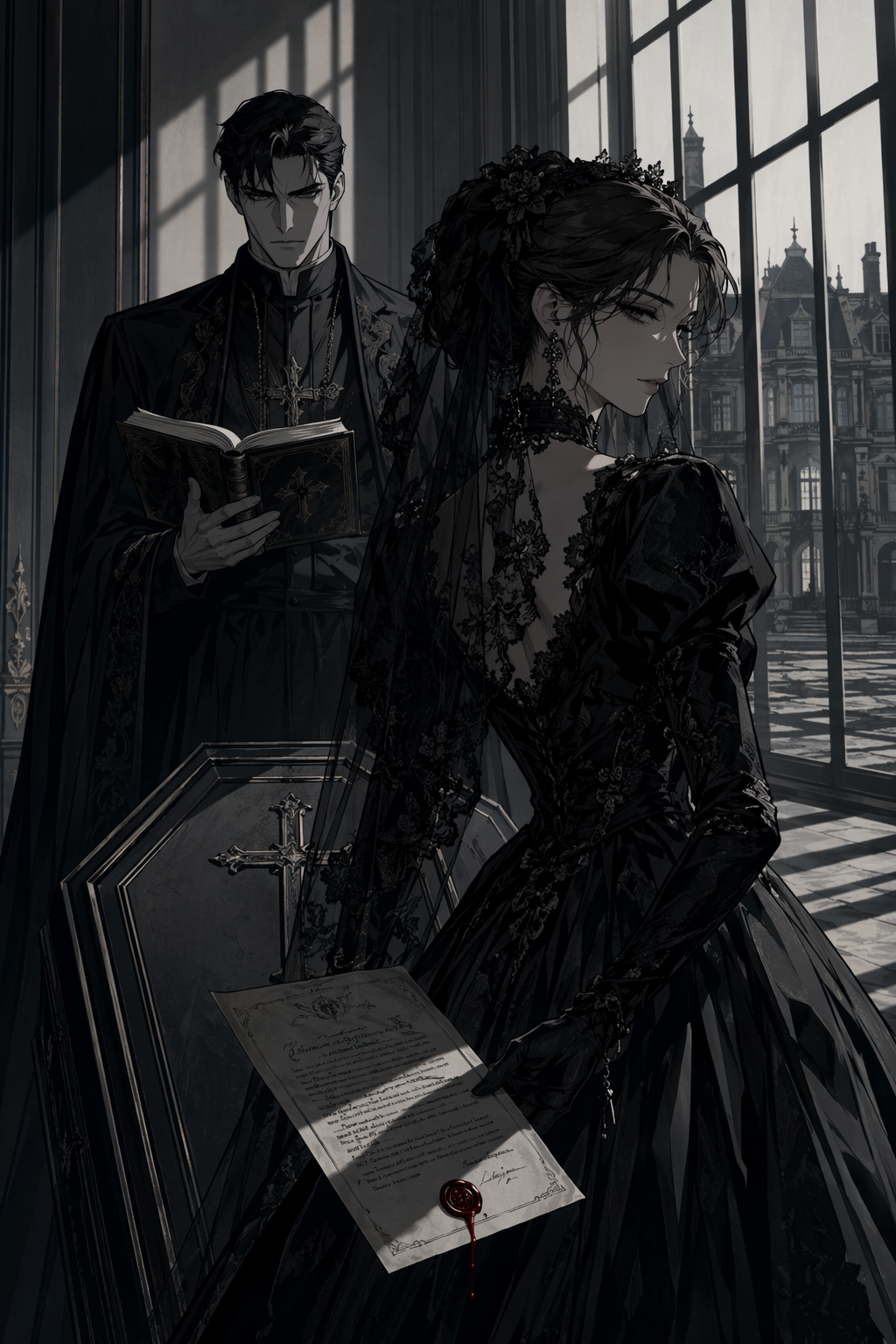
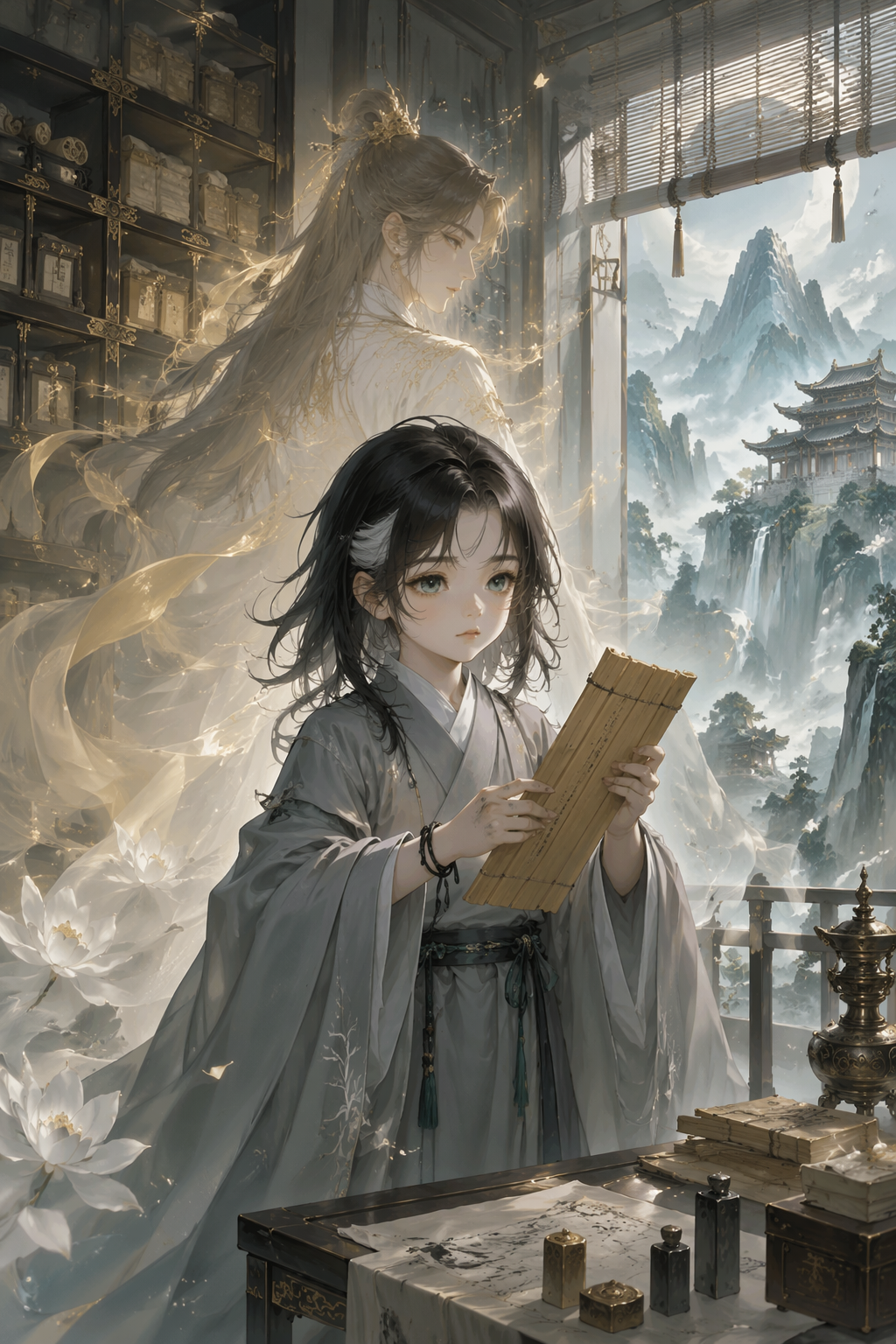
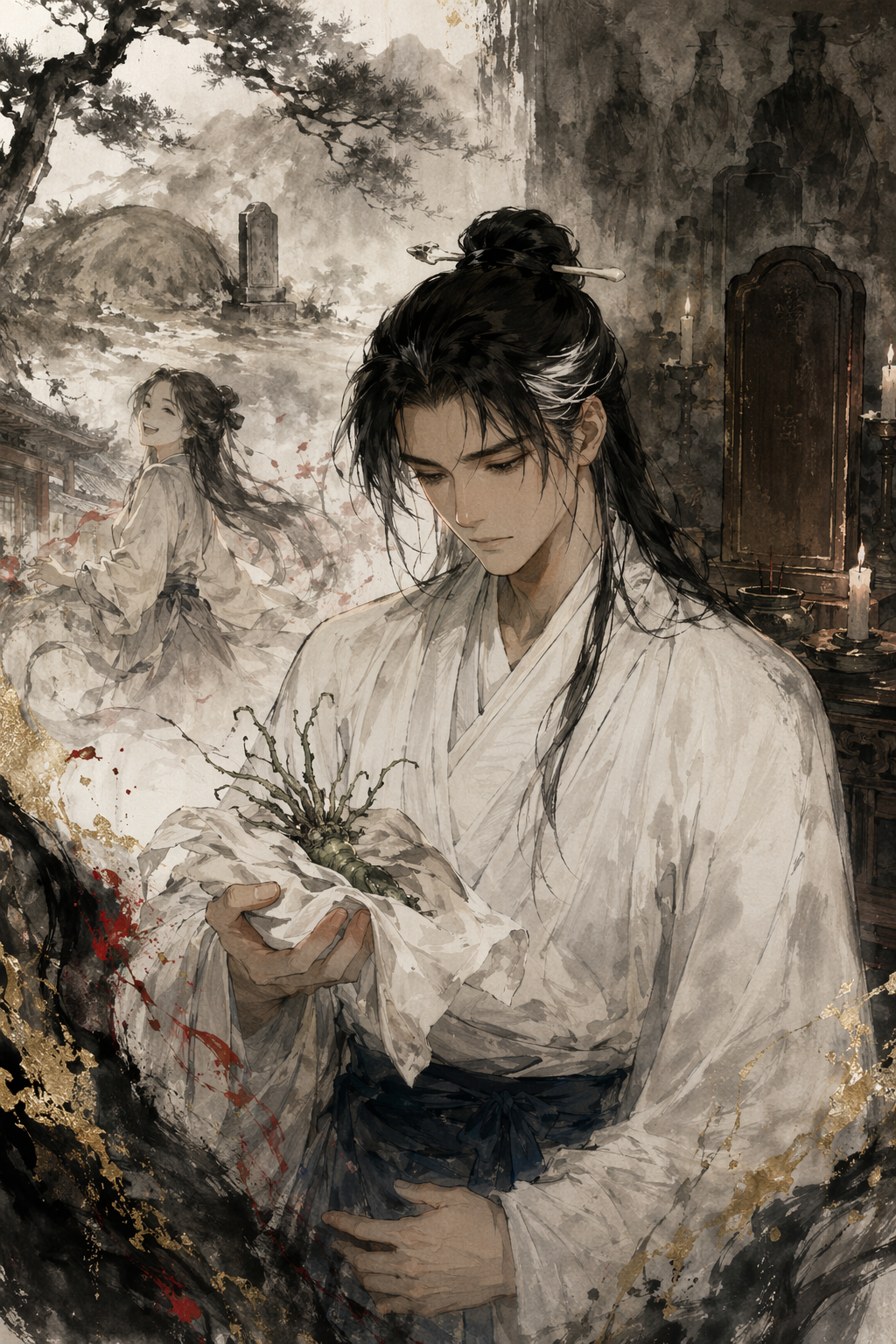
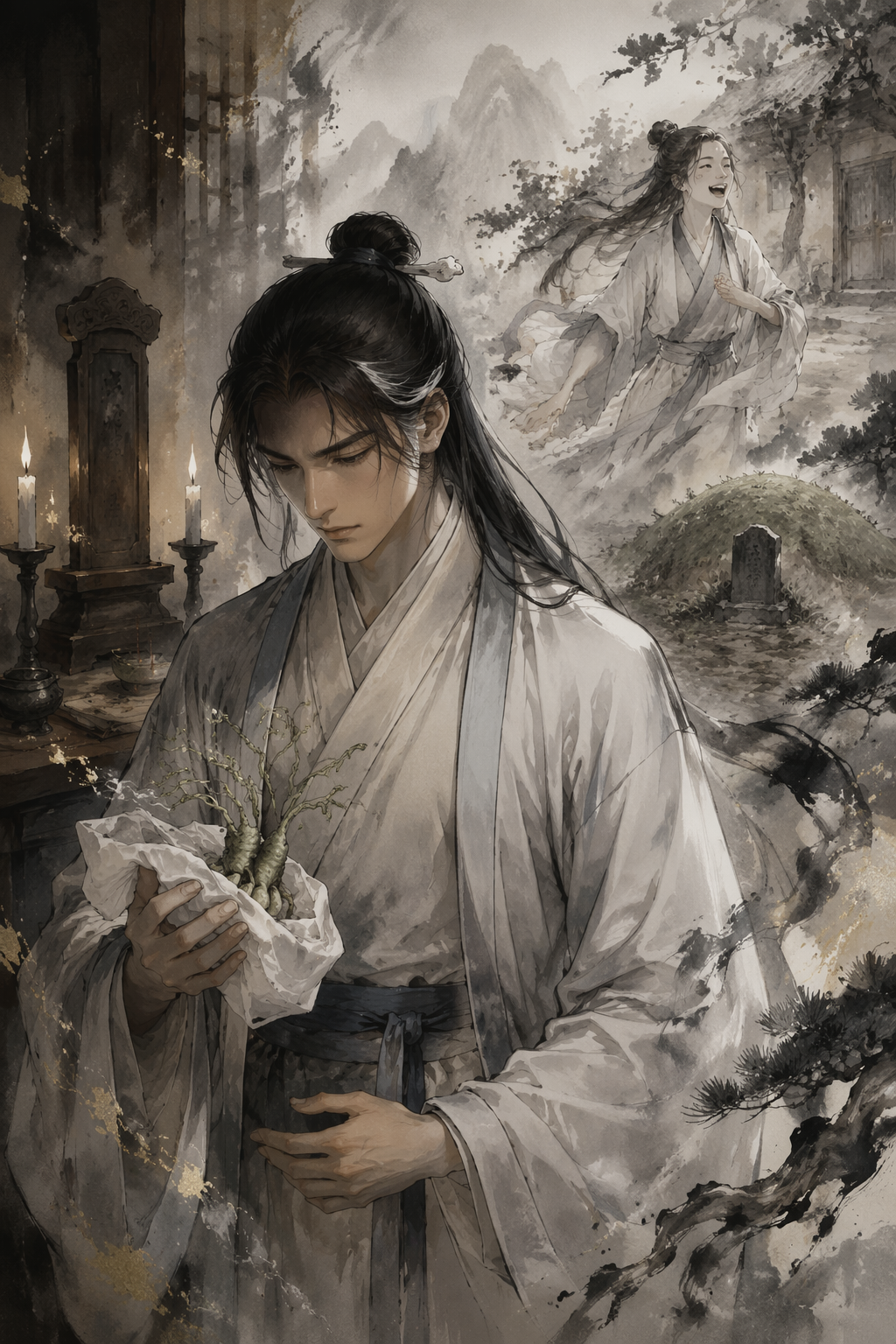
Cha Joon-Ho transmigrated into a fallen noble's body and started running the genre playbook — right up until the family lawyer read aloud a will left by the previous soul, who had also transmigrated, and who had predicted every single move Joon-Ho was about to make.
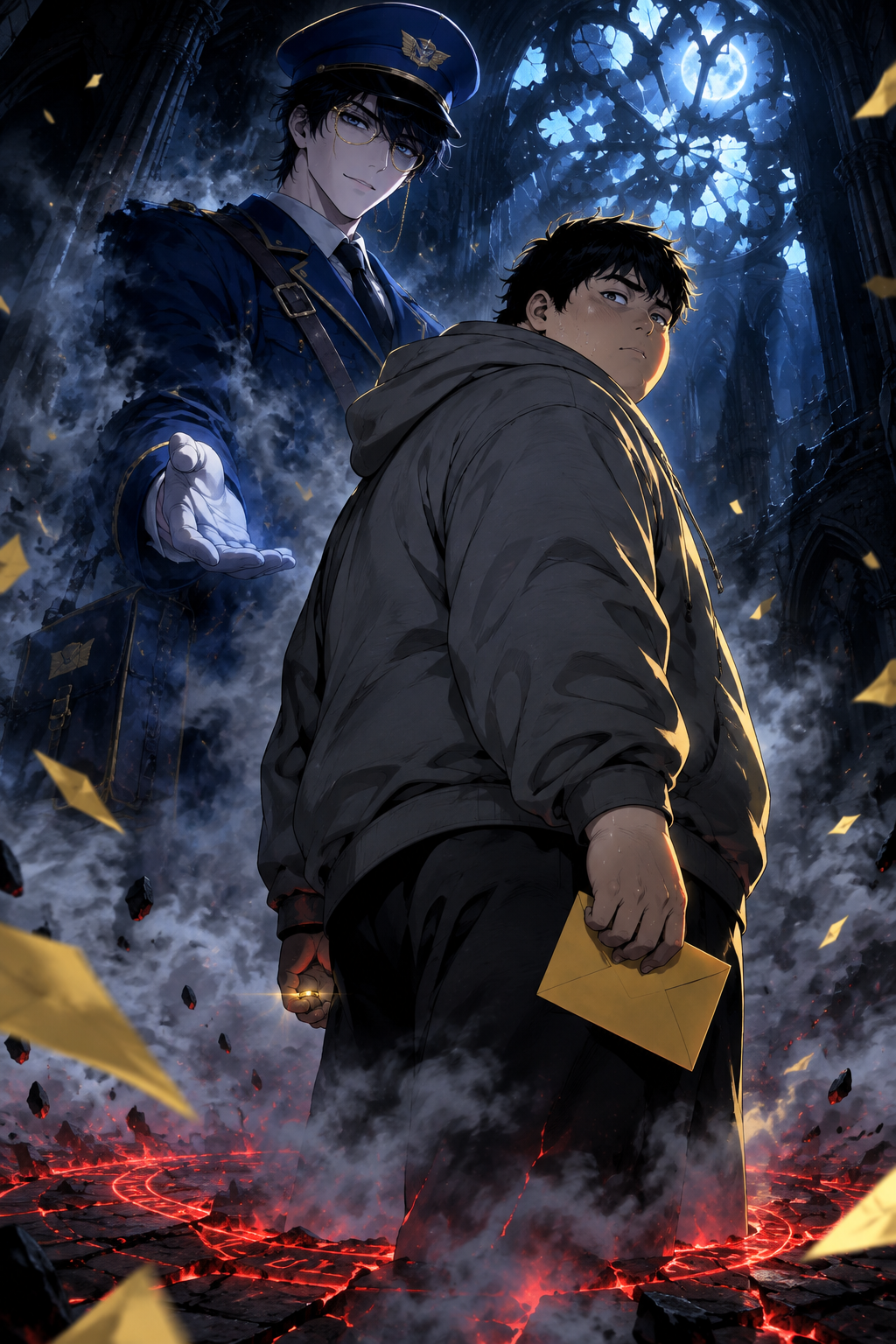
Cha Joon-Ho, a dead-end Korean salaryman, wakes inside the body of the disgraced youngest son of Marquis Renatus and immediately treats the situation like a transmigration novel he has already solved. The manor is drowning in debt, the servants are suspicious, and Joon-Ho is certain his genre-savvy comeback arc has begun. Then a family lawyer reads him a will addressed to "the next soul in residence"—written by the previous transmigrator who occupied the same body and predicted Joon-Ho's every clever move. Joon-Ho tries to reject the script, only to be stabbed exactly as the will warned. Bedridden and furious, he opens the final envelope and discovers the real horror: he is not the second occupant but one link in a chain of recycled souls, each leaving instructions for the next. In the end, Joon-Ho begins writing his own addendum, because survival and complicity are the same hand holding the pen.
Cha Joon-Ho, a dead-end Korean salaryman, wakes inside the body of the disgraced youngest son of Marquis Renatus and immediately treats the situation like a transmigration novel he has already solved. The manor is drowning in debt, the servants are suspicious, and Joon-Ho is certain his genre-savvy comeback arc has begun. Then a family lawyer reads him a will addressed to "the next soul in residence"—written by the previous transmigrator who occupied the same body and predicted Joon-Ho's every clever move. Joon-Ho tries to reject the script, only to be stabbed exactly as the will warned. Bedridden and furious, he opens the final envelope and discovers the real horror: he is not the second occupant but one link in a chain of recycled souls, each leaving instructions for the next. In the end, Joon-Ho begins writing his own addendum, because survival and complicity are the same hand holding the pen.
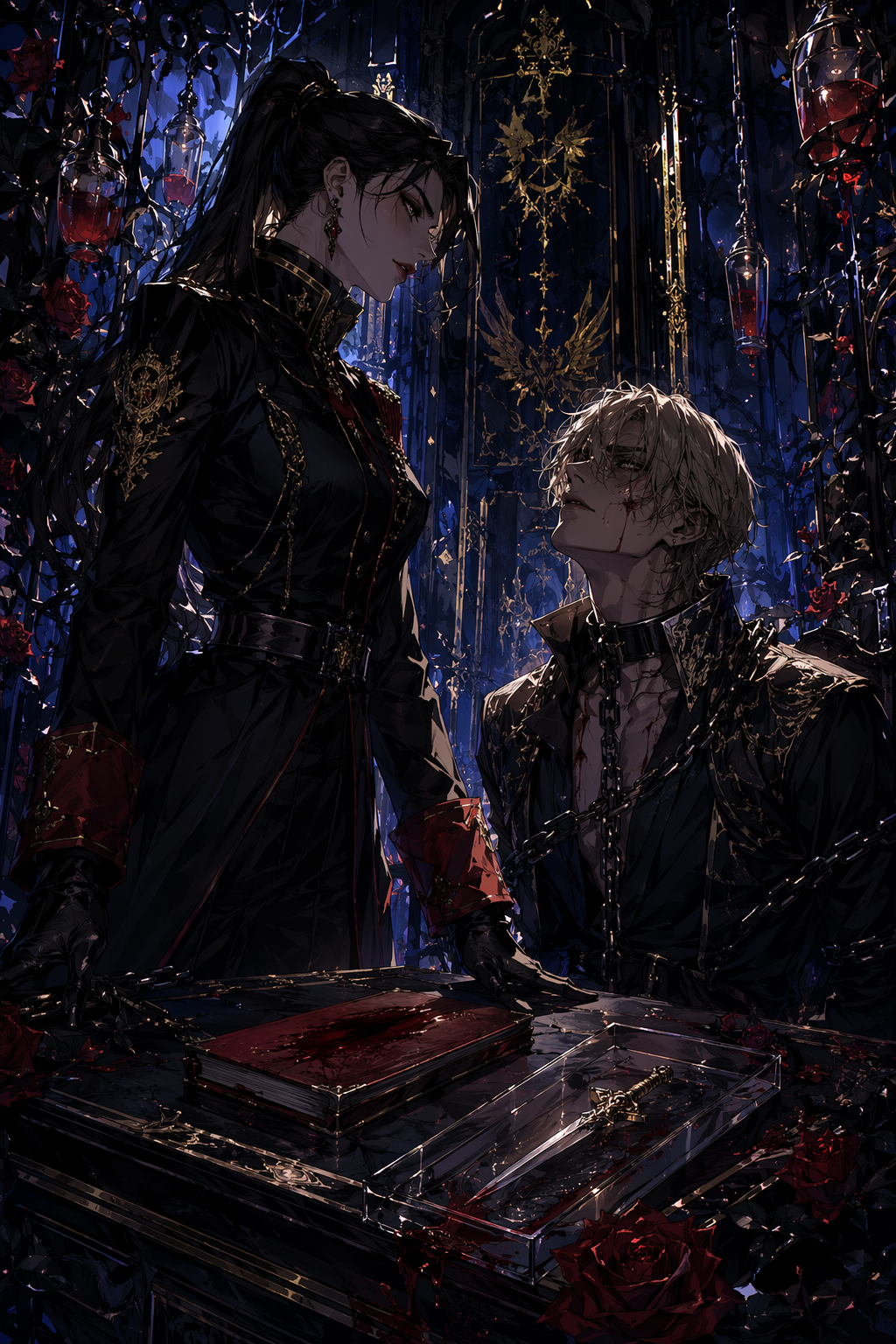
Yelena Otzar, the crown’s feared First Question, has eleven days to break a chained crown prince accused of regicide or watch her indebted family sold to the silver mines. Prince Cassian will give her the truth only under one condition: each night, he may ask her one question she must answer truthfully if she answers at all. As Yelena’s interrogation of Cassian becomes Cassian’s interrogation of Yelena, the perfect servant of the throne begins to suspect the case was designed not to reveal a murderer, but to bury one.
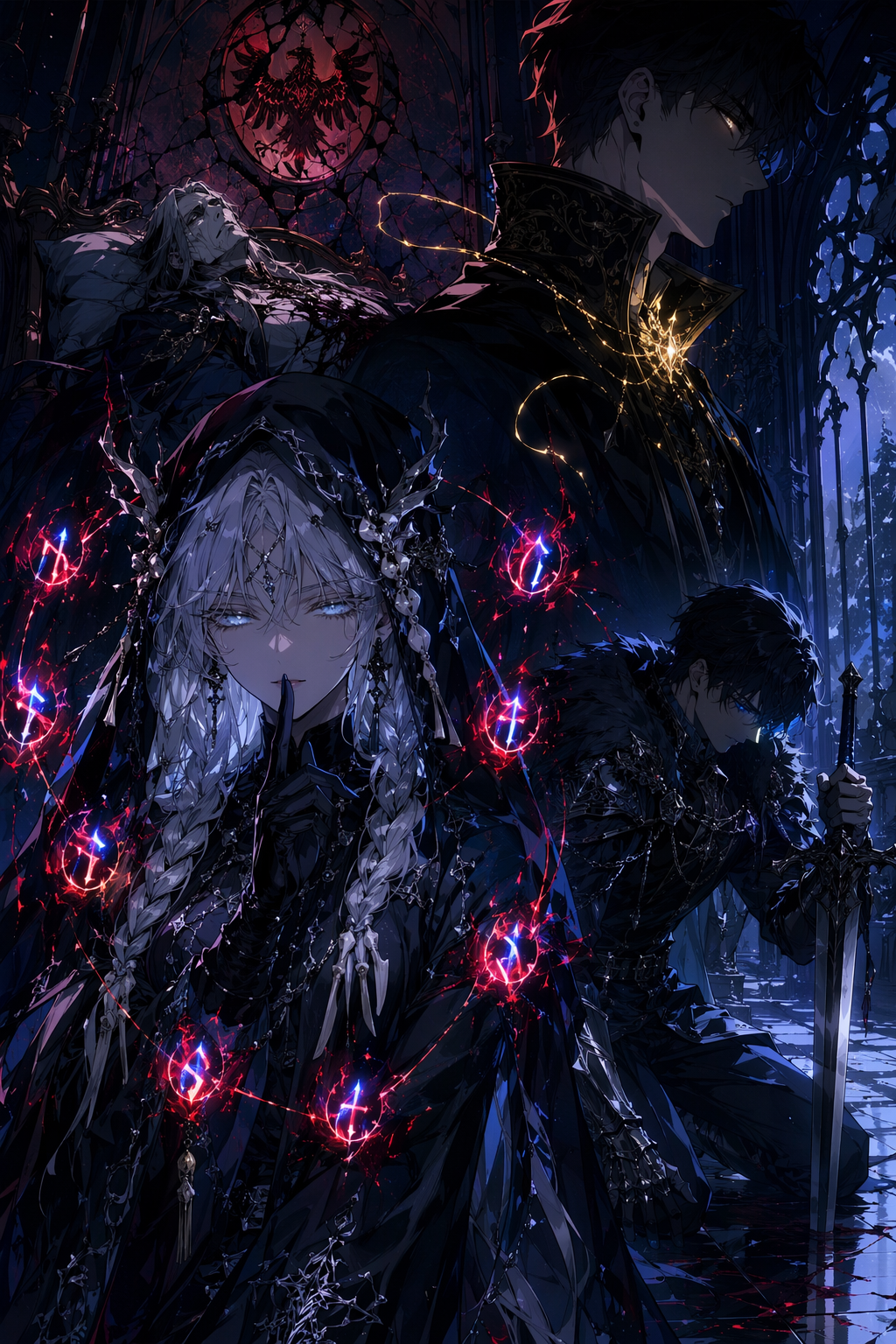
In the southern empire, a noble house survives only when its dying head whispers the family's True Name to a single witness. If the chosen heir sleeps before hearing it, the name is lost and the house is dissolved. Sirin of the Hollow Spring, the last unburned Name-Witch of the ice frontier, is summoned under imperial protection to keep Lord Alderic's exhausted heir awake while the lord delays his choice. Sirin has seven wakefulness syllables, each worth one hour and impossible to reuse on the same person. She can hear the True Name humming in noble throats, but she cannot speak or write it without burning her tongue to ash. On arrival, she discovers the impossible: House Hollow Bell's True Name is not humming in the dying lord, but in Lucien, the spare son. As Casimir, the official heir, survives revolts, impossible tests, and his father's grief, he begins courting Sirin as a bargain and slowly becomes the one person who refuses to force her truth from her. With every syllable spent, Sirin must choose whether to preserve her monastery, save one brother, doom the other, or expose a law of inheritance that may already be broken.
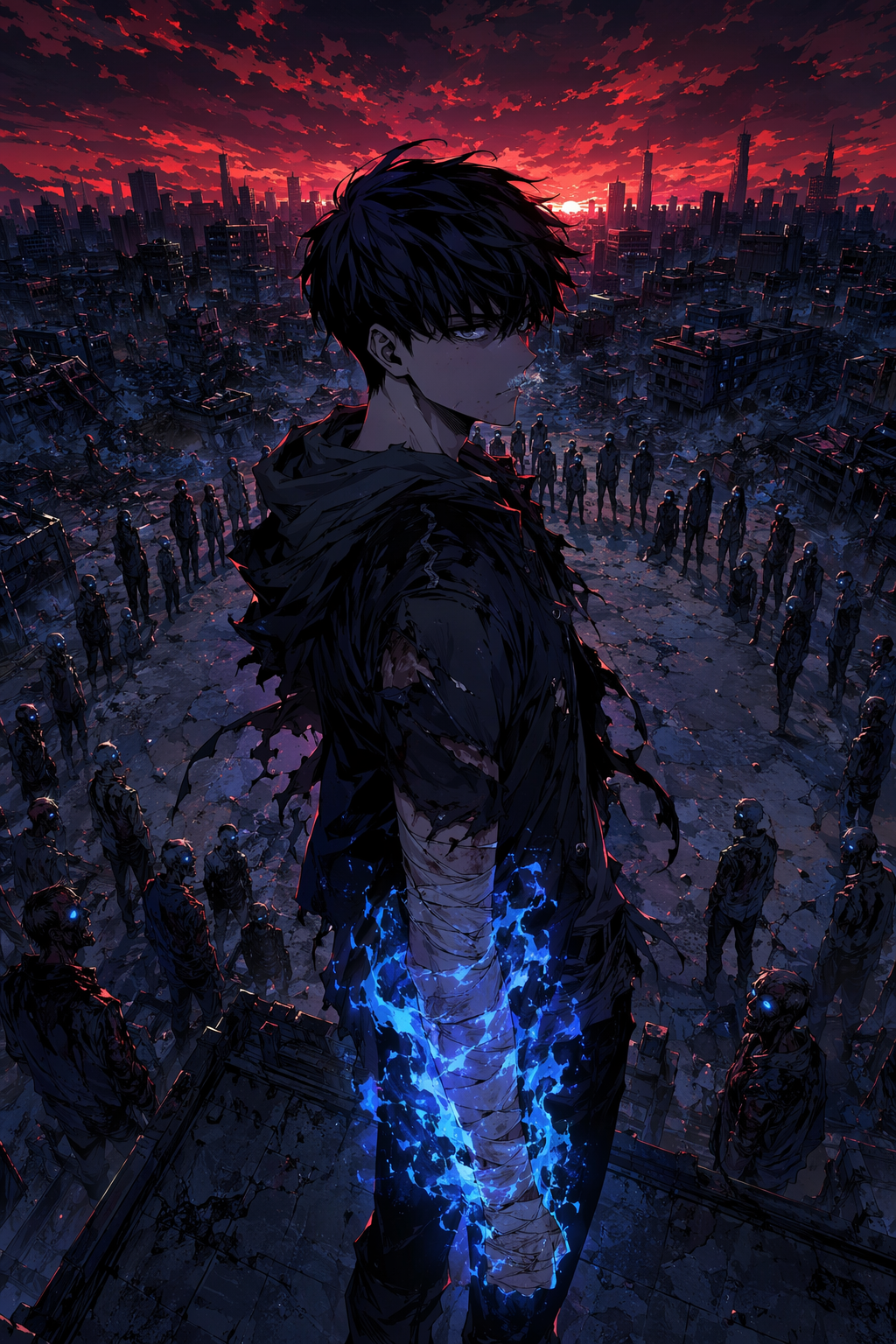
The bitten boy who walked out to die alone is the first human to absorb the virus instead of being eaten by it — and the friends who gave his antidote to a liar are now lying to a commander who is about to ask where he is.
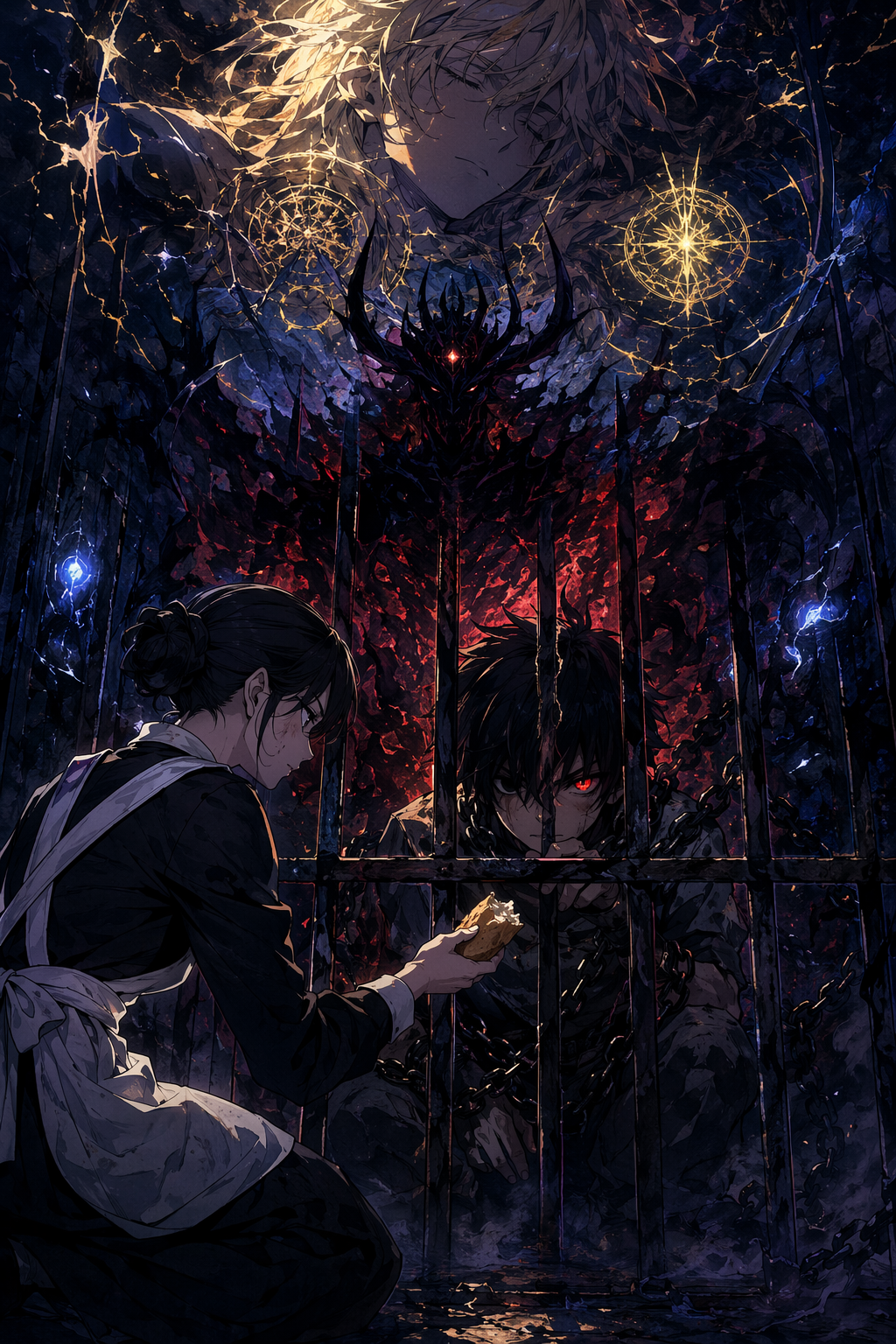
Burned-out counseling intern Cha Eunha falls asleep after rage-reading a fantasy tragedy and wakes as a nameless palace maid cleaning the royal dungeon. The prisoner she finds is not the demon king yet, but fifteen-year-old Prince Lucien: half-demon, hated, starving, and five days from execution. Eunha decides the most obvious way to save the world is to stop the final boss from becoming one. Her modern therapy tactics look like forbidden magic in a medieval palace, but bread, stubborn listening, and badly explained emotional boundaries begin to reach Lucien. As Eunha uncovers the truth—that Lucien’s saintly mother sealed a war god inside him and the royal family wants to weaponize his death—she must choose between preserving the story and trusting the boy everyone abandoned. The final revelation is crueler: Eunha is not in a novel at all, but inside Lucien’s sealed mind, reconstructed from the memory of someone who once tried to help him before the real timeline collapsed. When Lucien awakens as the grown demon king on a battlefield, surrounded by heroes, he chooses not slaughter, but one impossible sentence: “Before we fight, I’d like to talk.”
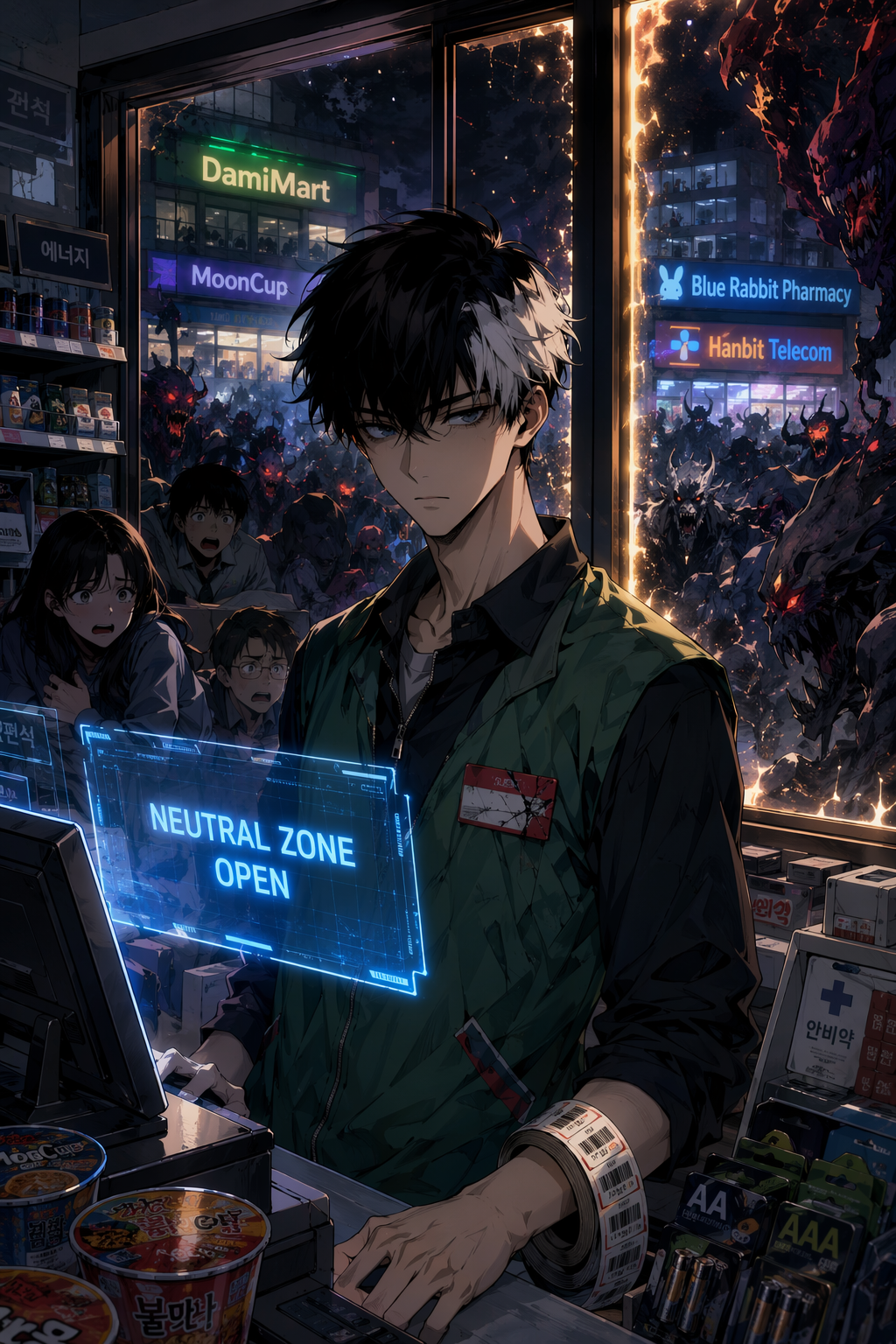
At midnight in a Seoul convenience store, high school dropout Kang Yubin becomes the unwilling manager of a Neutral Zone where no one can be harmed and every purchase costs life minutes. As monsters descend and survivors crowd the aisles, Yubin learns that keeping a store open can become a judgment on the world. He must choose between profit, survival, and the small kindnesses that make people worth saving.
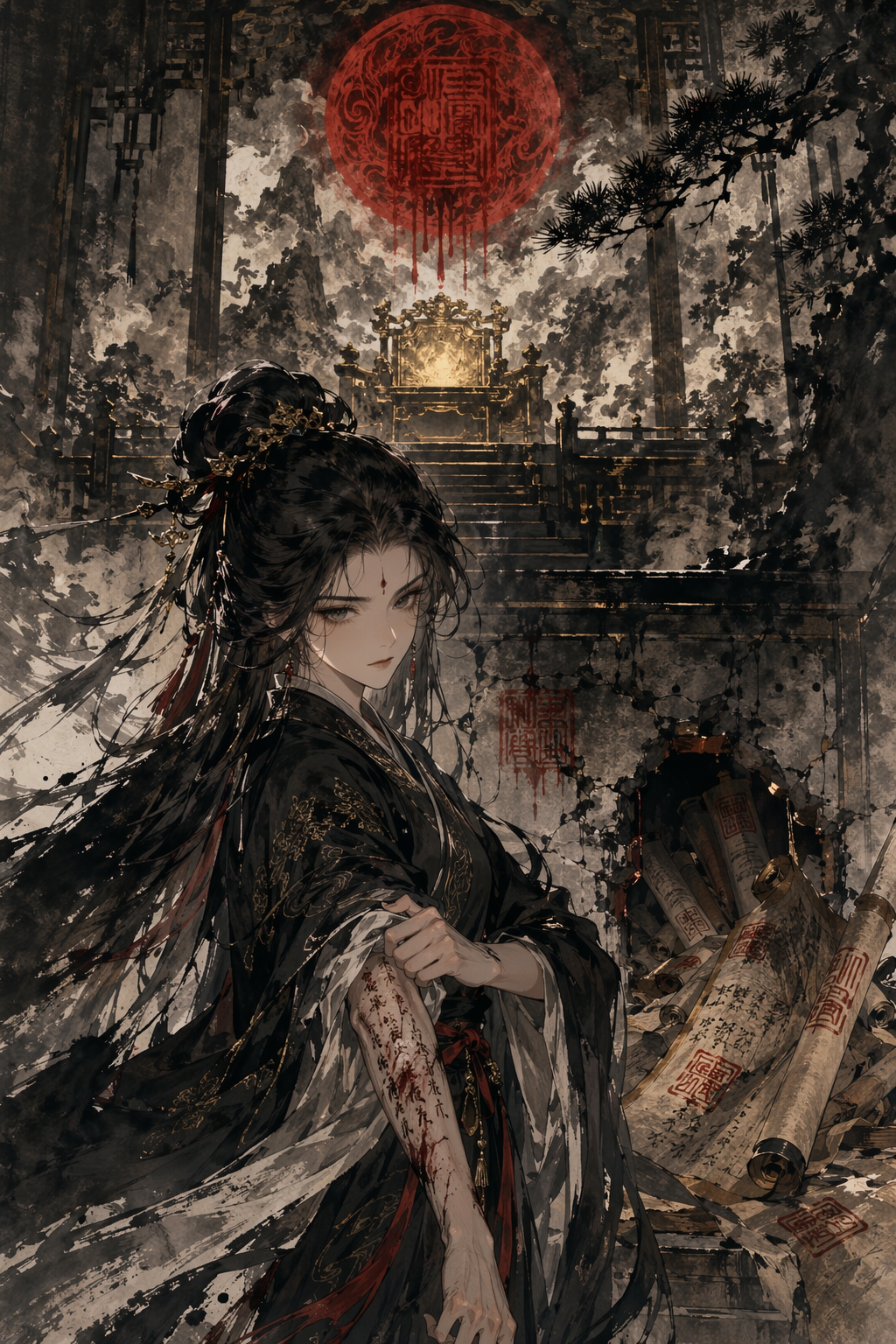
In the Hollow Throne, every imperial decree must exist in three sealed copies: palace, archive, and shrine. If the copies differ, the nearest clerk dies for treason. Bai Lihua, an eighteen-year-old fourth-rank archive clerk with perfect recall for every decree she has copied in blood, discovers a hidden fourth copy sealed inside a latrine wall. It is dated three weeks in the future, signed by a regency seal dead for sixty years, and names her as the clerk who will execute an imperial order. If she refuses to appear, her younger brother will be erased by attainder. Trapped inside the palace, unable to accuse anyone without a higher-rank sponsor, Lihua hunts illegal decrees through latrines, shrines, smoke vents, and forbidden offices, uncovering a parallel government of clerks that has ruled the empire from the walls for generations. Her dead mother was one of them. Her supervisor may be her enemy, her sponsor, or the only person trying to keep her alive. The pilot ends on execution day, when Lihua turns the court's own ritual into a public reading of the empire's hidden ledger.
At the Bone Stitch Sect, low-talent disciples survive by leasing their organs to geniuses. Yi Wen leased his heart at eleven to save his family from debt; now it beats for Ning Que, the sect master's brilliant daughter, and can be recalled if he disobeys. When Ning Que asks him to poison her beloved cousin, Yi Wen discovers the order is a trap: obeying makes him a murderer, refusing kills him and condemns his younger sister as the next donor. Across five tense chapters, Yi Wen uses alchemy, memorized recall-meridian patterns, and perfect false obedience to search for a path through a hierarchy that owns his heartbeat.
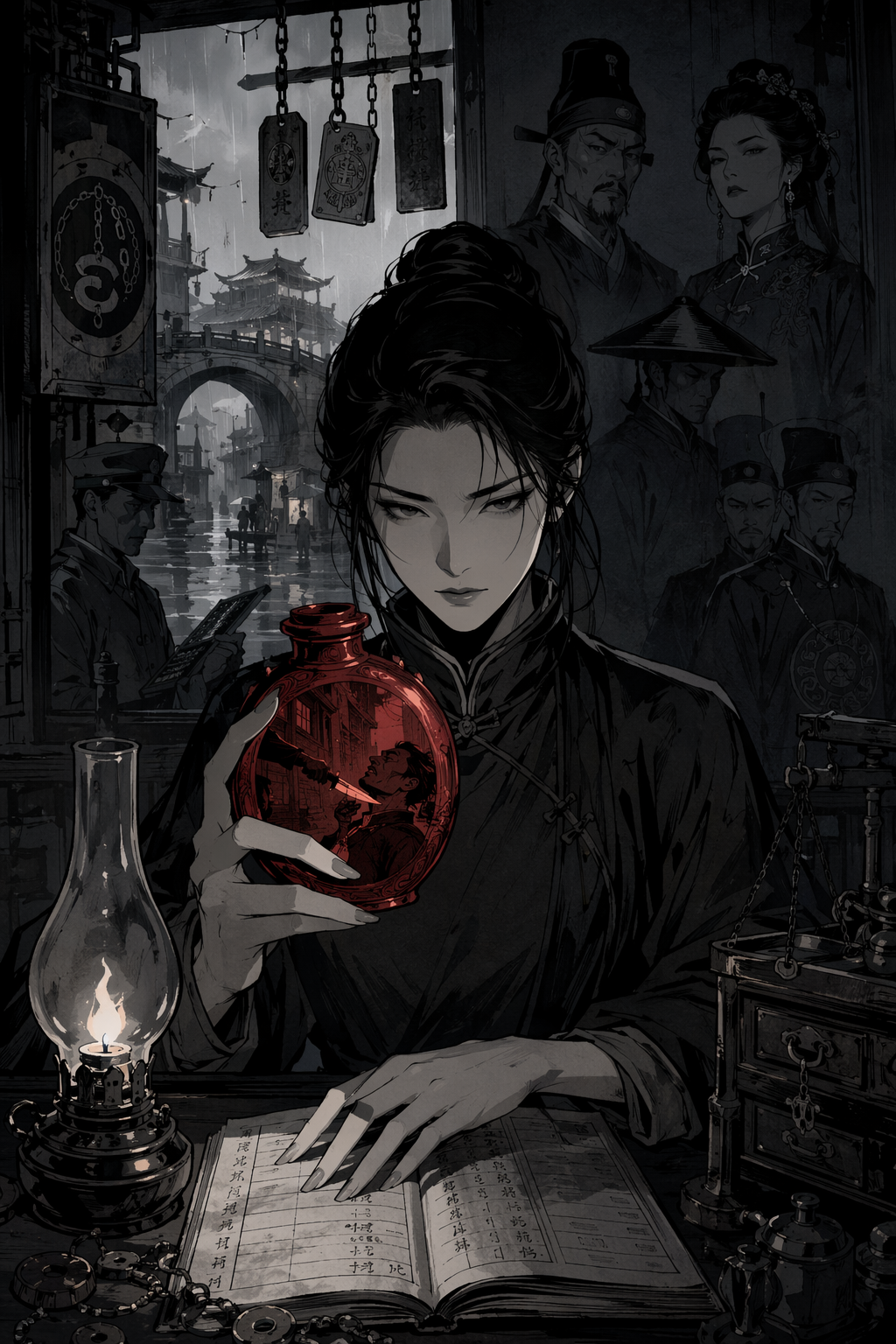
In the industrial river-port of Ren-Hai, licensed pawnshops accept memories as collateral: a face, a scene, a feeling sealed into jade and fully erased from the customer until redeemed. Han Xinyu, the twenty-year-old heir of an old bridge pawnshop, is calm, exact, and trapped by law. When a stranger pawns a memory that shows her own father’s murder, Xinyu cannot report what she saw, cannot return the memory, and cannot abandon the shop without losing her family’s livelihood. Each new transaction gives her one more legal clue in a twelve-year-old conspiracy—until the trail leads not only to officials and assassins, but back to her dead grandfather’s private ledger.
Cael is a scholarship student at Verdane Academy whose face is so ordinary that people forget him mid-sentence. That is exactly why the imperial chancellor hires him to wear Crown Prince Aurelian's face at duels, banquets, and social traps — using a family Mirror Art that copies the Prince's voice, posture, and swordwork. The price is brutal: every hour under the borrowed face burns one of Cael's own memories, and exposure means execution for him and his family. Cael expects to be a shield. Instead, he becomes the person the Prince's suitors have been waiting for. Kaelen, the duke's heir with a hidden wrist injury; Sevarin, the foreign prince whose forbidden book was confiscated; and Niel, the commoner genius drowning in a duel debt — each of them is ignored or dismissed by the real Aurelian, and each is quietly saved by the decoy wearing his face. As the suitors drift toward the boy who remembered their details, the real Prince grows jealous and forces Cael to wear his face longer and longer, burning away his sister's face, his mother's voice, his own name. At the Winter Ball the deception is exposed — and the suitors must publicly choose between the perfect Prince and the boy who actually showed up.
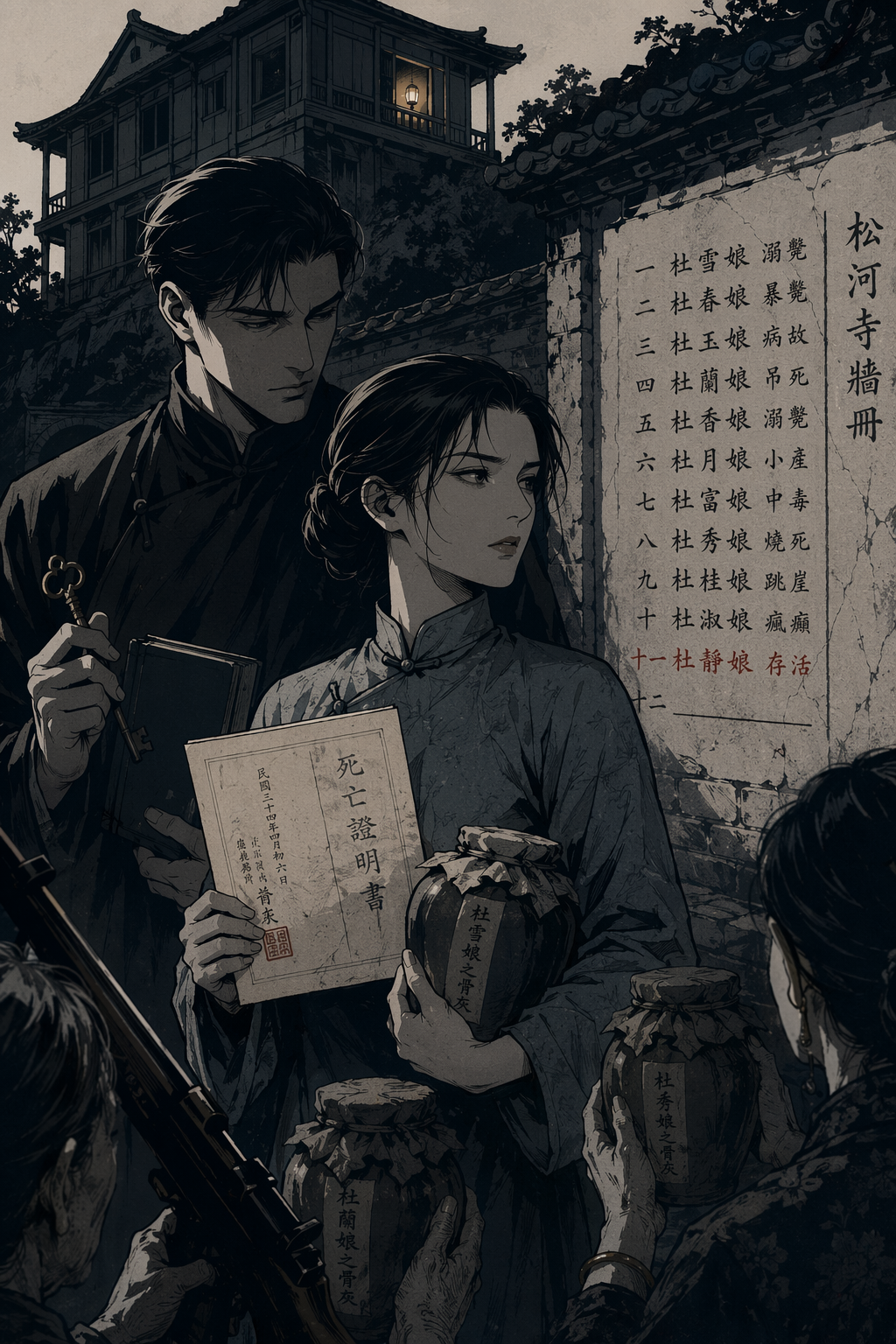
Liang Wen, a 23-year-old vet-school dropout in Chengdu, returns to the isolated mountain village she fled as a child after receiving her grandmother's death certificate and an old betrothal registry naming her as the twelfth bride of the Du family. Songhe Pass does not greet her with violence; it greets her with patience, food, water rights, and a public temple ledger listing eleven previous brides. The eleventh bride is marked not dead, but "survives." To protect the eleven-year-old half-brother she never knew was left behind, Wen has twenty-one days to either submit to the village's hereditary rite or watch her family lose its land and water. As Wen decodes the bride records, she discovers the rite is not a simple sacrificial marriage but a hidden system of death accounting: brides record the crimes the village wants forgotten and seal them in the Du altar so the mountain takes the debt instead of another child. Wen's choice becomes sharper than escape or surrender: expose the ledger publicly and risk being killed, or become another silent accountant for Songhe's sins.
In the Jade Empire, cultivation is the only wealth the throne cannot tax—so it places disposable imperial relatives inside powerful sects and claims their spiritual energy after death. Xiao Fen, the overlooked third daughter of a minor imperial branch, arrives at Yǎngshén Sect expecting polite neglect. Instead, she notices that the last three imperial cultivators stationed here were quietly drained before they died. With no great talent, no family protection, and no one safe to trust, Fen survives by doing what she has always done: reading rooms, remembering details, and letting powerful people underestimate her until their own paperwork becomes a weapon.
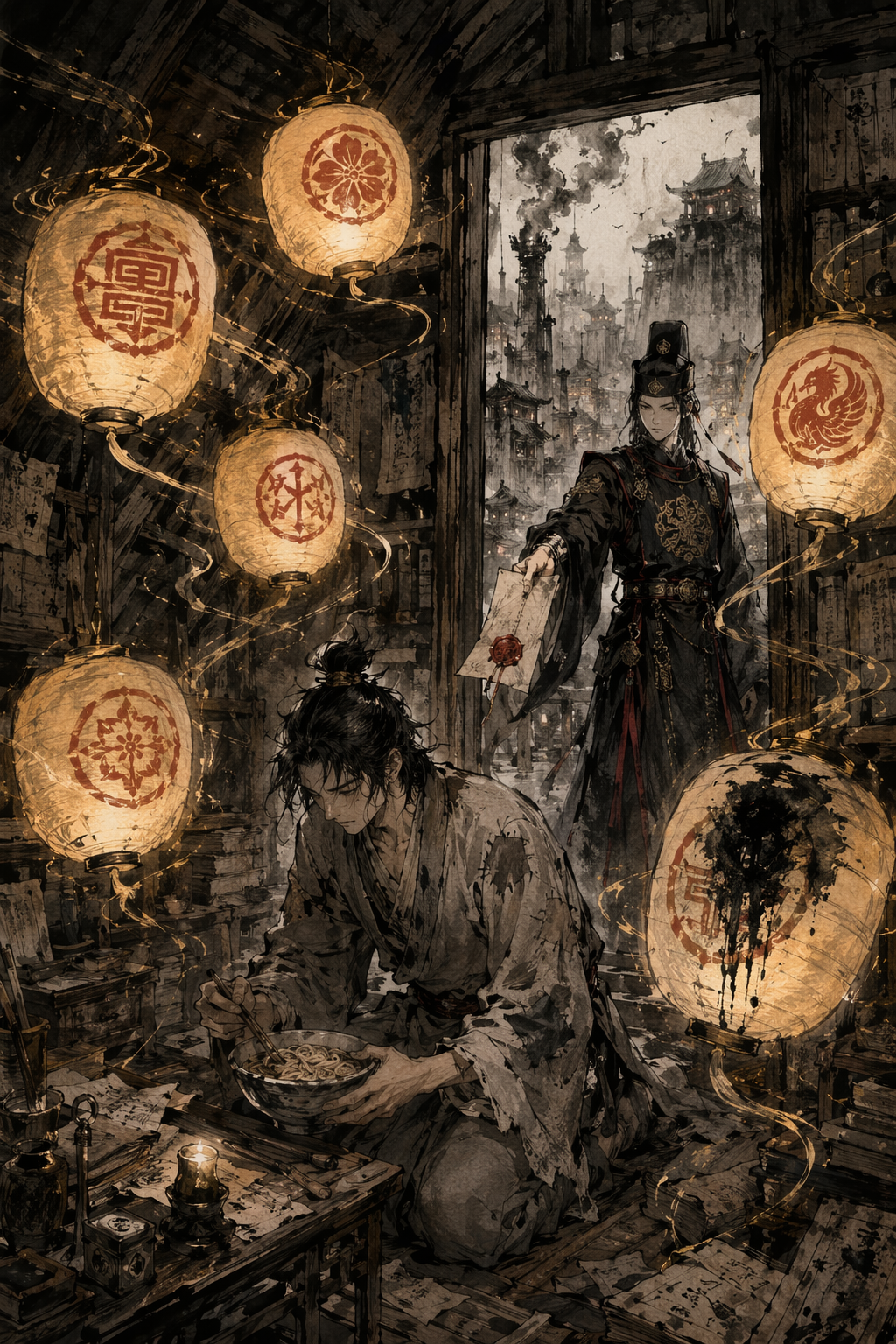
In the walled monastic city of Tsun-Ji, failed civil-service candidate Yu Sansheng wakes to six glowing paper lanterns on his attic floor. A Bureau of Restitution official informs him that he has inherited his grandfather's old office: Lantern-Keeper, bearer of six ancestral debts owed to dead families wronged by his bloodline. If any lantern is extinguished, the debt is collected from his body, organ by organ, in the order the claimant chooses. Yu has no money, no martial skill, and thirty days before automatic collection begins; his only weapons are six years of failed exam study, the city's Restitution Code, and a talent for staying polite while terrified. Each chapter follows one negotiation with a wronged family or institution, revealing that one lantern's filing number is forged by the very Bureau enforcing the debt. The pilot ends when Yu discovers the false debt is not attached to him at all, but to the person he most needs to protect.
In Bone-Bell City, nineteen-year-old Tan Jiaolin collects debts for Five Crane Exchange, a six-floor cultivator bank that owns eight more years of his life. When he inherits a forty-year-old witness coin that should have been melted, the coin grows warm inside the bank and points toward the grandmaster's restricted circle. Jiaolin wants only to protect his sister's last six months before freedom, but every floor he investigates reveals that his family's indenture began with a buried assassination loan. If he exposes the truth, he loses everything. If he sells or melts the coin, the lie that enslaved his family survives.
Heléne Saint-Maur, the last keeper of a magical debt ledger, has spent five years paying down sins her family wrote in ink. On her twenty-first birthday, the young Earl of Wassen arrives to collect the worst line in the book: her grandmother sold "one heir of the body" to his house, and Heléne is the overdue heir. With only seven blank pages left, only four safe crossings left in her lifespan, and a courtly creditor who may be victim as much as villain, Heléne must decide whose name deserves the last page before another ledger claims them both.
Mire, a parlor-maid from a third-rate inn, is hired to impersonate the sickly Lady Sera Tessen for one autumn so a political marriage can be consummated and a dowry secured. Her face, voice, handwriting, and posture are close enough to fool even Sera’s mother, but her contract hides a poison clause and her younger brother is held hostage by the bride’s family. In the second week of marriage, the real Lady Sera dies, and Mire is told the role is now lifelong. Her cold archivist husband, Domnal Tessen, begins setting quiet tests only the true Sera would pass. As Mire searches Sera’s stolen diary for survival, she discovers Sera herself was once a replacement: the original girl died at seven, and the woman Mire is copying was named Iulia. By the monthly memorial, Mire must read sacred Old Tessen liturgy she cannot understand—only to find the page replaced with a passage copied from her own private letter to her brother. Domnal is watching. He knows.
Erine, a burnt-out corporate worker, died at her desk one save-screen short of the secret true ending of the otome game 'Mirai-mirai'. She wakes up as a sentient AI food truck — the game's joke NPC. To make matters worse, the villainess Helena is already exiled, months ahead of schedule. Someone else is playing, and they have the same cheat sheet. Erine must feed the starving, bank fuel to maintain her human avatar, and race a rival reincarnator rewriting the story in real time — while the villainess she's trying to save slowly realizes her 'friend' knows things no stranger should.
Fourteen-year-old Tasso Vereil is cast out of his silver-baron family by a wax seal that makes returning home legally impossible—and failing to claim a new name within sixty days fatal. His only weapon is stamp-magic: a personal seal that can bind one person to one exact clause for one year, but he has only three uses left and can never stamp the same person twice in a year. When Tasso reaches the forgotten frontier village of Hak-Ulm, he discovers an ancient unspent clause in its tax ledger: by pressing his seal there, he can become its lawful lord. But Hak-Ulm sits on silver his family plans to steal, his older brother is immune to his magic, and the village ledger hides older claims that may be deadlier than House Vereil.
Shen Yue, the unfavored second daughter of a famous weapons clan, survives the bridal bond to Cheng Yi, the family’s legendary sword. The bond makes her a terrifying tournament fighter—but every beautiful strike the blade loves opens the same wound on her own body. Bound by family contract, political pressure, and a possessive weapon-spirit that calls itself her husband, Yue must learn whether survival means fighting ugly, bleeding beautifully, or choosing a new marriage that may be only another cage.
Cao Ling-er enters the Imperial Consort Examination with one goal: fail gracefully for thirty days and receive the return-bride tattoo that will legally free her from marriage forever. Armed with her dead aunt's secret notebook of beautiful failures, she sabotages her poems, music, clothing, and embroidery without crossing the line into treason. But the dawn rank board keeps climbing instead of falling. By day three she learns that someone has been correcting her failures; by day ten a rival princess is protecting her rank; by day twenty-one the Crown Prince himself has begun overturning her losses. The higher Ling-er rises, the more she realizes the examination is not choosing a bride — it is reopening the sealed truth of her aunt's death.