How to Make a Comic Without Drawing
Not drawing doesn't stop you making a comic. You still write and plan every panel, and each way to get the art made trades money and hours for control.

You can make a comic even if you can't draw. The script, the thumbnails and the pacing are still yours, and they decide what the reader sees in every panel. Only the finished art needs someone or something else, and each way of getting it trades money and hours for control.
What you still do yourself: script, thumbnails and pacing
A comic writer's job is choosing moments. For each panel you decide what the reader sees first and who's talking. None of that needs a steady hand.
The script is a list of those moments, one panel each, with the lines under them. Our webtoon script guide shows the layout next to the real page it became.
Thumbnails are where you make the visual calls. Boxes and circle heads are enough to settle who stands on which side and how close the camera sits. We'll follow one beat through this post, taken from The God of Happy Endings, a comic on FicPal: a wandering healer dangles a jade pendant in front of a young disciple, who can't believe he's being handed something so valuable.
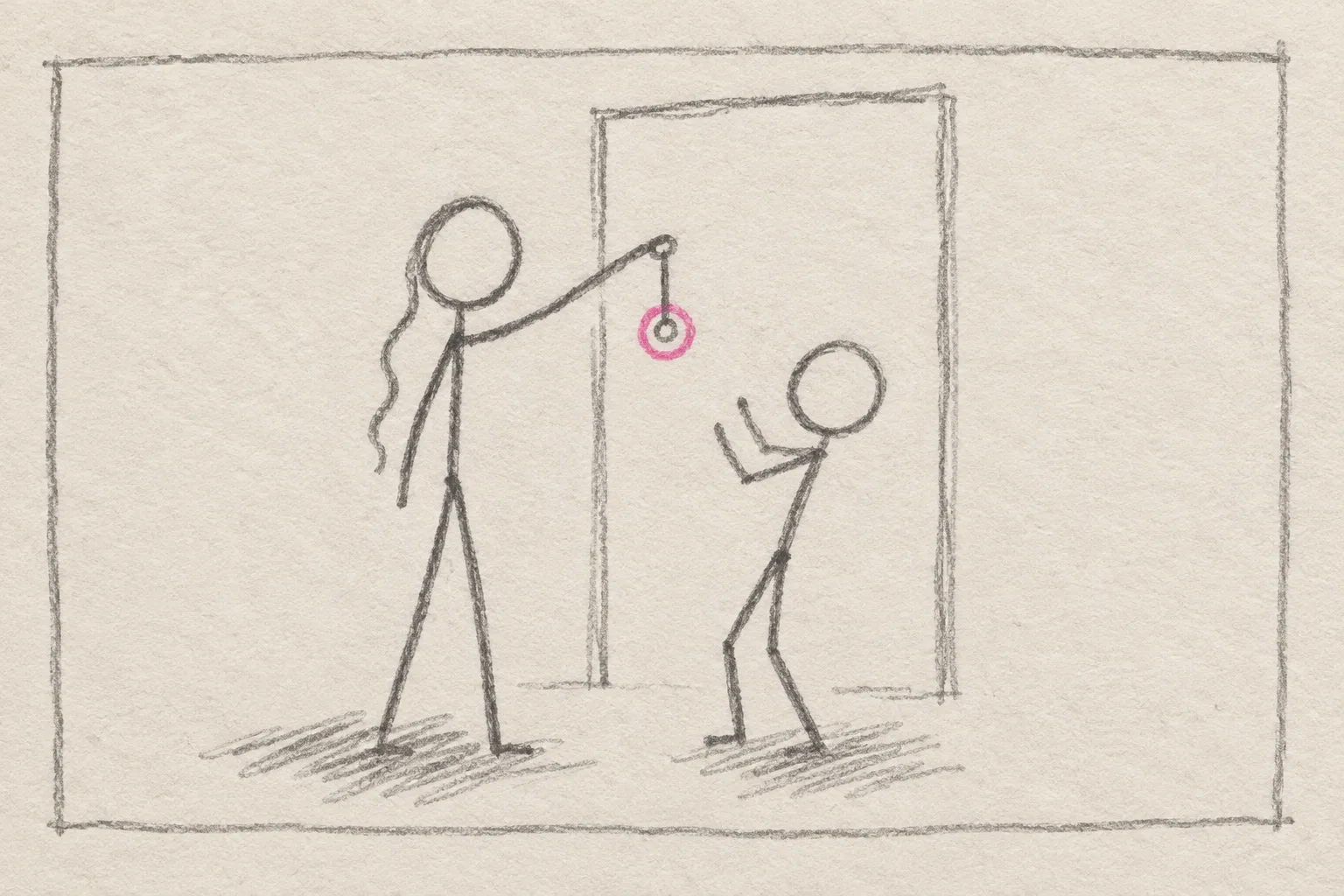
Pacing is the last call that stays with you. You pick which beats get a big panel and where the scroll holds back a reveal. An artist can suggest changes, but the order of moments comes from you.
Five ways to get the art made, by money, hours and control
- Money
- The most. You pay per page for pencils, inks, colors and letters
- Hours
- The artist's: 6 to 17 hours a page for pencils and inks alone
- Your control over the art
- High. You approve thumbnails and pencils, but the hand is theirs
- Money
- No fee. You share credit and any income
- Hours
- Theirs, unpaid. Webtoon creators in one study averaged 57 hours of work a week
- Your control over the art
- Shared. They're a co-author
- Money
- From free up to the price of a drawing app
- Hours
- Yours: posing and framing, then tracing or painting over
- Your control over the art
- Full over poses and camera, within what your models can do
- Money
- Close to nothing: a phone, friends and props
- Hours
- Yours: shooting, then editing and lettering
- Your control over the art
- Full over framing, within what you can stage
- Money
- On FicPal, the first comic is free on signup credits and each further chapter currently costs 50 purchased credits
- Hours
- Minutes: a chapter of about 22 pages is usually ready in about ten
- Your control over the art
- Lowest. You write the premise and pick the look, the AI draws the pages, and you fix them afterward
Here is the beat from the thumbnail, finished three of those ways.
Hiring an artist or finding a partner
Hiring gives you the most control without learning a tool. You hand over the script, the thumbnails and a reference sheet for each character, then approve the work at the thumbnail and pencil stages, while changes are still cheap.
Agree on the rights, the number of revision rounds and the deadline in writing before the first page. Our guide to what comic artists charge per page breaks the price down by stage.
A partner draws for a share of the comic instead of a fee, so the drawing hours go unpaid. Treat them as a co-author: expect them to change your panels, and put the split of credit and income in writing. Arrive with a finished script and a few pages of thumbnails, so they can see you'll carry your half.
Posing 3D models and making photo comics
With 3D figures you pose a mannequin, frame the shot, and use the render as the base of the panel. Clip Studio Paint, a drawing app, has poseable 3D figures built in, and DesignDoll is a posing tool with a free version.
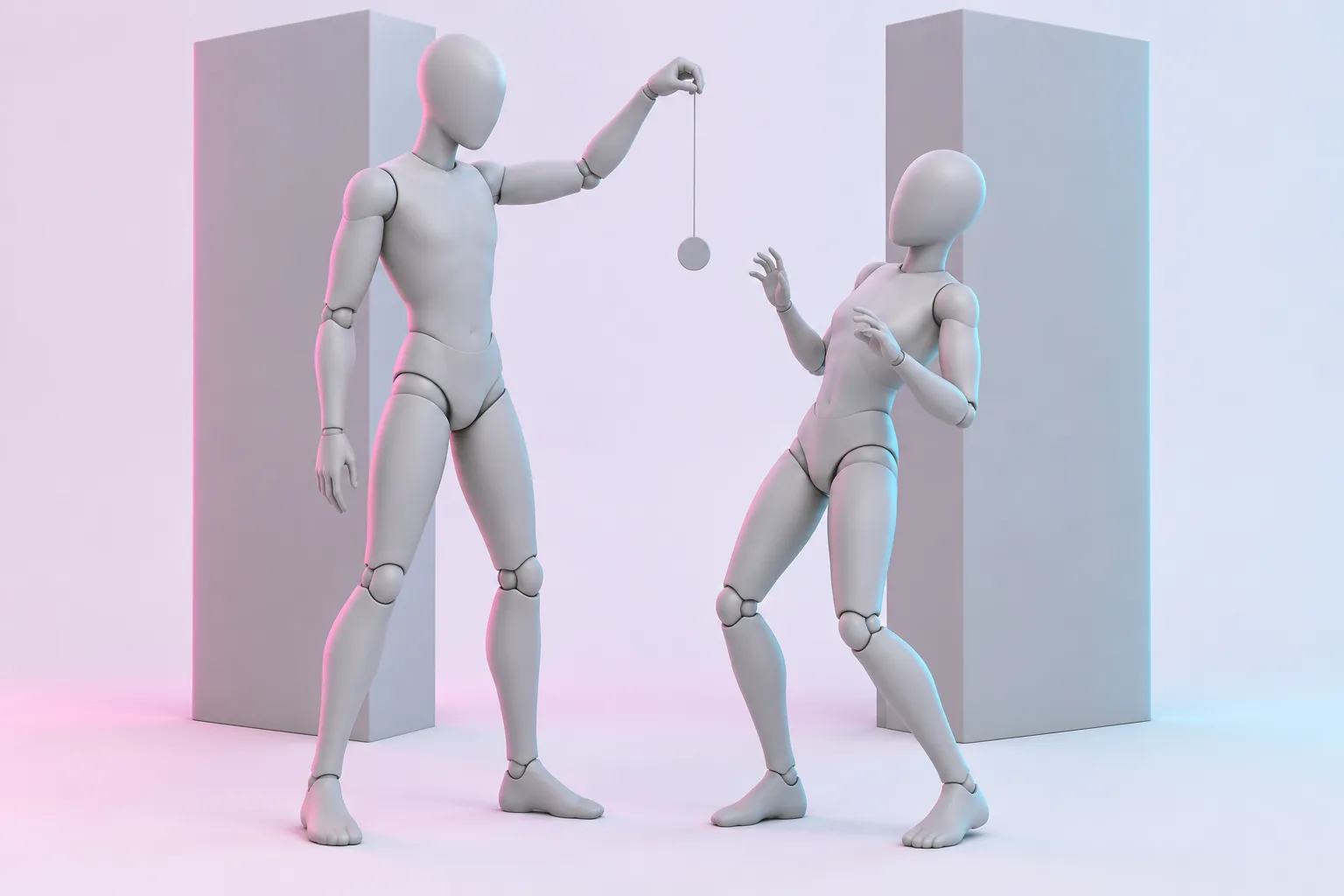
The catch is the last step. A gray render still has to become art, by tracing it into line work or painting over it, and posed figures look stiff until you push the poses past what feels natural.
A photo comic uses photographs as its panels. You need people willing to act, a few props and a place that looks right. Shoot each panel from the angle in your thumbnail, then add the bubbles in any layout app.

Your limit is what you can stage: a garden doorway is easy to find, a burning palace is not.
Using AI, and what you give up
An AI story tool takes the art and much of the writing off your hands. On FicPal you write a premise of up to 8,000 characters, pick an art style and add optional notes, and the AI plans the outline, writes the dialogue and draws a Chapter 1 of about 22 pages. Here's the page the beat came from.

What you give up is the panel-by-panel control from the first section. You pick the art style, but the AI writes the script you'd otherwise write and draws every page. Afterward you can fix a page by describing the change, retype any line of dialogue, and reorder pages.
A fix redraws rather than edits: you describe the change, or paint over the part to redo, and after your first few free ones each one costs credits. The comic goes public when it's done unless you set it to unlisted or private. FicPal's Terms make no promise of commercial rights to the art, though your premise and your ideas stay yours. Pages download from the editor as PNGs.
Most of your control moves into the premise, so it has to name what you'd otherwise draw: what the lead wants, how the cast looks, and where Chapter 1 should end. How to make a comic with AI shows what a premise needs.
If the AI chapter shows the story works and you want it printed, owned outright or drawn in a hand nobody else has, hire an artist. The script and thumbnails you'd give them are the same work you started with.
Questions people ask.
Can I make a manga or webtoon without drawing?
Yes, by any of the same routes. The format is what changes. Manga is usually black and white and read as pages, while a webtoon scrolls in one tall color column. Frame your 3D or photo panels to match, and when you hire, ask for samples in that format.
Can a comic with very simple art still work?
Yes. xkcd, one of the best-known webcomics, is drawn with stick figures. Simple art holds up when the writing and the pacing carry the story, and those are the parts you already control.
Do I have to show my own face in a photo comic?
No. Friends can act for you, and some photo comics use action figures or dolls posed on a table instead of people, which also solves costumes and locations. If real people appear, get their OK before you post it.
How long should my first comic be?
Short. A story of four to eight pages with one turn teaches you pacing, and a finished short is easier to show an artist or a partner than a plan for two hundred pages.
Make one yourself
Write a premise and see Chapter 1 drawn
FicPal plans the story from your premise and draws the first chapter.