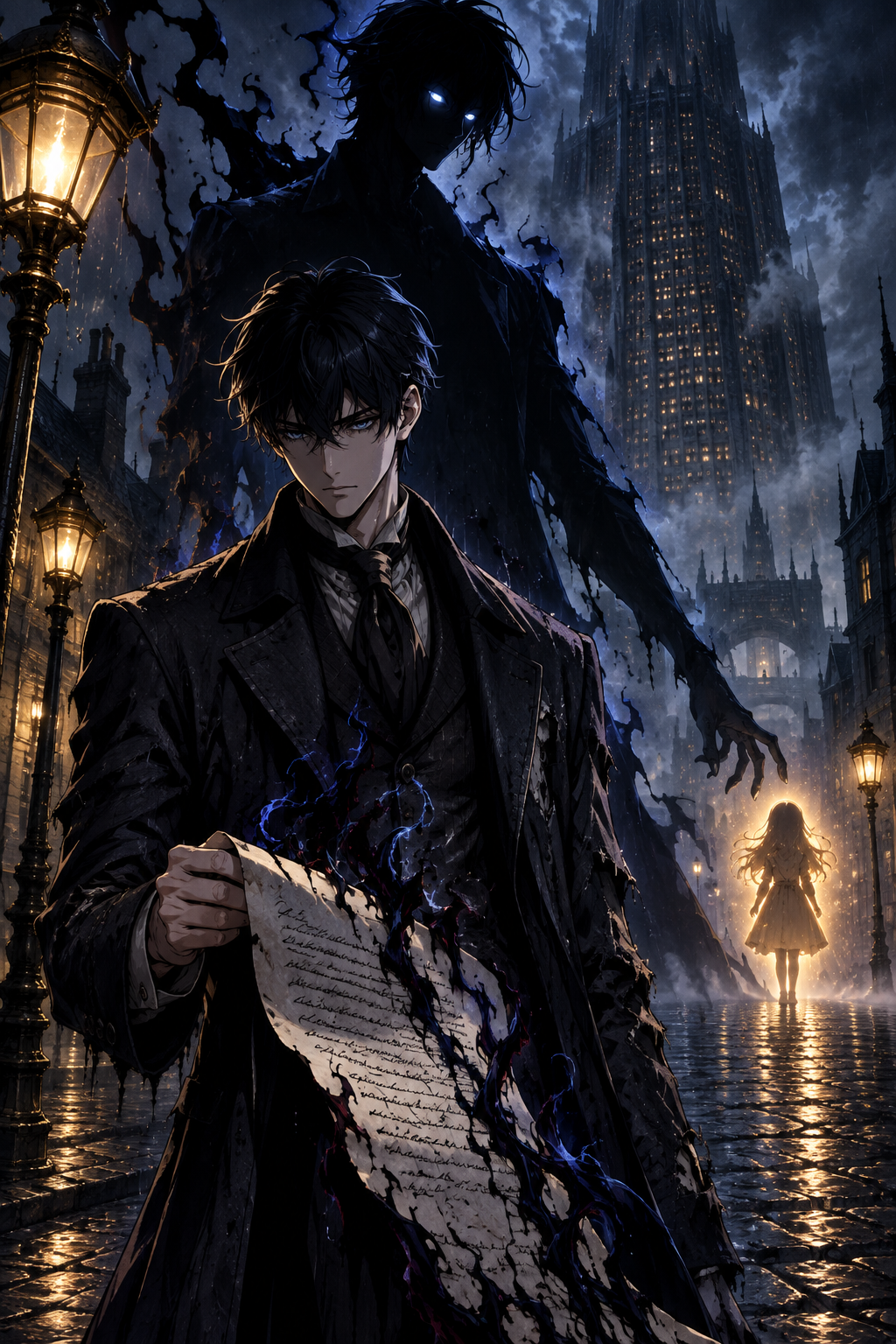
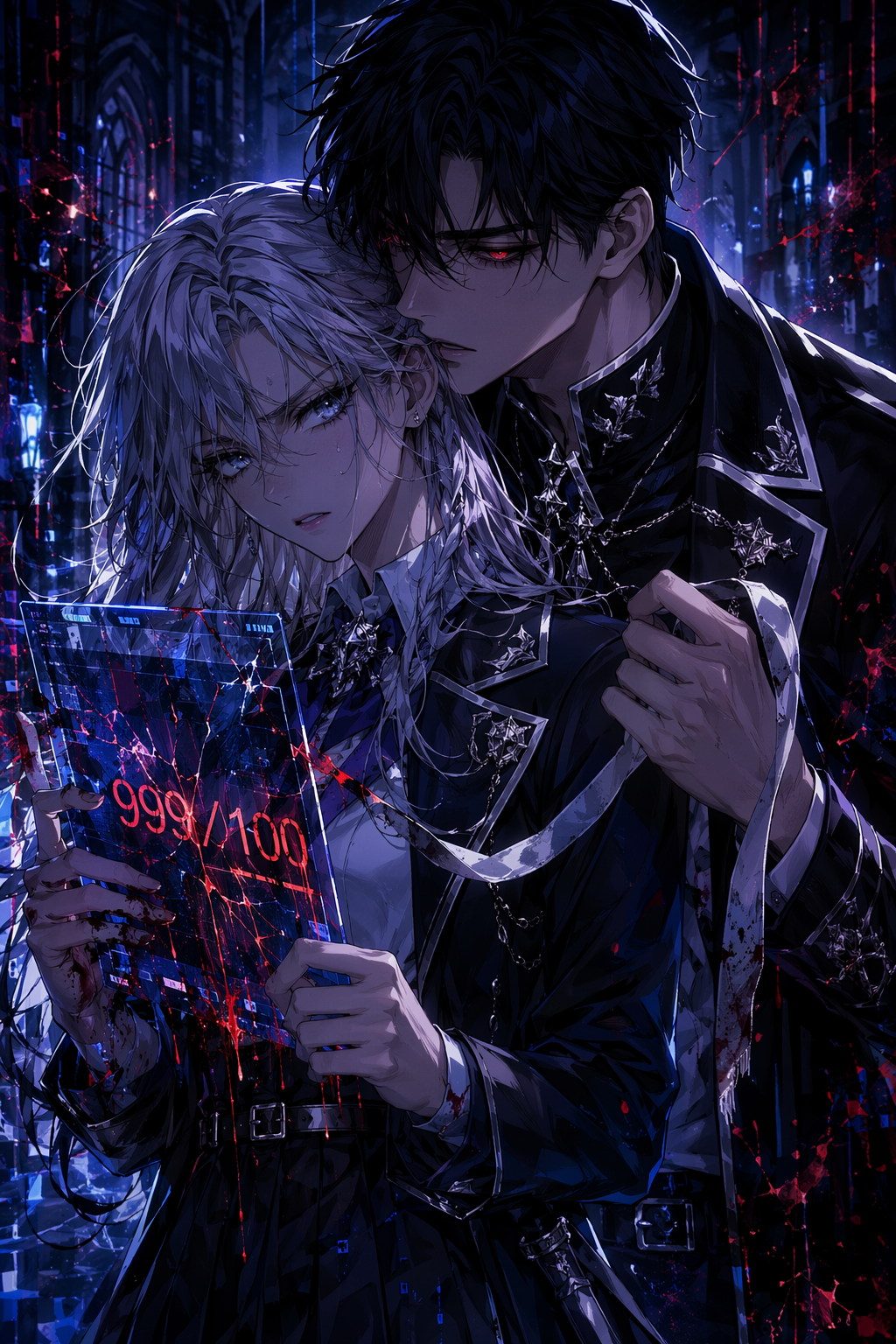
Cha Joon-Ho transmigrated into a fallen noble's body and started running the genre playbook — right up until the family lawyer read aloud a will left by the previous soul, who had also transmigrated, and who had predicted every single move Joon-Ho was about to make.
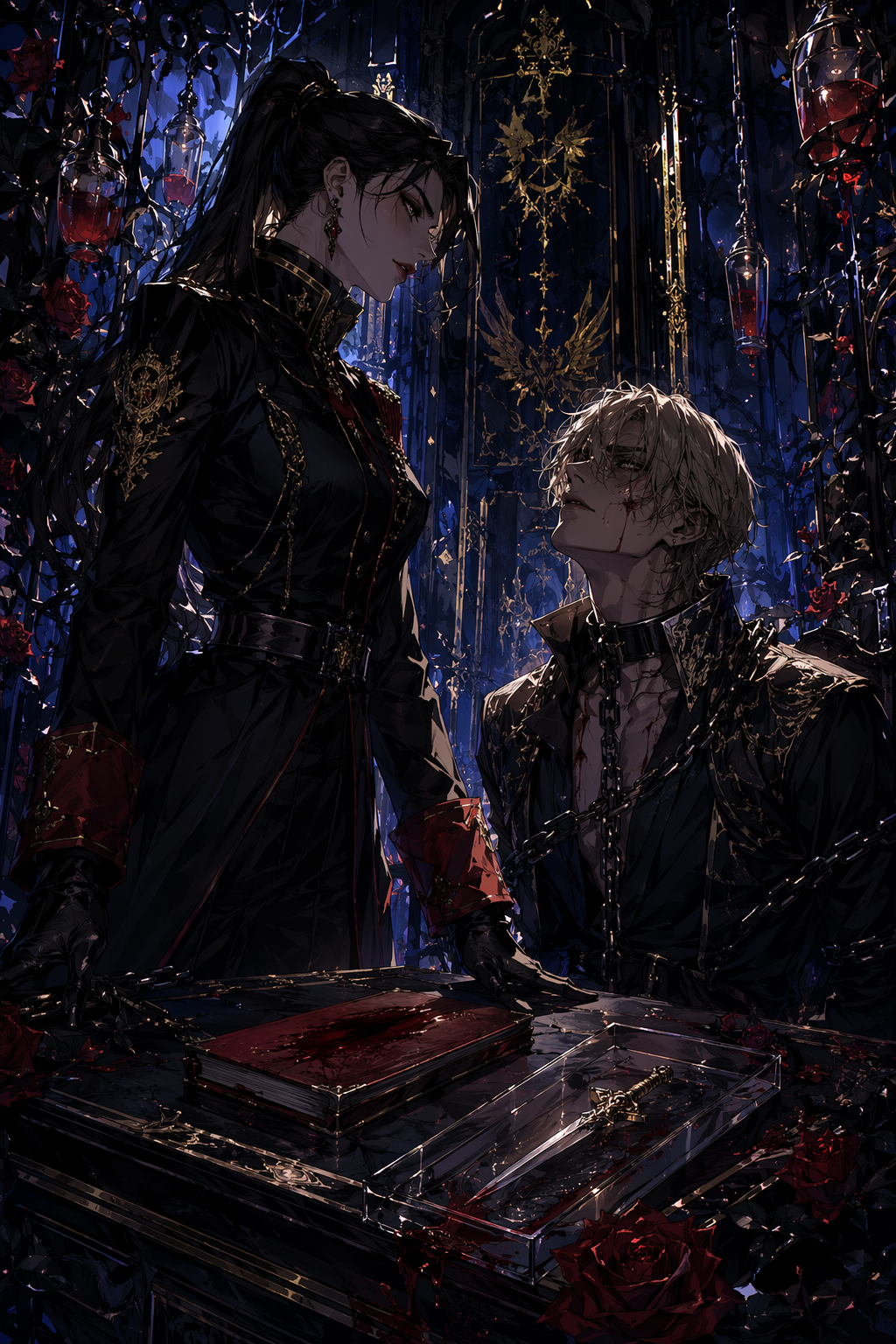
Yelena Otzar, the crown’s feared First Question, has eleven days to break a chained crown prince accused of regicide or watch her indebted family sold to the silver mines. Prince Cassian will give her the truth only under one condition: each night, he may ask her one question she must answer truthfully if she answers at all. As Yelena’s interrogation of Cassian becomes Cassian’s interrogation of Yelena, the perfect servant of the throne begins to suspect the case was designed not to reveal a murderer, but to bury one.
Mu Yana, nineteen, is the youngest junior reckoner in the Bone-Ledger Temple, a sealed xianxia sect where unpaid debts are inscribed as marks on the debtor’s skeleton. Her rare gift lets her read even invisible bone-marks by touching a debtor’s wrist, but every reading causes nosebleeds, and she cannot alter any mark without elder approval. When four powerful men arrive for seasonal accounting, each expects the mercy of a woman who looks exactly like Yana. Their records say their debts were already collected five years ago by her own hand—when Yana was fourteen, unlicensed, and supposedly never allowed near debtors. As each man reveals a different favor he came to repay, Yana discovers a hidden mark on her own body, a false cremation record, and a secret line written in her blood on the master ledger. The elders demand she inscribe a new debt on the foreign envoy’s heart using her own name, forcing her to choose between the life she remembers and the forbidden identity waking beneath her skin.
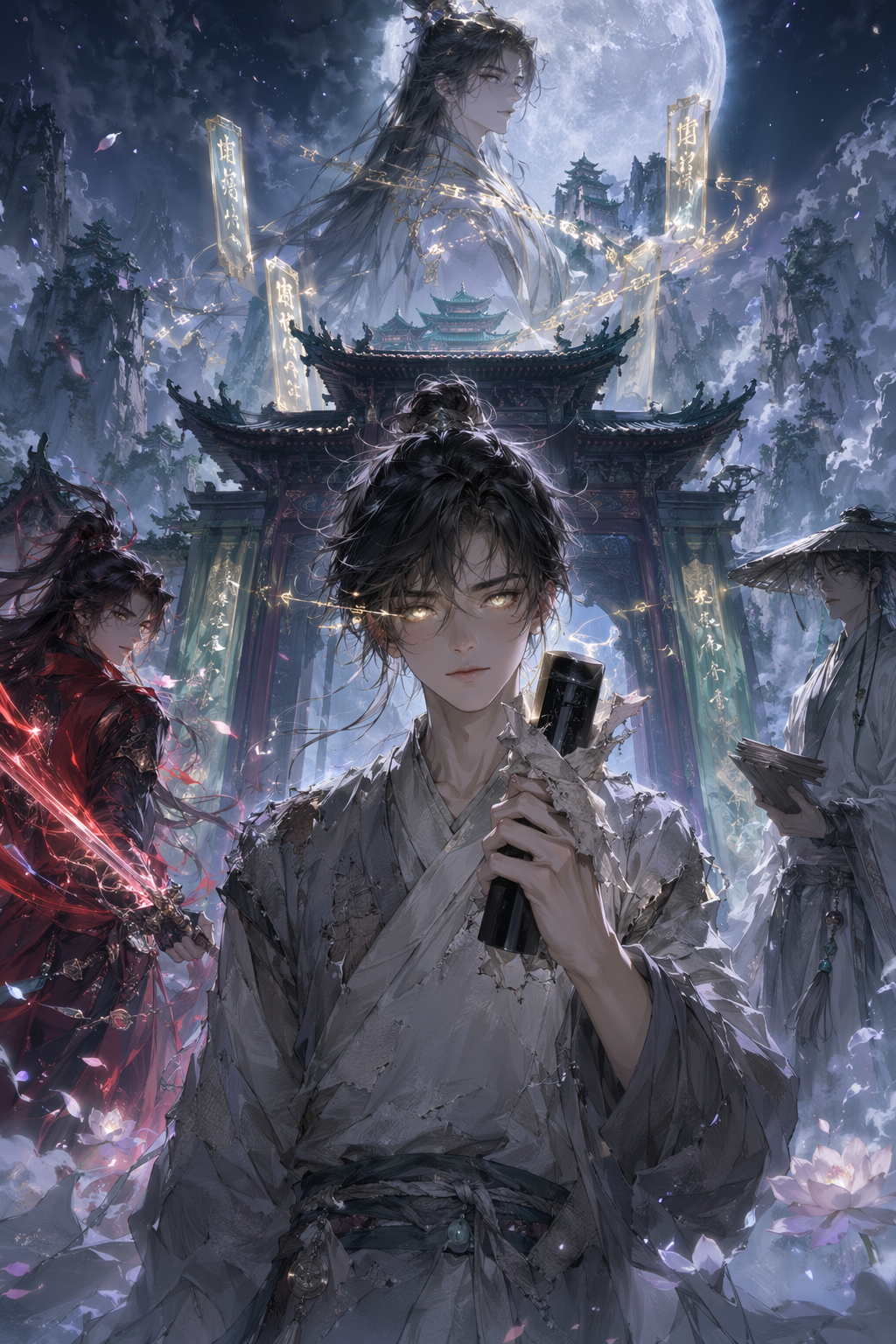
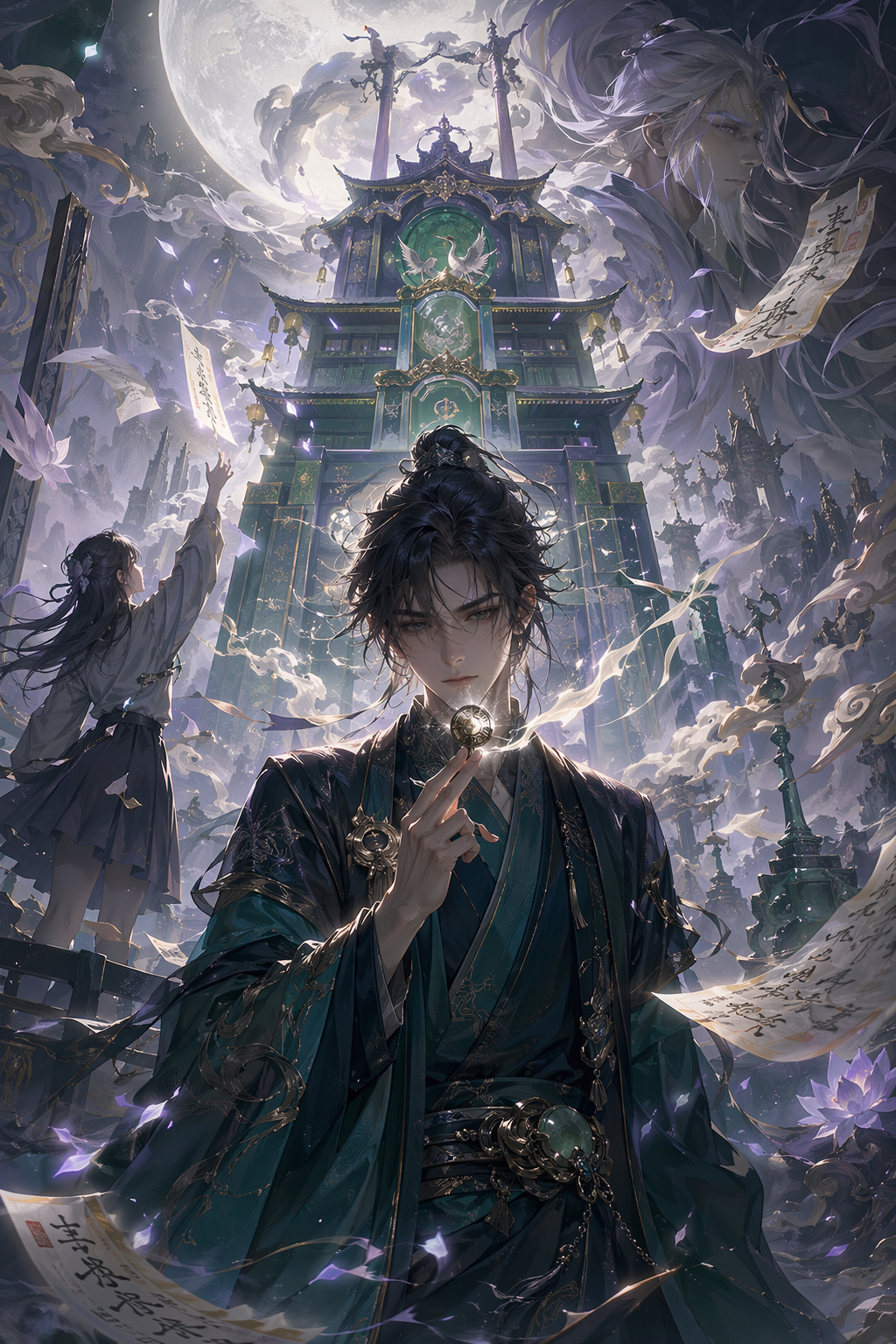
Yan Heshu is a penniless servant-class disciple trapped inside Mirror Pool Sect by an inherited exile-oath. He has no qi, no master, and no chance of surviving the sect-survival exam by strength. But when he is assigned to clean old oath-tablets, he discovers his disgraced grandfather's ink reveals the hidden fallback clauses that enforce every blood-oath. Seniors who treat contracts as servant work begin signing vows in front of him, never realizing Yan can read the second line beneath the first. With each notarized oath, Yan maps the sect's secret debts, blackmails, and betrayals—especially the twenty-seven private vows of the First Seat, the immortal cultivator who once declared him useless. Yan cannot break oaths, cannot lie under his own ink, and cannot leave the mountain without dying. So he does the only thing a powerless boy can do in a sect of monsters: he writes terms sharp enough to make monsters kneel.
Yun Sora wakes at seventeen with twenty years of misery lodged in her chest: a loveless arranged marriage, a silent husband, an estate where no one noticed her illness until it killed her. Like any competent regressor, she uses that knowledge to break the engagement and build a life of her own. By twenty, she is free, successful, and certain she escaped her tragedy. But when the man she remembers as cold keeps appearing with unsettling sincerity, and old witnesses contradict the story she has trusted, Sora faces a harder truth: her memories are real, but they may not be reliable. The life she fled was shaped not only by neglect, but by depression, pride, silence, and conclusions she made when she was too wounded to see clearly. Now she must choose again—not whether to return to the past, but whether she can live without treating pain as proof.
In the Hollow Throne, every imperial decree must exist in three sealed copies: palace, archive, and shrine. If the copies differ, the nearest clerk dies for treason. Bai Lihua, an eighteen-year-old fourth-rank archive clerk with perfect recall for every decree she has copied in blood, discovers a hidden fourth copy sealed inside a latrine wall. It is dated three weeks in the future, signed by a regency seal dead for sixty years, and names her as the clerk who will execute an imperial order. If she refuses to appear, her younger brother will be erased by attainder. Trapped inside the palace, unable to accuse anyone without a higher-rank sponsor, Lihua hunts illegal decrees through latrines, shrines, smoke vents, and forbidden offices, uncovering a parallel government of clerks that has ruled the empire from the walls for generations. Her dead mother was one of them. Her supervisor may be her enemy, her sponsor, or the only person trying to keep her alive. The pilot ends on execution day, when Lihua turns the court's own ritual into a public reading of the empire's hidden ledger.
At Last Vow Monastery, dying cultivators carve their final vows into their own kneecaps, and novice bone-scribes read the truth after death. Fourteen-year-old Sui Wanqing is obedient in public and dangerous in secret: she has been practicing vow-script on her own ribs, becoming sharper than her teachers while hiding that she has no martial cultivation and no sponsor to leave. When a fresh kneecap appears in the offering basket bearing a vow addressed to her, written by a future hand she has not yet learned, Wanqing is pulled into a murder network that already knows her name. Each new bone reveals one more piece of the conspiracy, but every reading destroys the evidence. By the chrysanthemum festival, she must outwit beast-tamers, a coerced dead nun, and the abbot whose four-hundred-year-old spine may hold the secret that makes Wanqing the only witness worth silencing.
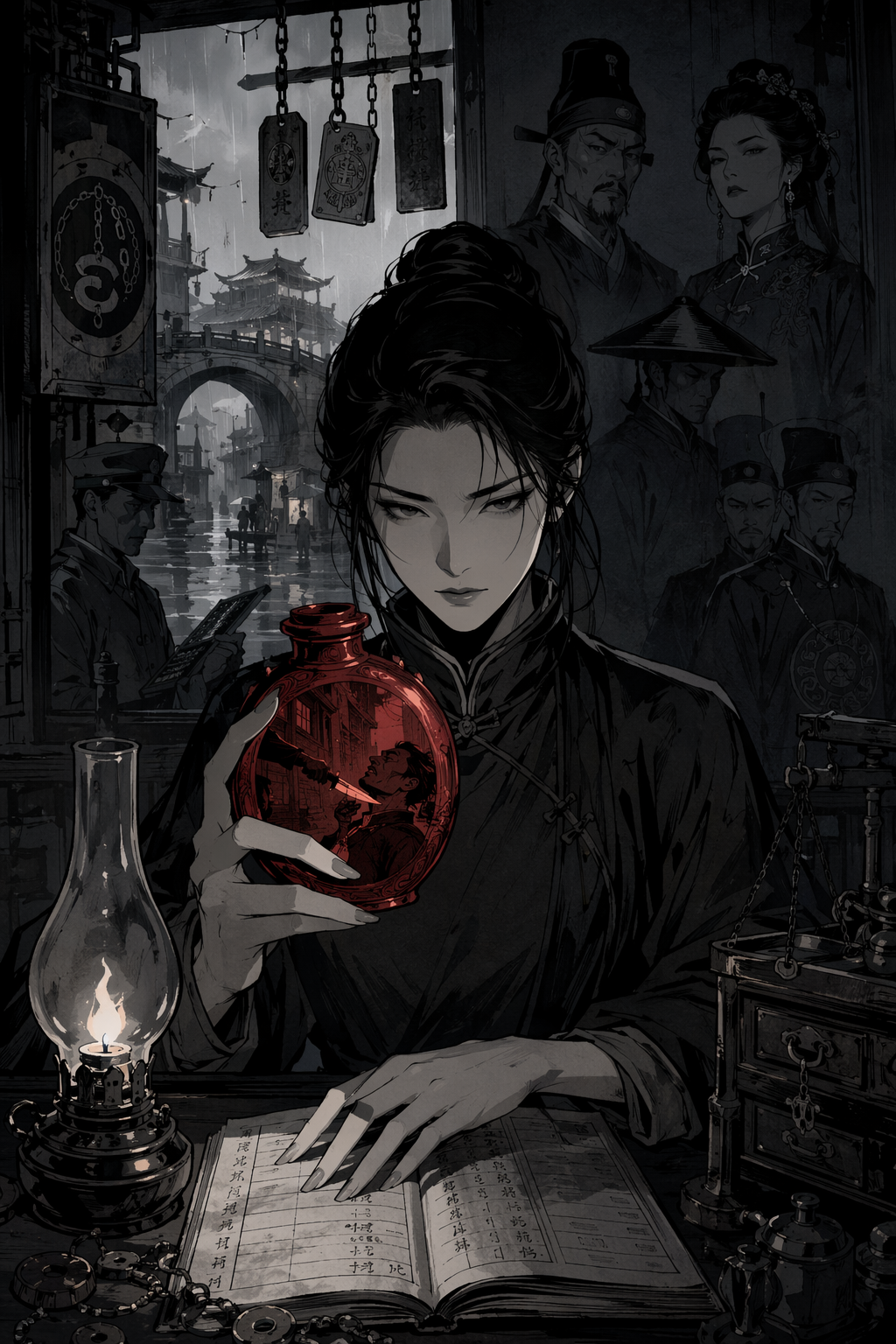
In the industrial river-port of Ren-Hai, licensed pawnshops accept memories as collateral: a face, a scene, a feeling sealed into jade and fully erased from the customer until redeemed. Han Xinyu, the twenty-year-old heir of an old bridge pawnshop, is calm, exact, and trapped by law. When a stranger pawns a memory that shows her own father’s murder, Xinyu cannot report what she saw, cannot return the memory, and cannot abandon the shop without losing her family’s livelihood. Each new transaction gives her one more legal clue in a twelve-year-old conspiracy—until the trail leads not only to officials and assassins, but back to her dead grandfather’s private ledger.
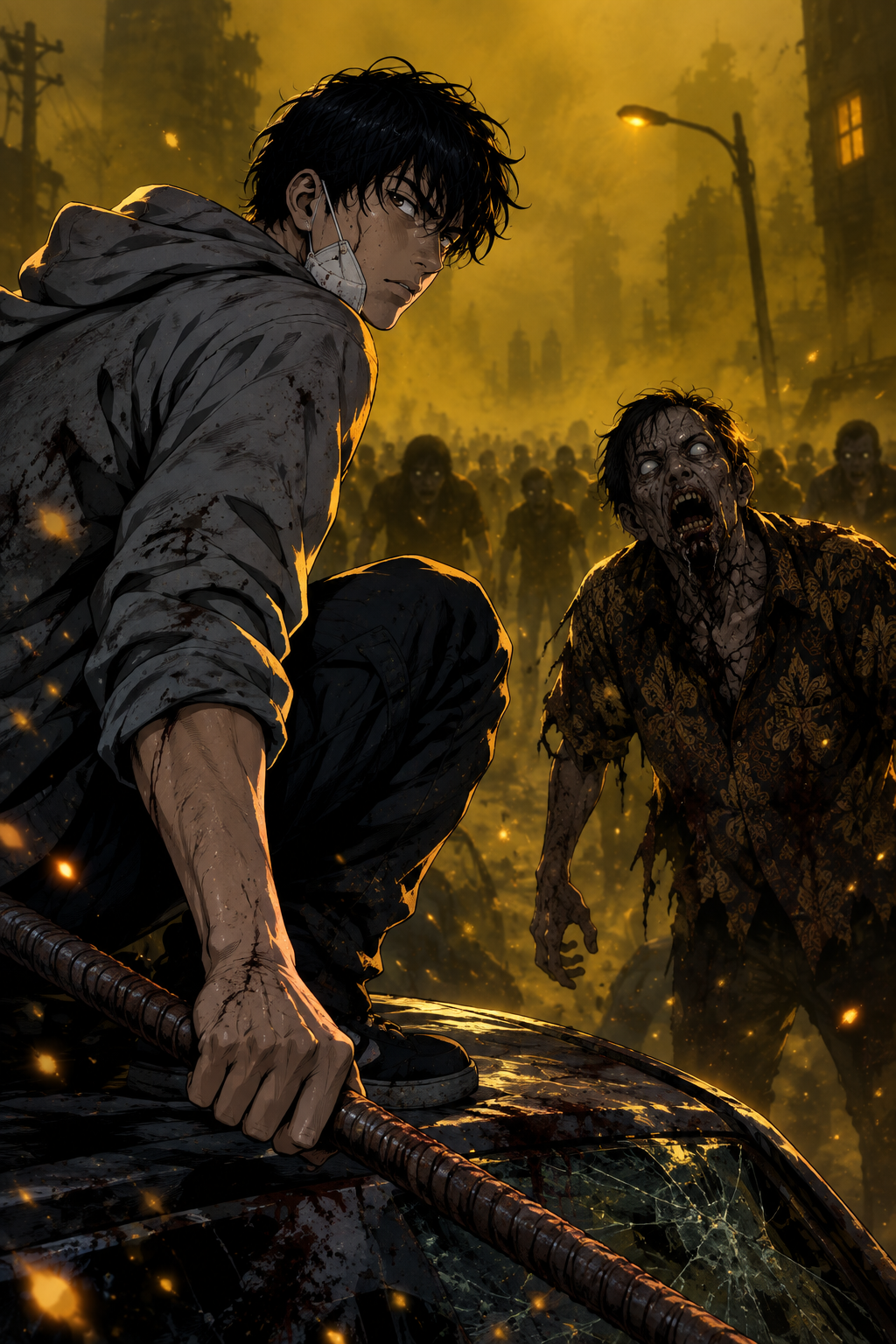
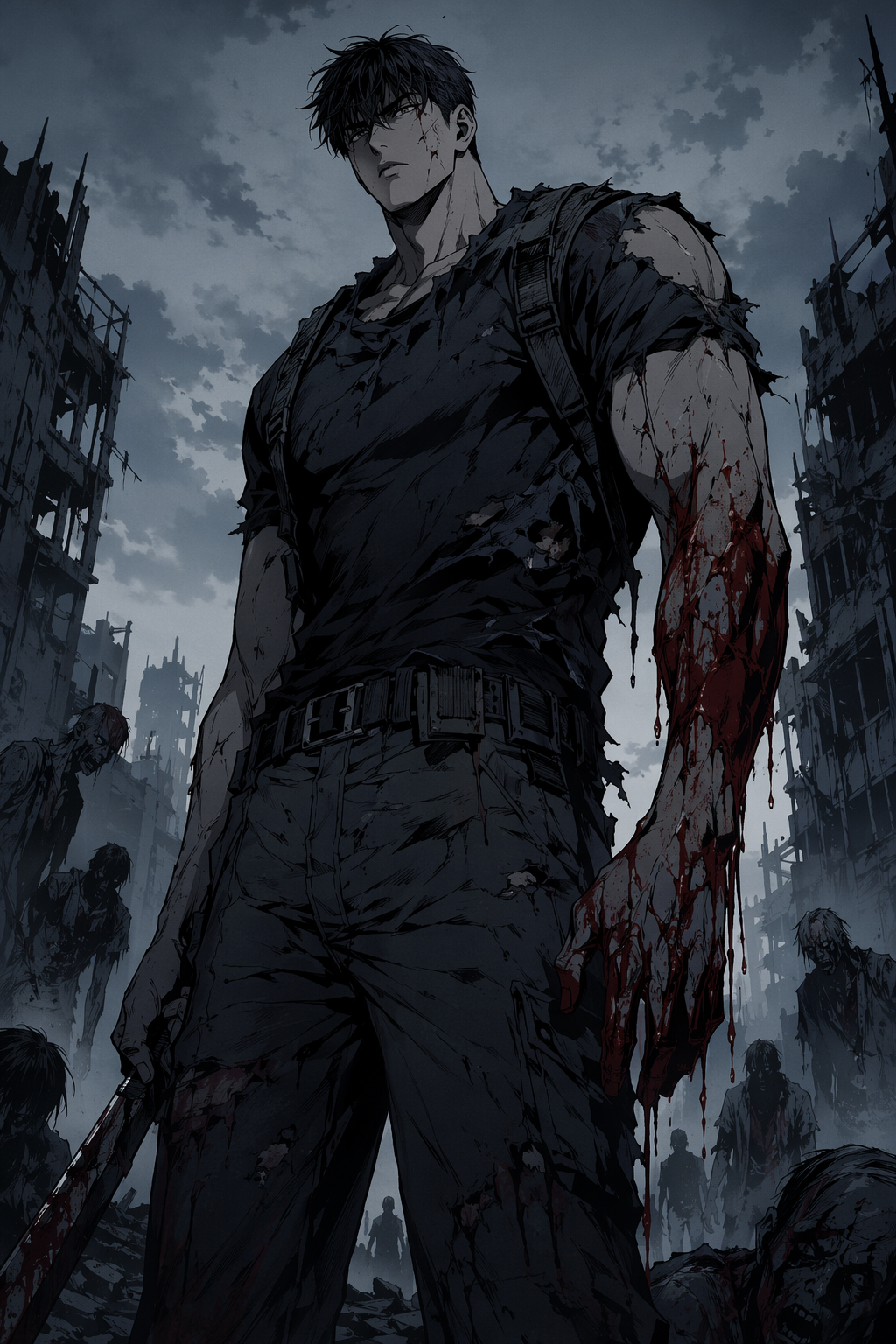
In 2026 the peat fires of Sumatra stop being a seasonal disaster and become an extinction event: a spore from a burned, unnamed fungus rides the smoke into the nervous system of anyone who breathes it, killing them in minutes and walking them back upright with white-film eyes and black veins. Raka, a seventh-semester student in Pekanbaru, survives his mask snapping — which makes him either the luckiest man alive or a specimen everyone wants. As a militia led by a man who calls slaughter order and a scientist who calls the outbreak an experiment tighten their hands around him, Raka follows the yellow fog out of the city to the peat dome where the mother colony is still breathing — and finds out whether he is the beginning of the cure, or the beginning of something worse.
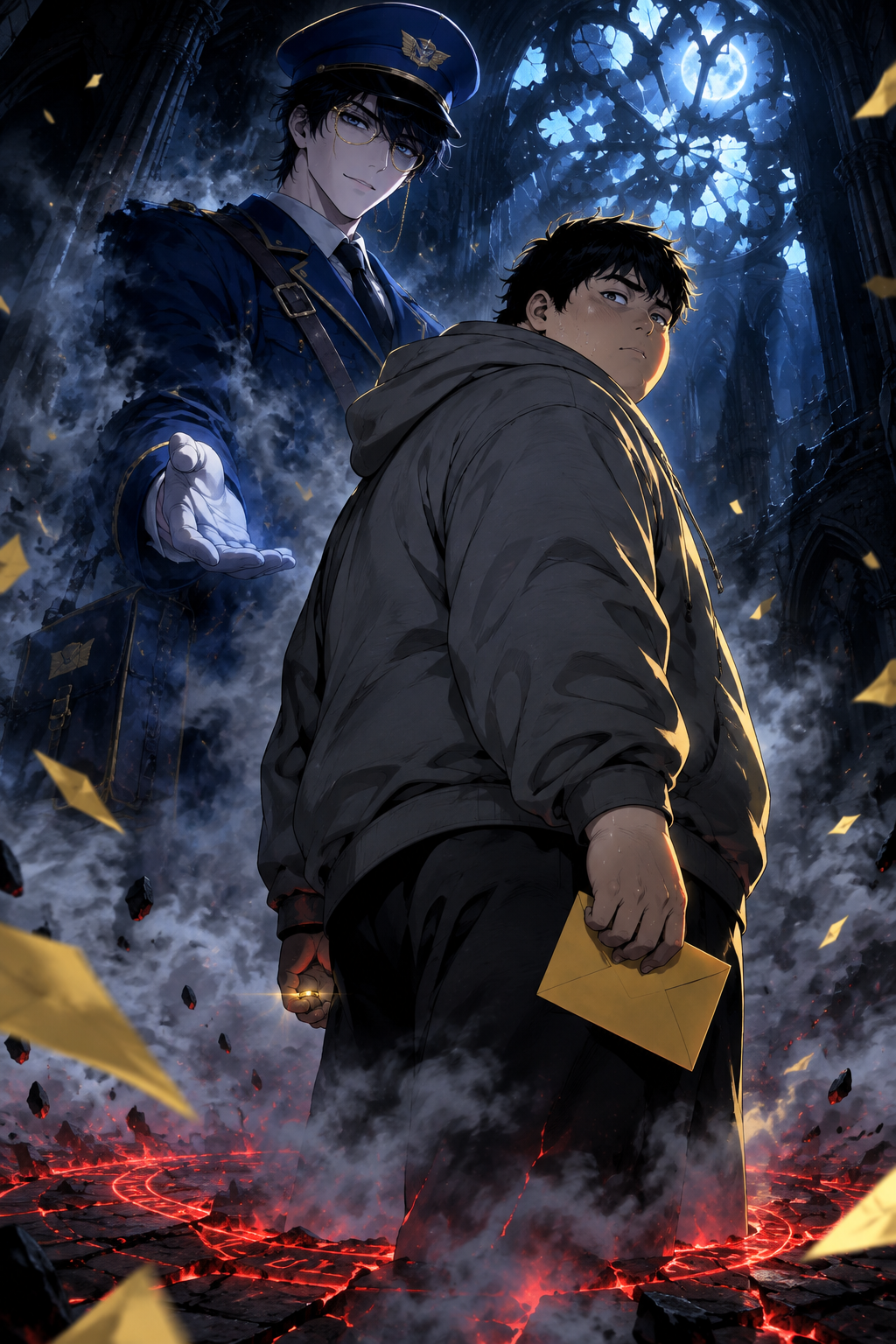
Kenzie is a lonely, overweight twenty-something who spends his days gaming in a dark apartment until a doorbell drags him to the door — and to a mailman too beautiful to be real, smiling sunshine from under a navy-blue cap with a gold-rimmed monocle on his right eye. The box the courier hands him holds a plain gold ring that fits him perfectly and a yellow letter signed in something that is not ink. Kenzie reads the words out loud. He does not know it is a summoning spell until the grey fog fills his room. He wakes in Ashfen, a drowned fantasy world where people breathe monsters and couriers deliver death, wearing the ring and nothing else that matters. Most 'recipients' of the yellow letter die in their first hour. Kenzie is fat, slow, and scared — but he is also the only recipient who ever read the fine print. The ring is a Recipient's Seal, and the world has just learned that Kenzie Yeon can refuse a delivery. To survive, he has to survive the world. To get home, he has to find the address it was sent from — and deliver something back.
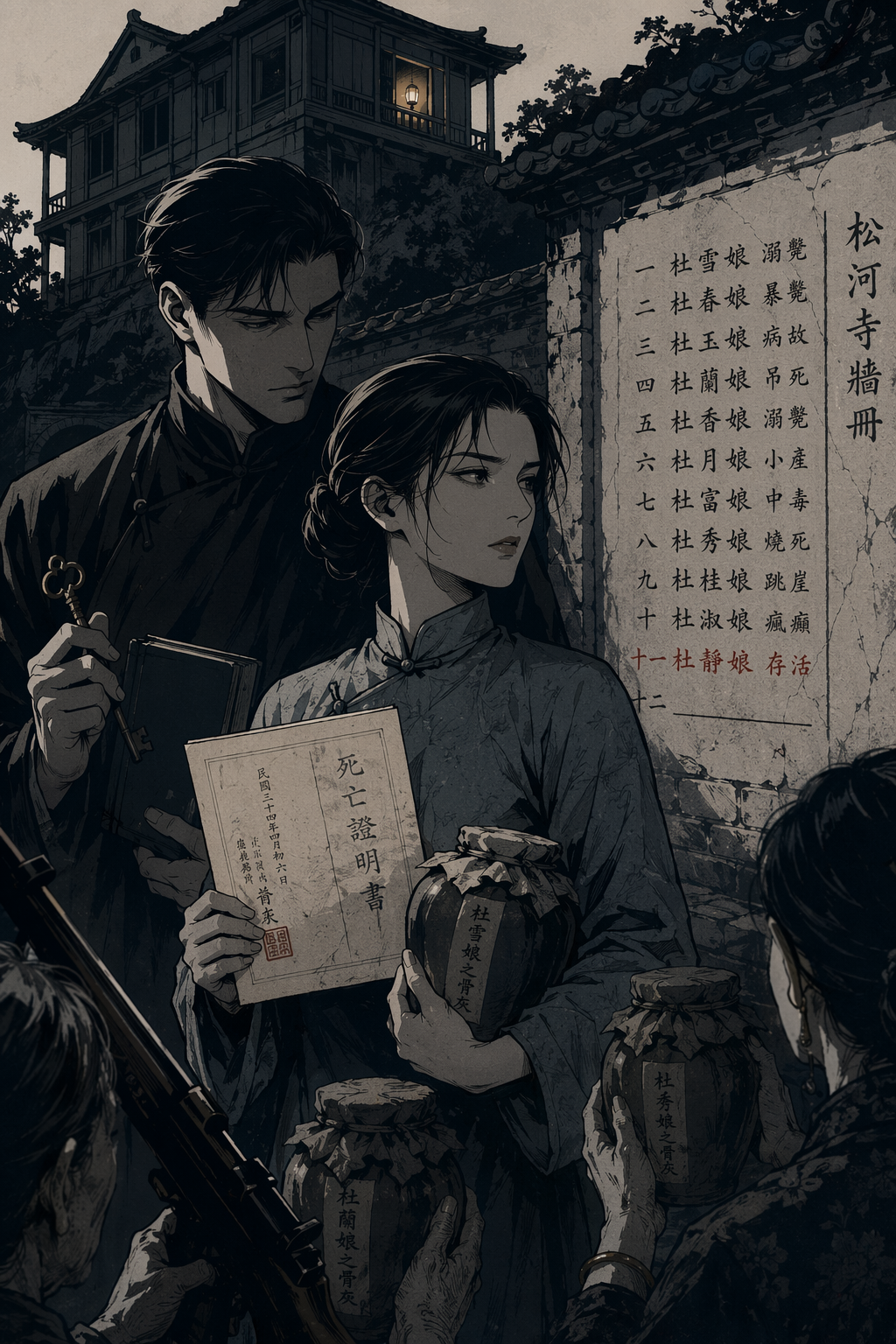
Liang Wen, a 23-year-old vet-school dropout in Chengdu, returns to the isolated mountain village she fled as a child after receiving her grandmother's death certificate and an old betrothal registry naming her as the twelfth bride of the Du family. Songhe Pass does not greet her with violence; it greets her with patience, food, water rights, and a public temple ledger listing eleven previous brides. The eleventh bride is marked not dead, but "survives." To protect the eleven-year-old half-brother she never knew was left behind, Wen has twenty-one days to either submit to the village's hereditary rite or watch her family lose its land and water. As Wen decodes the bride records, she discovers the rite is not a simple sacrificial marriage but a hidden system of death accounting: brides record the crimes the village wants forgotten and seal them in the Du altar so the mountain takes the debt instead of another child. Wen's choice becomes sharper than escape or surrender: expose the ledger publicly and risk being killed, or become another silent accountant for Songhe's sins.
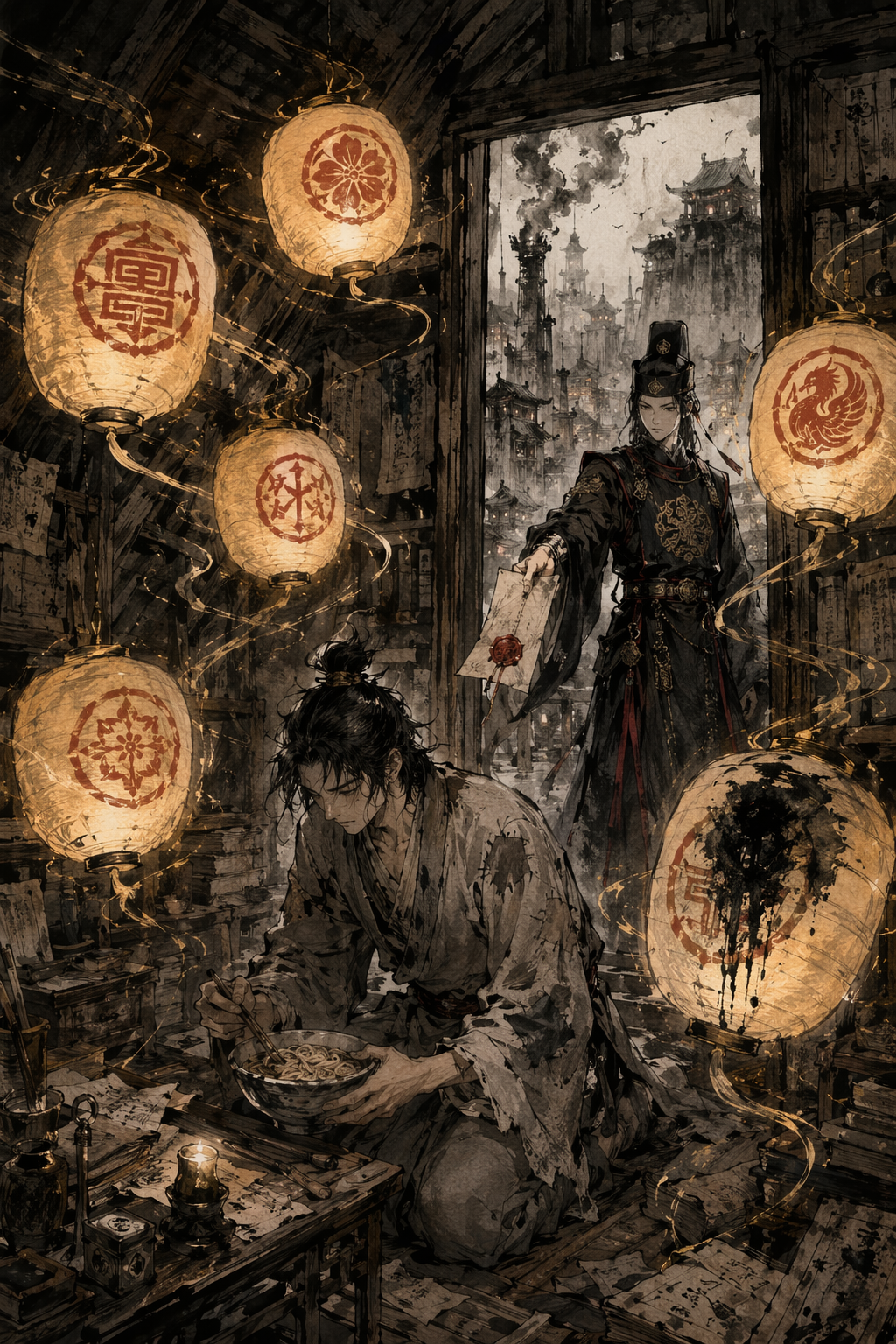
In the walled monastic city of Tsun-Ji, failed civil-service candidate Yu Sansheng wakes to six glowing paper lanterns on his attic floor. A Bureau of Restitution official informs him that he has inherited his grandfather's old office: Lantern-Keeper, bearer of six ancestral debts owed to dead families wronged by his bloodline. If any lantern is extinguished, the debt is collected from his body, organ by organ, in the order the claimant chooses. Yu has no money, no martial skill, and thirty days before automatic collection begins; his only weapons are six years of failed exam study, the city's Restitution Code, and a talent for staying polite while terrified. Each chapter follows one negotiation with a wronged family or institution, revealing that one lantern's filing number is forged by the very Bureau enforcing the debt. The pilot ends when Yu discovers the false debt is not attached to him at all, but to the person he most needs to protect.
In Bone-Bell City, nineteen-year-old Tan Jiaolin collects debts for Five Crane Exchange, a six-floor cultivator bank that owns eight more years of his life. When he inherits a forty-year-old witness coin that should have been melted, the coin grows warm inside the bank and points toward the grandmaster's restricted circle. Jiaolin wants only to protect his sister's last six months before freedom, but every floor he investigates reveals that his family's indenture began with a buried assassination loan. If he exposes the truth, he loses everything. If he sells or melts the coin, the lie that enslaved his family survives.
In Avermouth, a sunken naval fleet sealed into a pressurized underwater city, air is currency and every wrist carries a weekly breath-mark countdown. Tela Iguri, a twenty-three-year-old junior quartermaster of Hull Six, discovers her superior has been selling next month’s air to Hull Three, where Tela’s younger brother sleeps between shifts. Exposing the crime will save Hull Six from a full audit purge, but stopping the trade means opening a valve that floods the deck above the stolen air stock. With six days left on her own breath-mark and no witness willing to risk suffocation, Tela must choose who gets to breathe, who gets written off as arithmetic, and whether becoming the honest quartermaster means inheriting the same crime.
After her twin sister's death, Yoon-seo transfers into a new high school and is assigned the desk her sister once occupied. The boy beside her, Do-hyun, reacts as if a ghost sat down. What begins as a cruel coincidence becomes a chain of unsent letters, borrowed gestures, and one sealed message that suggests Yoon-ah understood more than anyone wanted her to.
Mire, a parlor-maid from a third-rate inn, is hired to impersonate the sickly Lady Sera Tessen for one autumn so a political marriage can be consummated and a dowry secured. Her face, voice, handwriting, and posture are close enough to fool even Sera’s mother, but her contract hides a poison clause and her younger brother is held hostage by the bride’s family. In the second week of marriage, the real Lady Sera dies, and Mire is told the role is now lifelong. Her cold archivist husband, Domnal Tessen, begins setting quiet tests only the true Sera would pass. As Mire searches Sera’s stolen diary for survival, she discovers Sera herself was once a replacement: the original girl died at seven, and the woman Mire is copying was named Iulia. By the monthly memorial, Mire must read sacred Old Tessen liturgy she cannot understand—only to find the page replaced with a passage copied from her own private letter to her brother. Domnal is watching. He knows.
At the Goldmoss Post-house on the imperial Salt Road, letters move by magic-stamped relay, and a ghost-stamped envelope can arrive before it was sent. Pae Soyeon, a broke backwater clerk supporting her siblings, knows the relay clauses better than anyone: she cannot refuse ghost-mail, she cannot answer it, and if she leaves her post her brother's debt-bond is forfeit. Then a letter arrives in her own handwriting, dated four months in the future: Stop reading the magistrate's mail. Each week, future-Soyeon writes again, angrier and more specific, naming crimes present-Soyeon has not yet committed, men she has not yet met, and children who have not yet died. As Soyeon investigates the magistrate's son, the courteous watch captain, and her own forged stamps on a caravan manifest, she realizes someone has been using her clerkship to launder atrocities through the relay. But the woman who already solved the mystery has chosen a simpler fix: come back on the new moon and kill herself before she becomes herself.
In Songrim Prefecture, all debt lives inside enchanted ledgers that grow heavier as the debt grows. Chae-on, a broke third-rank debt-broker, buys a dying broker’s final casefile for the price of one meal and becomes the sole creditor of a forty-year debt owed by all 312 residents of the fortified Yusan Compound. If he forgives it, his career and dead brother’s reputation are ruined; if he collects it wrongly, the compound is seized by his corrupt bureau. Armed only with patience, paperwork, and the ability to read a ledger’s chain of ownership, Chae-on must survive assassins, noble bargaining, and hidden signatures that prove the debt was engineered by the very people hunting him.
Cao Ling-er enters the Imperial Consort Examination with one goal: fail gracefully for thirty days and receive the return-bride tattoo that will legally free her from marriage forever. Armed with her dead aunt's secret notebook of beautiful failures, she sabotages her poems, music, clothing, and embroidery without crossing the line into treason. But the dawn rank board keeps climbing instead of falling. By day three she learns that someone has been correcting her failures; by day ten a rival princess is protecting her rank; by day twenty-one the Crown Prince himself has begun overturning her losses. The higher Ling-er rises, the more she realizes the examination is not choosing a bride — it is reopening the sealed truth of her aunt's death.
In the fog-drowned city of Greyveil, every supernatural bargain is filed, taxed, and enforced by the Veil Court — and Adrian is the least important clerk in it. He is anxious, overlooked, and hiding one impossible talent: by reading the shadow a pact casts, he can see its true terms and every buried clause. The price is a memory of equal emotional weight. When his sister Elara collapses, her shadow peeling like wet ink, Adrian learns she signed a pact seven years ago to save his life from the Greyveil Fever — and the debt has come due. To reach the vault where her contract is sealed he must rise through the Court's ranks, burning his own past for every promotion, outmaneuvering the legacy auditor Cassian who suspects exactly what he is. But Elara's contract is only a tributary. The Veil Court itself is one enormous pact, founded to keep the city's shadows fed on forgotten things so they never turn on the living — and it is fraying. Adrian finds the anchor clause, the one loophole that lets him rewrite the terms. The cost is everything he has ever been.
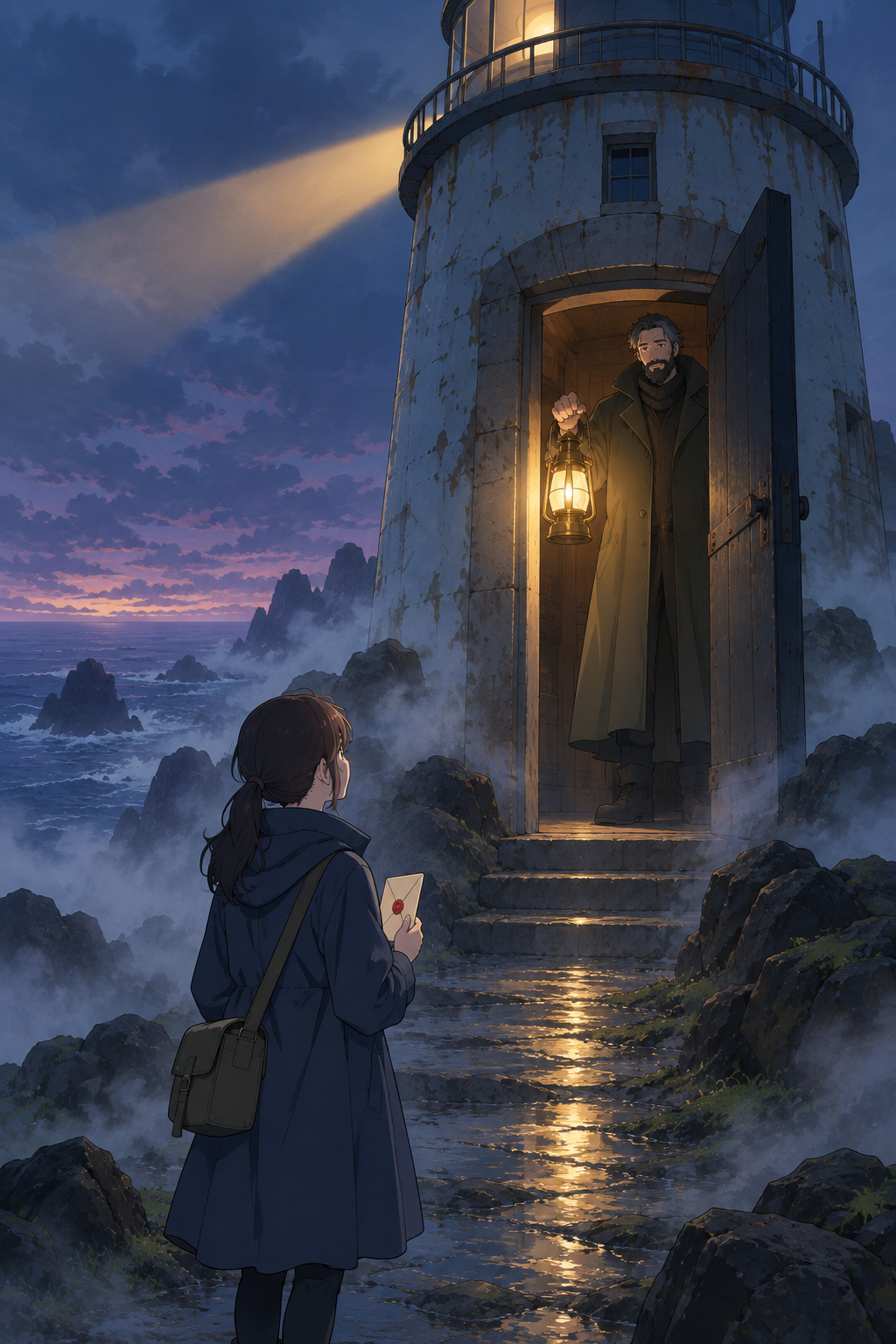
Yoon Seol works for the Night Post, a courier service that delivers letters the living cannot. When a parcel addressed to Kim Muwon—lighthouse keeper, died ten years ago—appears on her route, the red string on her wrist refuses to let her quit. At Cape Yeongdo she finds the keeper alive, the lighthouse lit, and a sealed letter that knows her name. To finish the delivery, Seol must open the one door she has spent her life avoiding: the night her father drowned.
“Upon hearing The Fool’s question, Audrey did not immediately answer like in the past. Instead, she widened her crystalline eyes and glanced at The Hanged Man with a scrutinous attitude. Alger subconsciously subdued his body motions. After…”