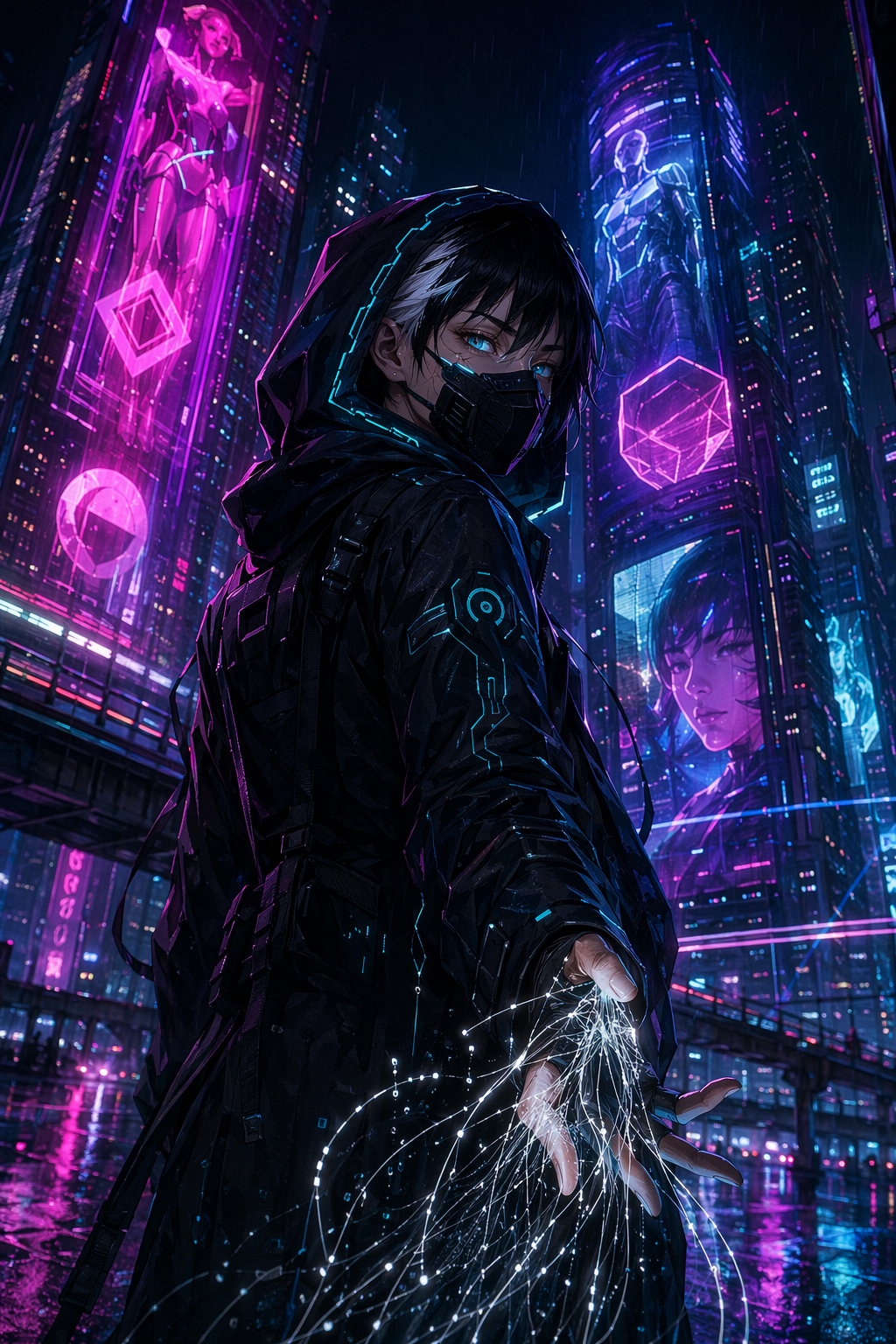
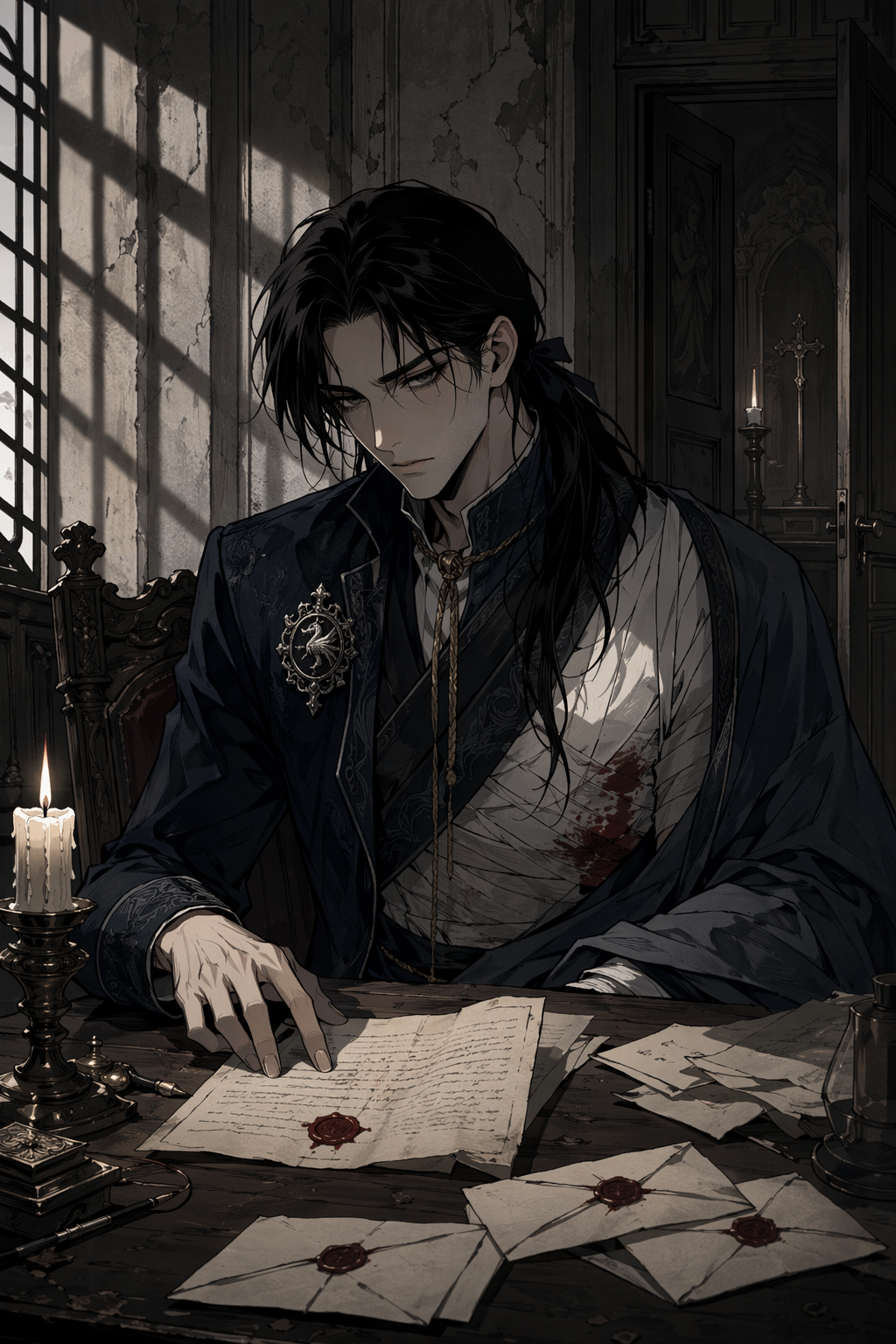
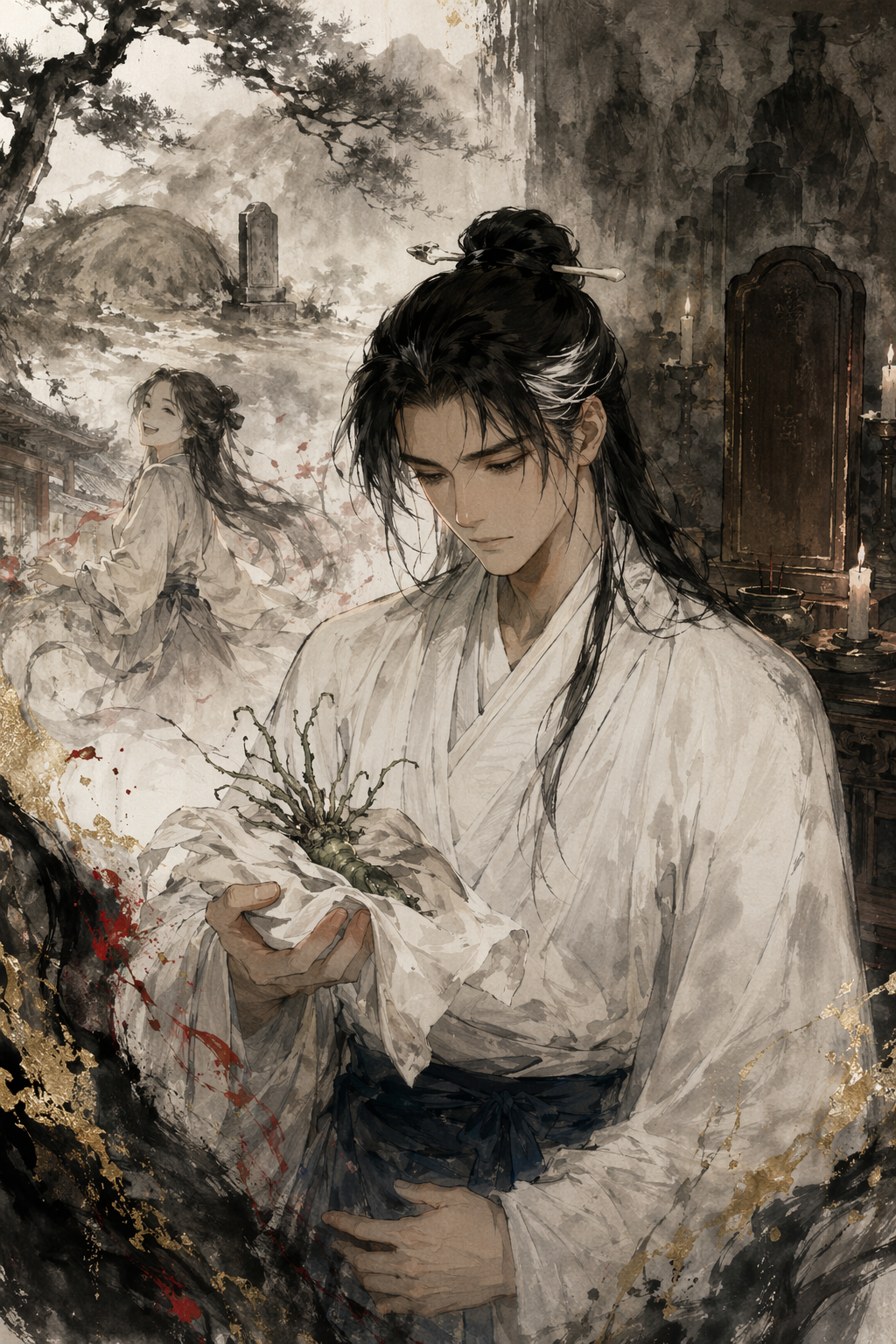
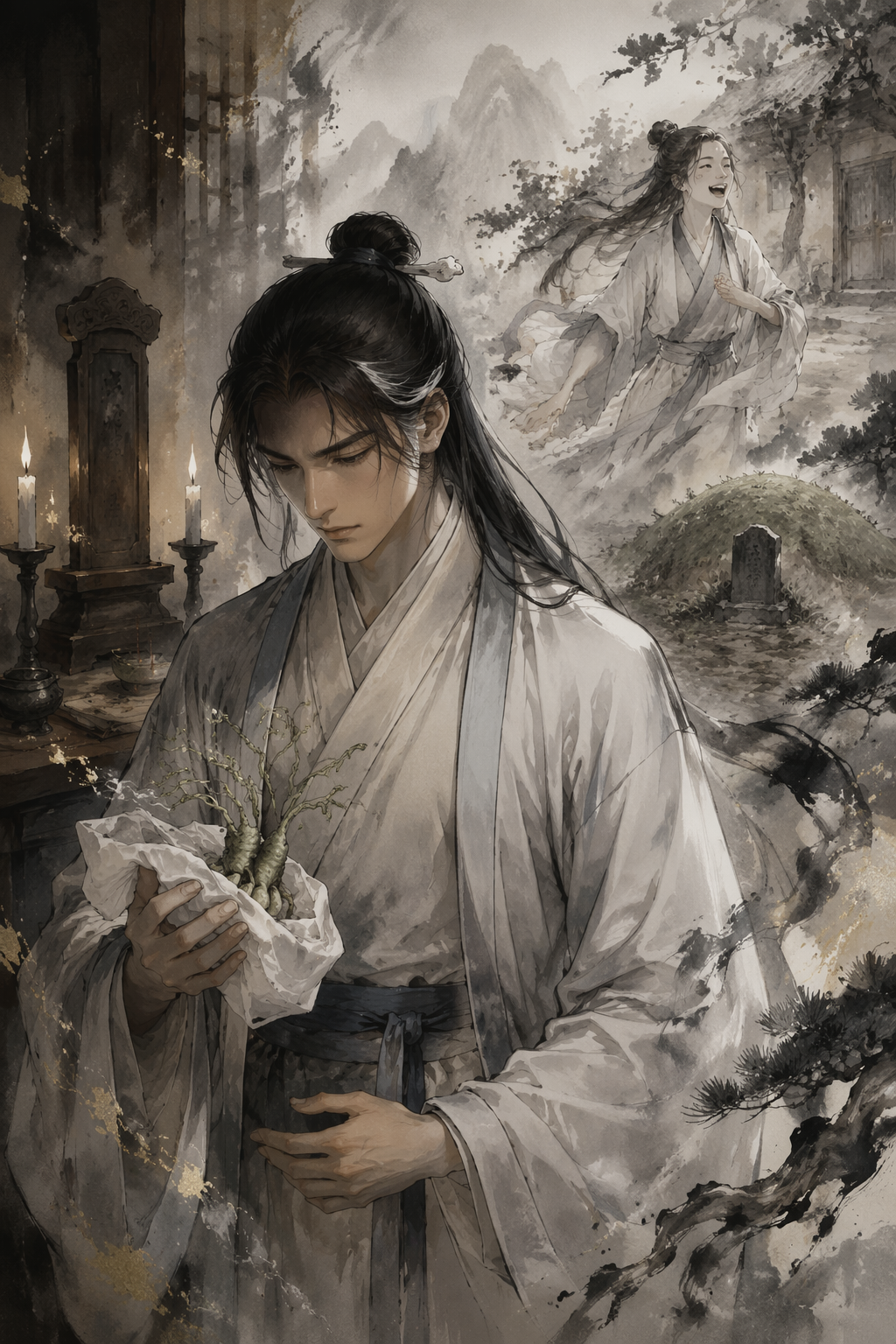
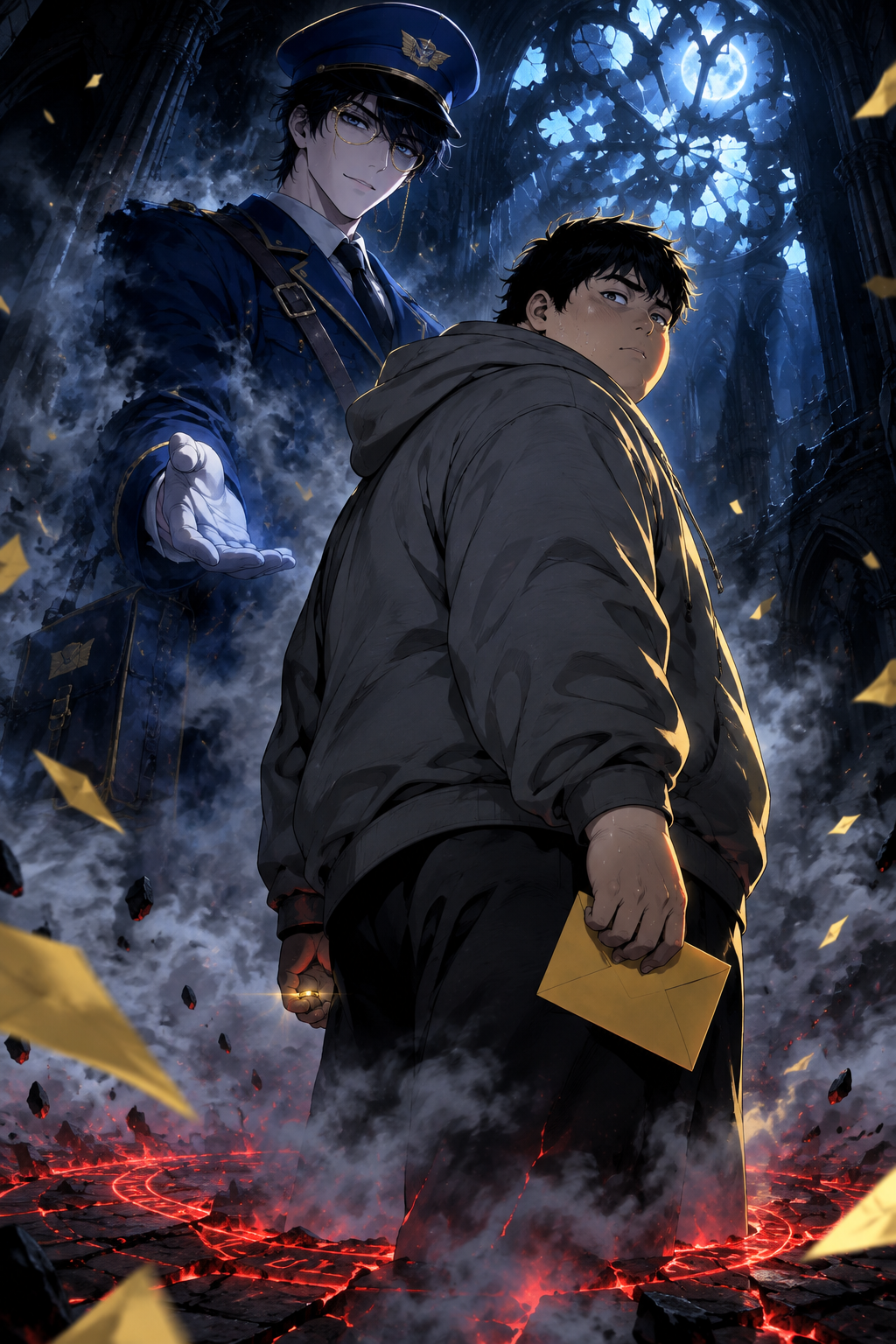
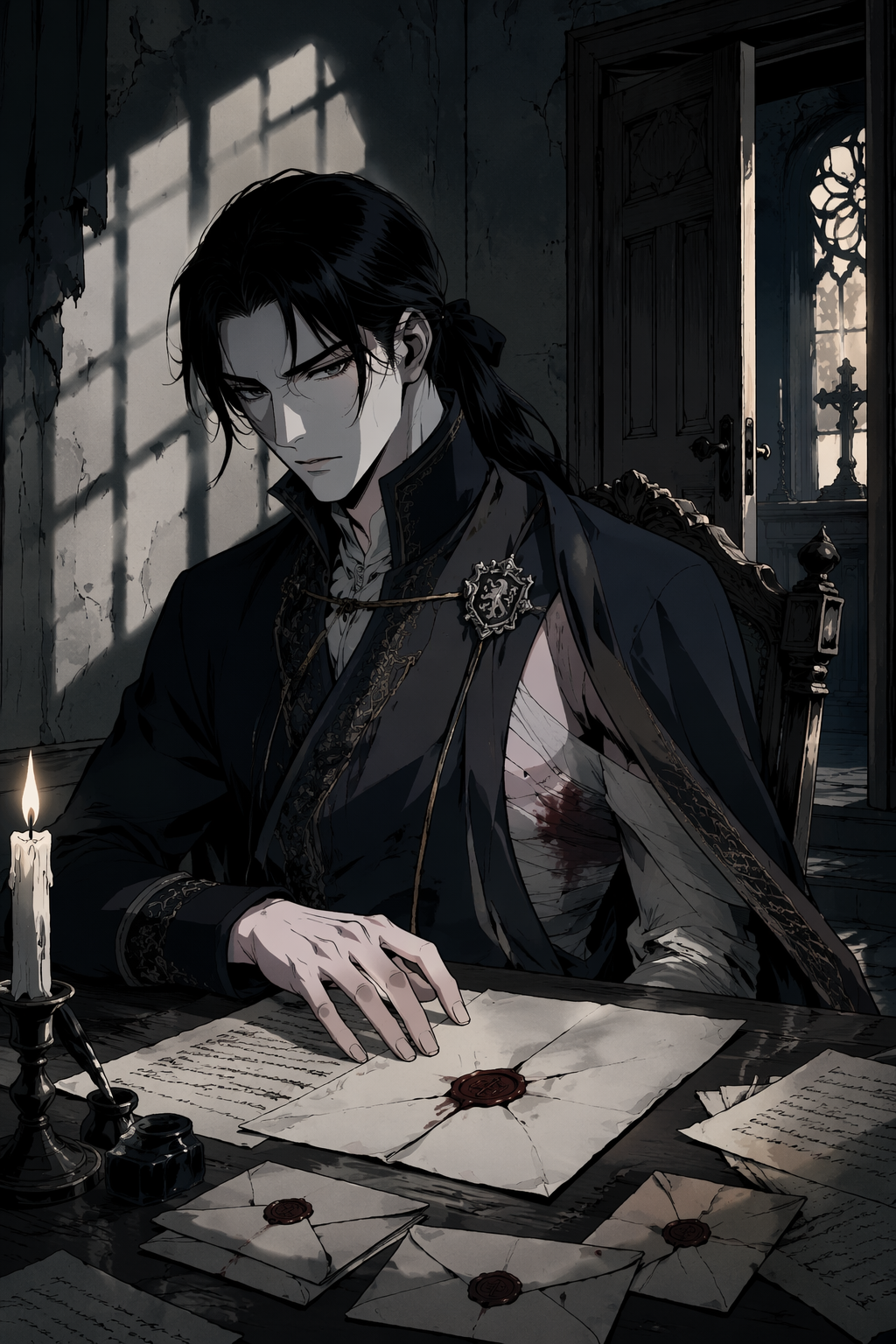
Han Yujin is the soft second-year nobody at Royal Eternal Academy — until the Duchess's daughter Cheon Arin transfers in and swears she will protect him this time. The reader assumes standard regressor-romance. They are wrong.
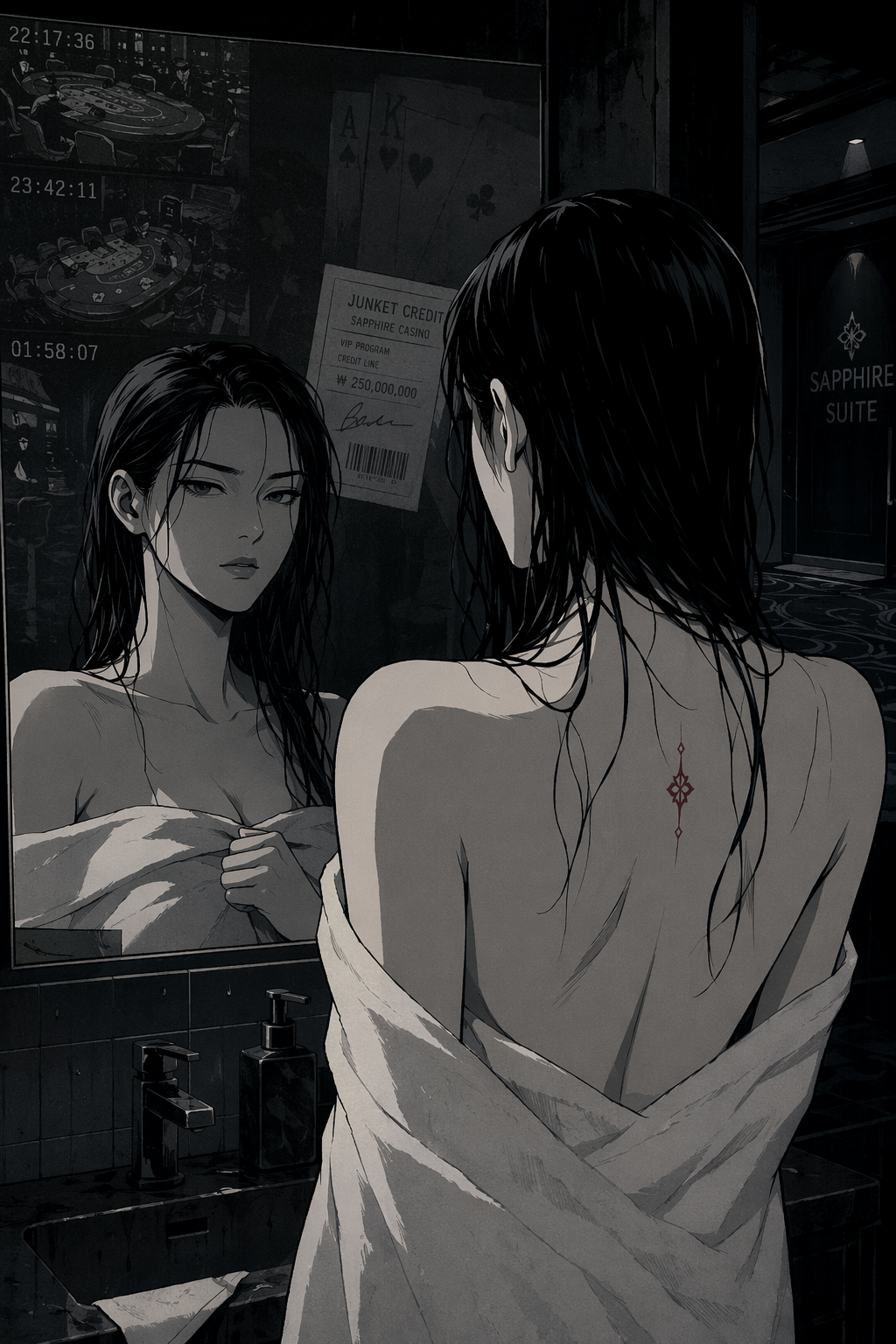
Choi Hayun, the coldest blackjack dealer in Macau's Sapphire Suite, has stayed sober for two years by never touching a bet. One Monday, she steps out of the shower and discovers a tiny creditor's marker tattooed between her shoulder blades—authorizing any junket affiliate in Macau, Manila, or Vladivostok to detain her over a 4.2 million HKD debt she has no memory of taking. The casino records show her handprint, two witnesses, and a missing corridor-camera gap from the night she supposedly signed. Using her perfect recall of high-stakes play and the casino's own surveillance system, Hayun reconstructs the missing Monday piece by piece, exposing a scheme that turns dealers into collateral. But clearing one man's trap only delivers her into the hands of a colder creditor who knows exactly how to make sobriety feel like captivity.
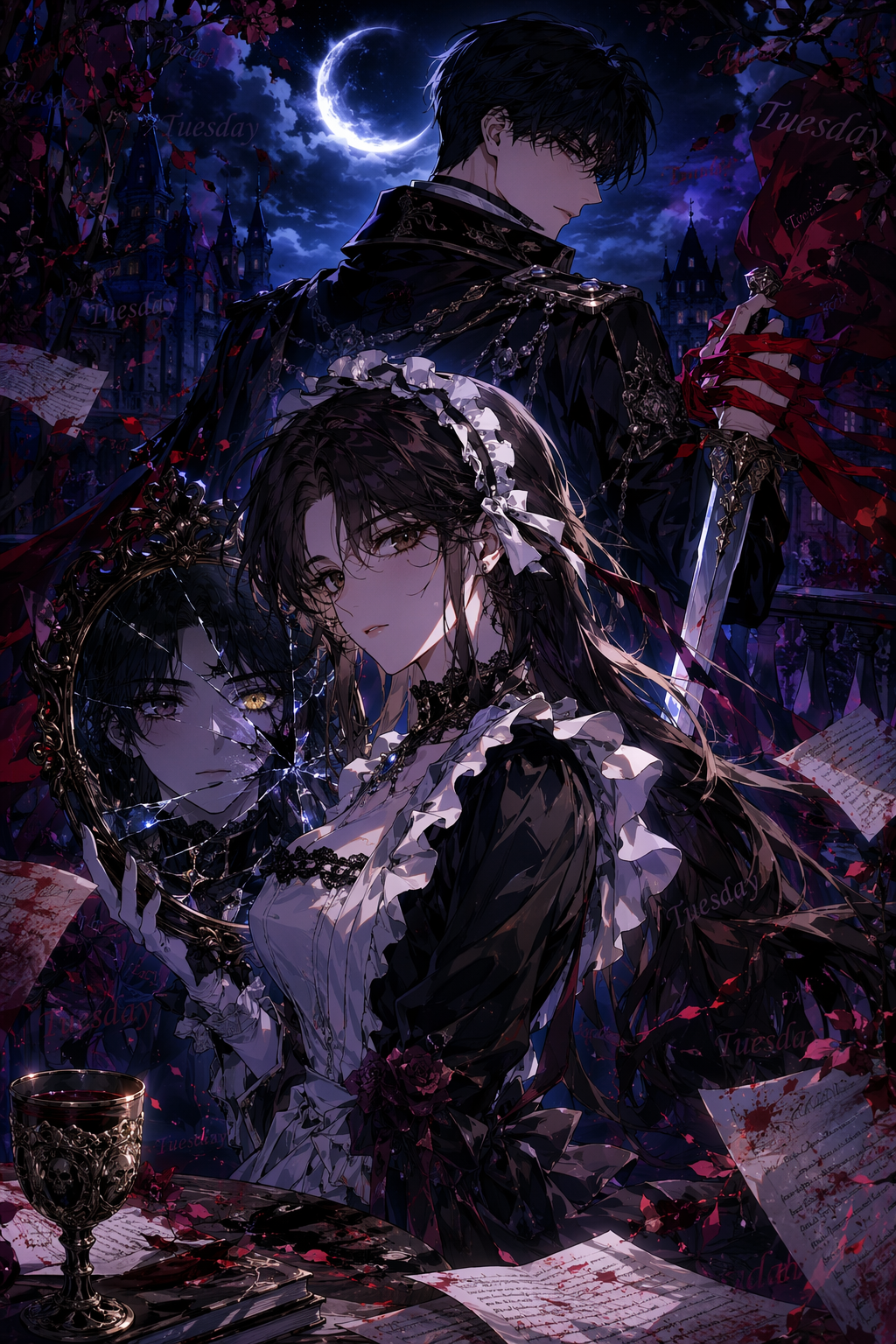
Park Dahee, a burned-out webtoon assistant, collapses after a brutal deadline and wakes inside the romance fantasy she was coloring as Elodie Valente, a disposable maid in the house of Duke Caelum—the infamous male lead who kills wife after wife until the story grants him a destined true love. Dahee knows the plot and only wants to survive quietly, but Tuesday keeps repeating whenever someone dies by the duke’s hand. When Caelum reveals he remembers the loops too, Dahee believes she has found another prisoner of the story. They decode the rules, fall into a desperate romance, and choose death together to escape the author’s cage. But Dahee wakes again to a duke who has never met her, a mirror with golden eyes staring back, and a novel page revealing the truth: she is not the maid. She is the villainess who built the cage.
Burned-out webtoon assistant Park Dahee wakes inside the romance fantasy she was coloring as Elodie Valente, a maid in the estate of the genre's cruelest duke. She knows Tuesday is execution day. She fails to stop it, dies into morning, and learns the day resets whenever Duke Caelum kills. Across repeated Tuesdays, Dahee and Caelum become allies, then almost something more, trying to break a rule that demands love be proven by death. But Tuesday has an owner, and the cage may have Dahee's face.
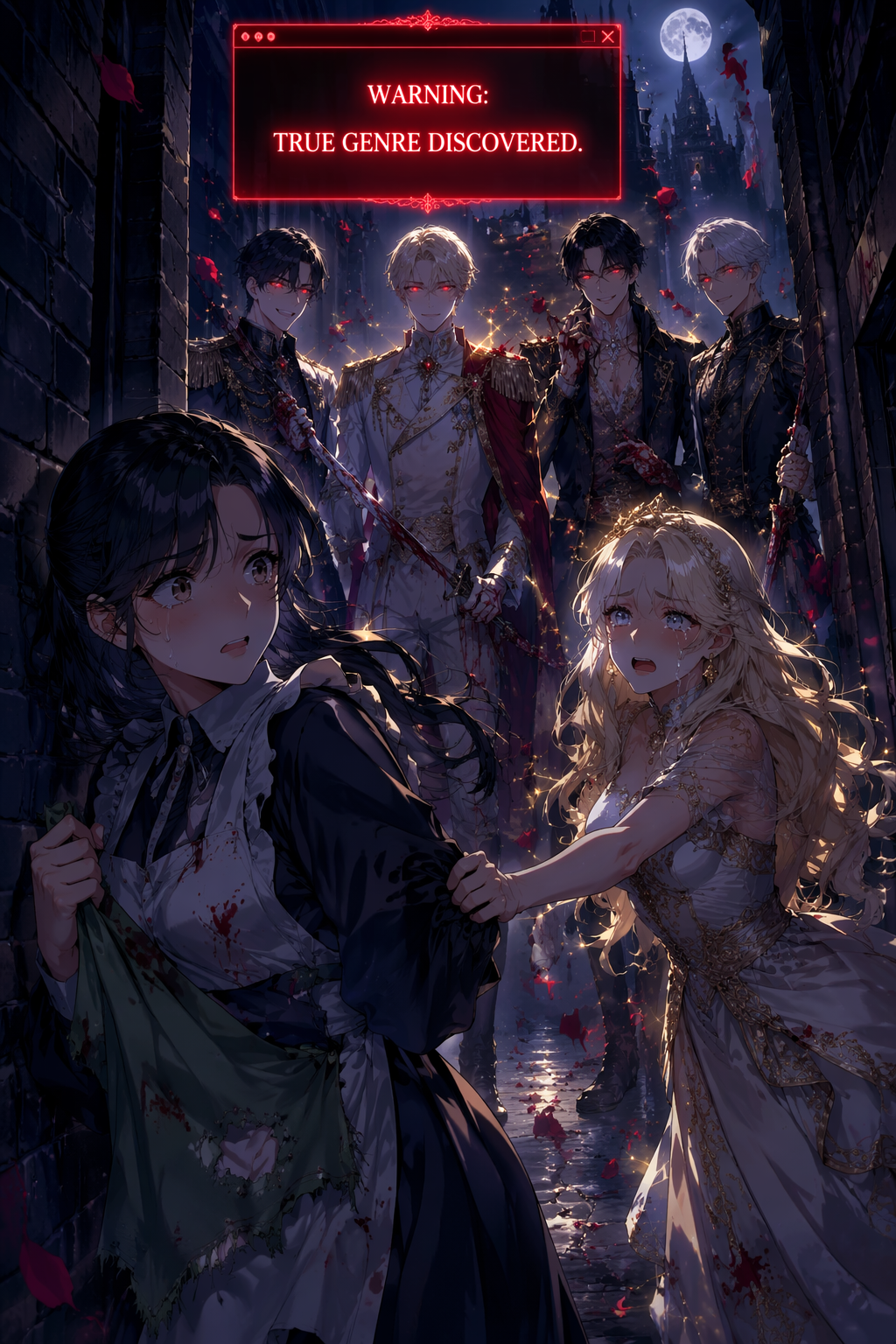
Kim Su-Jin wakes inside the world’s most famous romance-fantasy webnovel, The Duke’s Light, as a nameless maid destined to die in Chapter 1. Using her reader knowledge, she dodges the scripted bandit murder and hides in a quiet café, hoping to watch the heroine Aria’s glittering romance from a safe distance. At first, every iconic scene unfolds exactly as fans remember: the Prince’s dazzling rescue, the Duke’s brooding protection, the Mage’s mysterious gifts, and the Knight’s loyal devotion. But Su-Jin begins noticing what the original narration hid: blood on cuffs, buried evidence, rehearsed smiles, and romance effects that appear like camouflage over something rotten. When Aria corners Su-Jin in an alley and begs for help, the truth breaks open: the male leads are not saviors, the story is not romance, and the system has been waiting to punish any extra who discovers the real genre.
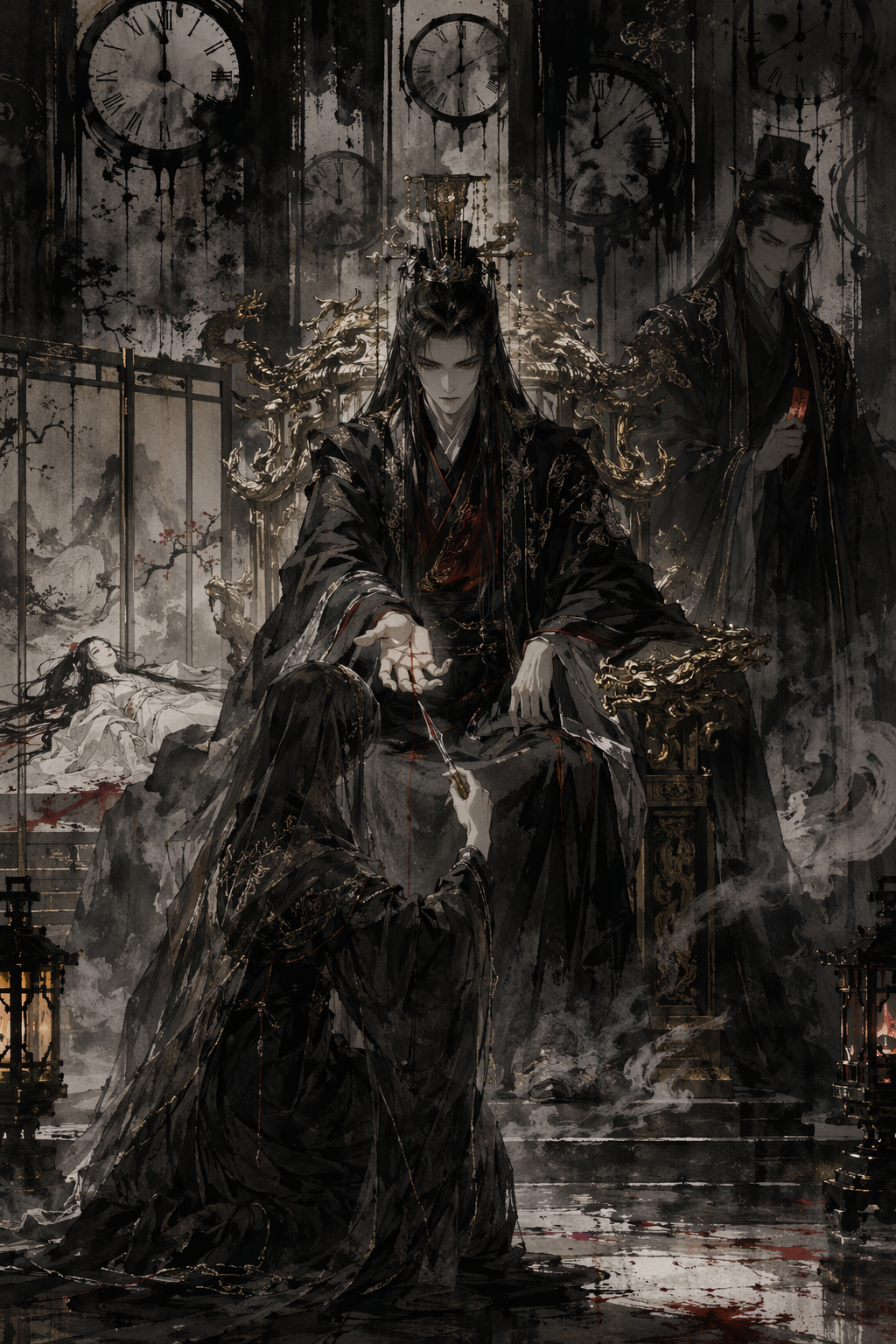
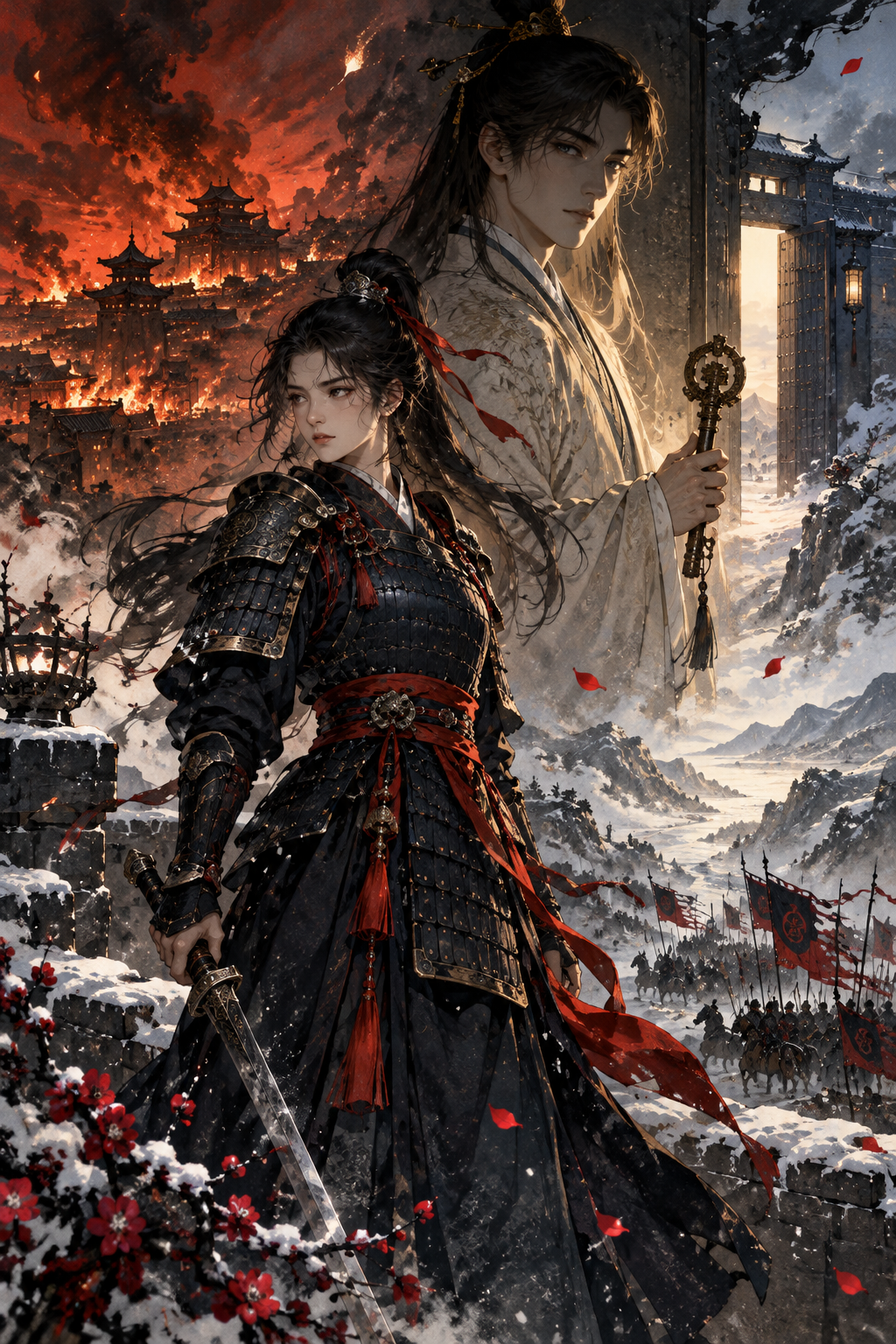
In the industrializing empire of Sao-Lan, succession is decided by the Twelve Hours: one night, twelve courtiers, twelve questions, and no movement from the throne until dawn. Wei Qun has survived six years as Princess Lu Min's decoy, trained to imitate her voice, tears, handwriting, and childhood scars. She is told the real princess will replace her before the seventh hour, when the Hand-of-Verification reads the heir's palm. Two hours into the vigil, Wei Qun realizes Lu Min is dead, the swap will never come, and one wrong answer will expose her as an impostor. Trapped in a sealed throne hall with the empire watching through ritual screens, Wei Qun must answer as a princess, think as a detective, and become more dangerous than the conspiracy that meant to kill her.
In a post-imperial mourning court, young Queen Dowager Seo Ha-eun must publicly grieve for one hundred days to keep her dead husband's title, lands, and her imprisoned mother alive. Ha-eun is a perfect ritual reader who can cry on command, but she never loved the king she married for only forty-one days. When a note in the late king's handwriting accuses her of crying the wrong number of tears, she follows the trail into the forbidden seventh-veil sanctum and finds her husband alive, chained, watching, and grading her sincerity. As the court punishes her technical failures and the hidden king rewards them, Ha-eun realizes she is trapped between two systems of ownership. Her only rebellion is to fail beautifully enough that the right witness cannot look away.
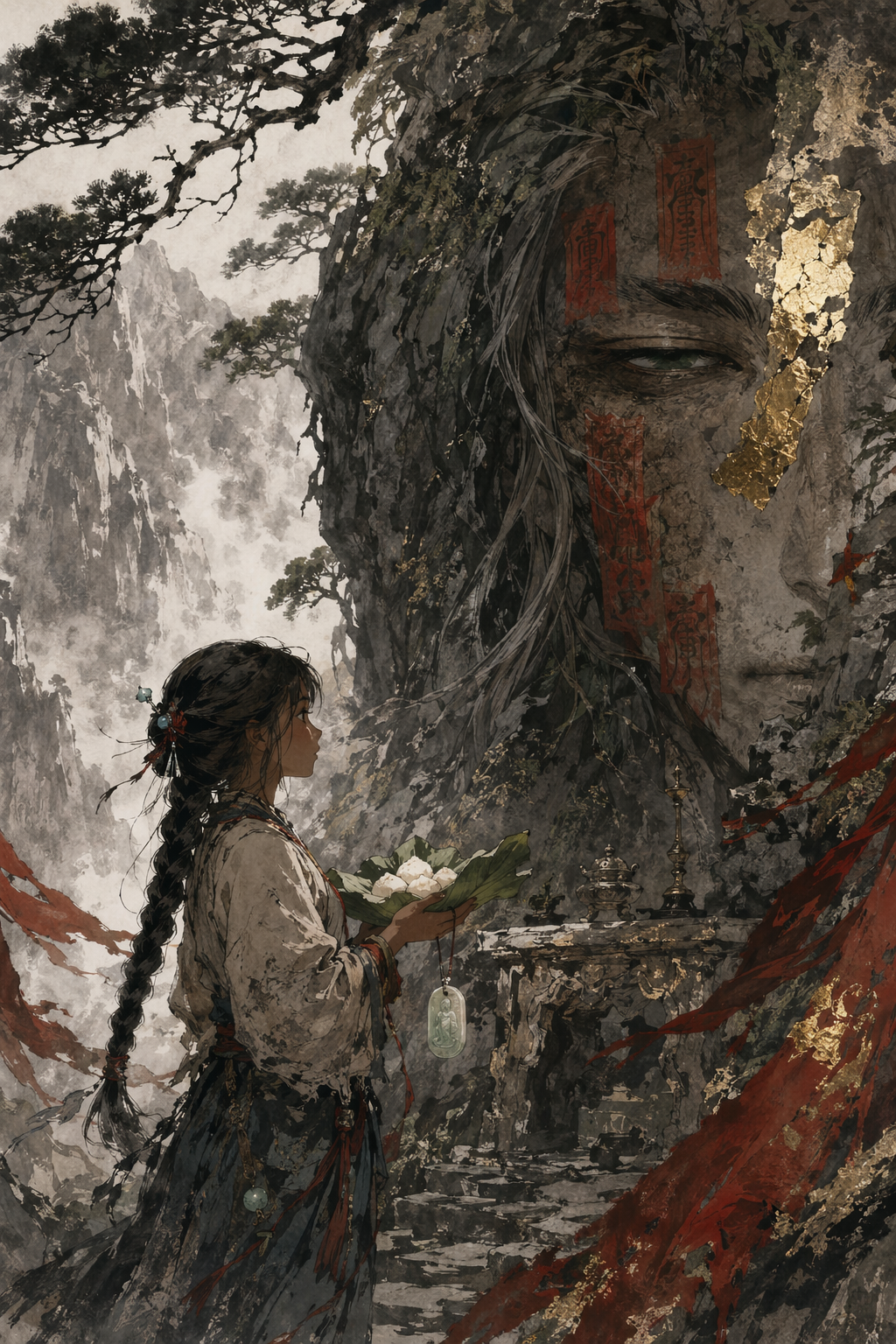
In the industrial river-port of Ren-Hai, licensed pawnshops accept memories as collateral: a face, a scene, a feeling sealed into jade and fully erased from the customer until redeemed. Han Xinyu, the twenty-year-old heir of an old bridge pawnshop, is calm, exact, and trapped by law. When a stranger pawns a memory that shows her own father’s murder, Xinyu cannot report what she saw, cannot return the memory, and cannot abandon the shop without losing her family’s livelihood. Each new transaction gives her one more legal clue in a twelve-year-old conspiracy—until the trail leads not only to officials and assassins, but back to her dead grandfather’s private ledger.
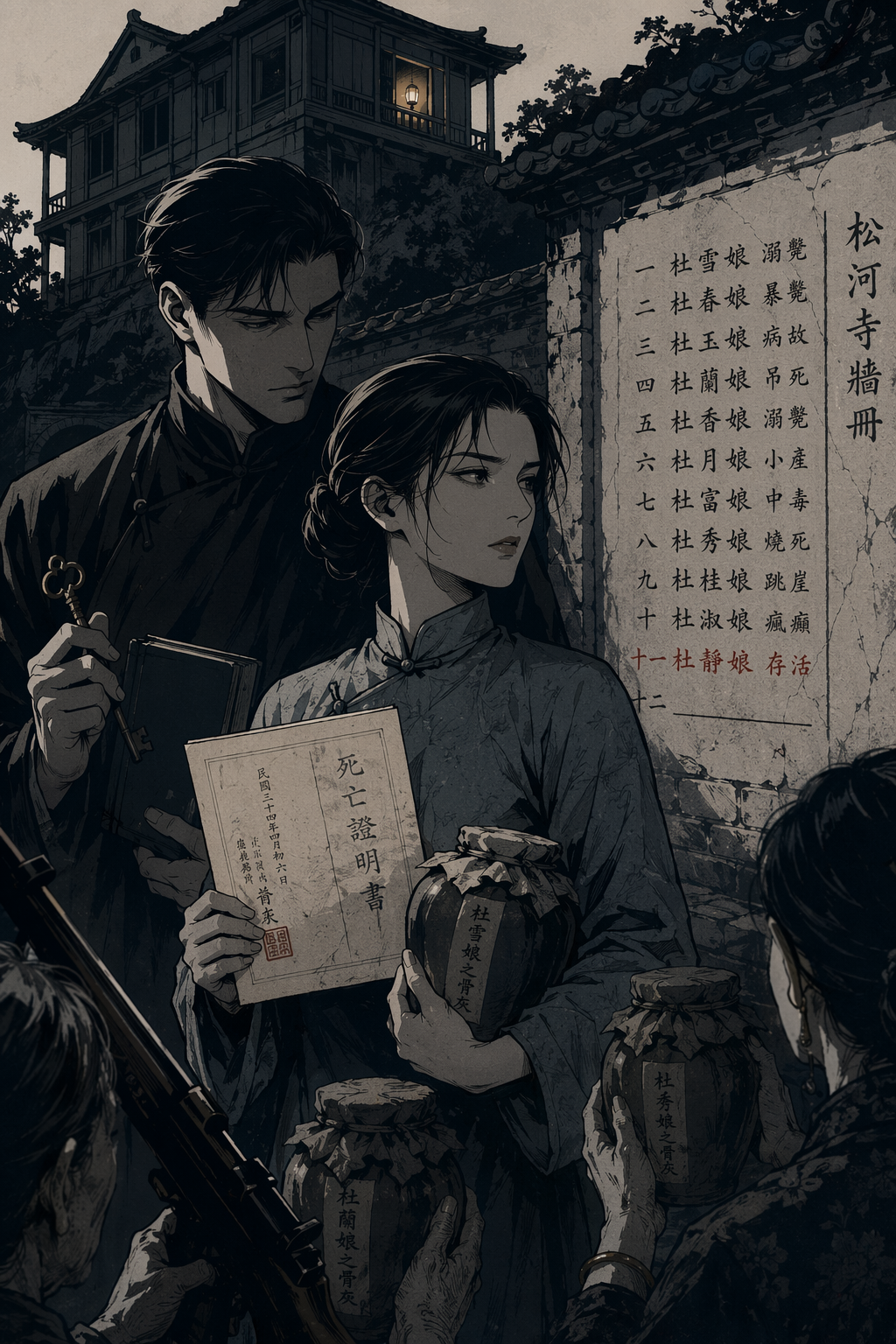
Liang Wen, a 23-year-old vet-school dropout in Chengdu, returns to the isolated mountain village she fled as a child after receiving her grandmother's death certificate and an old betrothal registry naming her as the twelfth bride of the Du family. Songhe Pass does not greet her with violence; it greets her with patience, food, water rights, and a public temple ledger listing eleven previous brides. The eleventh bride is marked not dead, but "survives." To protect the eleven-year-old half-brother she never knew was left behind, Wen has twenty-one days to either submit to the village's hereditary rite or watch her family lose its land and water. As Wen decodes the bride records, she discovers the rite is not a simple sacrificial marriage but a hidden system of death accounting: brides record the crimes the village wants forgotten and seal them in the Du altar so the mountain takes the debt instead of another child. Wen's choice becomes sharper than escape or surrender: expose the ledger publicly and risk being killed, or become another silent accountant for Songhe's sins.
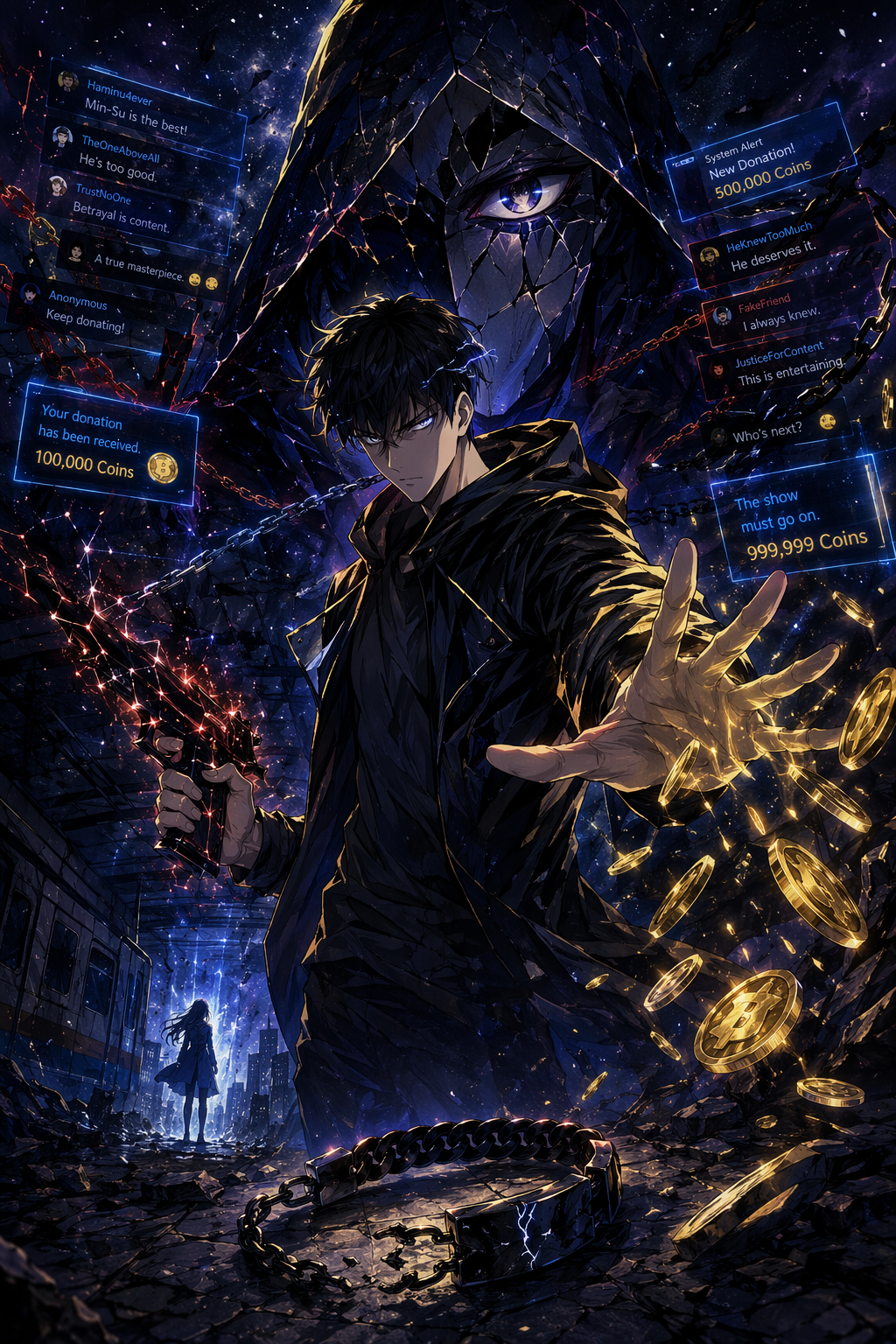
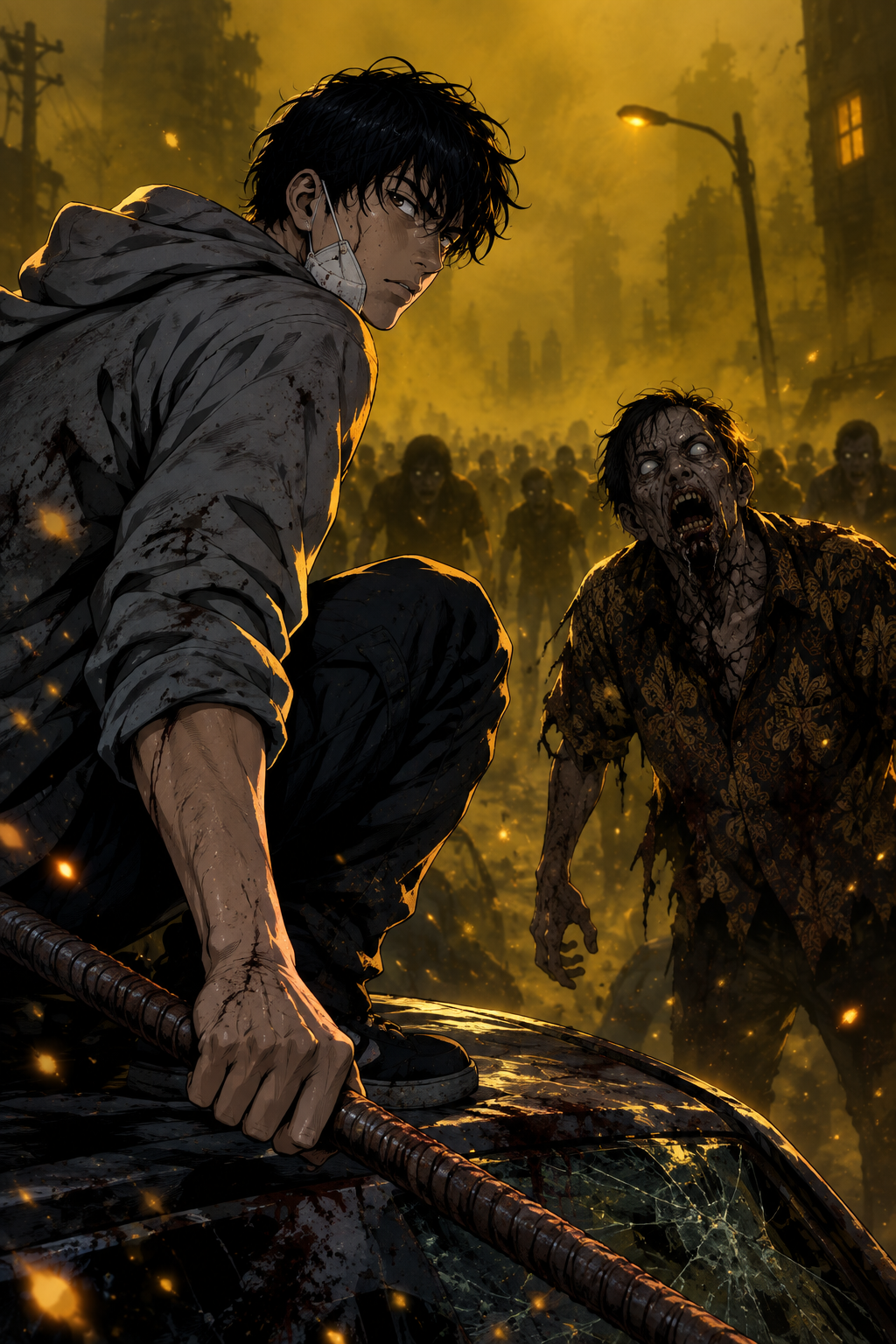
When the sky cracked open, Earth did not end like a prophecy. It went live. Every human became a performer in the Star Stream, a celestial broadcast where Constellations watch, comment, donate Coins, and force survivors through deadly Scenarios for entertainment. Those with beauty, violence, charisma, or useful sponsors rise like idols. Those without viewers are erased by monsters, penalties, or starvation.
Han Min-Su is a bottom-tier streamer with no talent for killing and no talent for being loved. His only advantage is the sponsor he hates most: the infamous Constellation known as [The Architect of Betrayal]. The Architect donates absurd amounts of Coins, but only when Min-Su lies, manipulates, humiliates allies, or commits acts that make the chat explode. Every weapon Min-Su receives is paid for with someone else’s trust. Every survival skill comes with a message demanding he become colder.
Min-Su plays the villain because he has one reason to live: his younger sister, Seo-Yeon, trapped in another Scenario district and depending on the medicine and protection only Coins can buy. His best friend, Park Jae-Hyun, still believes the old Min-Su is buried under the act, but the viewers prefer the mask. They clip his worst moments, reward his cruelty, and punish every sign of mercy.
Across five chapters, Min-Su is pushed into increasingly personal broadcasts: betrayal tutorials, popularity rankings, team missions designed to turn friends into content. At the center is a final Scenario where Min-Su and Jae-Hyun are chained to a stage before millions of celestial spectators. The rule is simple: sacrifice your closest bond or die together. The chat demands blood. The Architect donates 1,000,000 Coins and orders Min-Su to pull the trigger.
Then Min-Su notices impossible details in the Architect’s messages: phrases only he and Seo-Yeon know, strategies built from future regrets, a hidden scar mirrored in the Constellation’s avatar. The Architect is not a god. He is Min-Su, one thousand years ahead in the time-dilated Star Stream, a ruined survivor who believes the apocalypse can only be beaten by murdering his younger self’s humanity early.
Instead of obeying, present Min-Su looks past the chat, past the system window, and directly into the webtoon panel itself. He rejects the Coins, refuses the role written for him, and declares war on the future self who turned his pain into content.
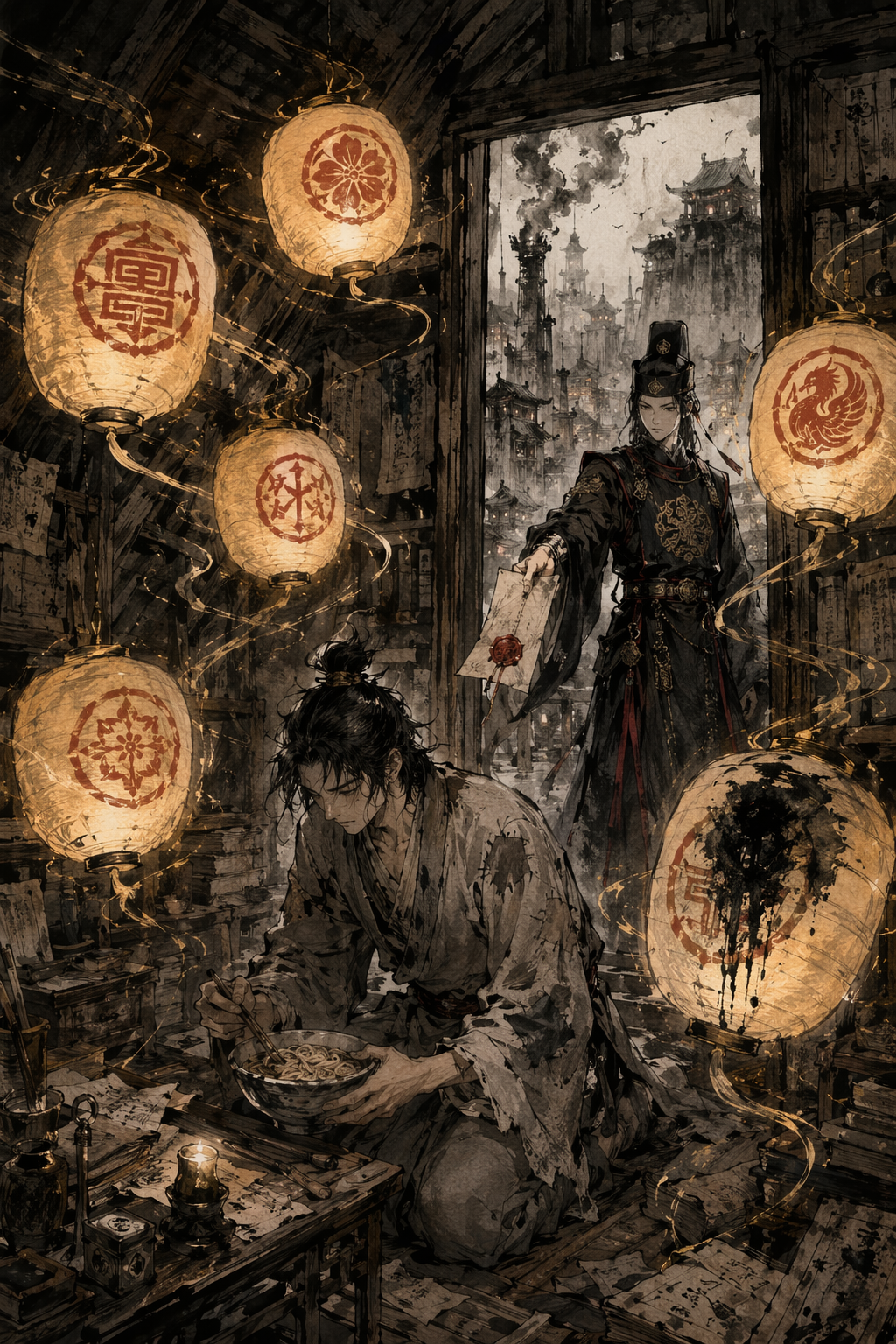
In the walled monastic city of Tsun-Ji, failed civil-service candidate Yu Sansheng wakes to six glowing paper lanterns on his attic floor. A Bureau of Restitution official informs him that he has inherited his grandfather's old office: Lantern-Keeper, bearer of six ancestral debts owed to dead families wronged by his bloodline. If any lantern is extinguished, the debt is collected from his body, organ by organ, in the order the claimant chooses. Yu has no money, no martial skill, and thirty days before automatic collection begins; his only weapons are six years of failed exam study, the city's Restitution Code, and a talent for staying polite while terrified. Each chapter follows one negotiation with a wronged family or institution, revealing that one lantern's filing number is forged by the very Bureau enforcing the debt. The pilot ends when Yu discovers the false debt is not attached to him at all, but to the person he most needs to protect.
After her twin sister's death, Yoon-seo transfers into a new high school and is assigned the desk her sister once occupied. The boy beside her, Do-hyun, reacts as if a ghost sat down. What begins as a cruel coincidence becomes a chain of unsent letters, borrowed gestures, and one sealed message that suggests Yoon-ah understood more than anyone wanted her to.
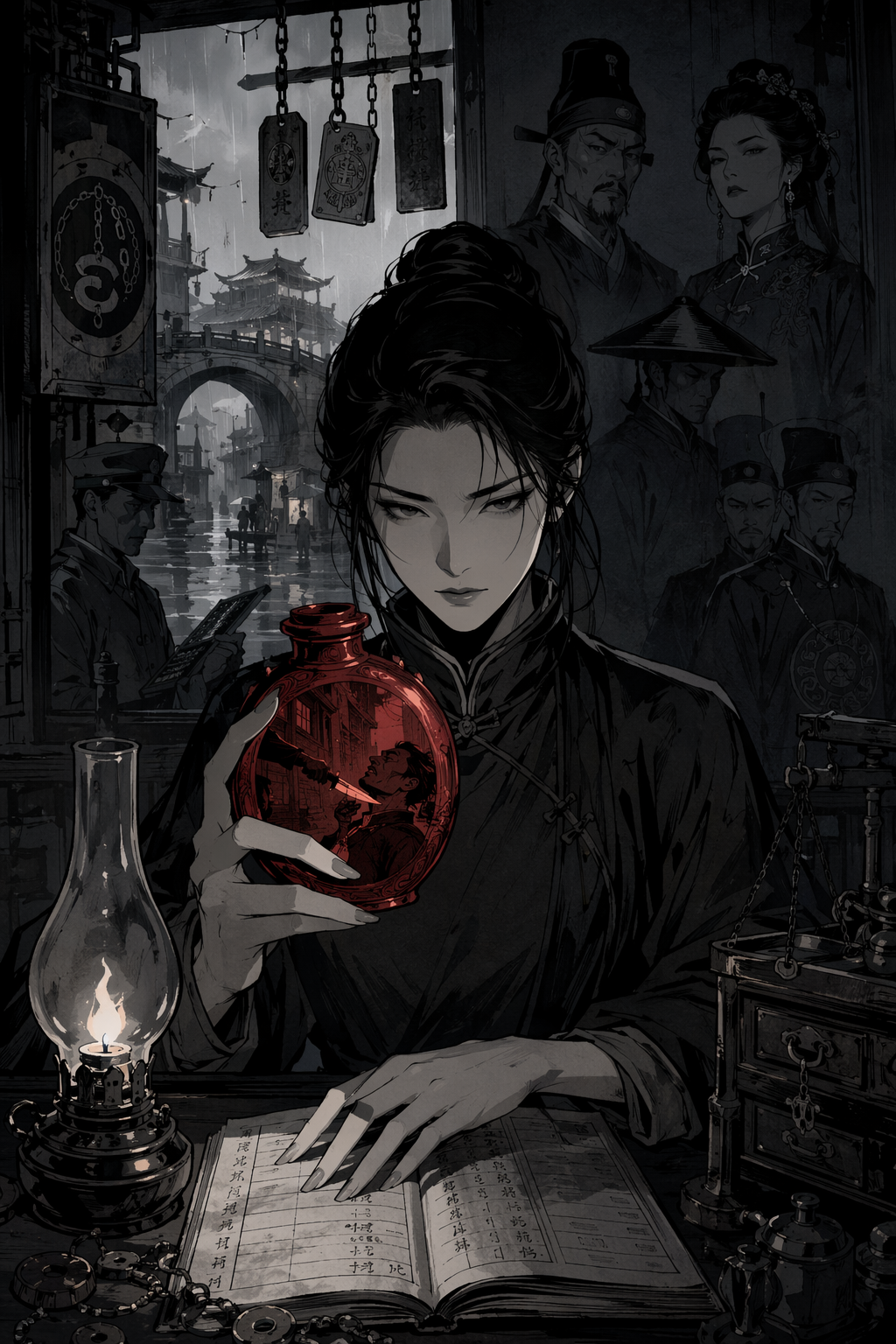
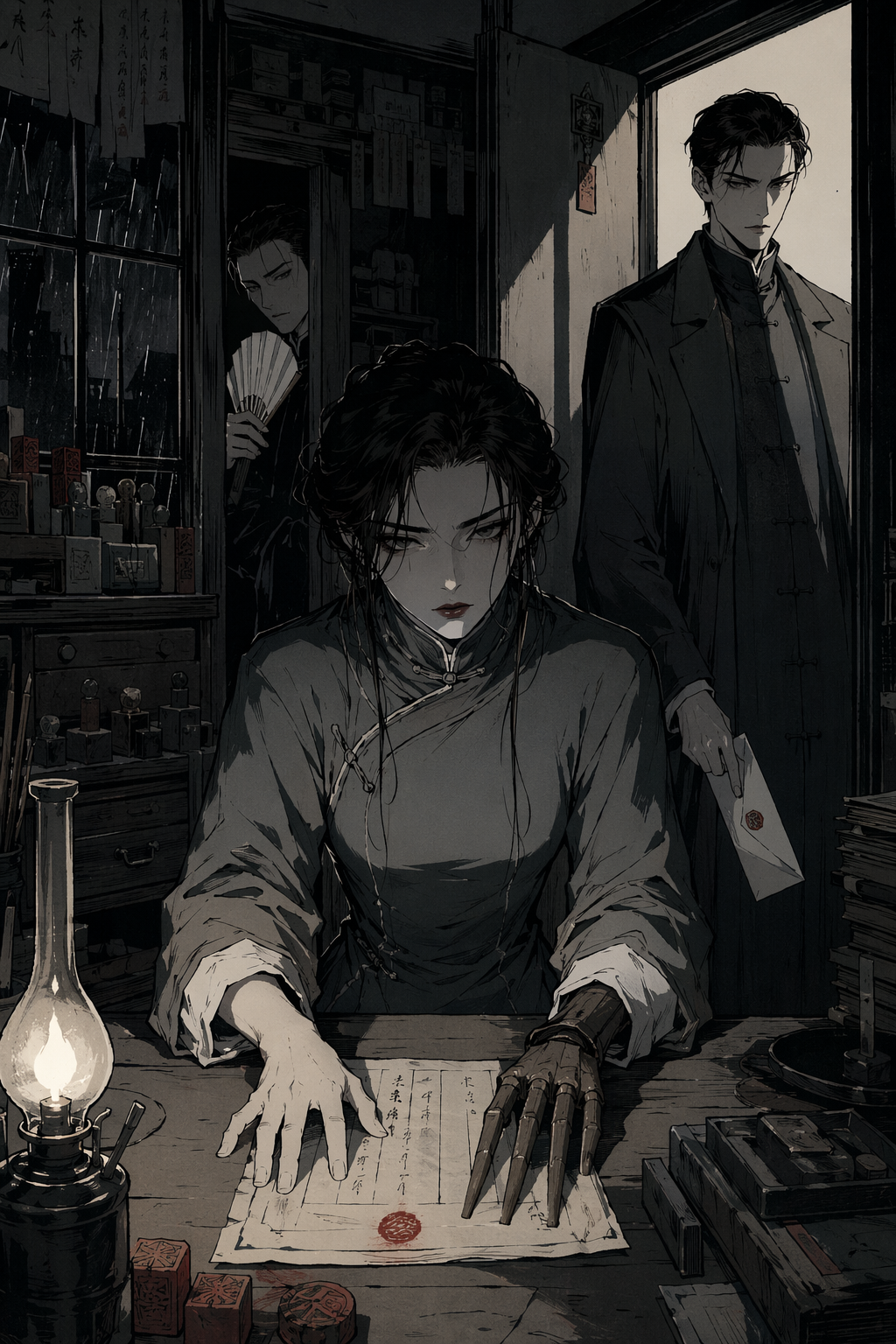
In a 1920s Shanghai-coded foreign concession, Wen Jia survives by telling the truth about other people's lies. She is the only certified woman documents-expert in the city, famous for reading a person's hand through pressure marks, ink sediment, and seal flaws. She is also a convicted perjurer with three wooden fingers, because three years ago Bai Lou, the beautiful and terrifying head of the Lotus Pier syndicate, paid her to certify a forged debt. Now Bai Lou hires her to authenticate the supposed last letter of Bai Yan, a dead heiress whose estate can shift the balance of the underworld. Halfway through the examination, a woman enters Wen Jia's atelier pretending to be Bai Yan's twin. Wen Jia recognizes the woman's penmanship from the letter itself: the dead heiress is alive. If Wen Jia refuses the job, Bai Lou exposes her old bribe receipt. If she lies under oath, the court takes her remaining left thumb and her license. If she tells the truth, Bai Yan may die. The pilot unfolds as a locked-room psychological duel between three predators: a forger who cannot lie, a dead woman who wrote her own accusation, and a possessive syndicate lord who watches hands the way other men watch mouths.