Yǔ Zhēn sells destinies for a living in a city where stories are transferable property. When a forbidden tragedy fragment mirrors her own childhood and the suspicious death of her younger brother, her search leads from her respectable brokerage into the Celestial Archive of Plots. There she learns that gods are not creators but entertainment executives collecting royalties from human suffering. To escape a closed-loop tragedy written for her, Yǔ Zhēn weaponizes every unfinished story she has ever skimmed, turning the gods into characters in a better show. Victory makes her divine, but it also asks for the only payment she cannot bear: the deletion of the brother-shaped wound that made her human.
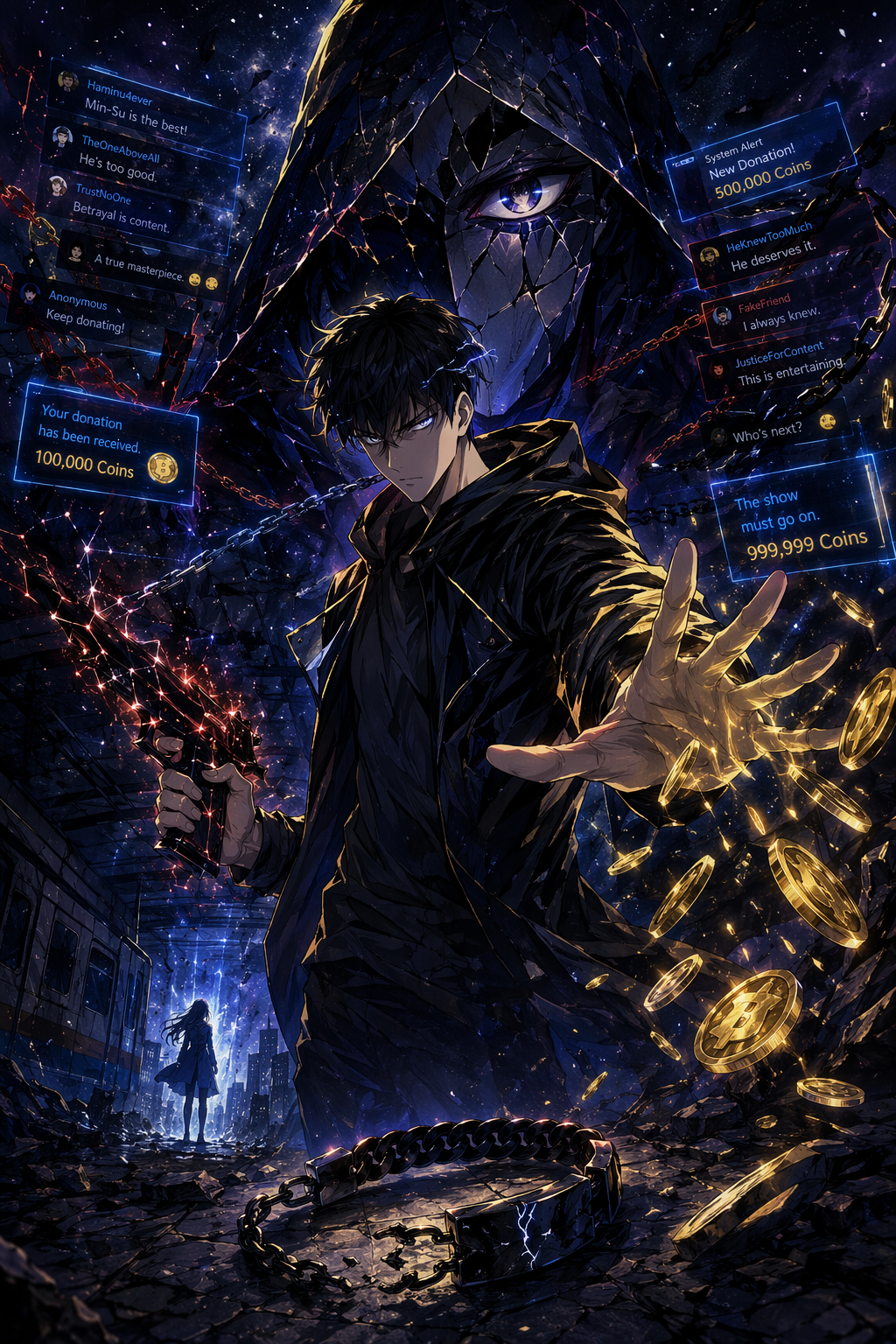
When the sky cracked open, Earth did not end like a prophecy. It went live. Every human became a performer in the Star Stream, a celestial broadcast where Constellations watch, comment, donate Coins, and force survivors through deadly Scenarios for entertainment. Those with beauty, violence, charisma, or useful sponsors rise like idols. Those without viewers are erased by monsters, penalties, or starvation.
Han Min-Su is a bottom-tier streamer with no talent for killing and no talent for being loved. His only advantage is the sponsor he hates most: the infamous Constellation known as [The Architect of Betrayal]. The Architect donates absurd amounts of Coins, but only when Min-Su lies, manipulates, humiliates allies, or commits acts that make the chat explode. Every weapon Min-Su receives is paid for with someone else’s trust. Every survival skill comes with a message demanding he become colder.
Min-Su plays the villain because he has one reason to live: his younger sister, Seo-Yeon, trapped in another Scenario district and depending on the medicine and protection only Coins can buy. His best friend, Park Jae-Hyun, still believes the old Min-Su is buried under the act, but the viewers prefer the mask. They clip his worst moments, reward his cruelty, and punish every sign of mercy.
Across five chapters, Min-Su is pushed into increasingly personal broadcasts: betrayal tutorials, popularity rankings, team missions designed to turn friends into content. At the center is a final Scenario where Min-Su and Jae-Hyun are chained to a stage before millions of celestial spectators. The rule is simple: sacrifice your closest bond or die together. The chat demands blood. The Architect donates 1,000,000 Coins and orders Min-Su to pull the trigger.
Then Min-Su notices impossible details in the Architect’s messages: phrases only he and Seo-Yeon know, strategies built from future regrets, a hidden scar mirrored in the Constellation’s avatar. The Architect is not a god. He is Min-Su, one thousand years ahead in the time-dilated Star Stream, a ruined survivor who believes the apocalypse can only be beaten by murdering his younger self’s humanity early.
Instead of obeying, present Min-Su looks past the chat, past the system window, and directly into the webtoon panel itself. He rejects the Coins, refuses the role written for him, and declares war on the future self who turned his pain into content.
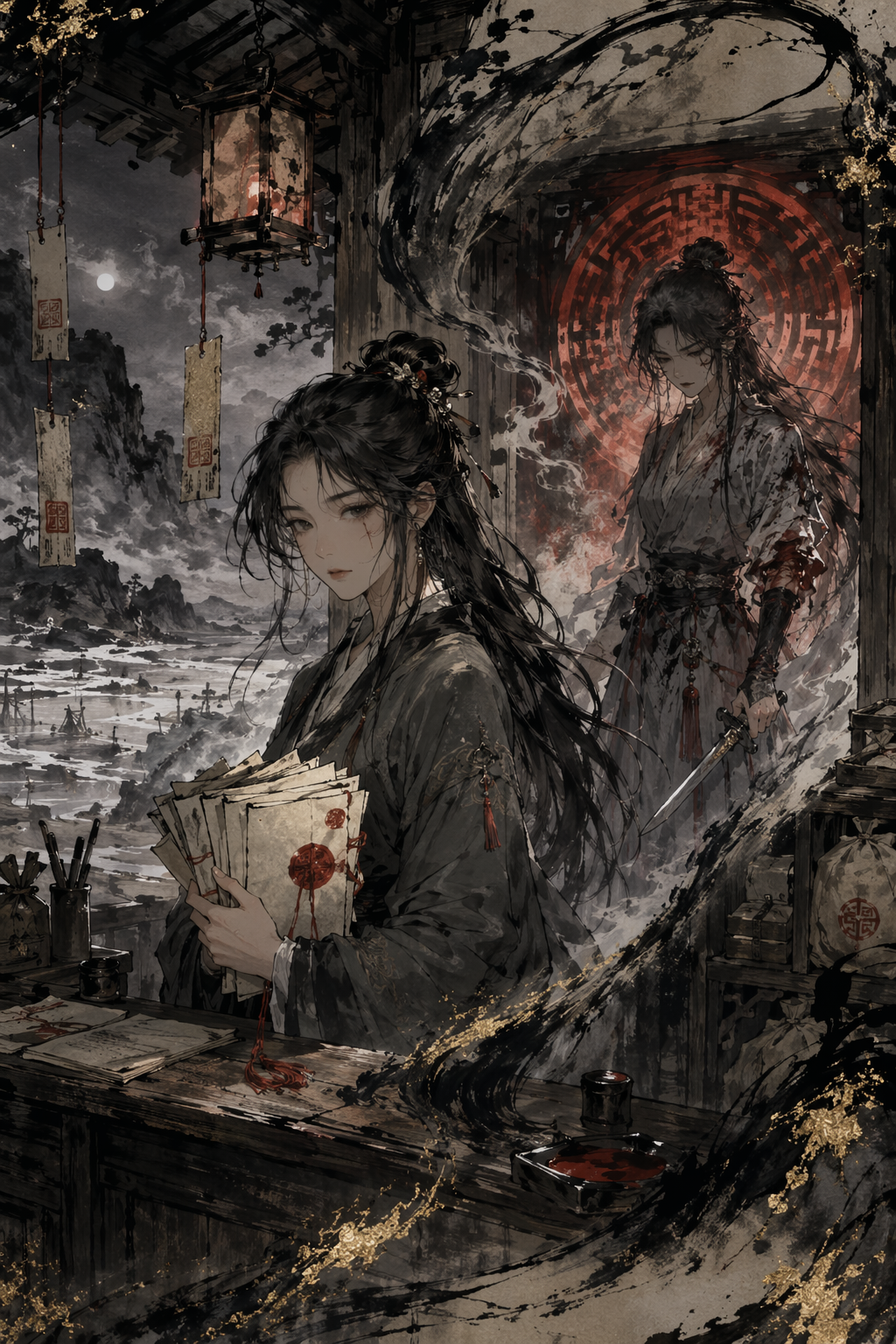
At the Goldmoss Post-house on the imperial Salt Road, letters move by magic-stamped relay, and a ghost-stamped envelope can arrive before it was sent. Pae Soyeon, a broke backwater clerk supporting her siblings, knows the relay clauses better than anyone: she cannot refuse ghost-mail, she cannot answer it, and if she leaves her post her brother's debt-bond is forfeit. Then a letter arrives in her own handwriting, dated four months in the future: Stop reading the magistrate's mail. Each week, future-Soyeon writes again, angrier and more specific, naming crimes present-Soyeon has not yet committed, men she has not yet met, and children who have not yet died. As Soyeon investigates the magistrate's son, the courteous watch captain, and her own forged stamps on a caravan manifest, she realizes someone has been using her clerkship to launder atrocities through the relay. But the woman who already solved the mystery has chosen a simpler fix: come back on the new moon and kill herself before she becomes herself.
In the fog-drowned city of Greyveil, every supernatural bargain is filed, taxed, and enforced by the Veil Court — and Adrian is the least important clerk in it. He is anxious, overlooked, and hiding one impossible talent: by reading the shadow a pact casts, he can see its true terms and every buried clause. The price is a memory of equal emotional weight. When his sister Elara collapses, her shadow peeling like wet ink, Adrian learns she signed a pact seven years ago to save his life from the Greyveil Fever — and the debt has come due. To reach the vault where her contract is sealed he must rise through the Court's ranks, burning his own past for every promotion, outmaneuvering the legacy auditor Cassian who suspects exactly what he is. But Elara's contract is only a tributary. The Veil Court itself is one enormous pact, founded to keep the city's shadows fed on forgotten things so they never turn on the living — and it is fraying. Adrian finds the anchor clause, the one loophole that lets him rewrite the terms. The cost is everything he has ever been.
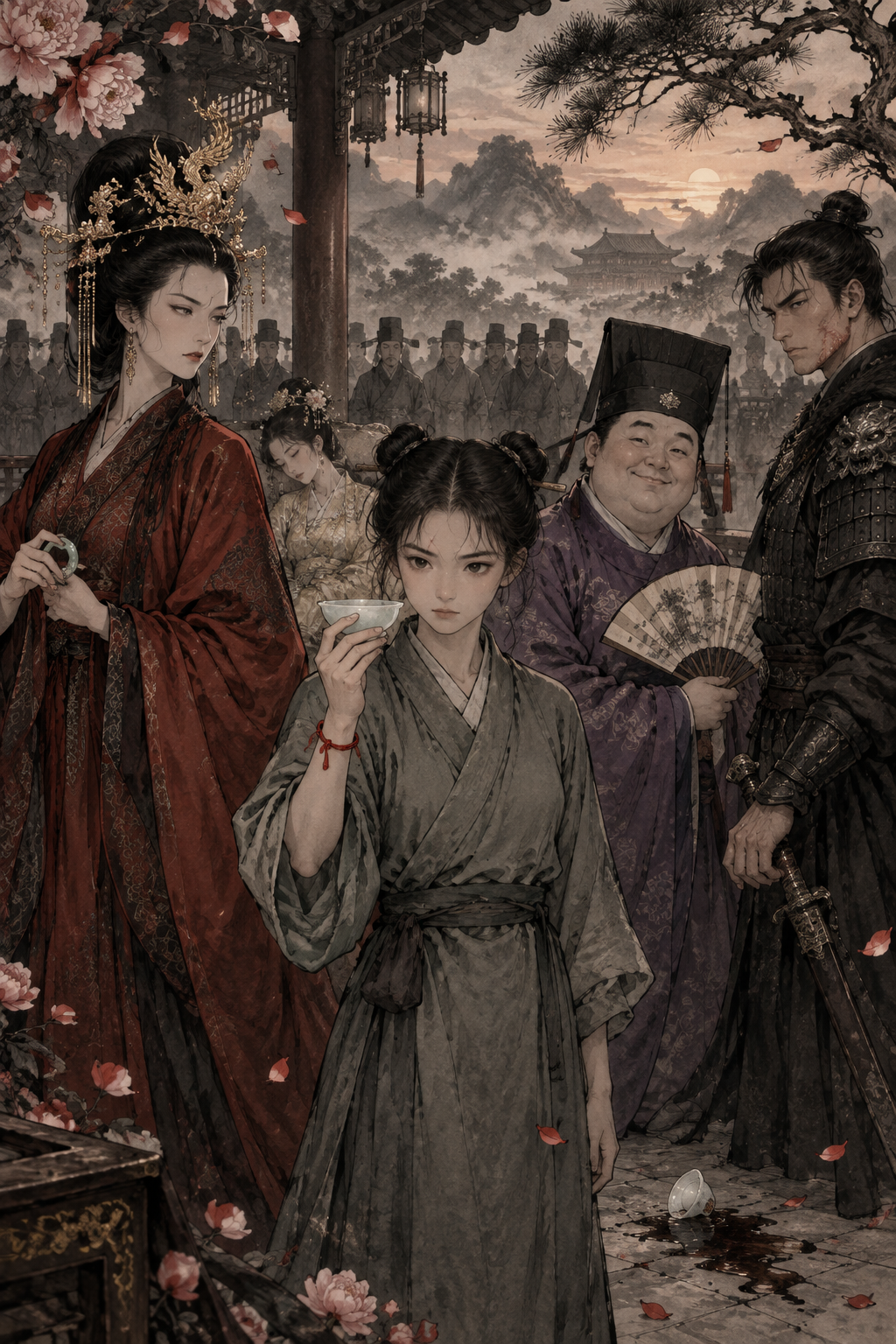
Lan Yue can taste lies. Anything served by a lying hand turns to rust on her tongue; honest food tastes of nothing at all. It is a miserable gift for a nineteen-year-old food taster in the Inner Palace, and she has exactly one plan: keep her head down for two more years, save her silver, and buy her little brother out of his debt contract. Then the Emperor's favourite consort collapses at a garden tea party, and Grand Eunuch Gao — the man who holds her brother's contract — orders Lan Yue to taste the dregs in front of the whole court and confirm the Empress's guilt. The tea tastes clean. Lan Yue says so out loud, and loses the only quiet life she had.
 Celestial xianxia