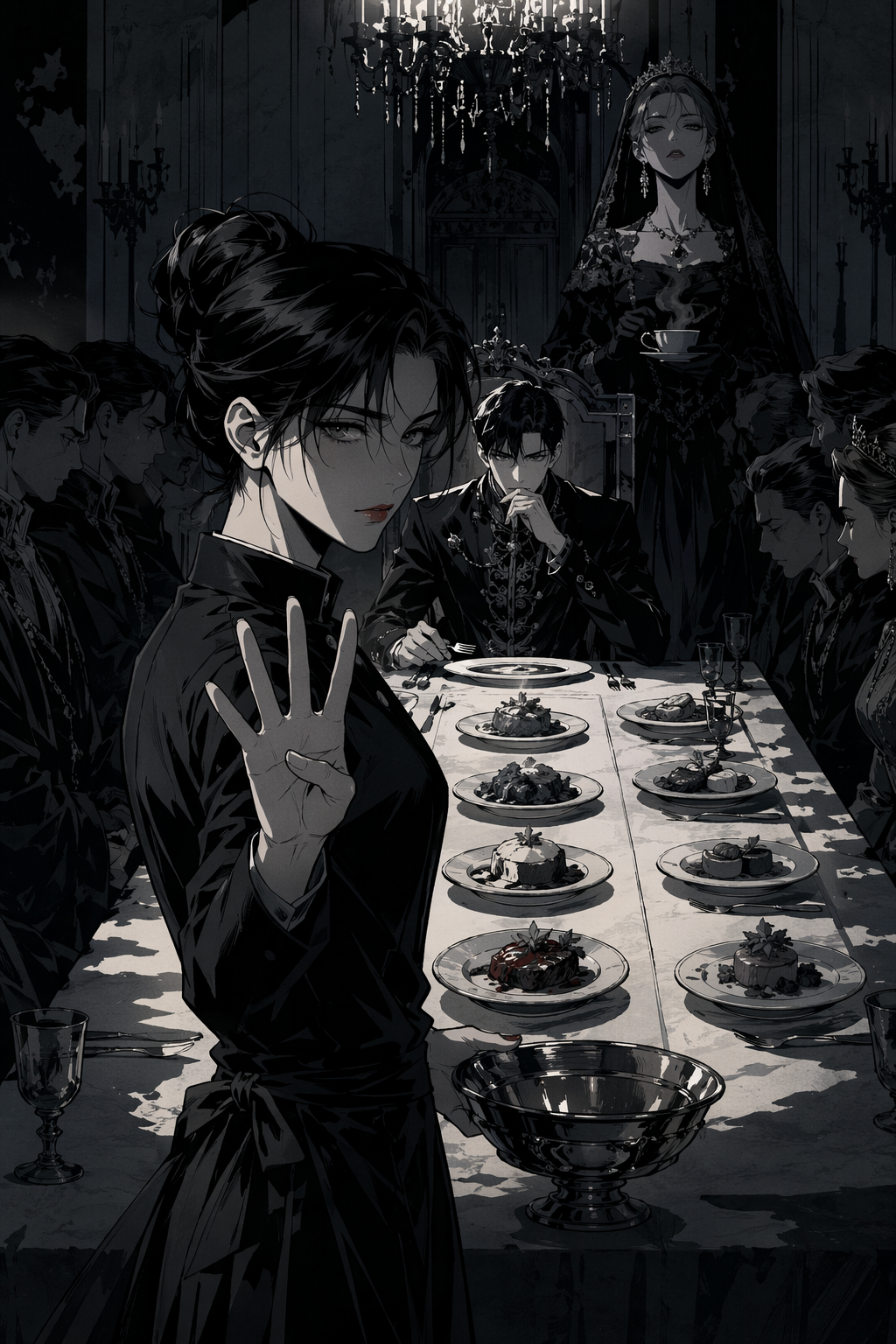
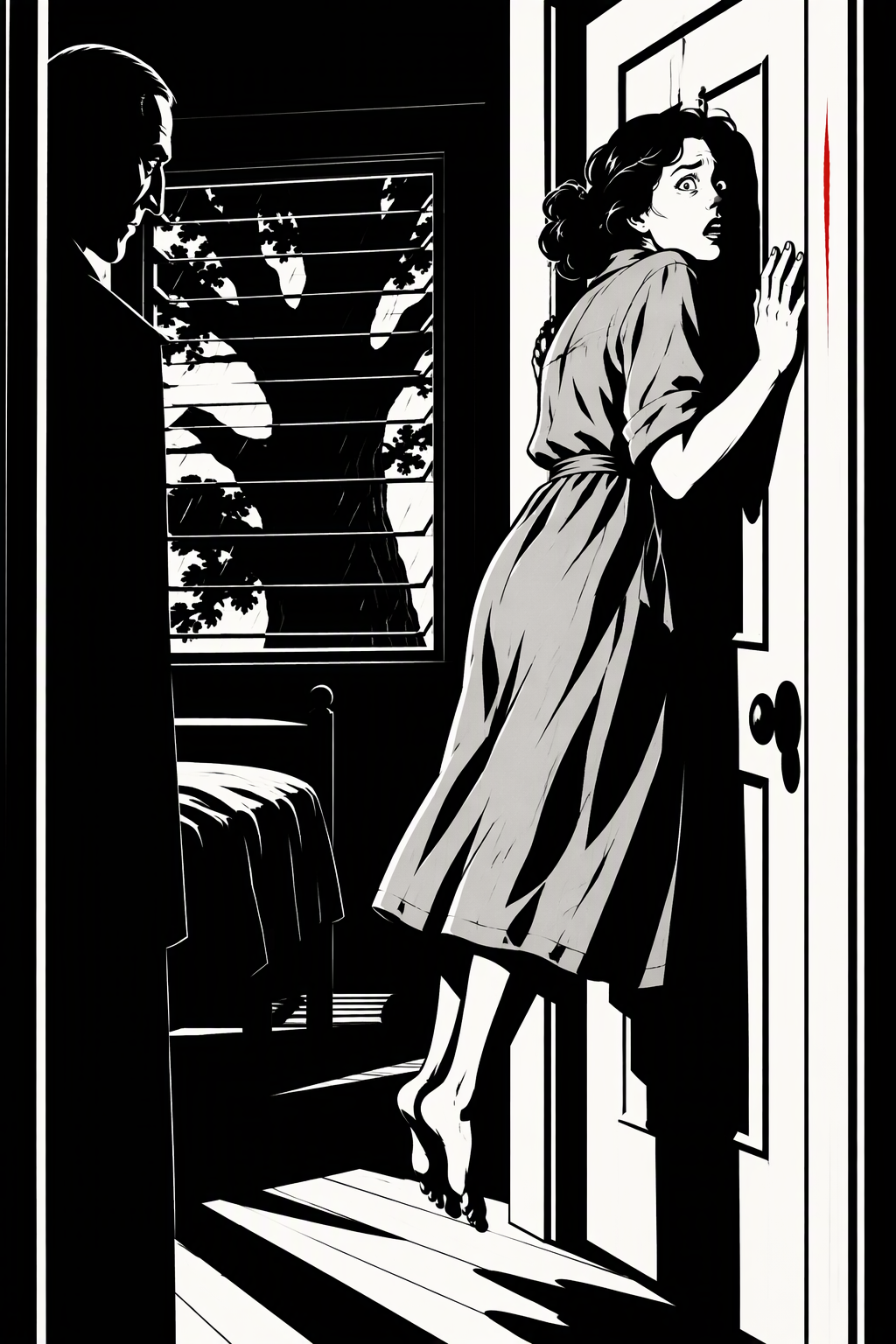
Yelena Otzar, the crown’s feared First Question, has eleven days to break a chained crown prince accused of regicide or watch her indebted family sold to the silver mines. Prince Cassian will give her the truth only under one condition: each night, he may ask her one question she must answer truthfully if she answers at all. As Yelena’s interrogation of Cassian becomes Cassian’s interrogation of Yelena, the perfect servant of the throne begins to suspect the case was designed not to reveal a murderer, but to bury one.
In the southern empire, a noble house survives only when its dying head whispers the family's True Name to a single witness. If the chosen heir sleeps before hearing it, the name is lost and the house is dissolved. Sirin of the Hollow Spring, the last unburned Name-Witch of the ice frontier, is summoned under imperial protection to keep Lord Alderic's exhausted heir awake while the lord delays his choice. Sirin has seven wakefulness syllables, each worth one hour and impossible to reuse on the same person. She can hear the True Name humming in noble throats, but she cannot speak or write it without burning her tongue to ash. On arrival, she discovers the impossible: House Hollow Bell's True Name is not humming in the dying lord, but in Lucien, the spare son. As Casimir, the official heir, survives revolts, impossible tests, and his father's grief, he begins courting Sirin as a bargain and slowly becomes the one person who refuses to force her truth from her. With every syllable spent, Sirin must choose whether to preserve her monastery, save one brother, doom the other, or expose a law of inheritance that may already be broken.
In the inland kingdom of Pyung, every vassal village survives under a brutal steppe rule: the richer a village looks in the public tribute ledger, the more the khanate takes. Wen Ji-rul, a tired under-merchant exiled to the canal-prefecture of Mok-ho, knows how to make wealth disappear on paper because he spent his career hiding nobles' fortunes beneath salt prices. With the khan's autumn audit one week away and kidnapped village children waiting in the khan's camp, Wen must coordinate real grain shipments, manipulate trusted salt-grain indexes, and convince hostile headmen to support a legal lie. When a Salt Bureau inspector with her own hostage brother arrives, the fraud becomes a shared knife between them. But every false number must survive three audit formulas, two refusing villages, one vengeful capital official, and a khanate translator who knows exactly what Wen is doing.
Mire, a parlor-maid from a third-rate inn, is hired to impersonate the sickly Lady Sera Tessen for one autumn so a political marriage can be consummated and a dowry secured. Her face, voice, handwriting, and posture are close enough to fool even Sera’s mother, but her contract hides a poison clause and her younger brother is held hostage by the bride’s family. In the second week of marriage, the real Lady Sera dies, and Mire is told the role is now lifelong. Her cold archivist husband, Domnal Tessen, begins setting quiet tests only the true Sera would pass. As Mire searches Sera’s stolen diary for survival, she discovers Sera herself was once a replacement: the original girl died at seven, and the woman Mire is copying was named Iulia. By the monthly memorial, Mire must read sacred Old Tessen liturgy she cannot understand—only to find the page replaced with a passage copied from her own private letter to her brother. Domnal is watching. He knows.
Iseren Vael, the underfed daughter of an executed apothecary house, begins court service as the royal food-taster for eighteen-year-old King Caelan. Her tongue can identify nineteen named poisons within four heartbeats, but she cannot refuse a dish without condemning her two younger sisters to the frontier brothels under the Crown's indenture contract. During the coronation banquet week, every meal becomes a public execution test: cobalt-bee venom in boar terrine, numbing root in sugared pears, a foreign alkaloid she cannot name, and lily-of-night in the king's private broth — a poison bearing the signature of the queen mother's house. As Iseren keeps Caelan alive plate by plate, the king begins to understand that his survival depends on a girl he is legally permitted to spend. His growing trust is dangerous; his pity is worse. The pilot ends when an unknown chef serves an unknown dish with an unknown poison, and the king breaks centuries of court law by reaching for his taster's hand before the court can decide whether she is dying.
Fifteen-year-old Tabi is a conscripted magical doorman sent to Sun-Beol, a border city already twelve days into a siege. A doorman can bind one door per day with one exact clause, and a bad clause fails open for everyone. Sun-Beol has sixty gates, sally-ports, storehouses, and palace doors that need sealing before the next assault. Tabi has eleven days. His commander, General Sang Eo-jin, is the same man named in Tabi’s dead mother’s final curse: her tiny kitchen door will open only to Sang Eo-jin’s blood, and only on the day he comes to her son for forgiveness. As Tabi chooses which parts of the city must be sacrificed, each binding becomes a weapon, a moral test, and a clue to what really happened between his mother and the general twenty years ago.
In Songrim Prefecture, all debt lives inside enchanted ledgers that grow heavier as the debt grows. Chae-on, a broke third-rank debt-broker, buys a dying broker’s final casefile for the price of one meal and becomes the sole creditor of a forty-year debt owed by all 312 residents of the fortified Yusan Compound. If he forgives it, his career and dead brother’s reputation are ruined; if he collects it wrongly, the compound is seized by his corrupt bureau. Armed only with patience, paperwork, and the ability to read a ledger’s chain of ownership, Chae-on must survive assassins, noble bargaining, and hidden signatures that prove the debt was engineered by the very people hunting him.
 Dark action manhwa