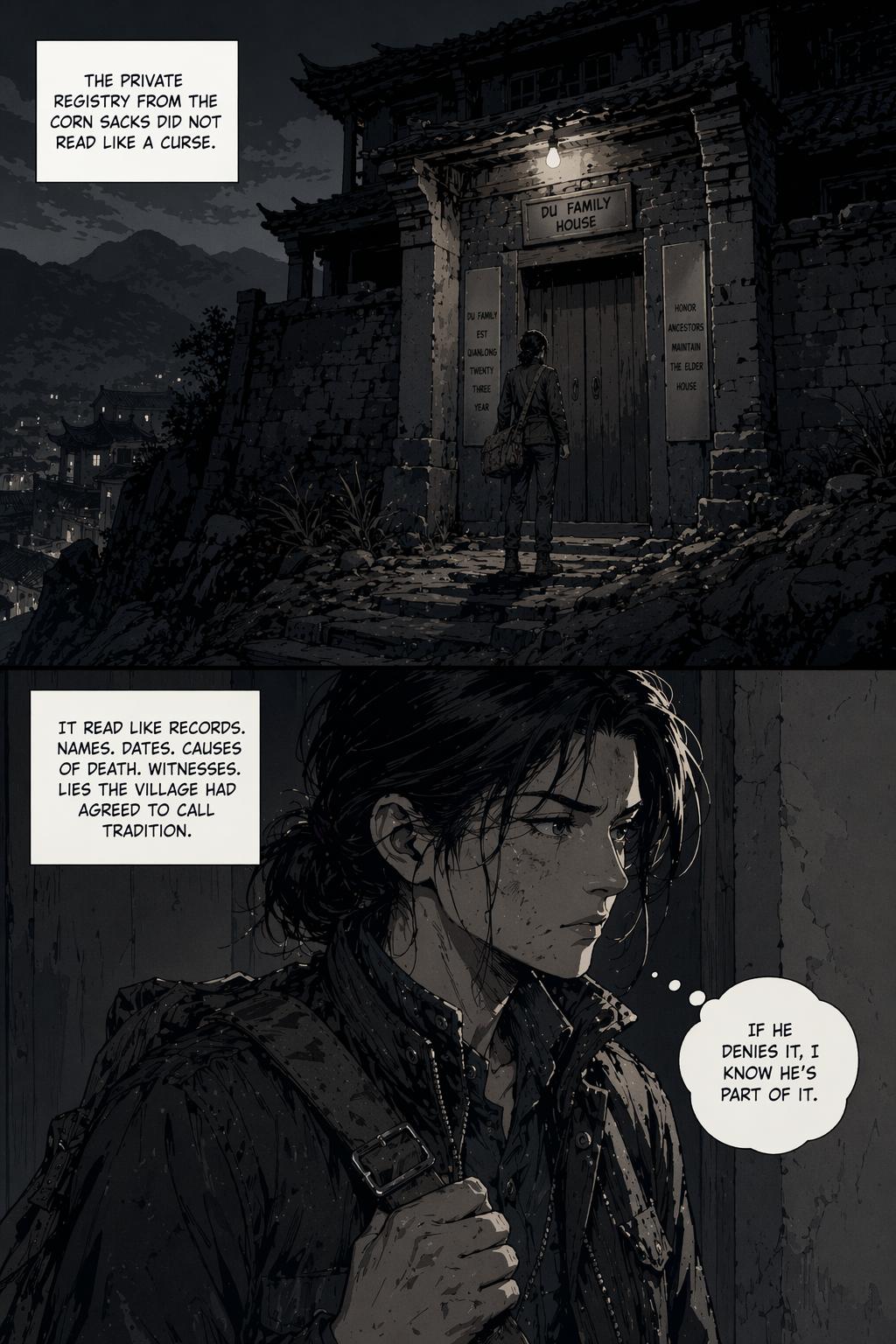
Night outside the Du family house on the hill. The building looms in blue-grey shadow, one bare bulb burning under the eaves. Wen has climbed up from her grandmother's house with the private registry in her satchel.
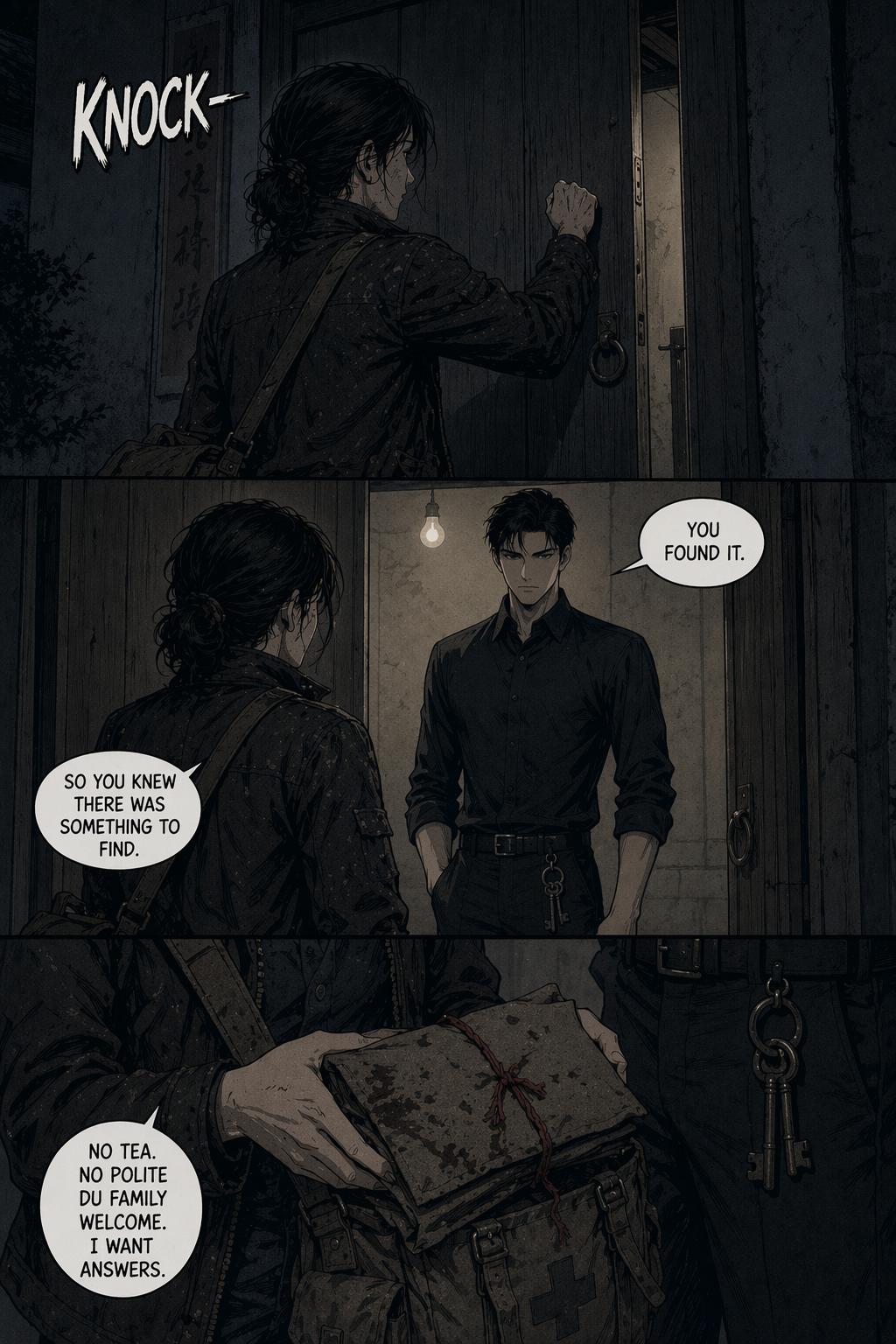
Du Heng opens the Du house door before Wen knocks twice. The entrance is bare and severe, with old wood, cold plaster, and the dull glint of keys at his belt.
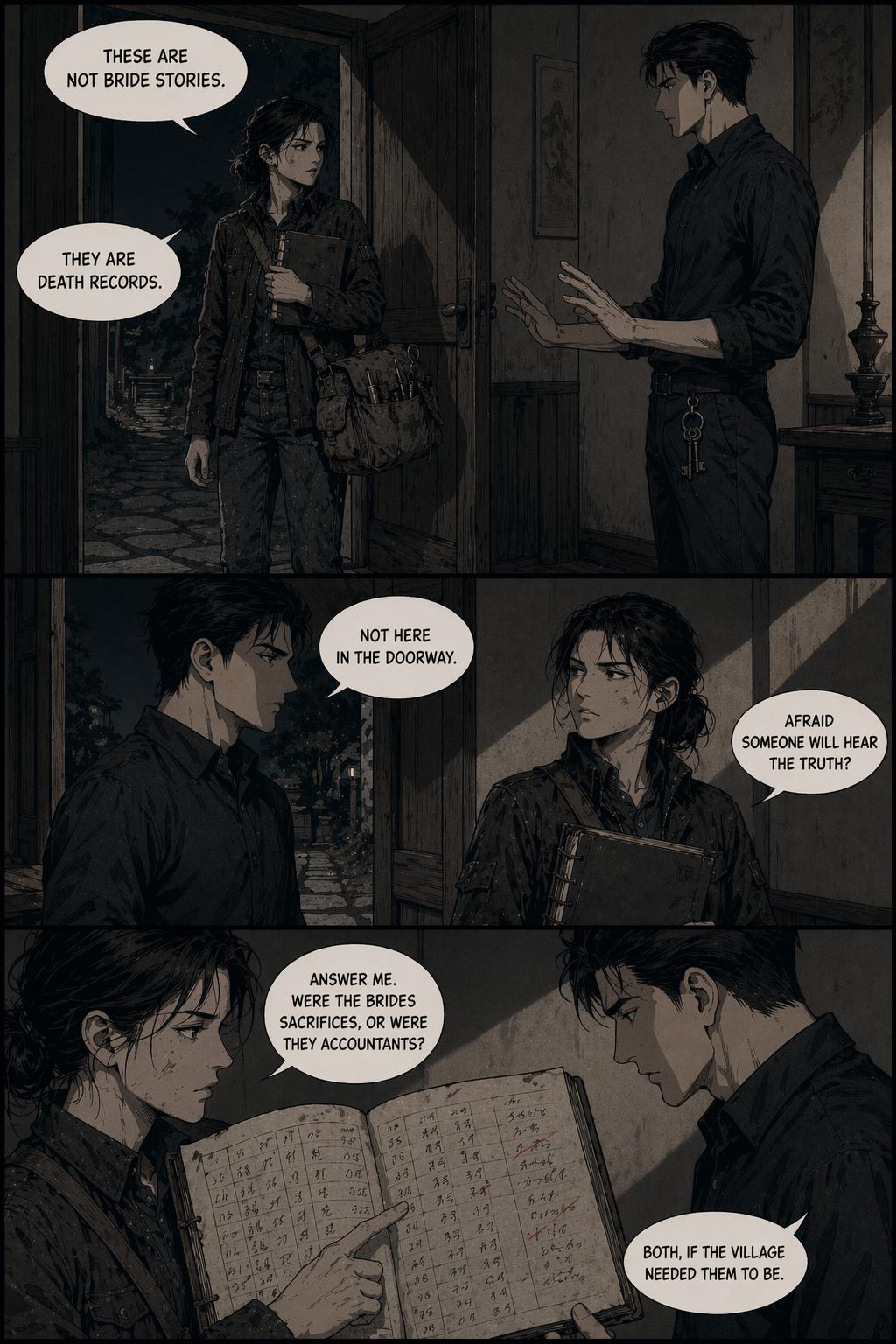
Inside the entrance hall of the Du house. The door remains open behind Wen, showing the cold night path. Du Heng keeps his hands visible and does not step too close.
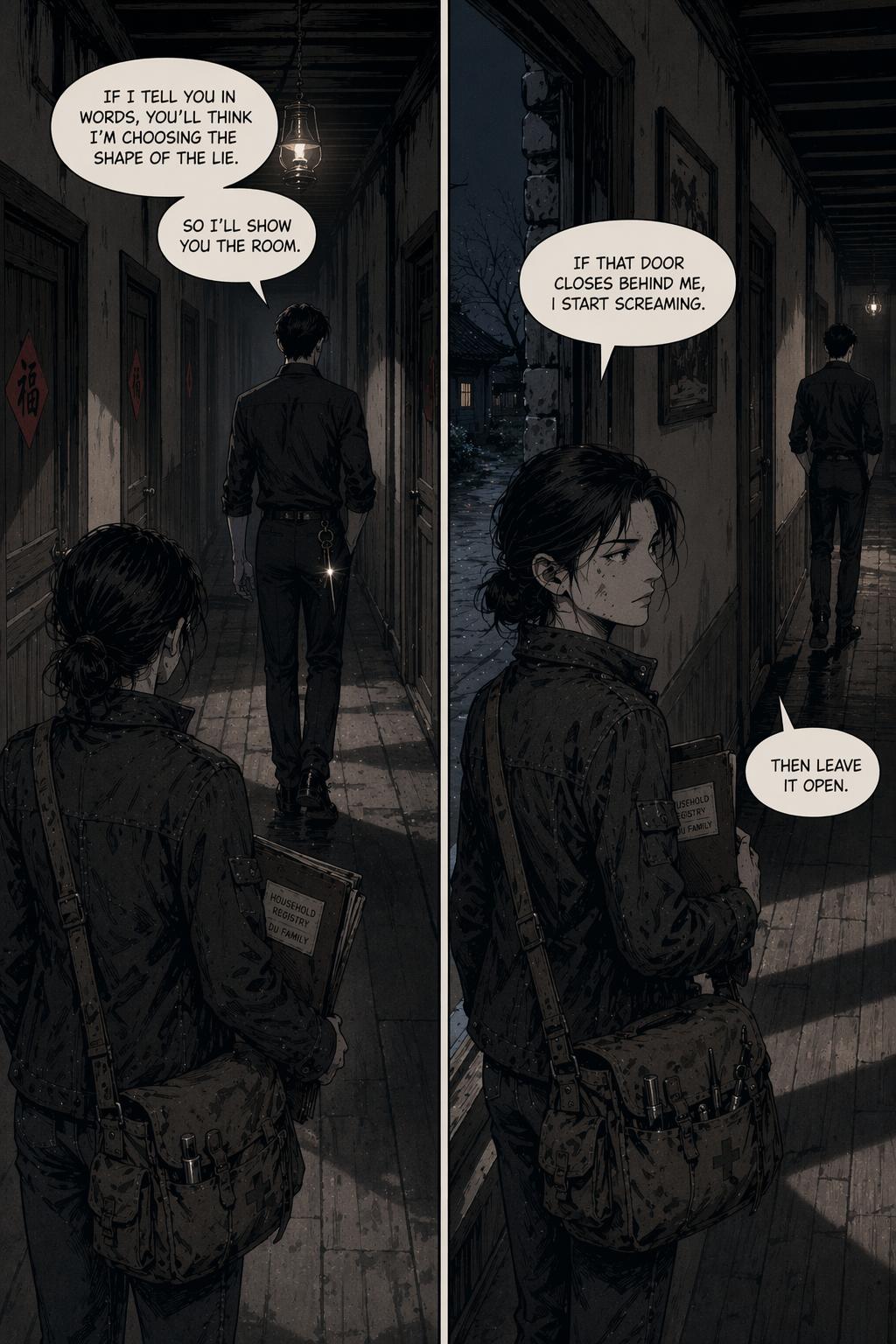
Du Heng leads Wen deeper into the Du house. The corridor is narrow, practical, and old, with family rooms closed behind plain wooden doors.
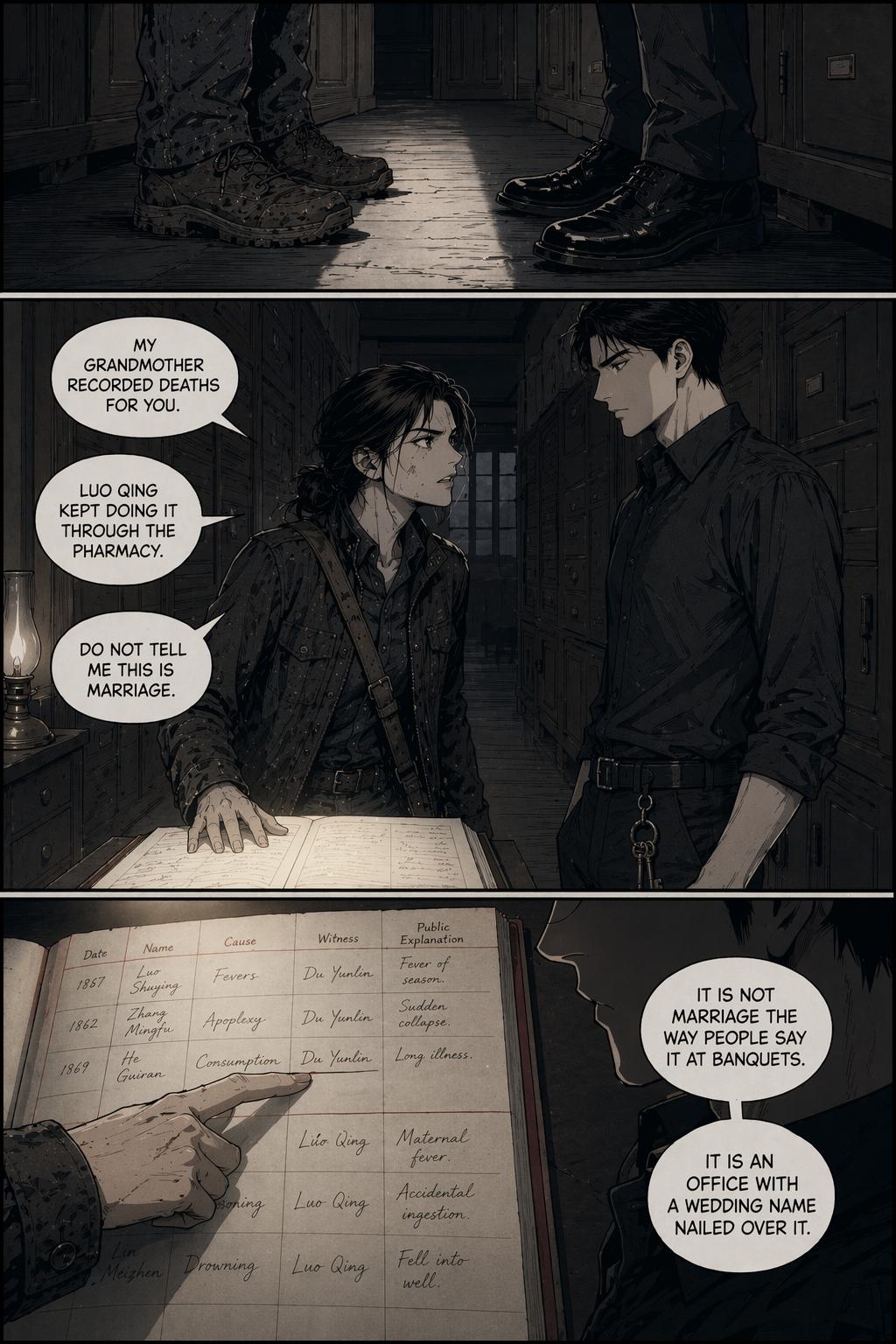
They stop at an inner corridor lined with old cupboards. Wen forces the conversation before he can unlock anything.
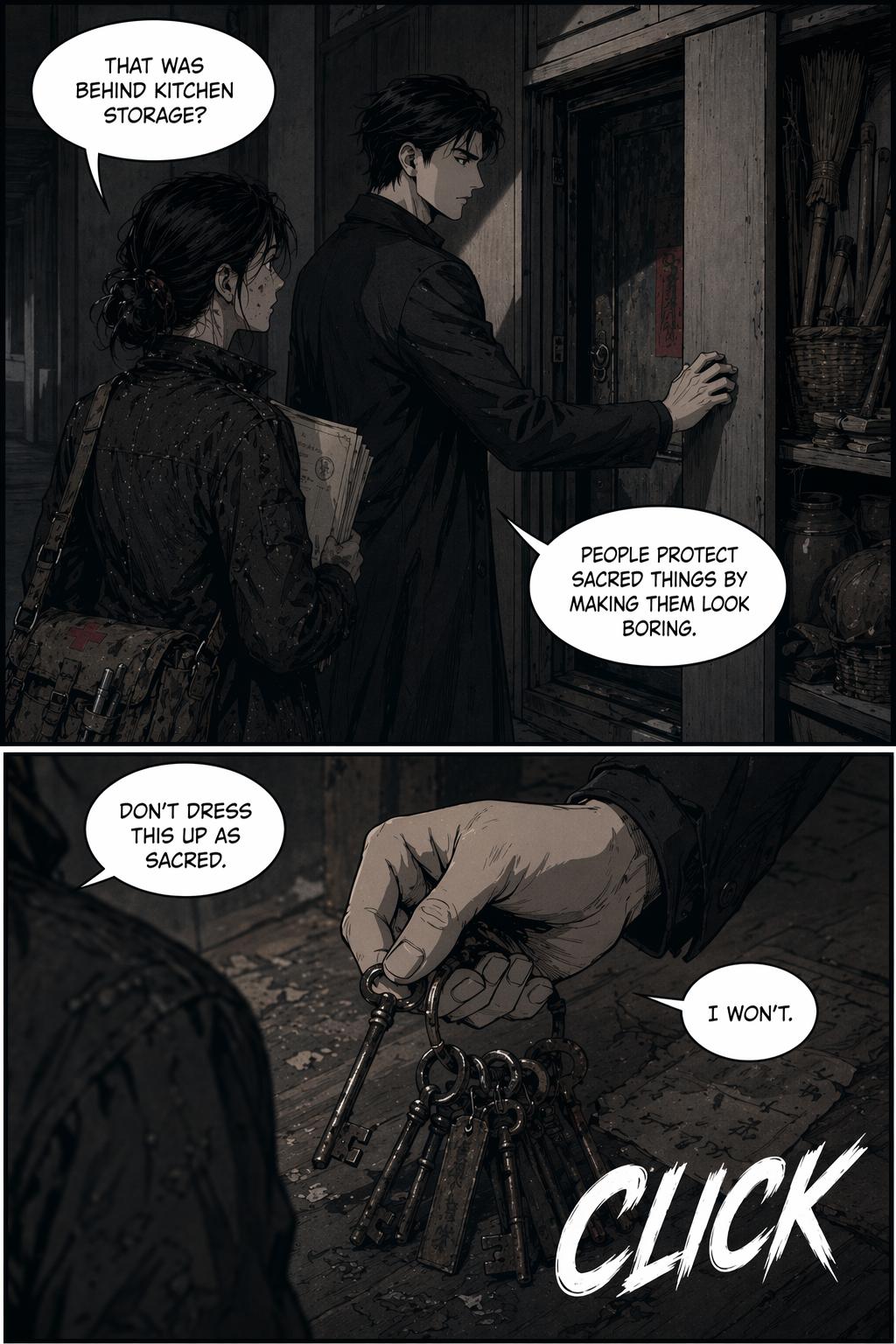
At the back of the corridor, Du Heng opens a cupboard panel that conceals an older, darker door. The air changes: dust, ash, sealed clay, and old paper.
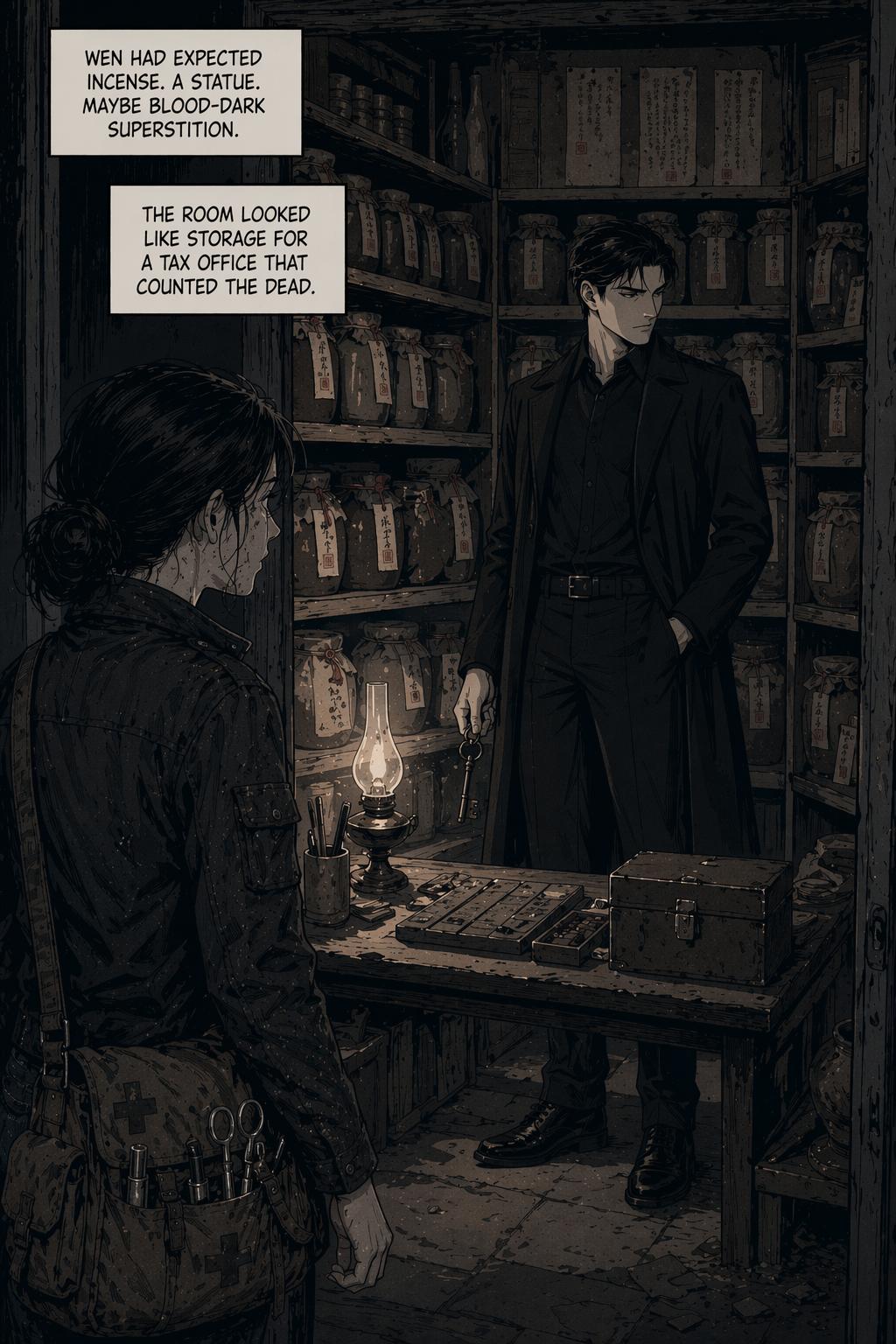
The Du family altar opens. It is cramped and functional, more archive than shrine: shelves, jars, old cloth tags, a low writing table, and one oil lamp.
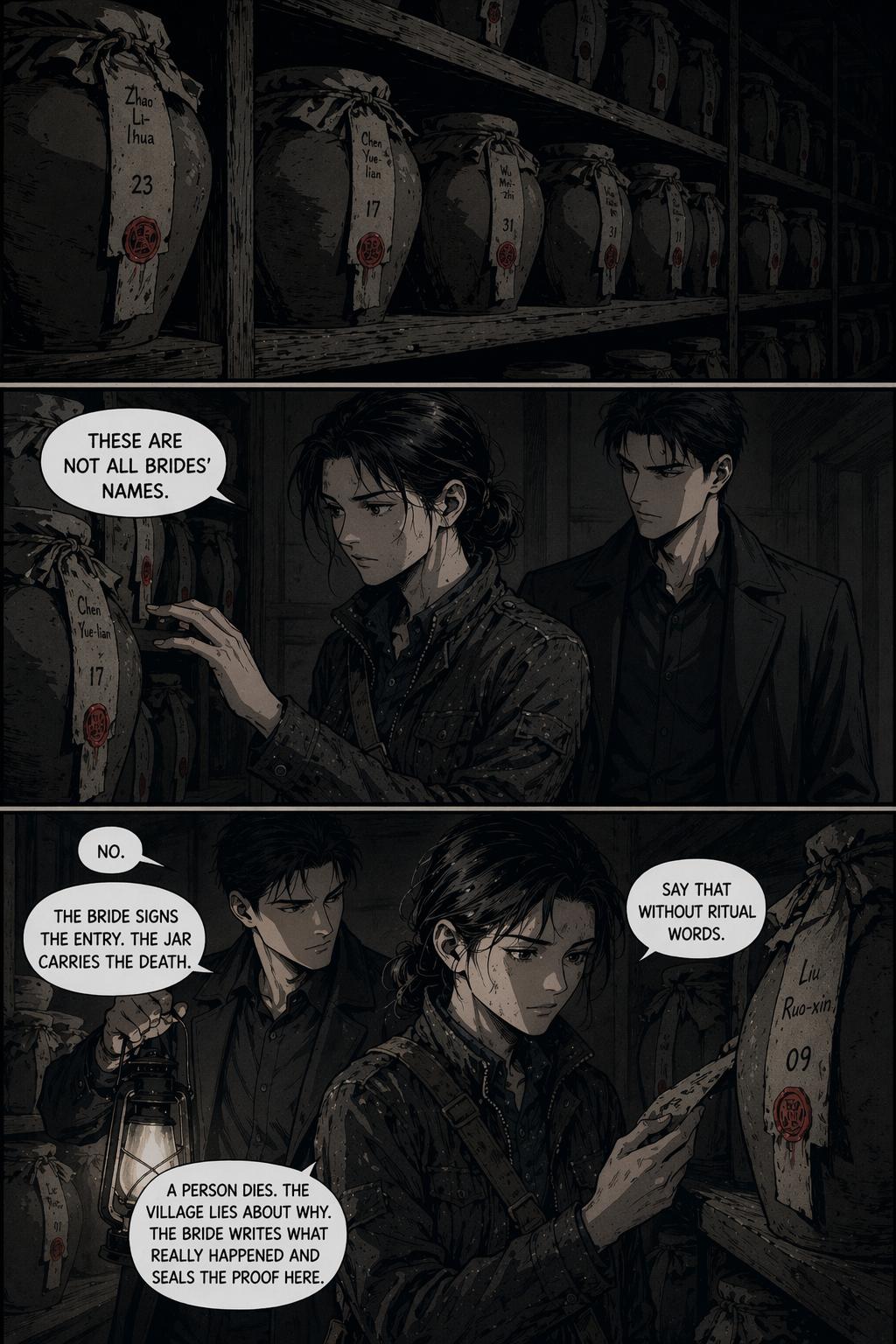
Wen steps into the altar archive and studies the jars. Each jar bears an old name, a number, and a sealed cloth strip.
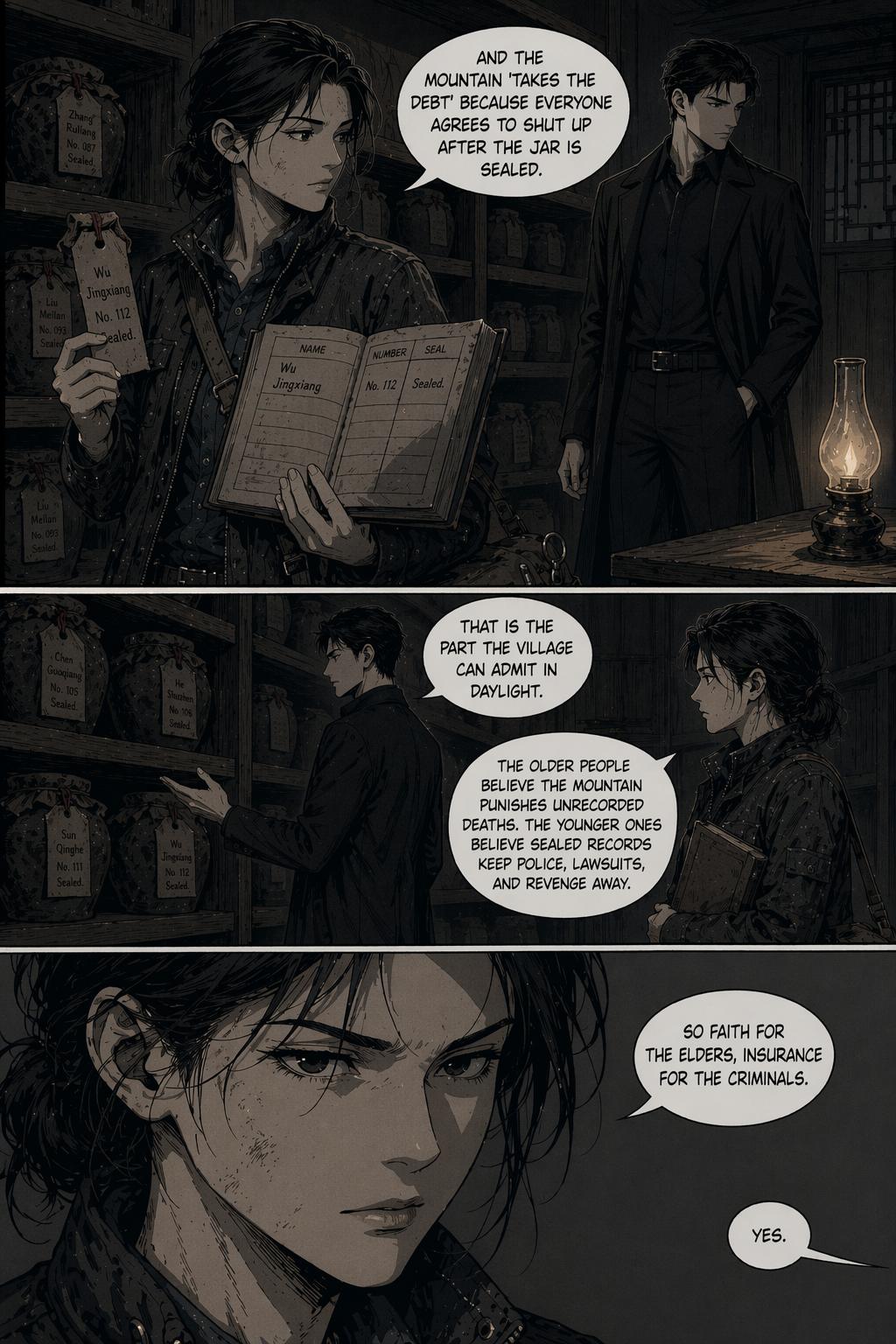
Inside the altar room, Du Heng explains the system in plain terms while Wen tests each part of it against what she has read.
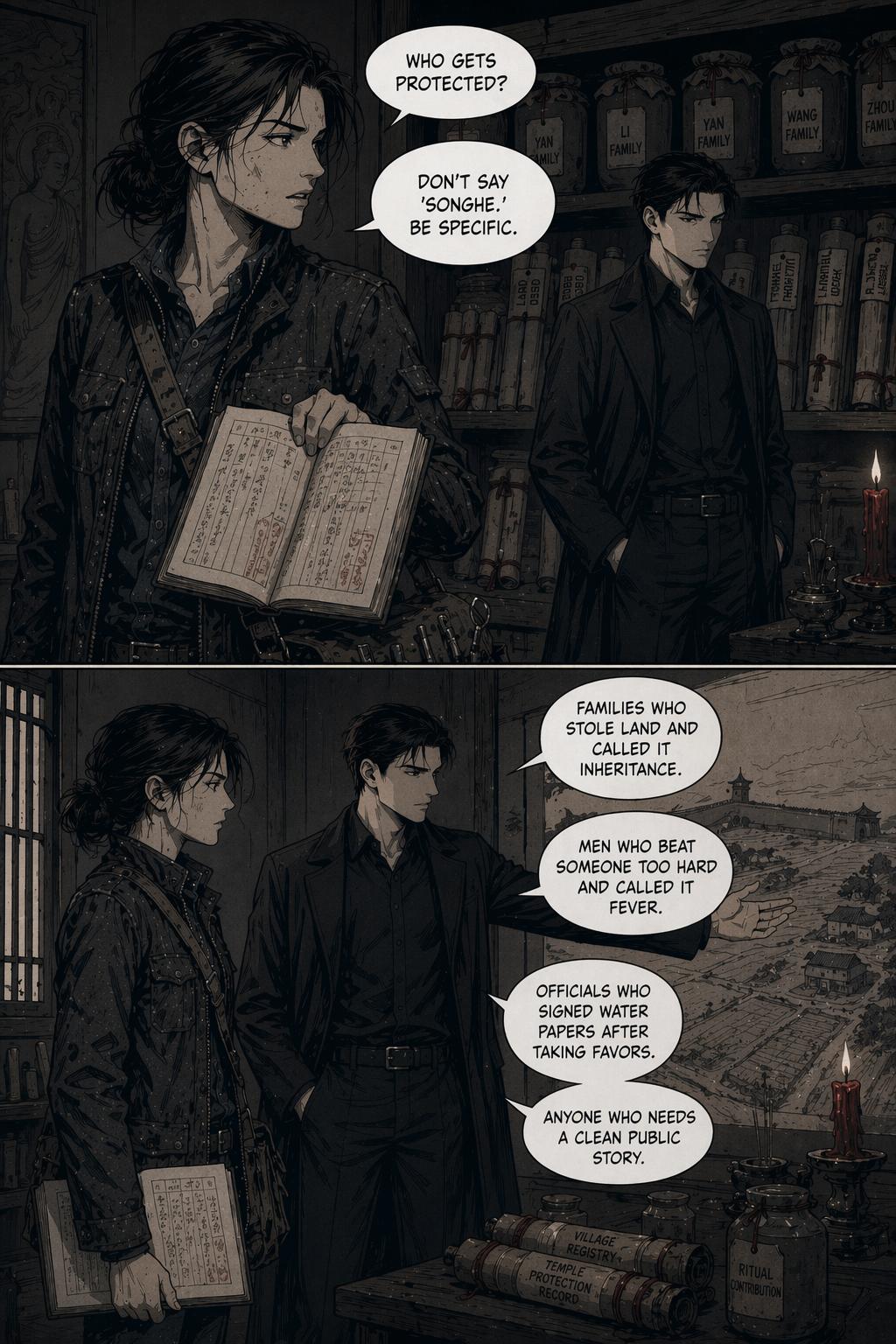
Wen forces the question of who gains from the system. The altar shelves become a map of village complicity.
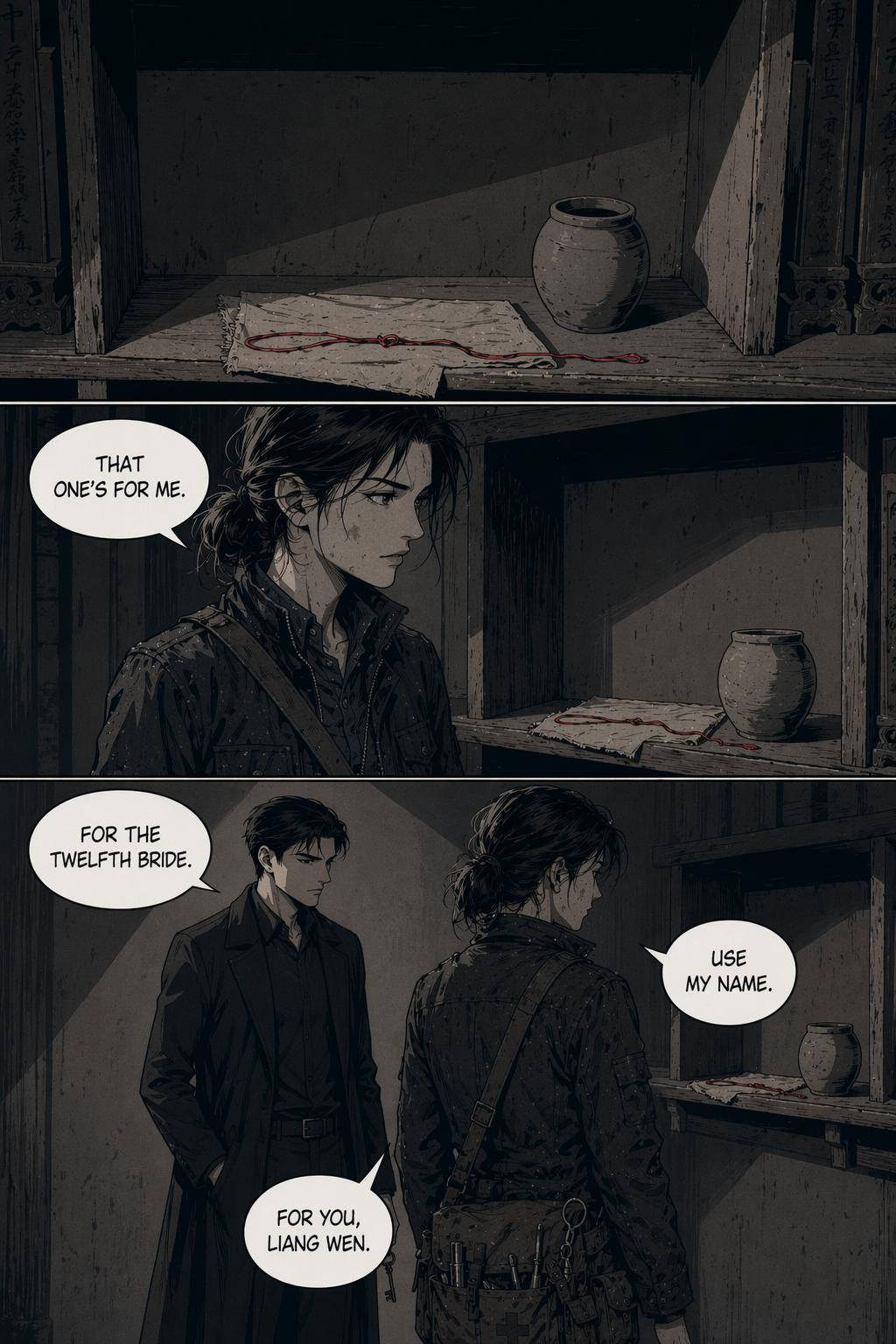
Wen notices an empty section on the shelf and understands that the system is waiting for the next entry.
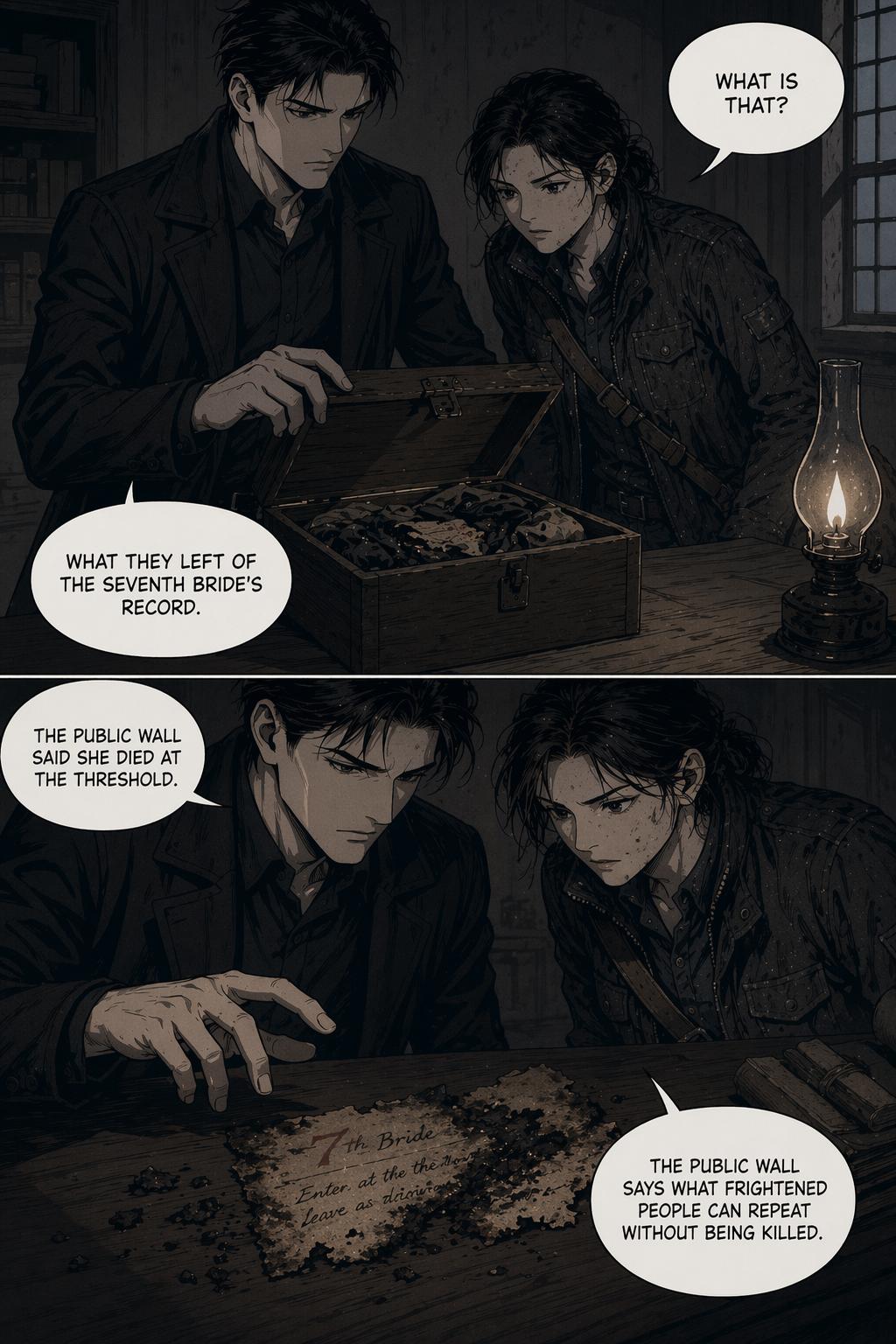
Du Heng takes down a small locked box and removes burned scraps connected to the seventh bride's records.
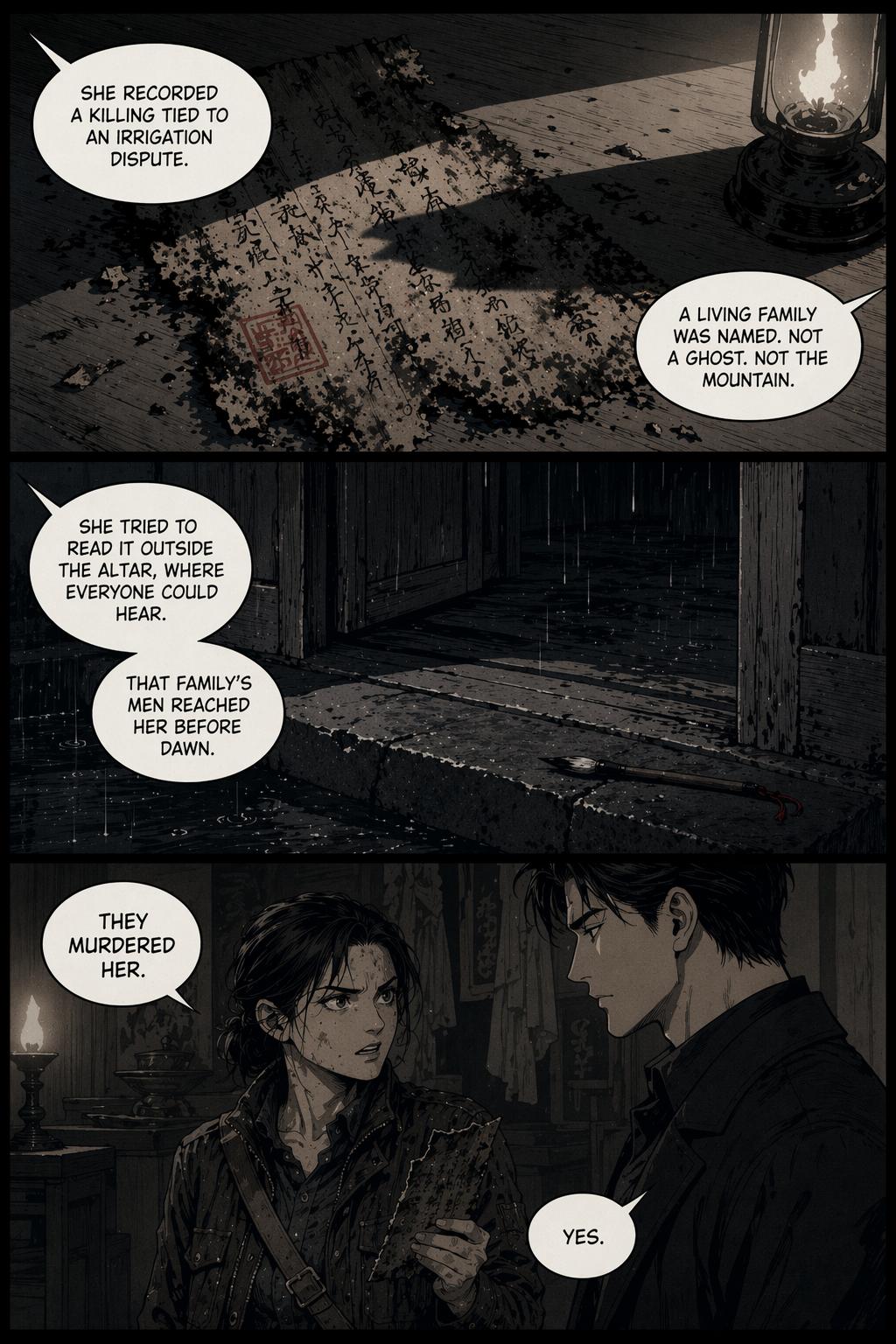
Du Heng tells the real story of the seventh bride while the art stays on burned records, a doorway, and Wen's reaction, avoiding sensational flashback violence.
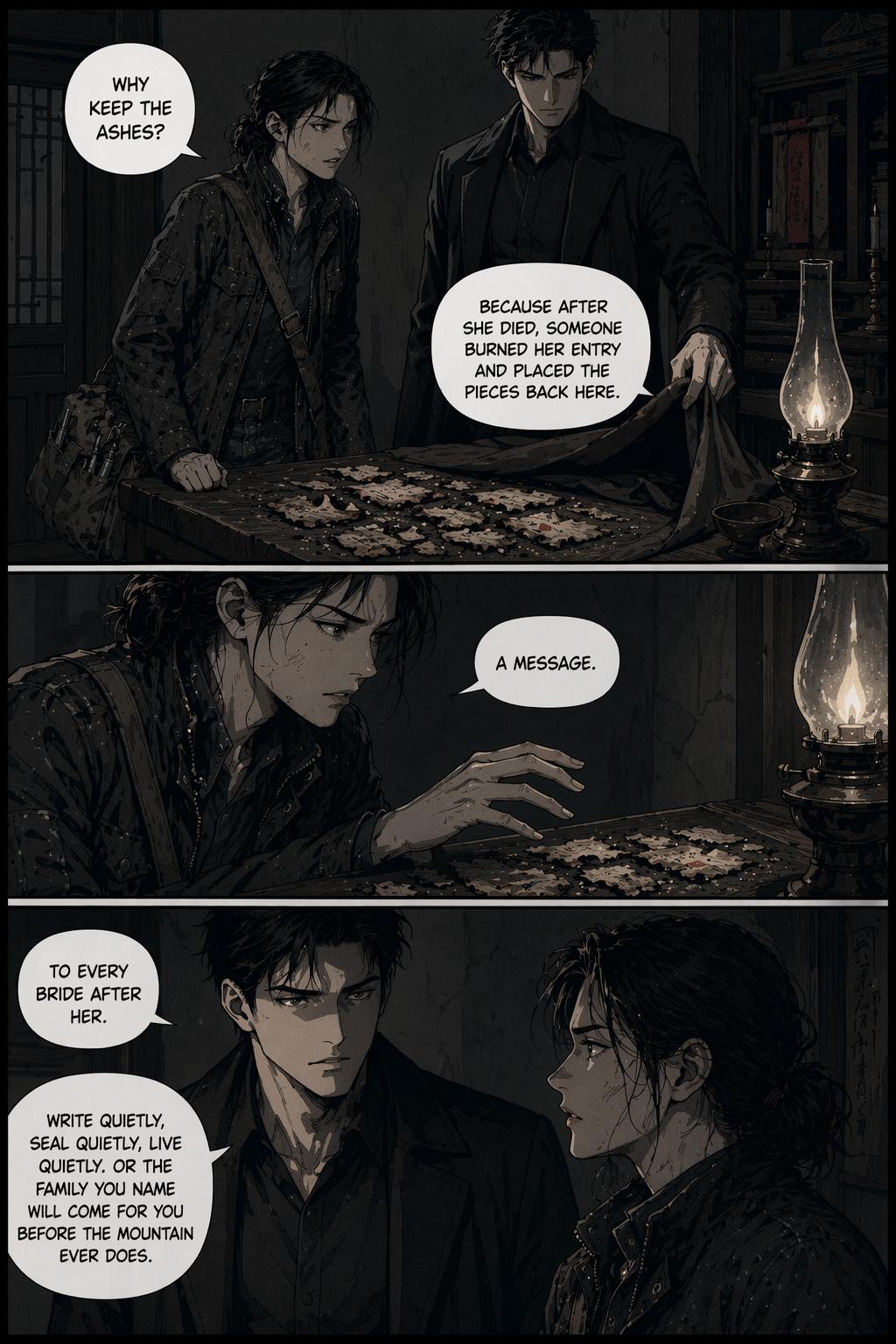
The burned records are explained as an intentional warning, not an accident. Wen realizes the danger is social and immediate.
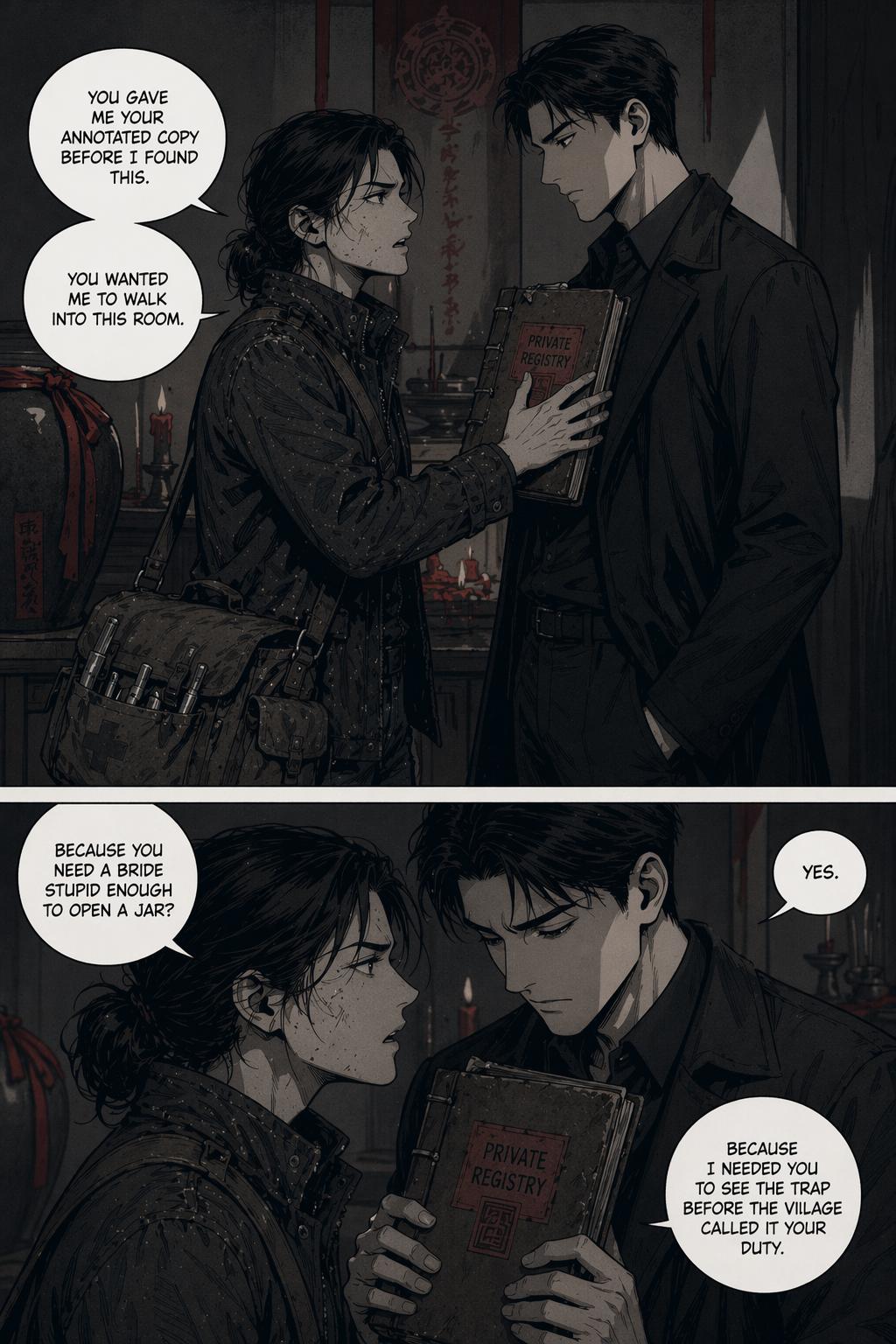
Wen turns the accusation on Du Heng. The intimacy of the altar makes the confrontation sharper, not safer.
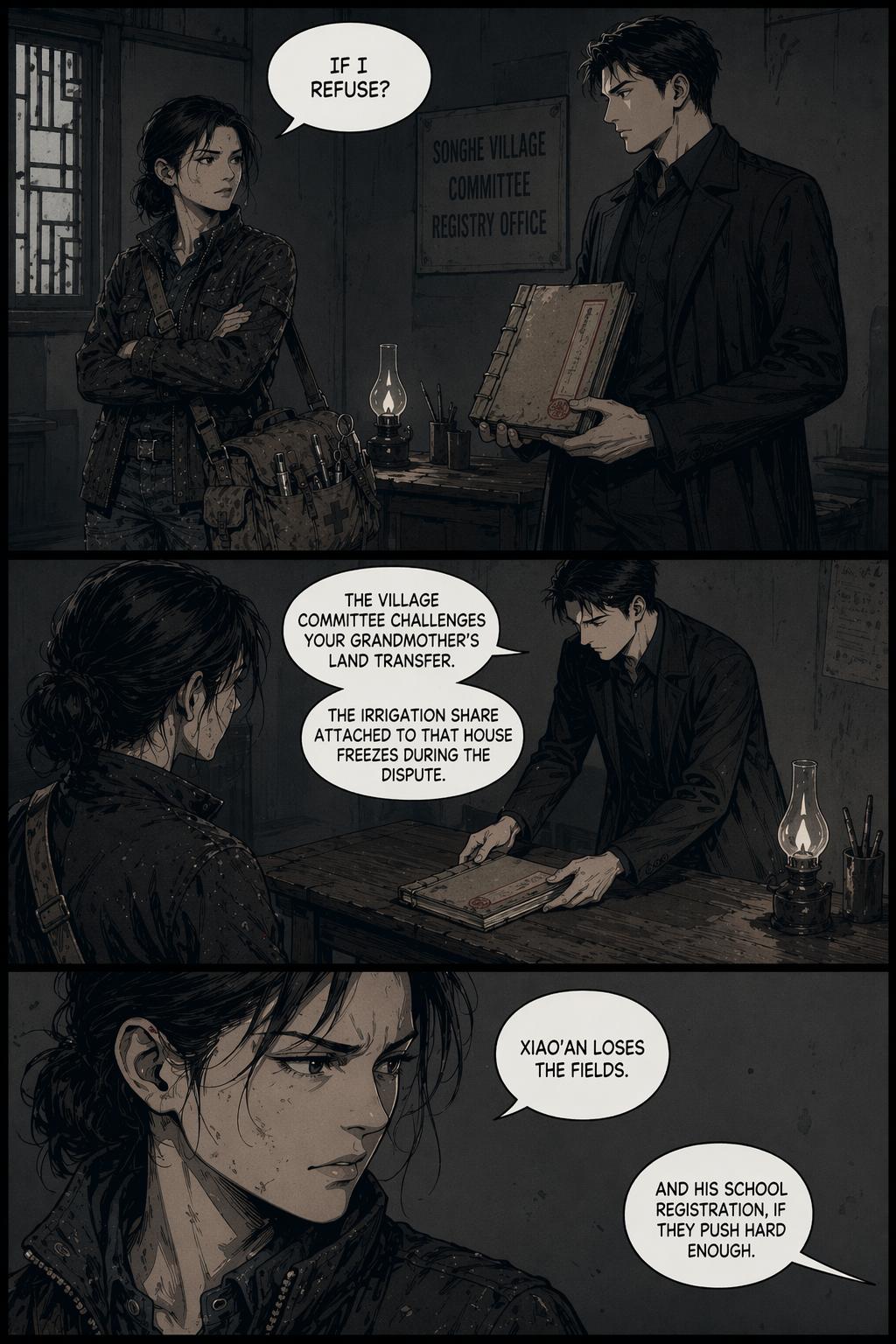
Wen demands the practical consequences of refusal and failure. Du Heng explains how Songhe turns coercion into paperwork.
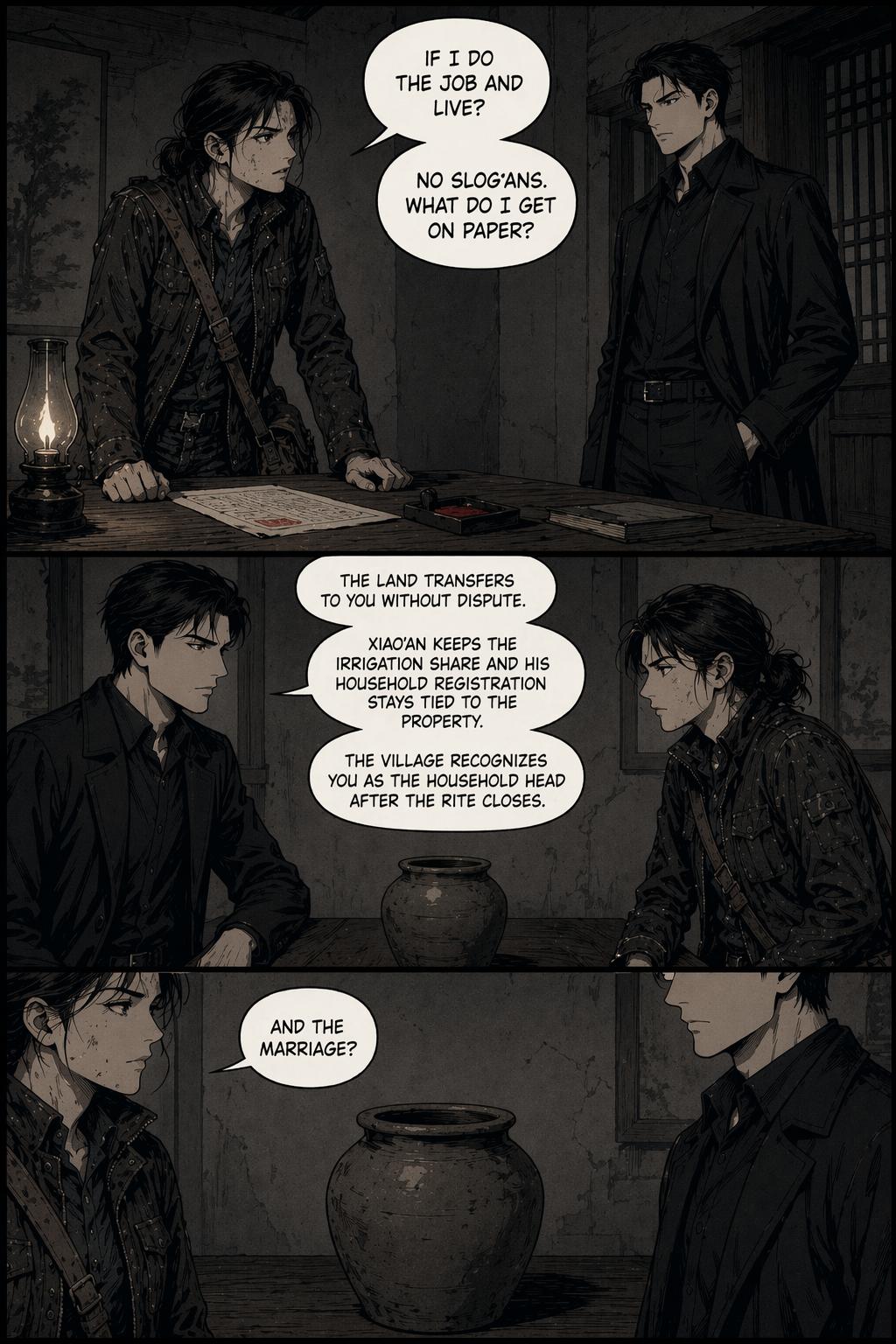
Wen asks what happens if she performs the record-keeping role and survives. Du Heng gives a concrete legal answer instead of romance.
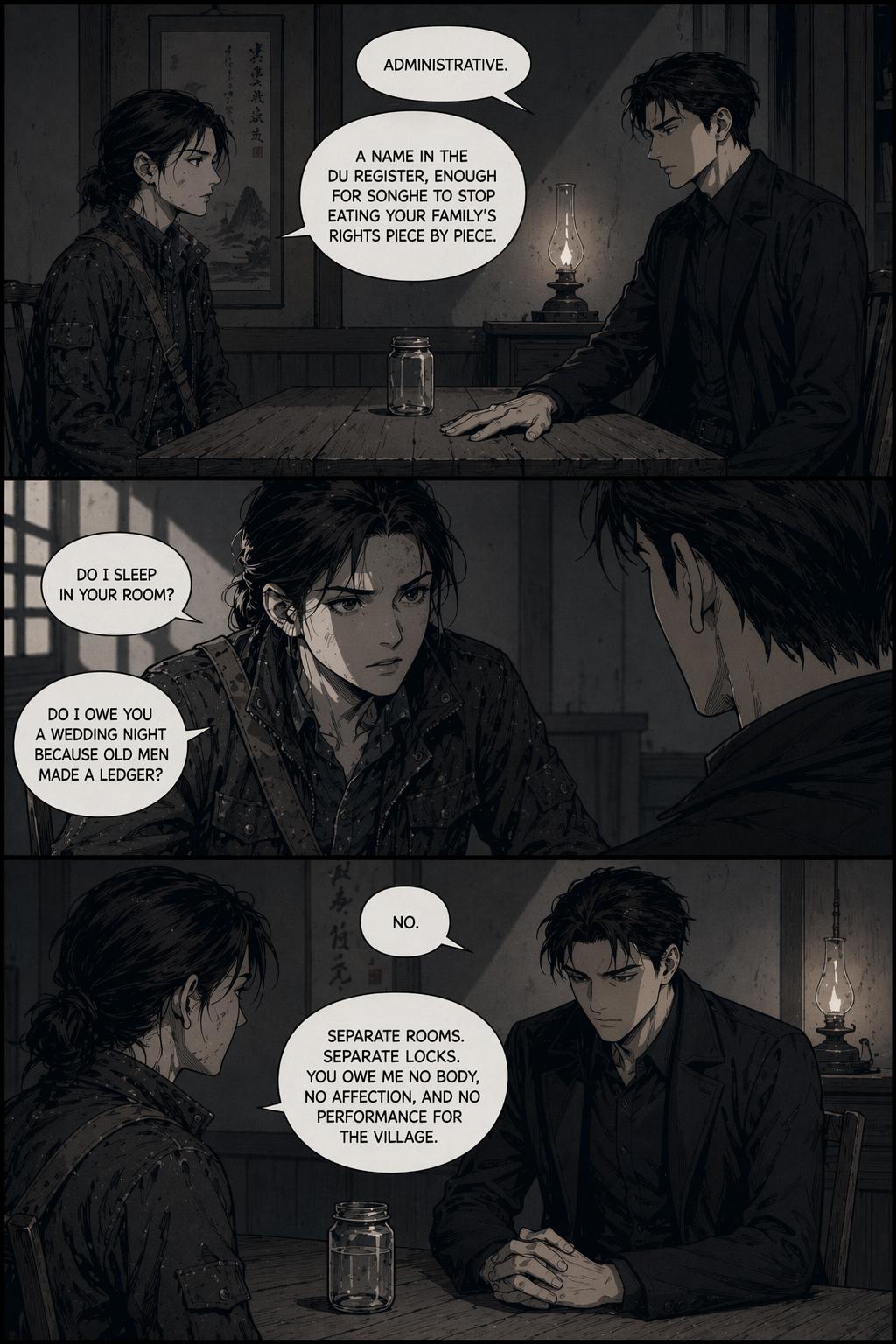
Du Heng states that the marriage can remain paperwork only. Wen makes him say what that means for her body and her room.
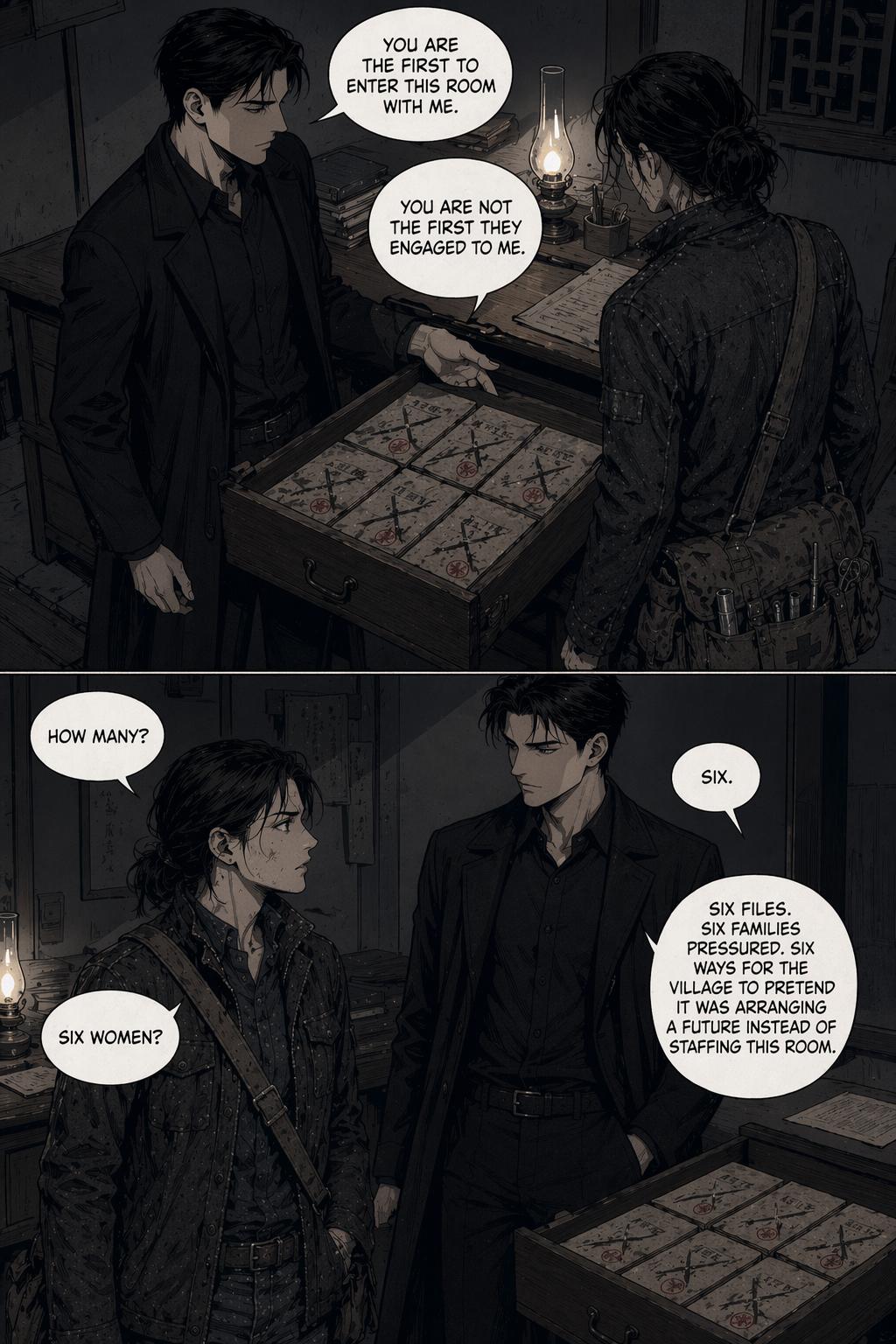
Du Heng reveals that Wen was not the first woman assigned to him. Six prior engagements were processed through the system and collapsed before becoming marriages.
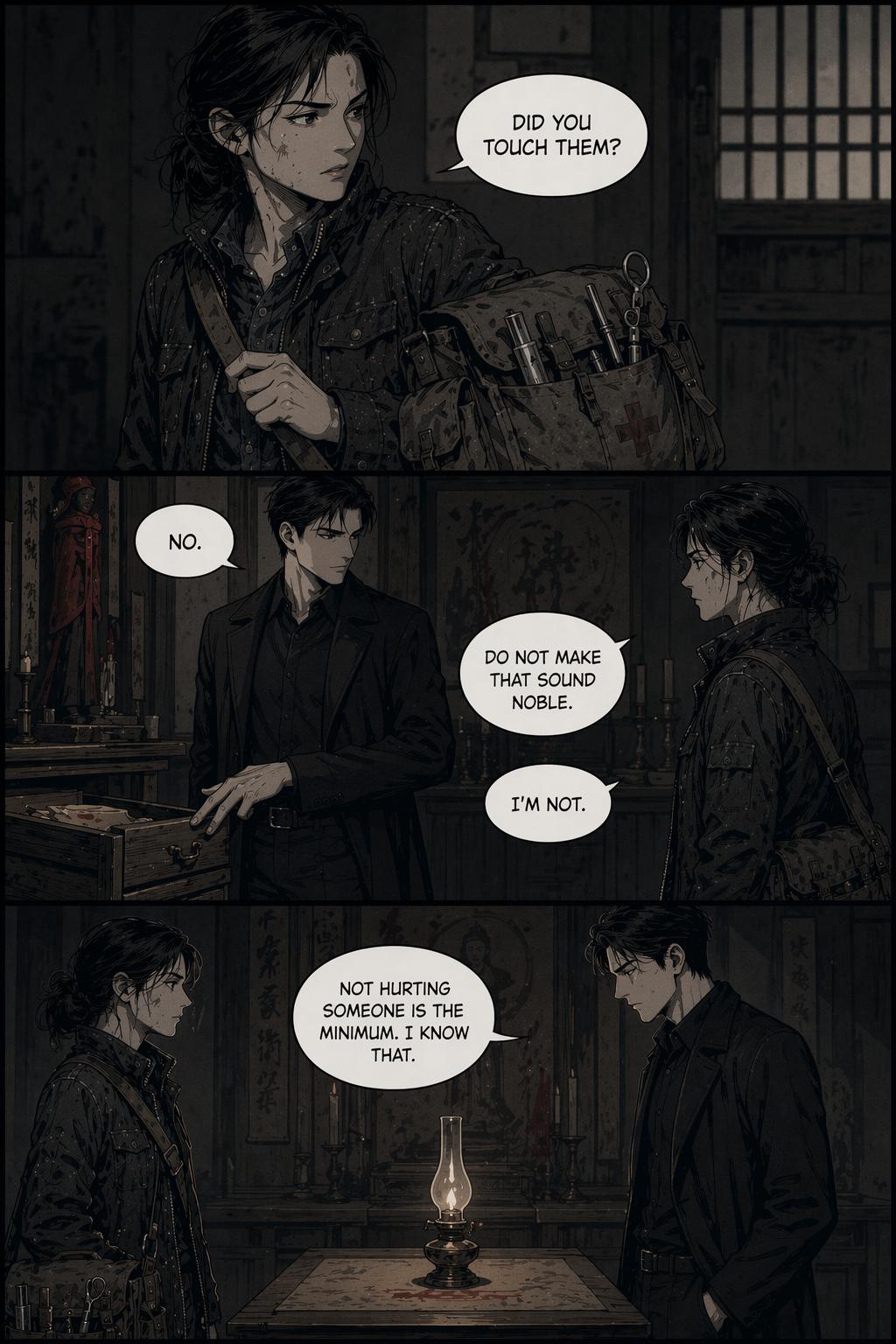
Du Heng clarifies that he never touched the previous betrothed women. The confession does not absolve him, but it changes the shape of Wen's fear.
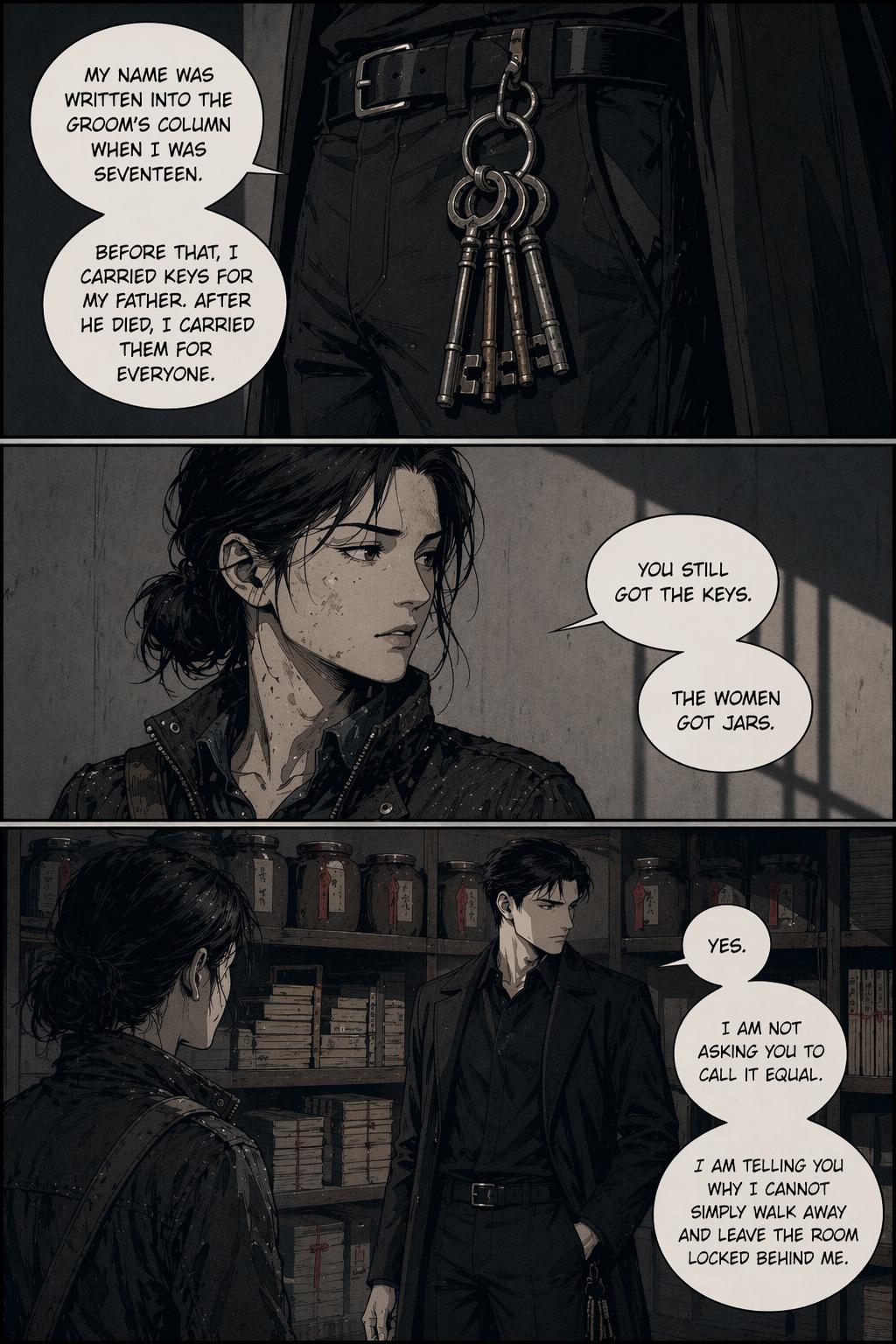
Du Heng admits he is trapped by the same registry, though not in the same way. Wen challenges his attempt to frame himself as a victim.
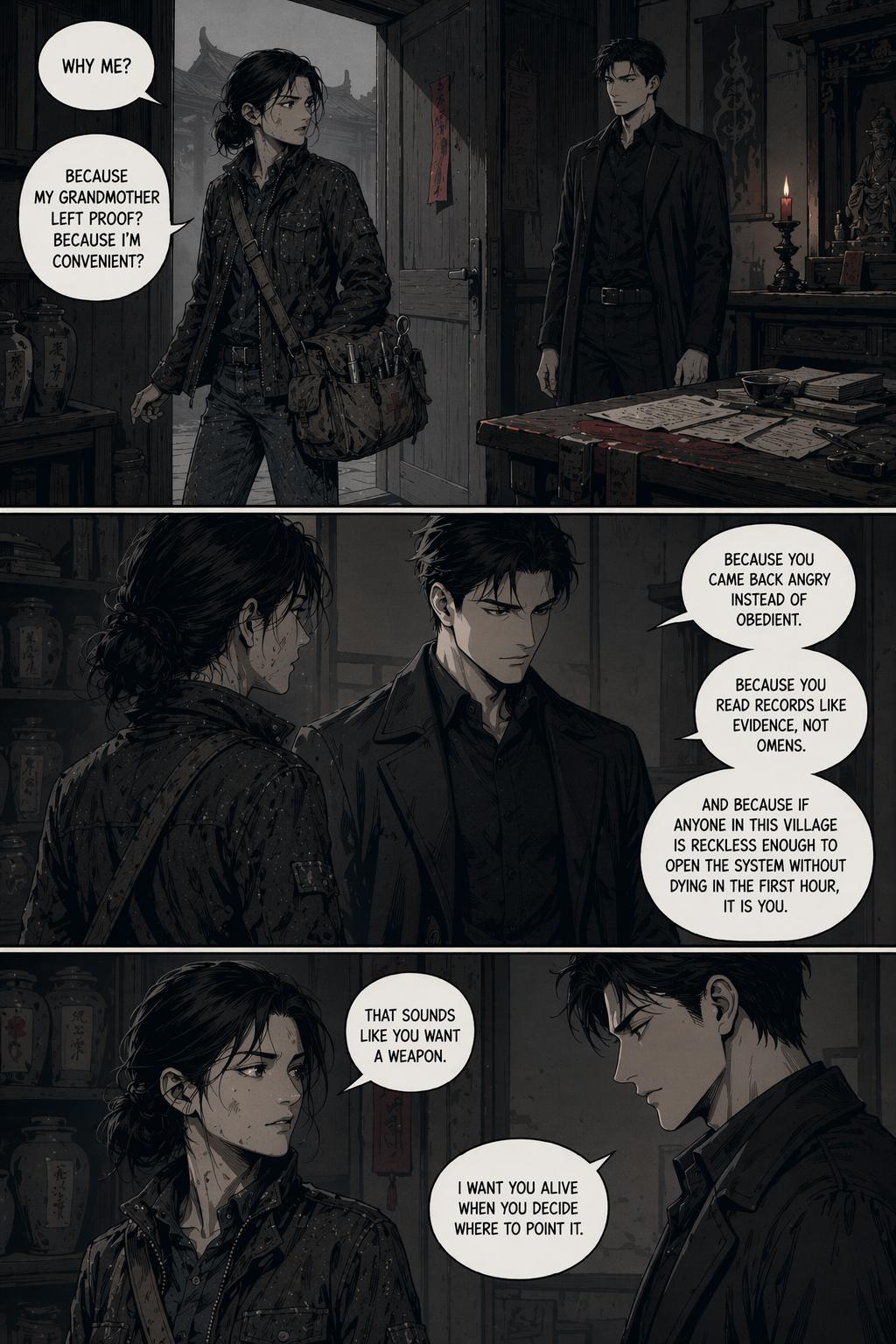
Du Heng explains why Wen matters to him: not as a romantic possession, but as someone with proof, anger, and the capacity to survive the village's pressure. His focus is still intense enough to feel dangerous.
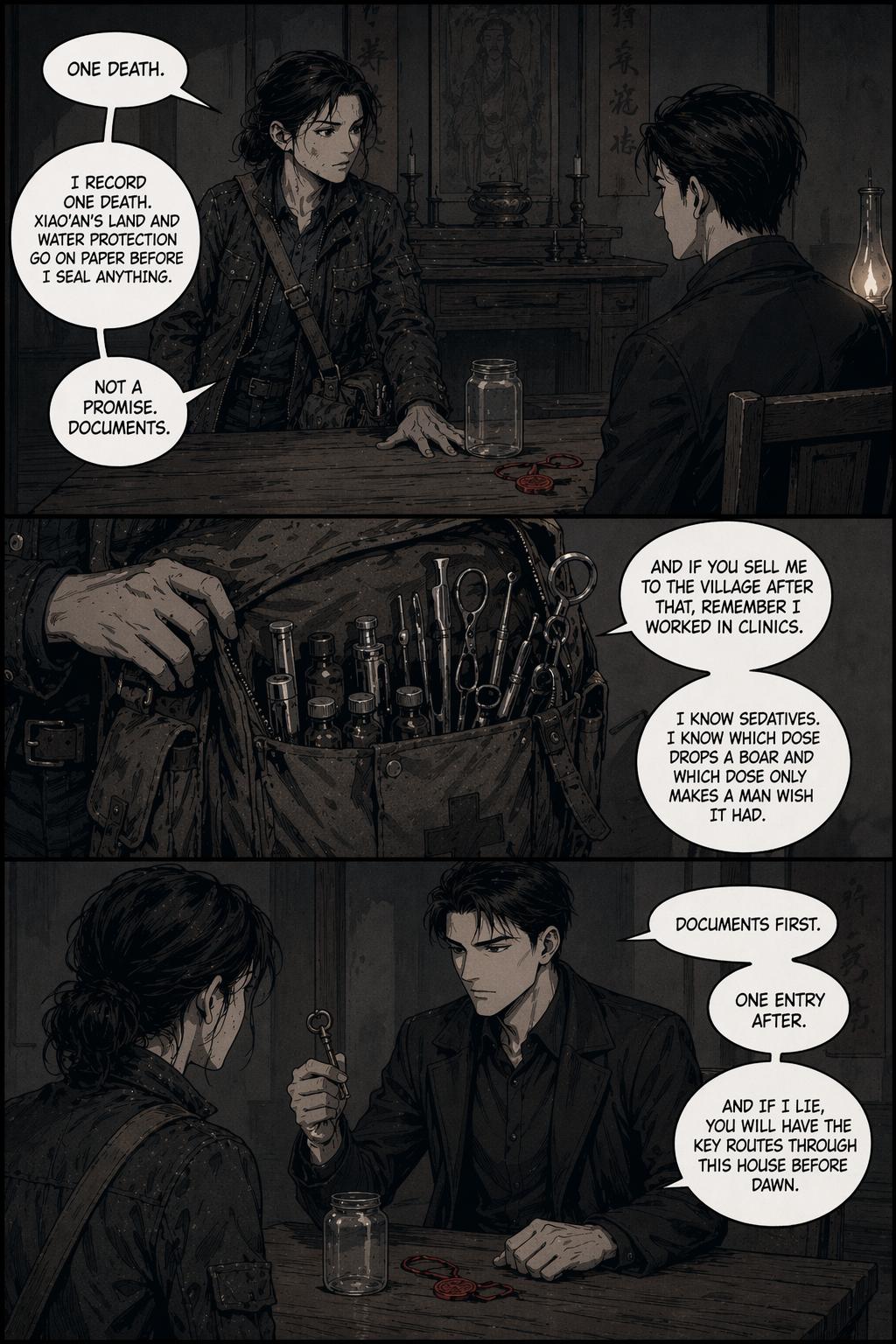
Wen sets terms. She does not forgive Du Heng or accept the bride role; she uses the terms of the system against him.
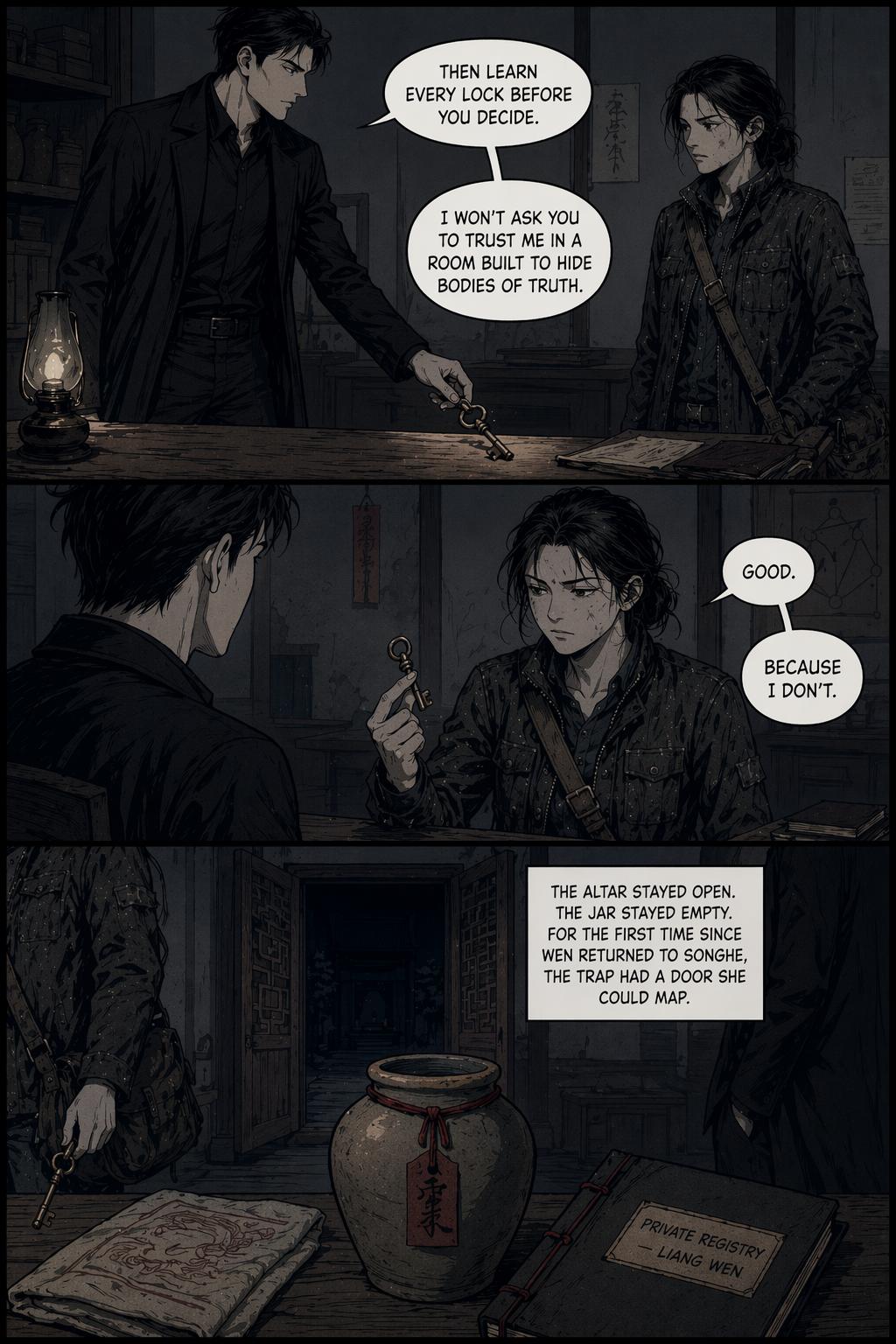
Du Heng offers Wen the altar key long enough for her to understand the house's routes. The chapter closes on the empty jar waiting for the next entry, with the bargain made but no trust earned.
Chapter Comments
Comments
to leave a comment.