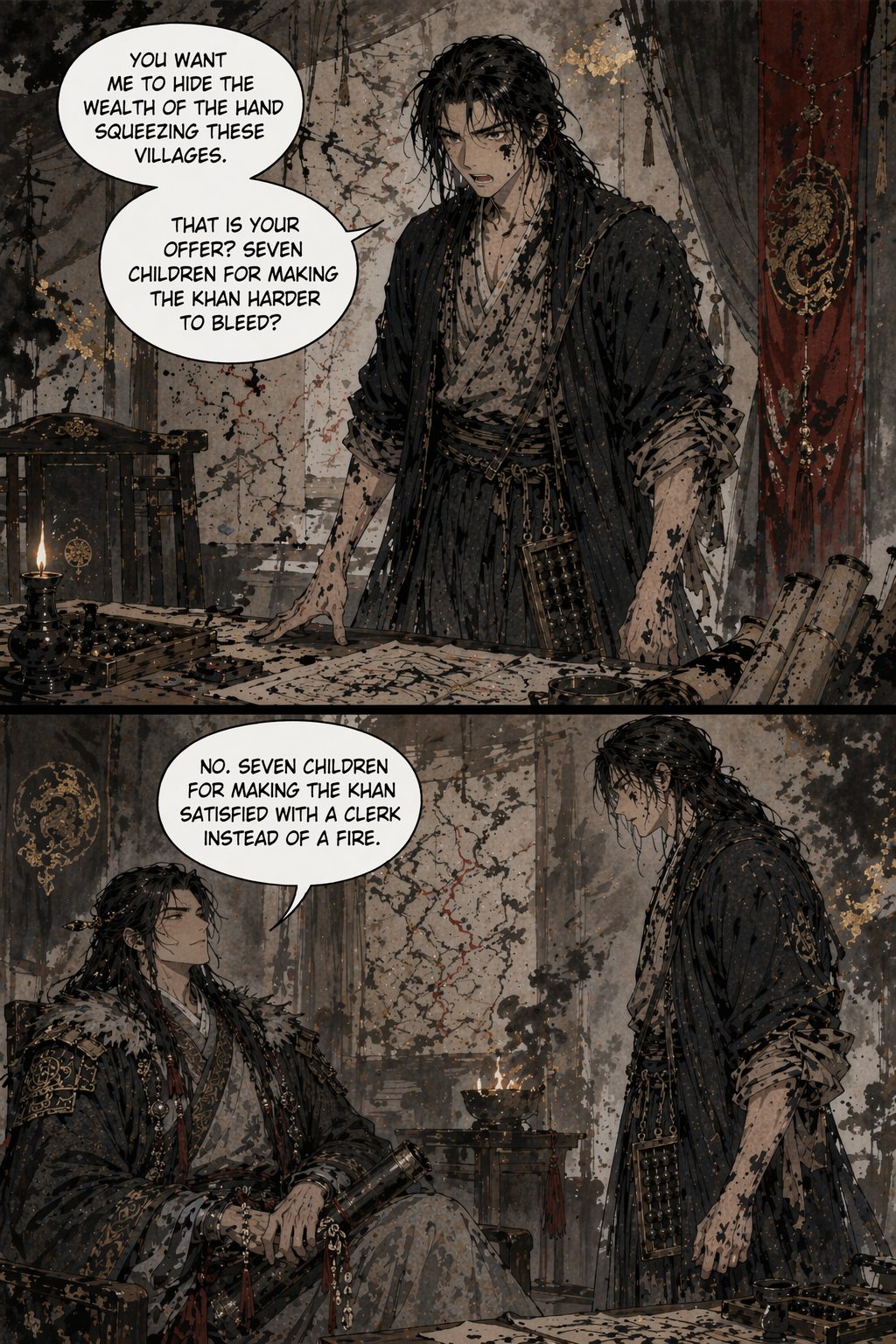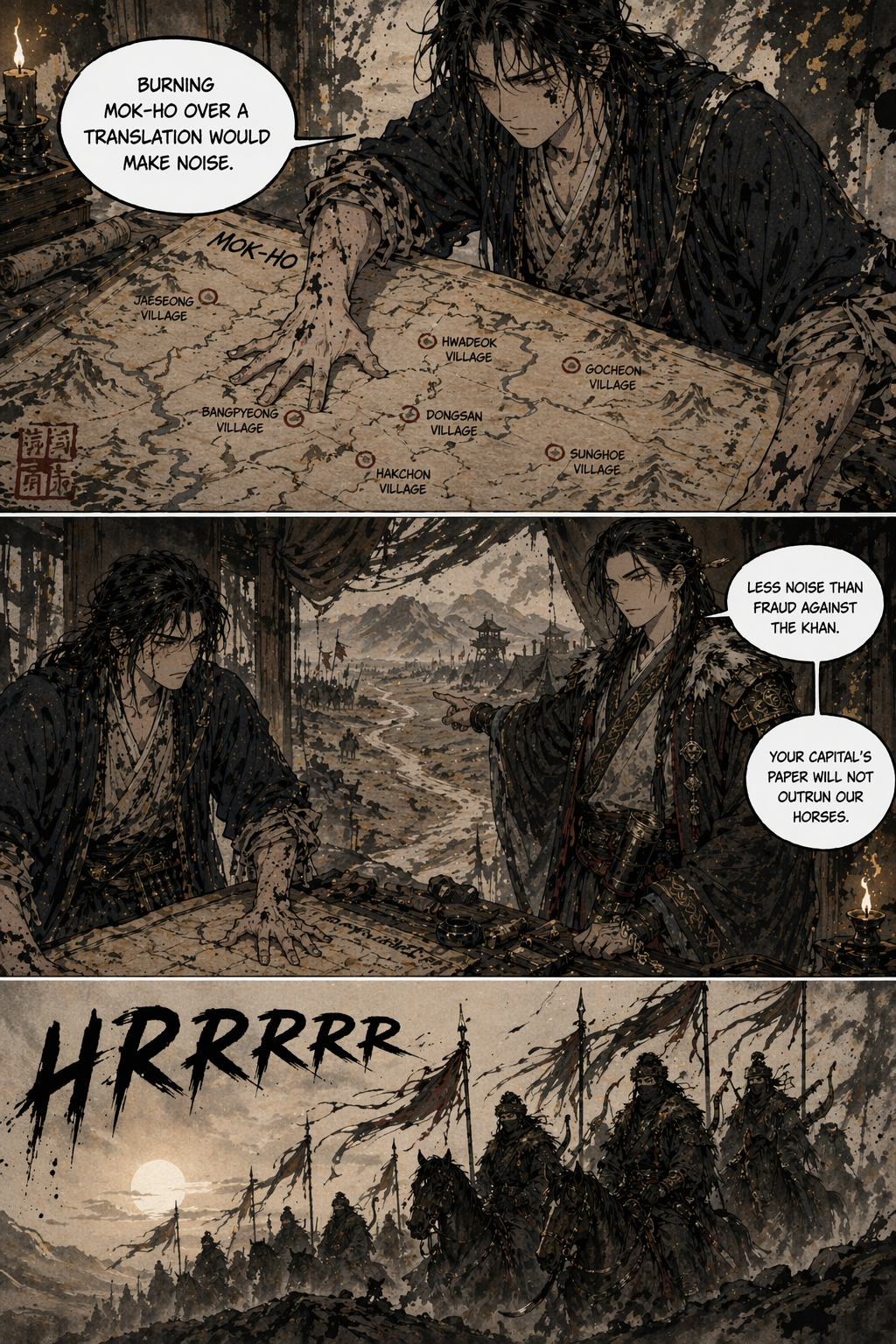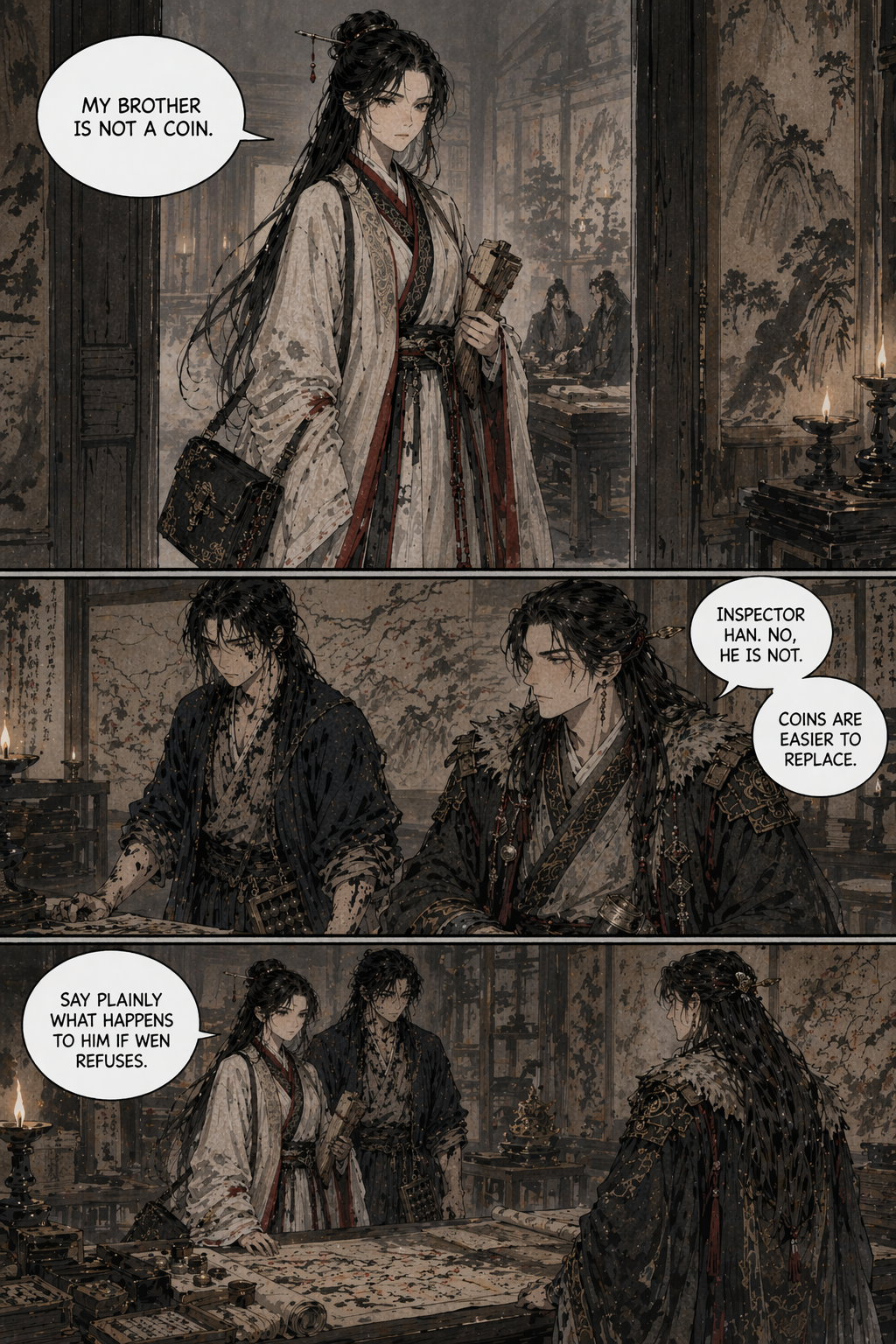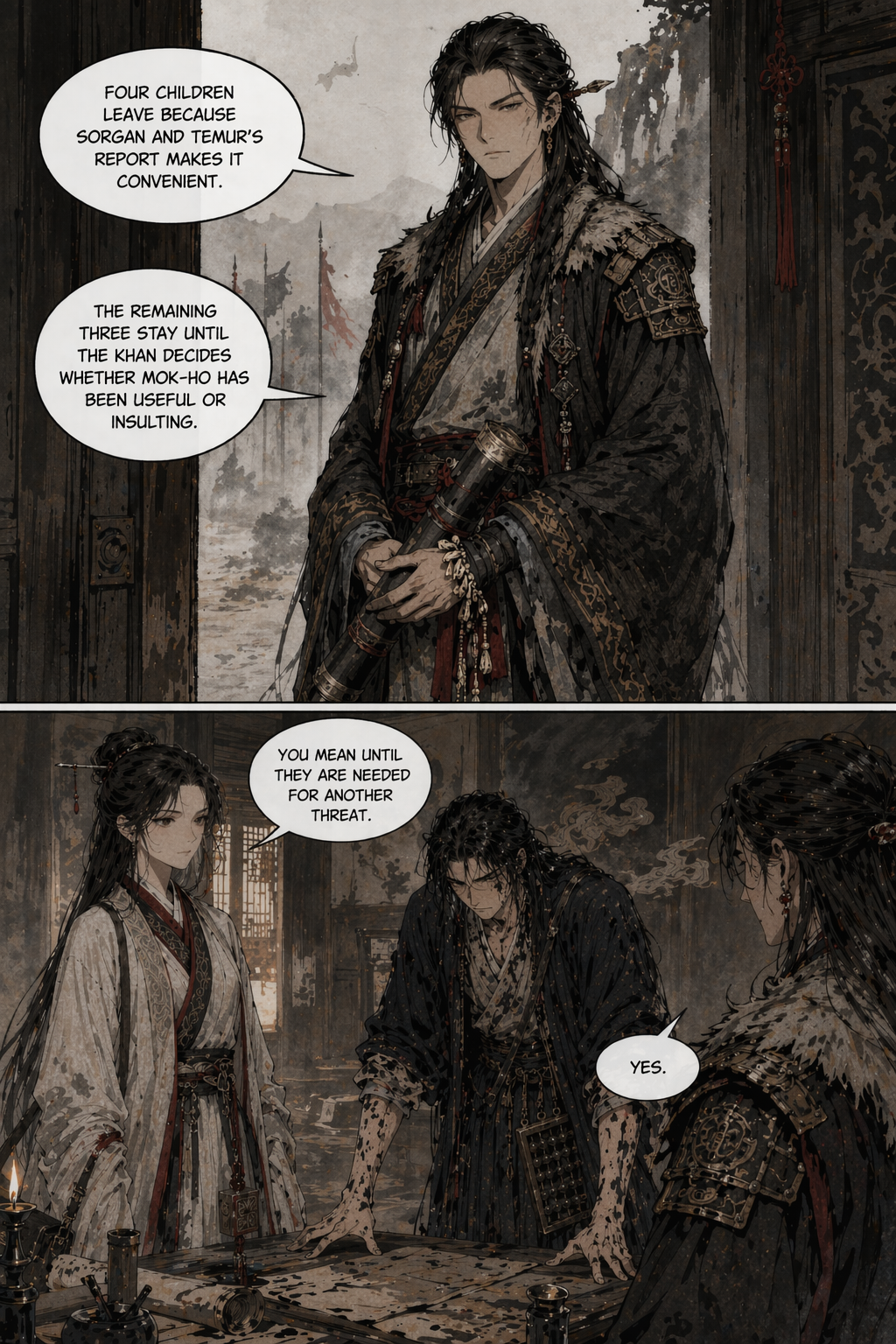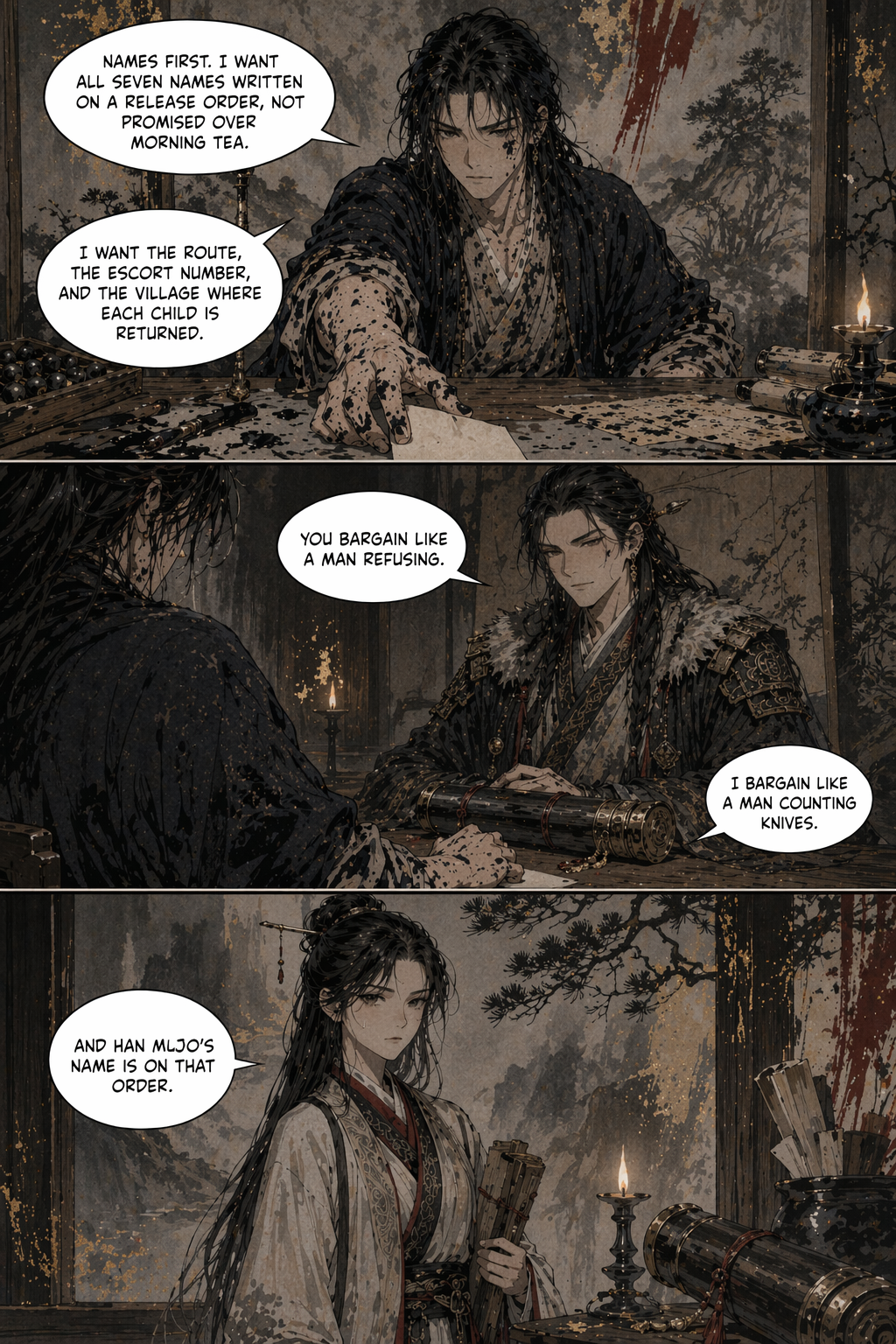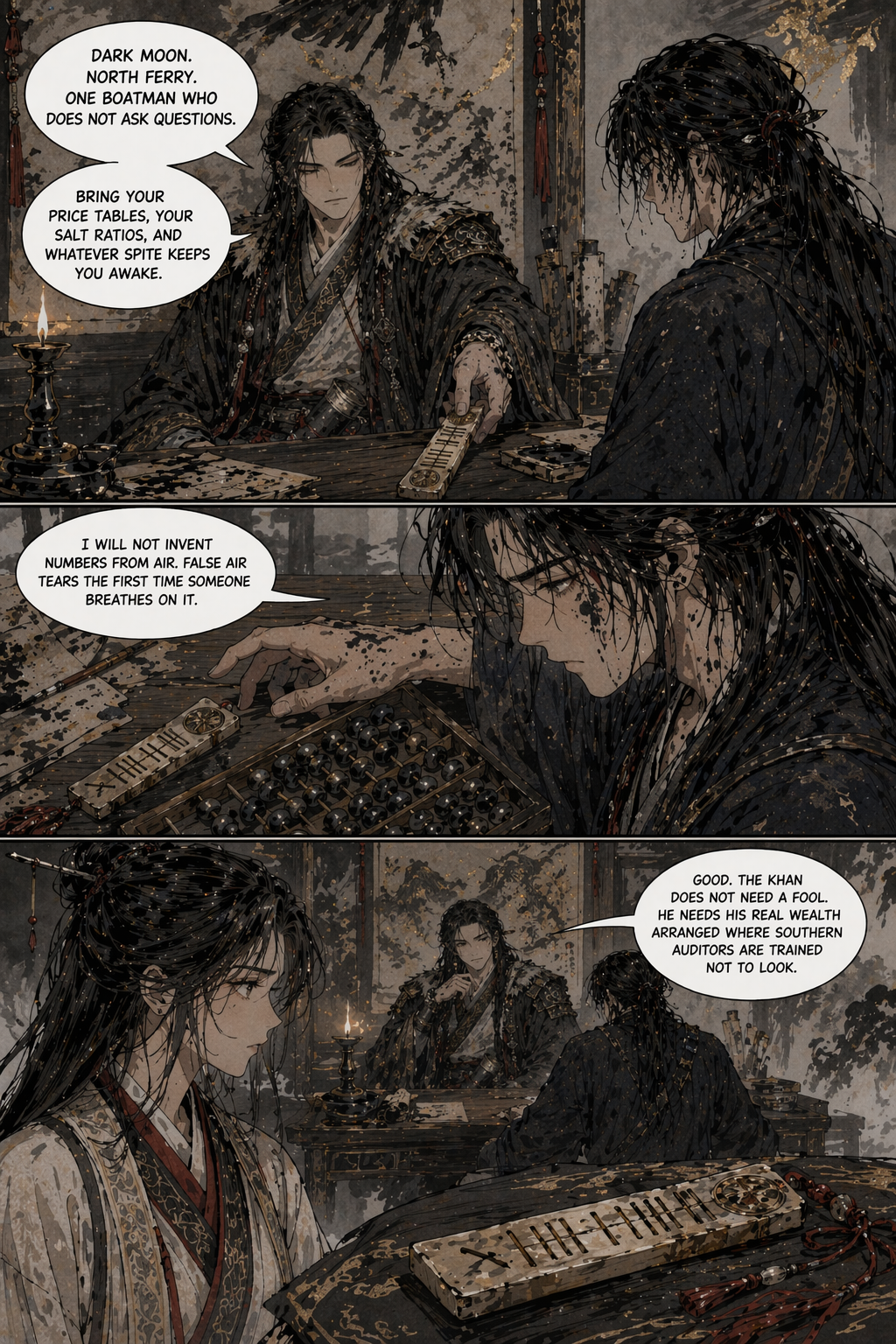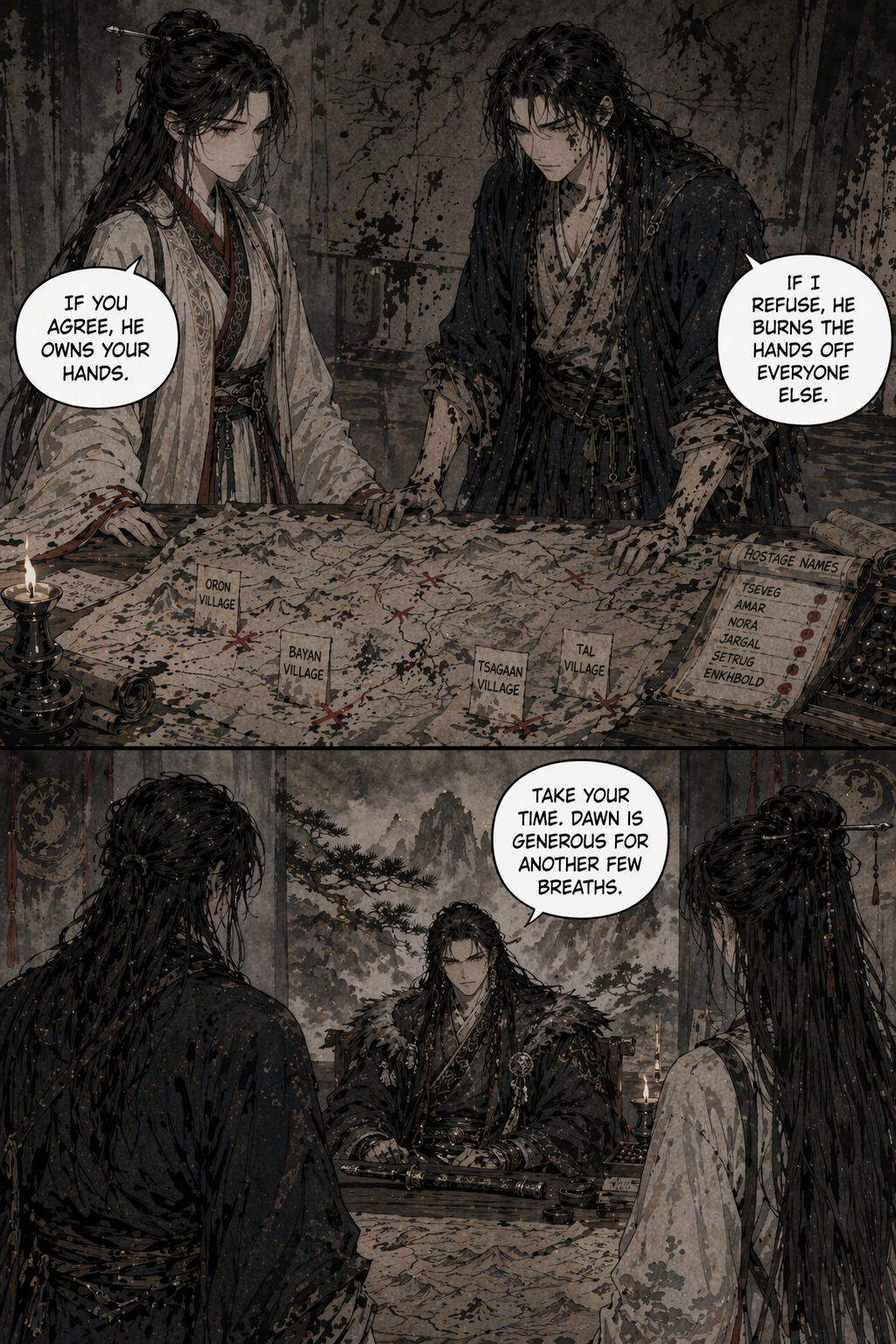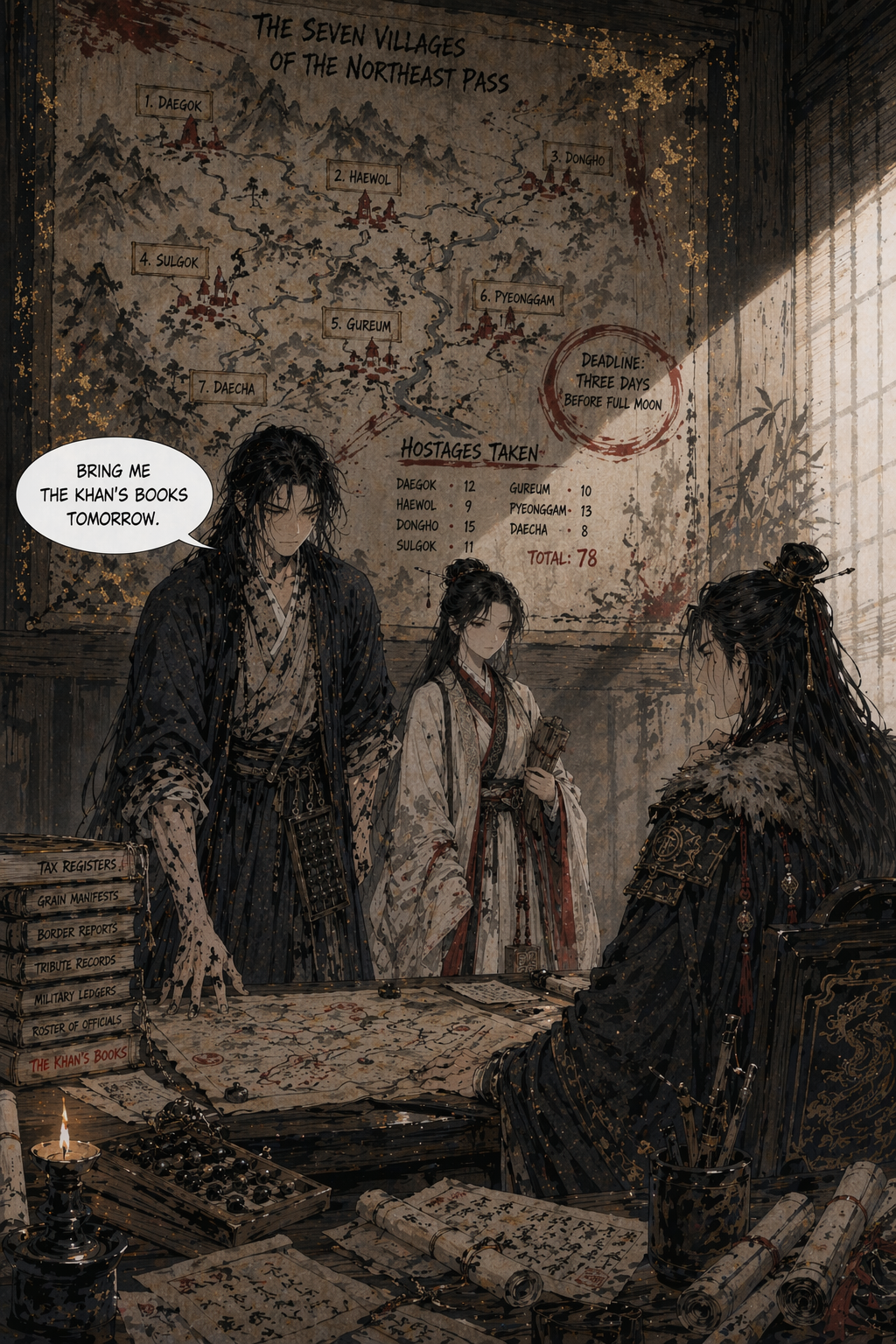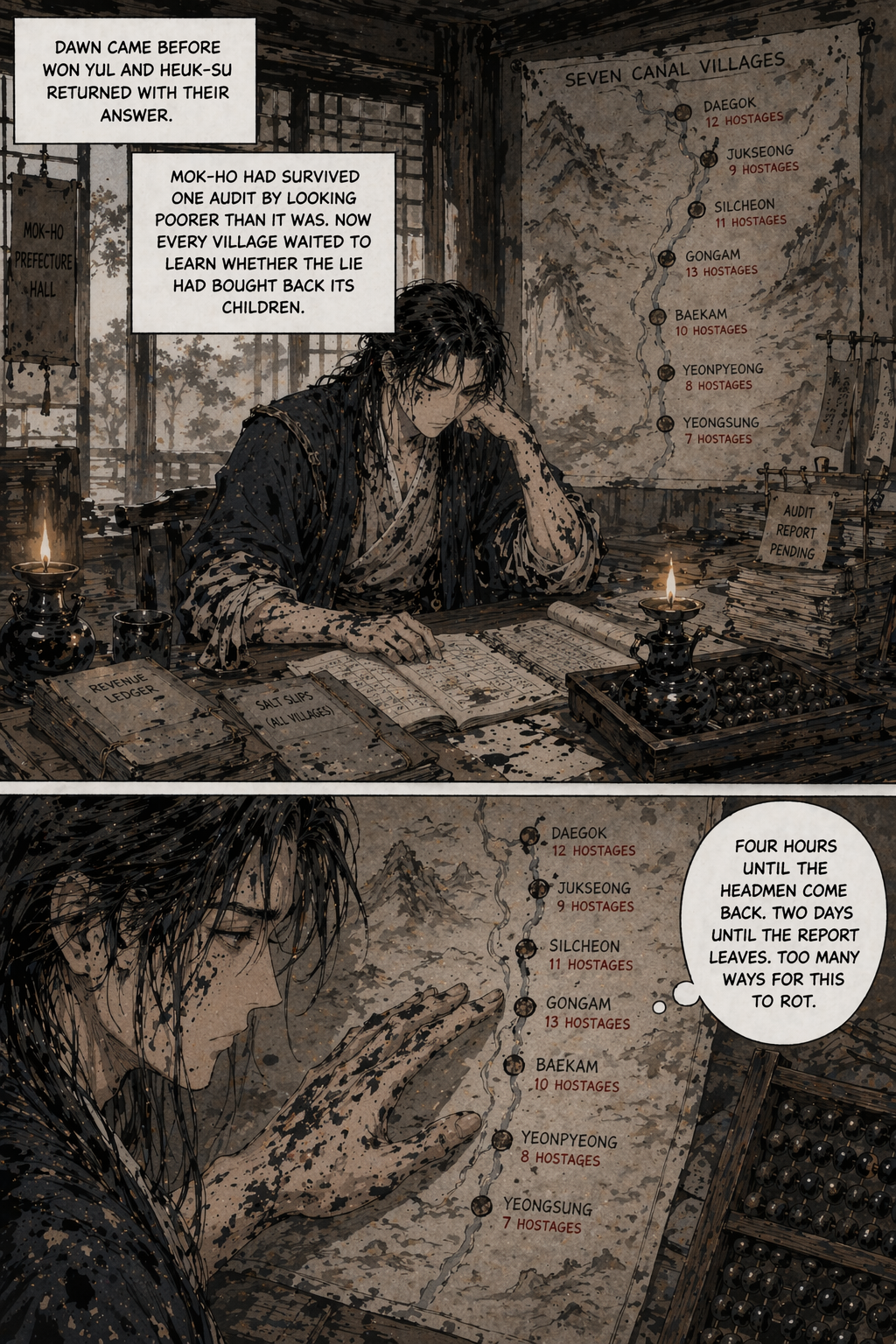
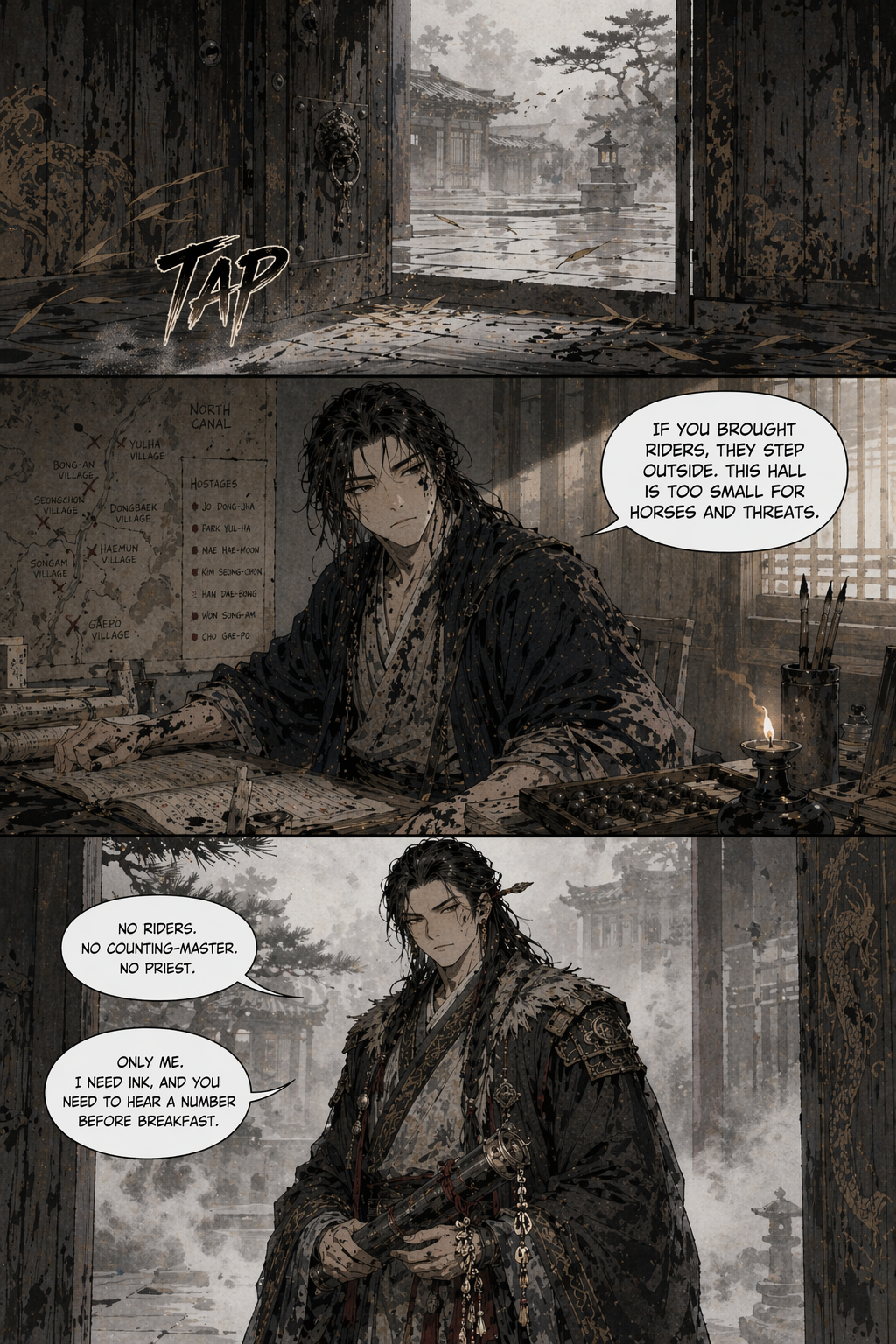
Inside Mok-ho prefecture hall at dawn after a sleepless night. Oil lamps gutter beside open ledgers, salt slips, and a wall map of seven canal villages marked with hostage names.

The prefecture courtyard outside the hall is unusually empty, with morning mist and no escort banners.

Borchu crosses into the hall as if the place already belongs to him; Wen remains behind the desk with the village map between them.

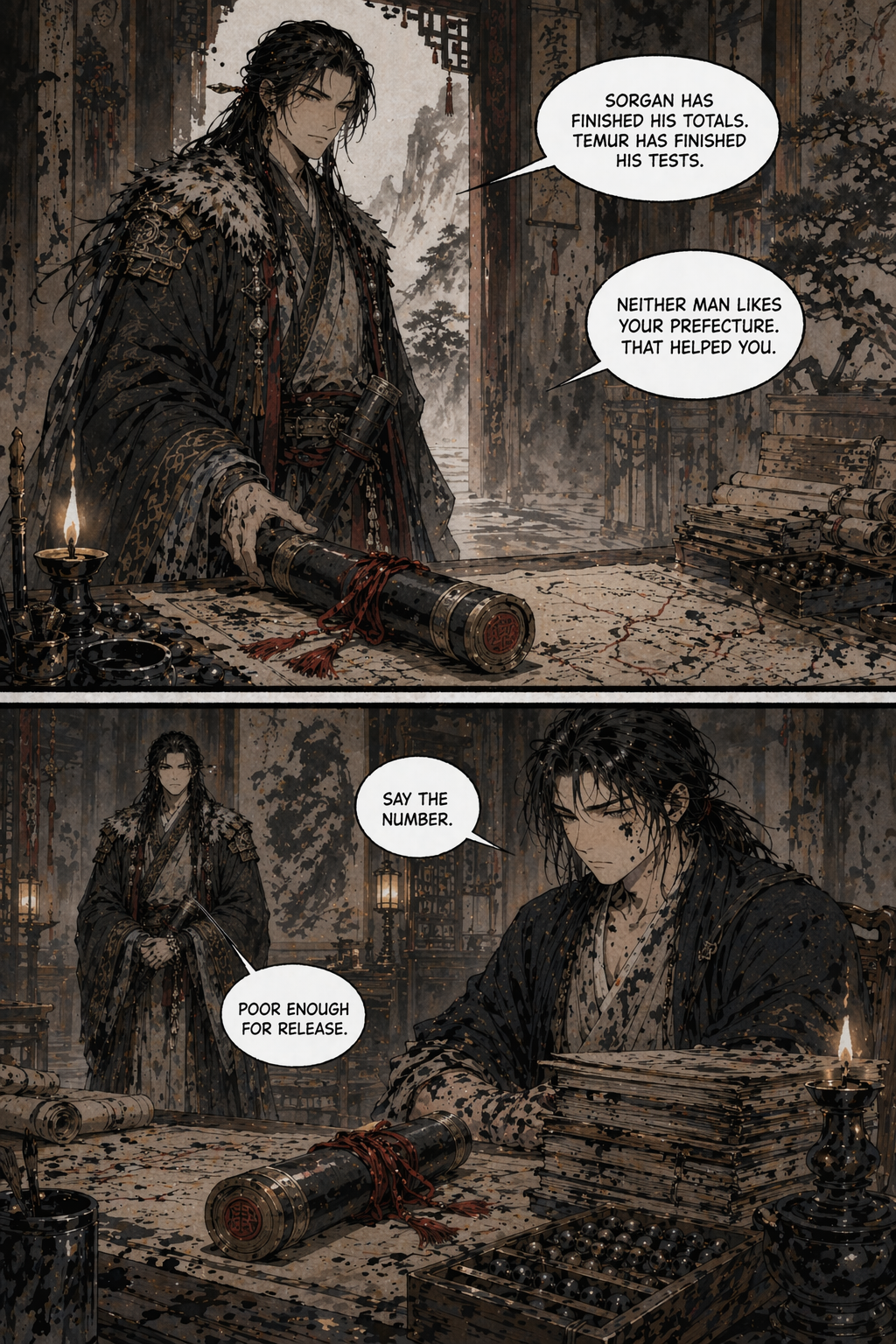
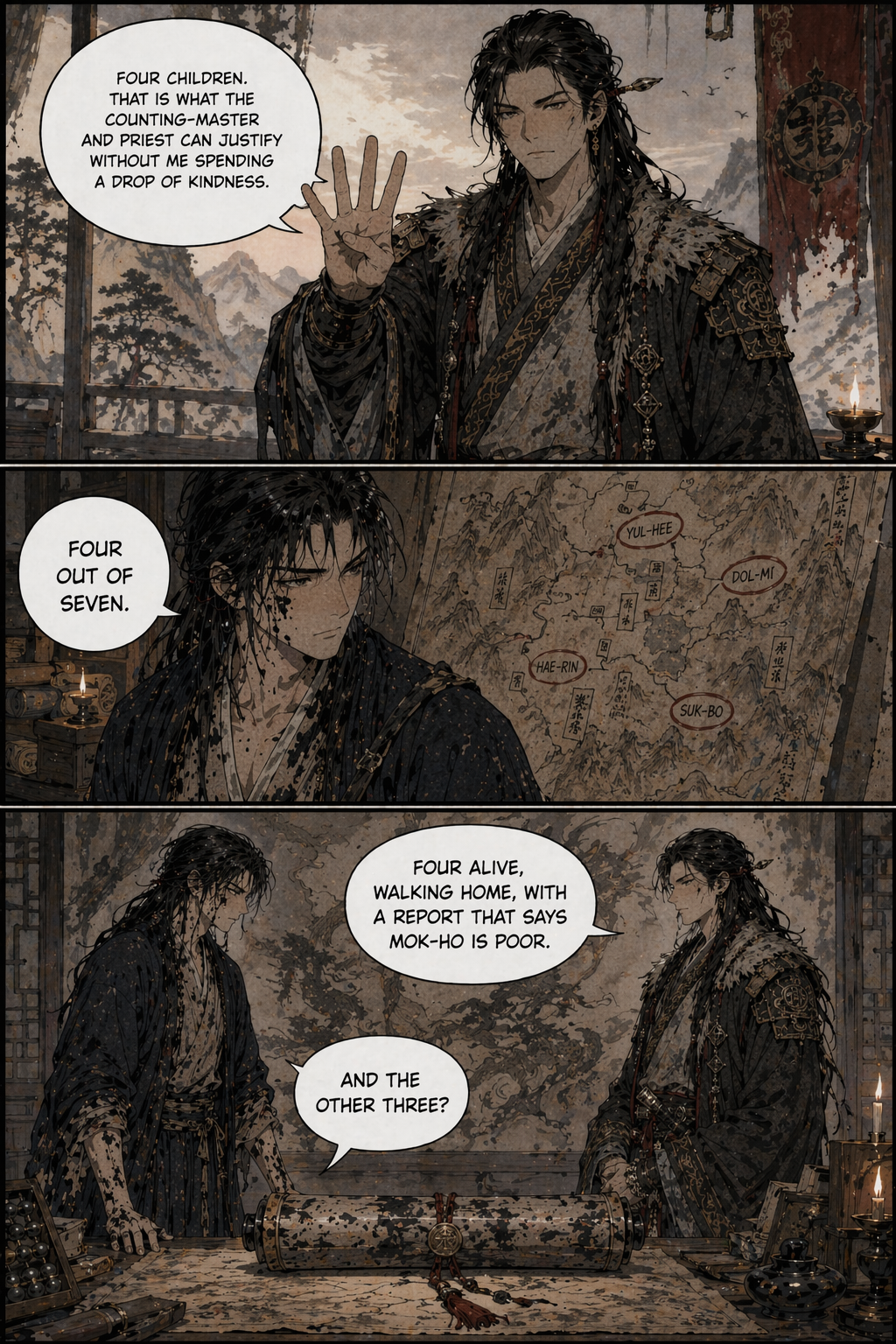
The first hostage release is stated as a bureaucratic result, cold and limited.

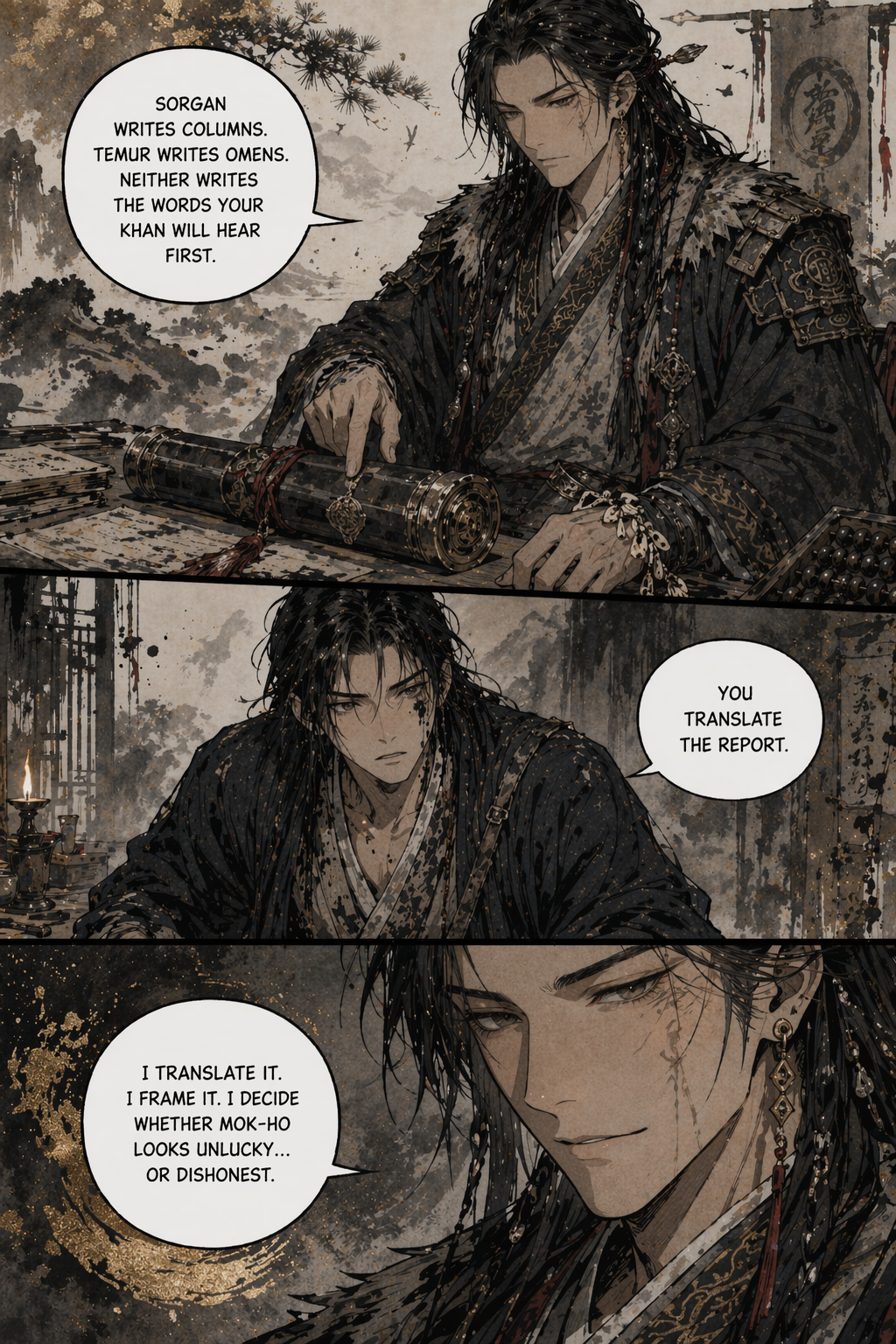
Borchu explains his role: the steppe auditors count, but his translation decides how the report travels upward.

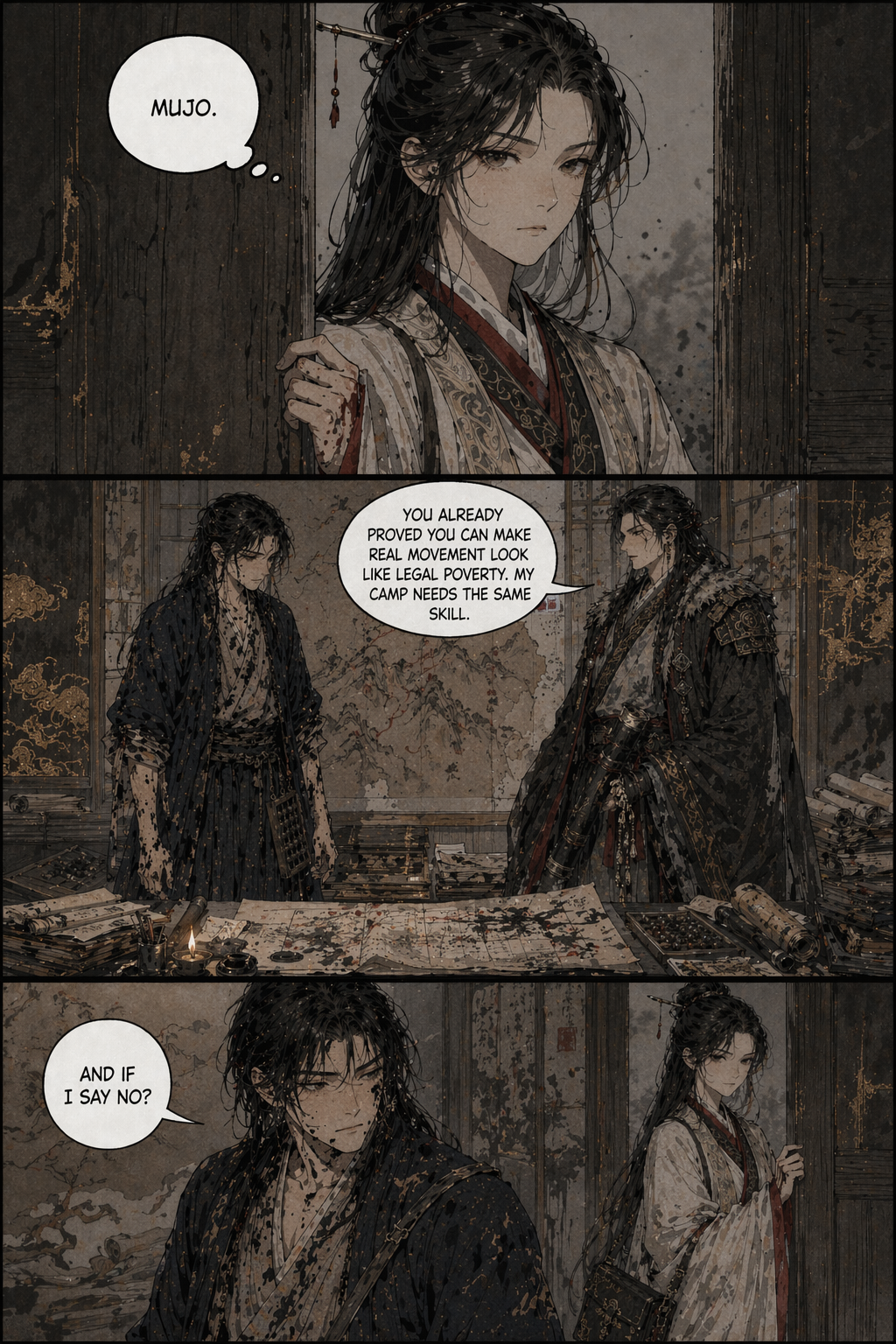
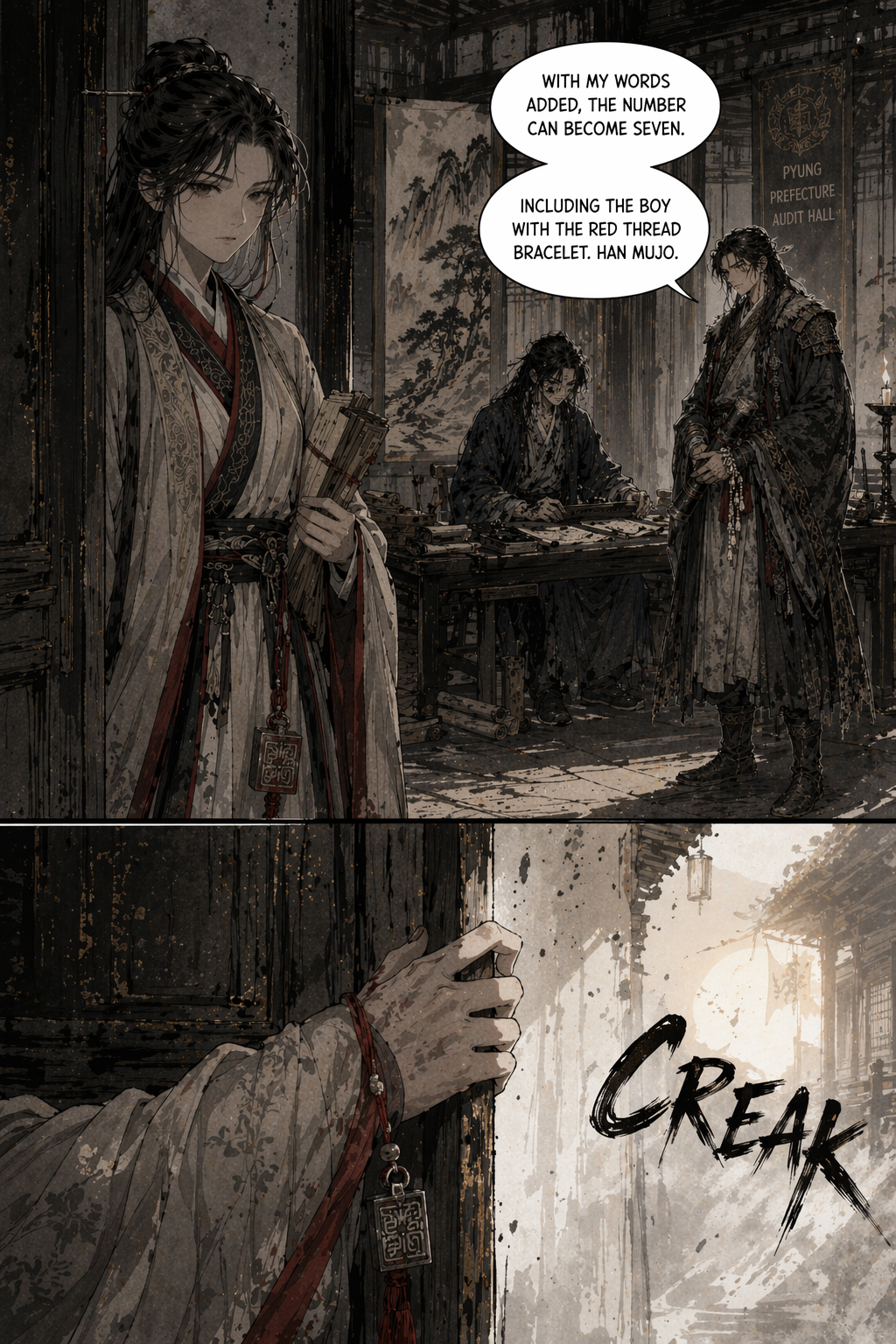
The corridor outside the hall. Han Saeryeon arrives just in time to hear the personal stake spoken aloud.

Borchu names the full release while Wen understands Saeryeon may have heard.

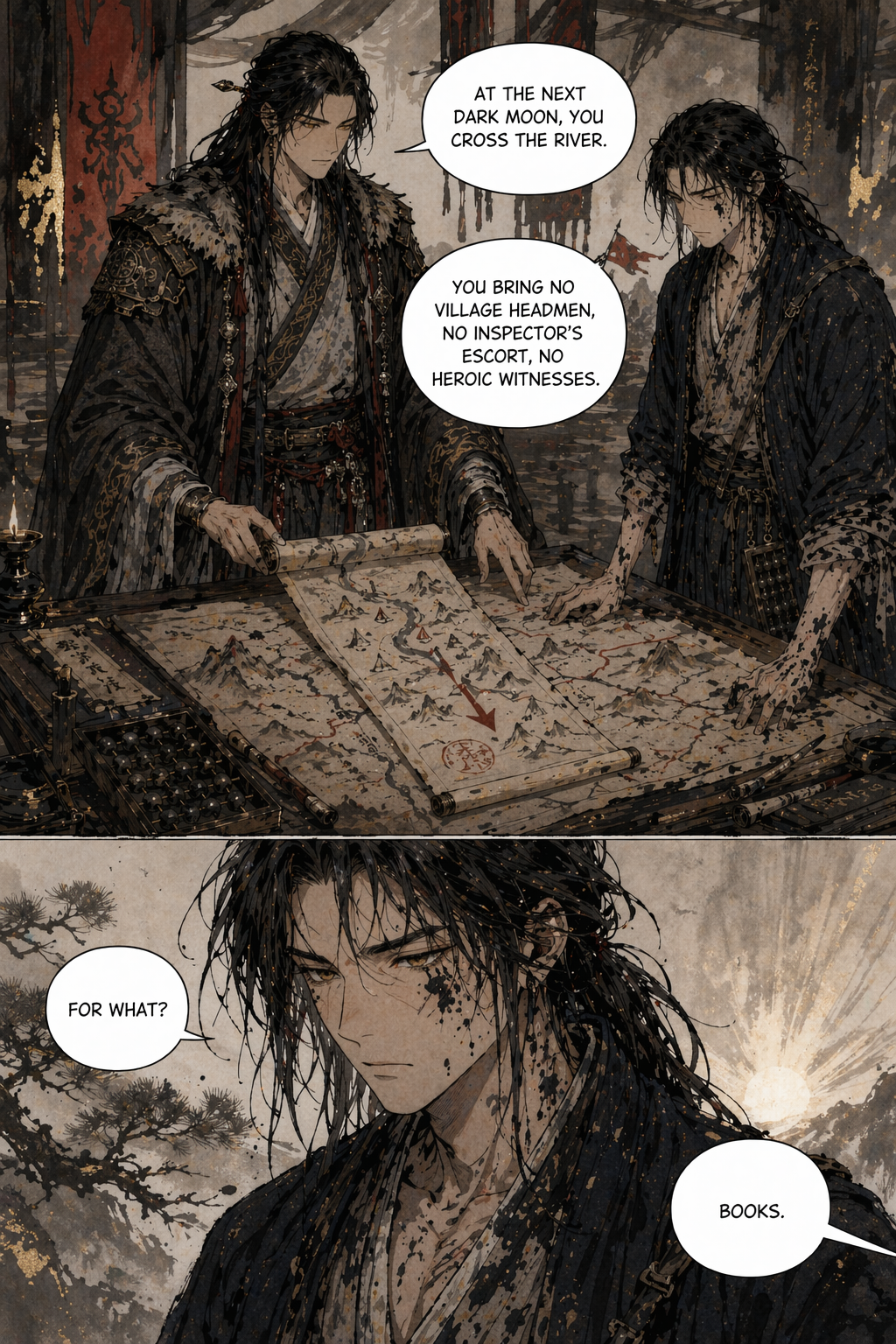
Borchu reveals the price: Wen must serve the khan's own ledger problem beyond the river.

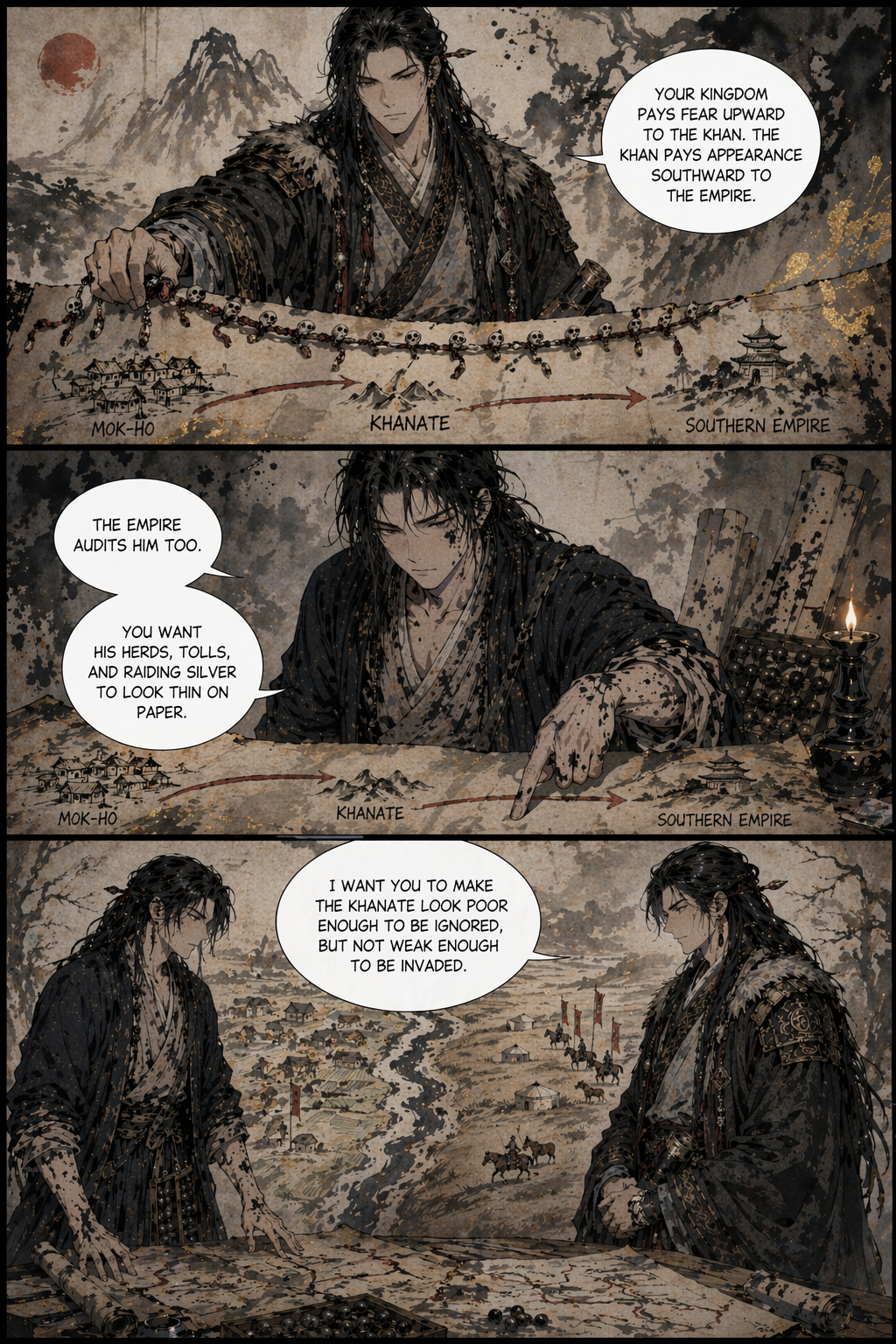
The ledger warfare widens from Mok-ho to the khanate's dealings with the southern empire.

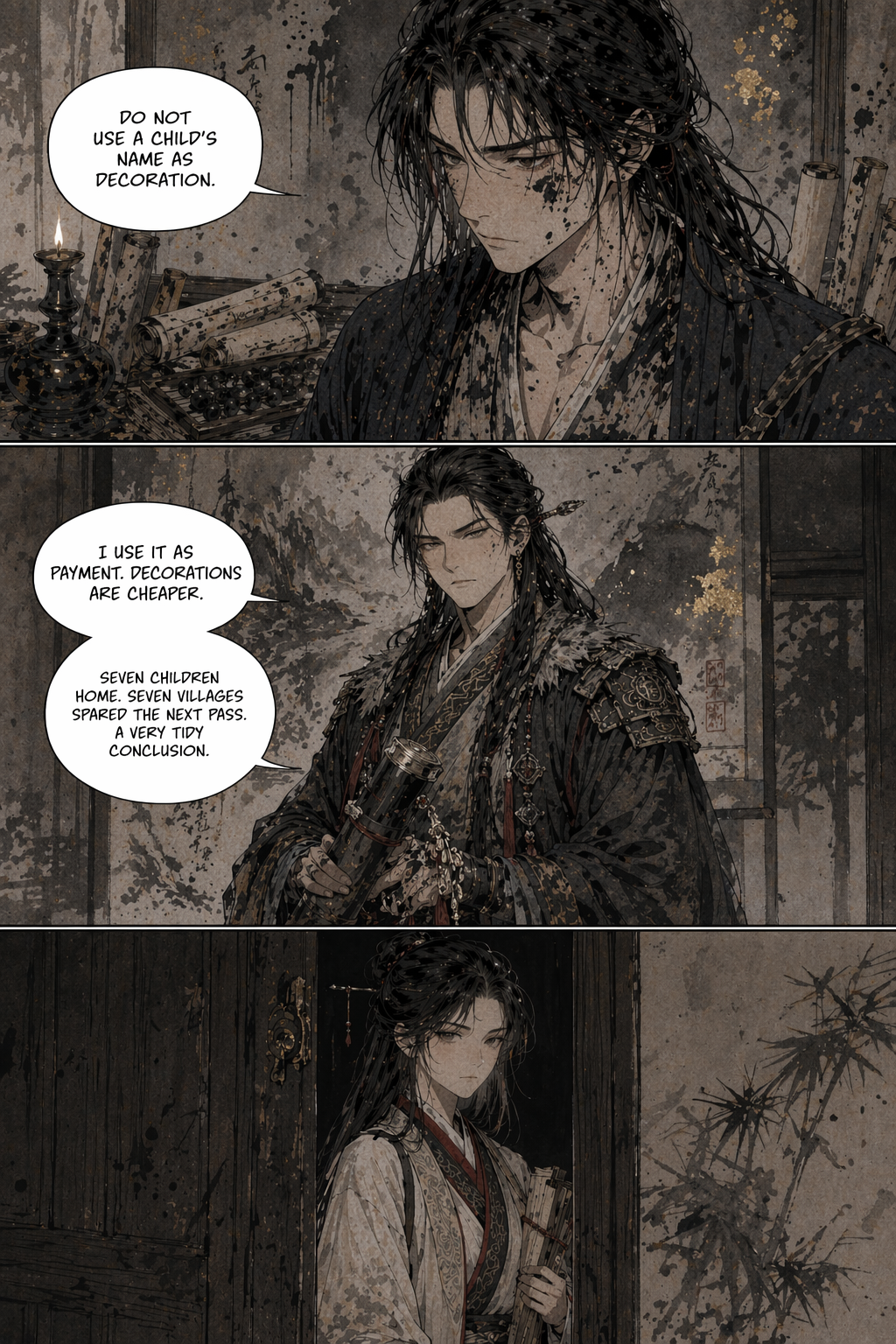
Wen states the moral and practical problem plainly: he is being asked to repeat the same fraud for a greater predator.

Saeryeon hears the full shape of the bargain and struggles to stay composed.

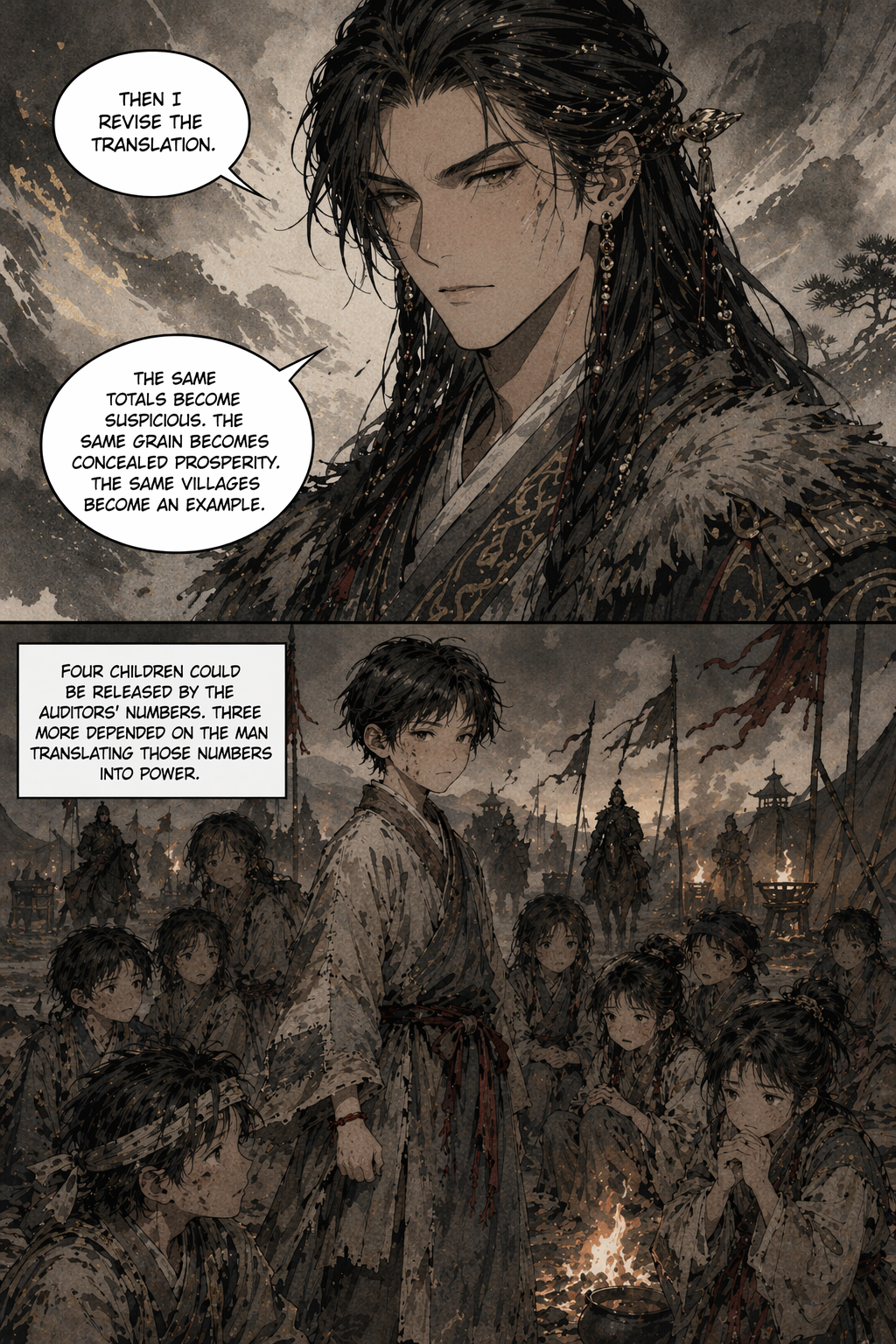
Borchu lays out the refusal consequence, with a pressure-image of the hostage camp showing what is at stake.

The threat shifts from hostage camp to the seven villages and the speed of riders versus paperwork.

Saeryeon stops hiding and confronts the use of her brother as leverage.

Borchu answers Saeryeon's question in practical terms, leaving no room for hopeful misunderstanding.

Wen tries to turn the coercion into something with enforceable terms, because bargaining is the only tool left.

The terms become concrete: when Wen must cross, what he must bring, and what he must do to the khan's ledger.

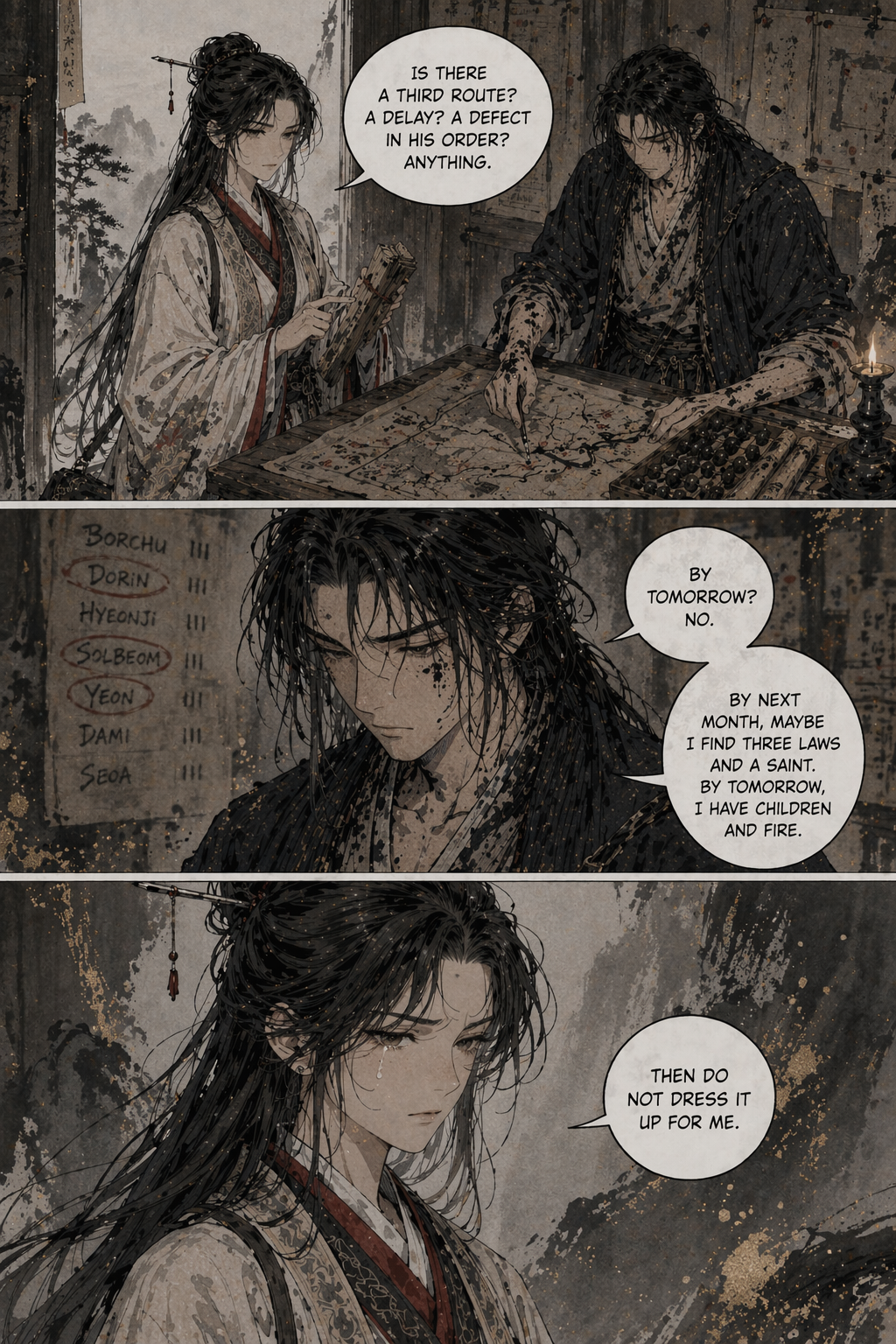
Wen and Saeryeon both understand there is no honorable answer that also saves the children immediately.

Saeryeon asks for a third route; Wen admits the terrible limit of time and procedure.

Wen makes the choice, flat and unheroic, with all the maps and names visible around him.

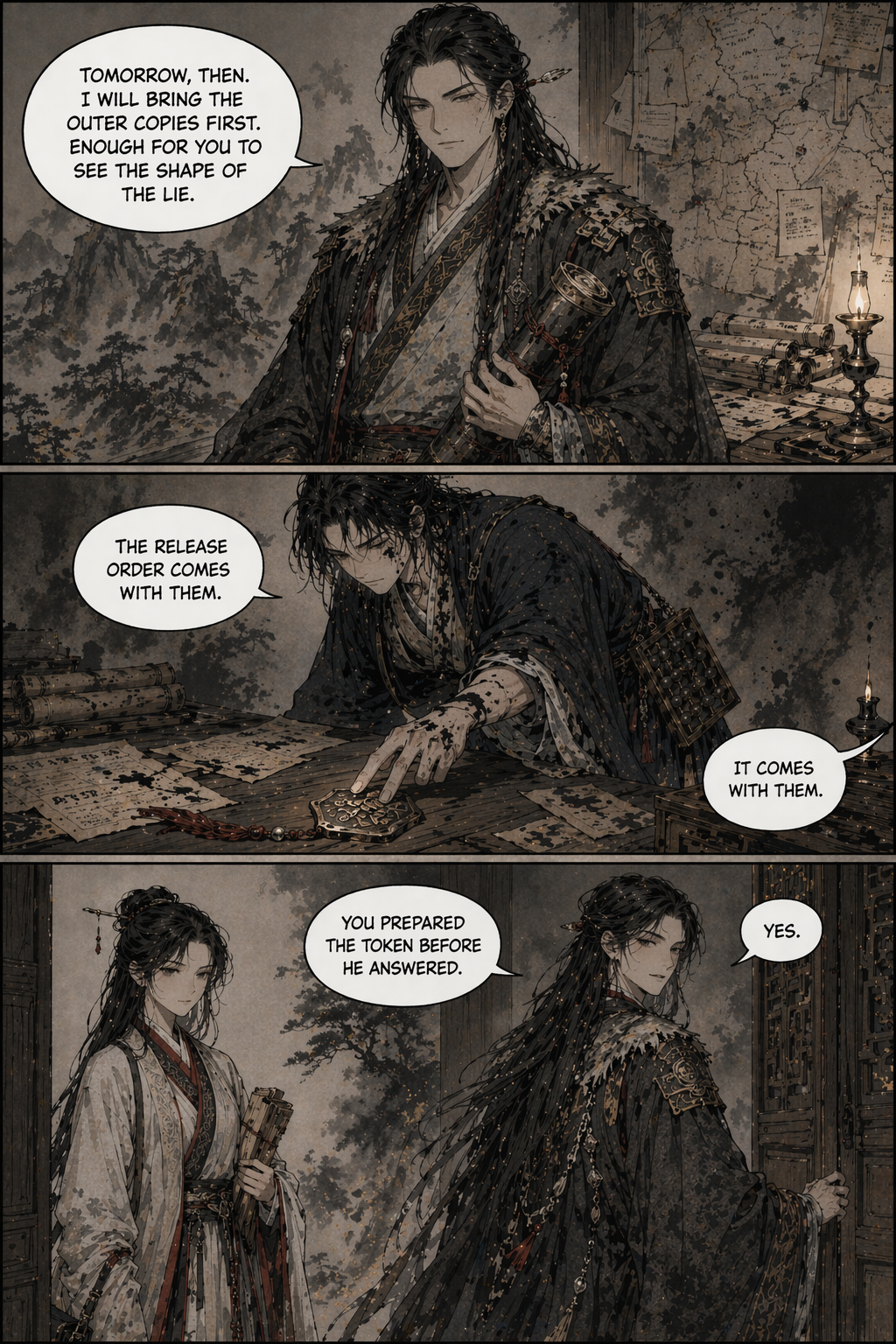
Borchu behaves as if Wen's answer was inevitable, turning the coercion into a schedule.

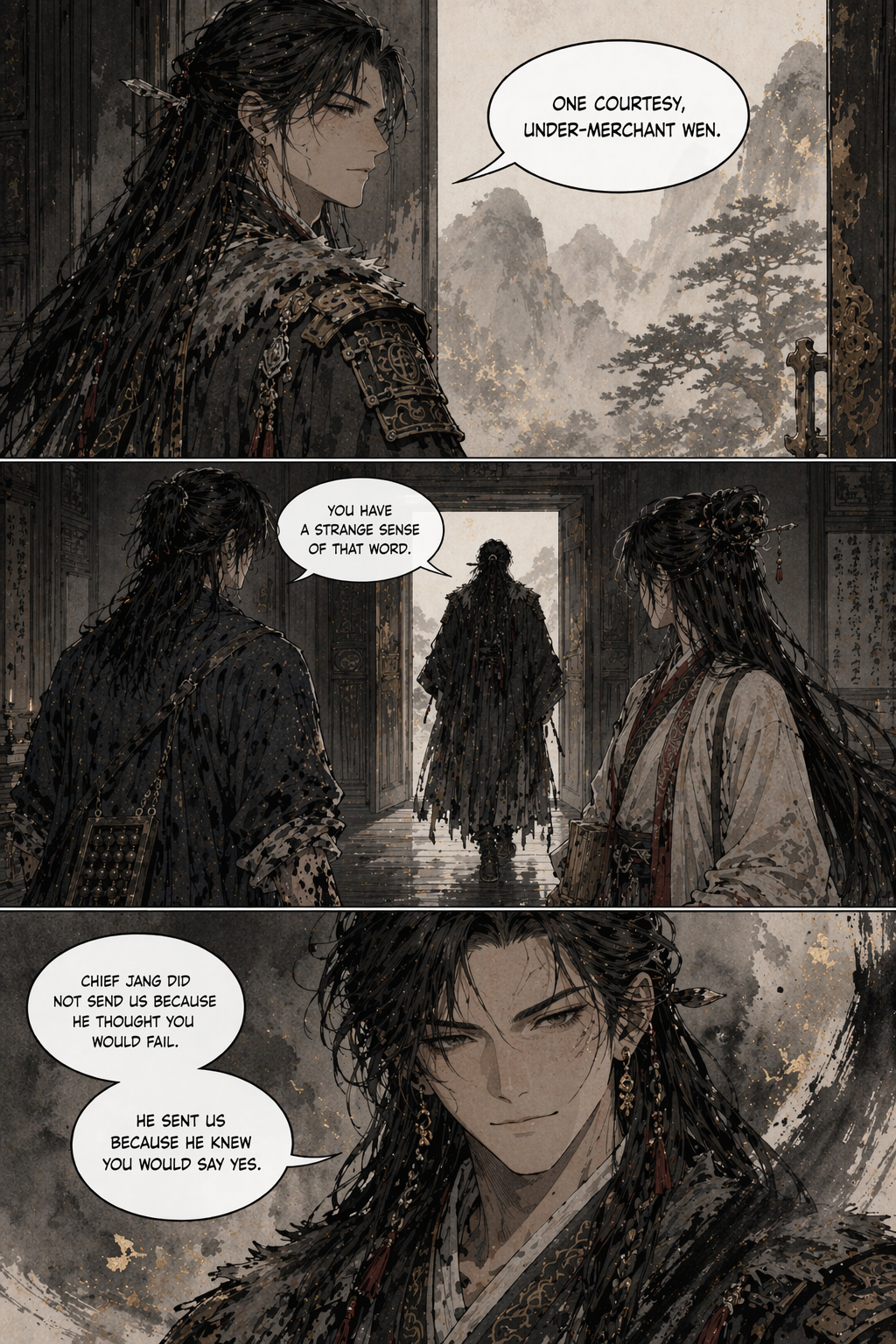
Borchu reaches the hall door and reveals that the capital's enemy and the khanate's demand are connected.

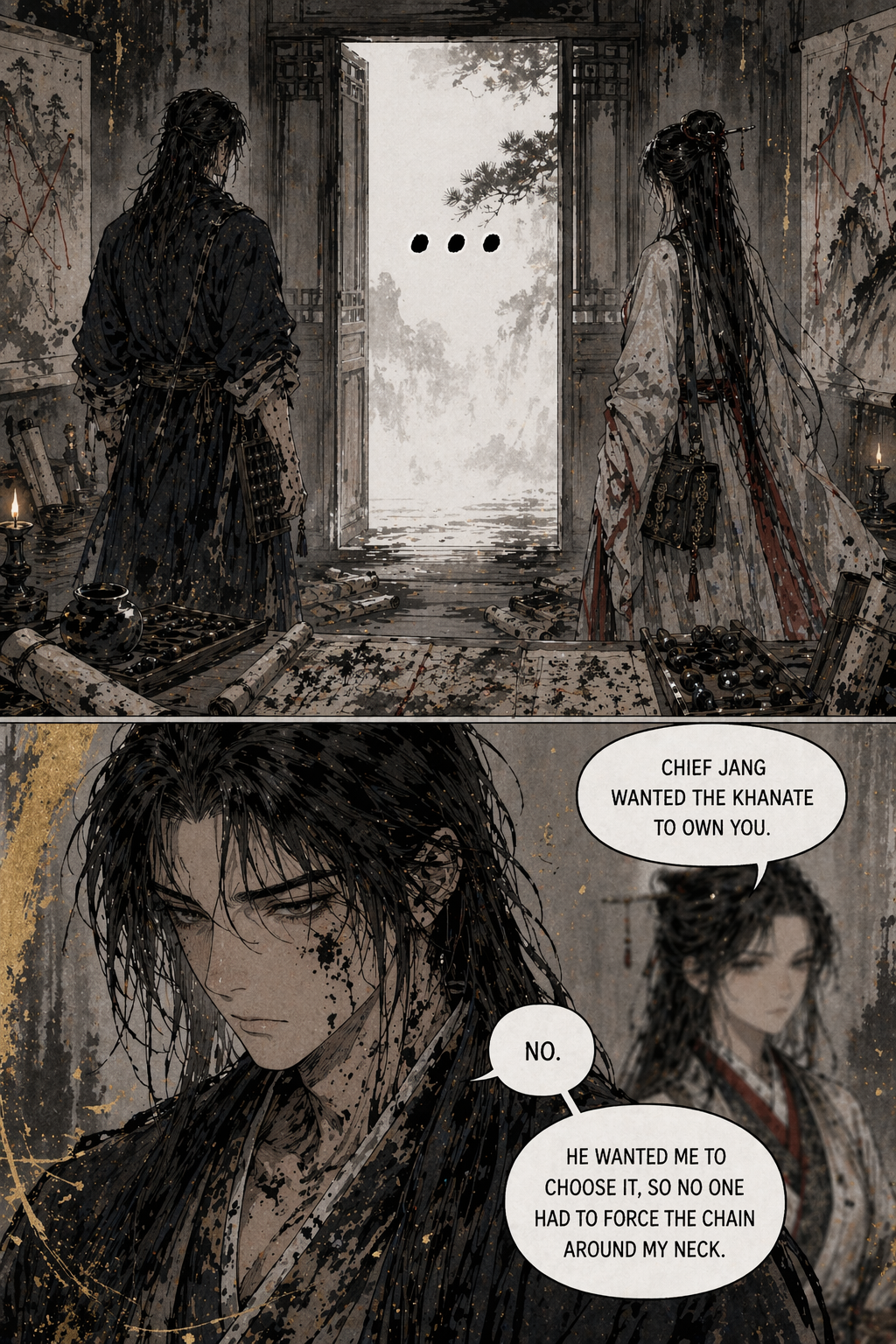
Borchu is gone. The hall remains, but the silence has changed; Wen and Saeryeon now understand they were maneuvered from the capital and the steppe at once.

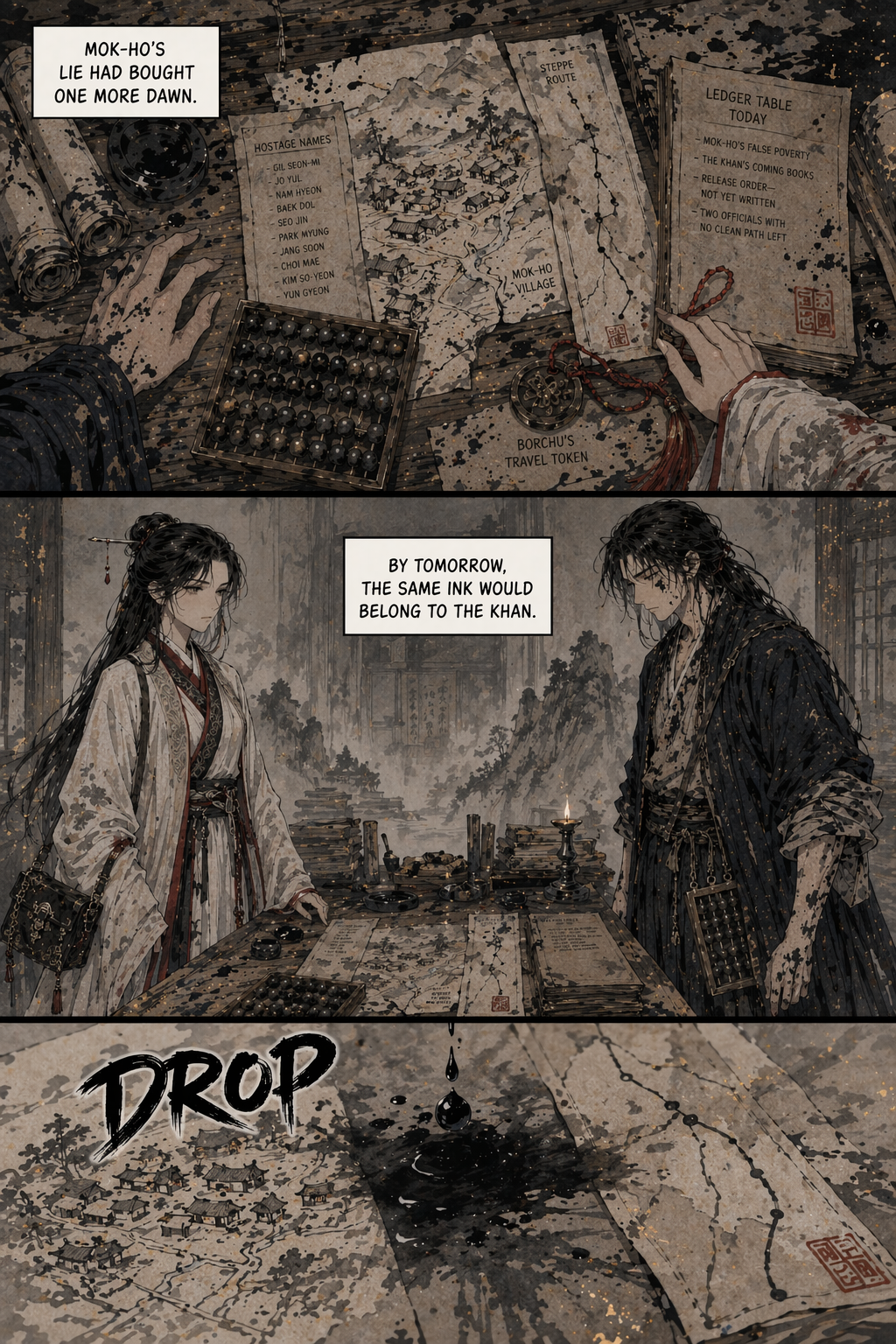
The pilot closes on the ledger table: Mok-ho's false poverty, the khan's coming books, the release order not yet written, and two officials with no clean path left.
Chapter Comments
Comments
to leave a comment.