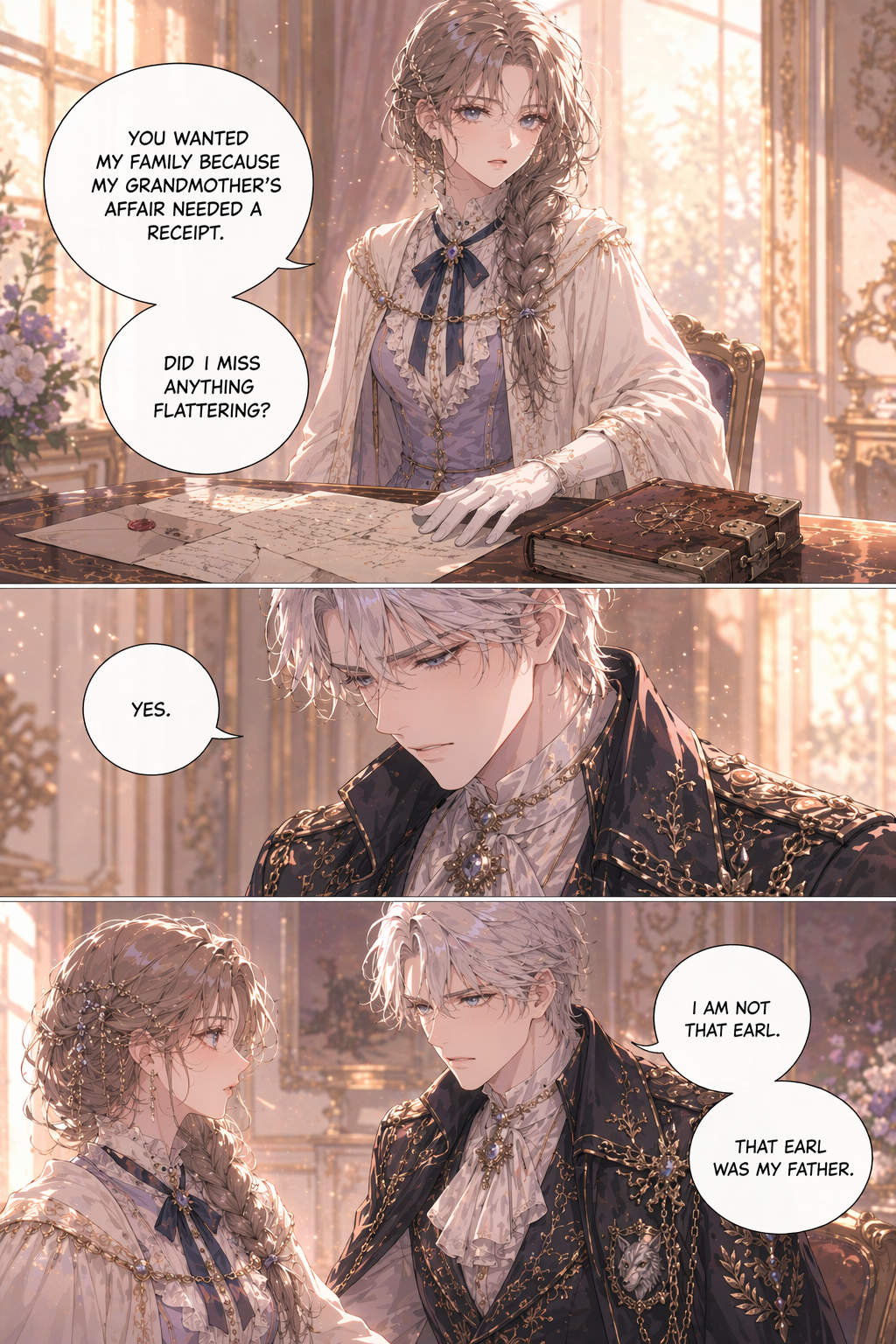
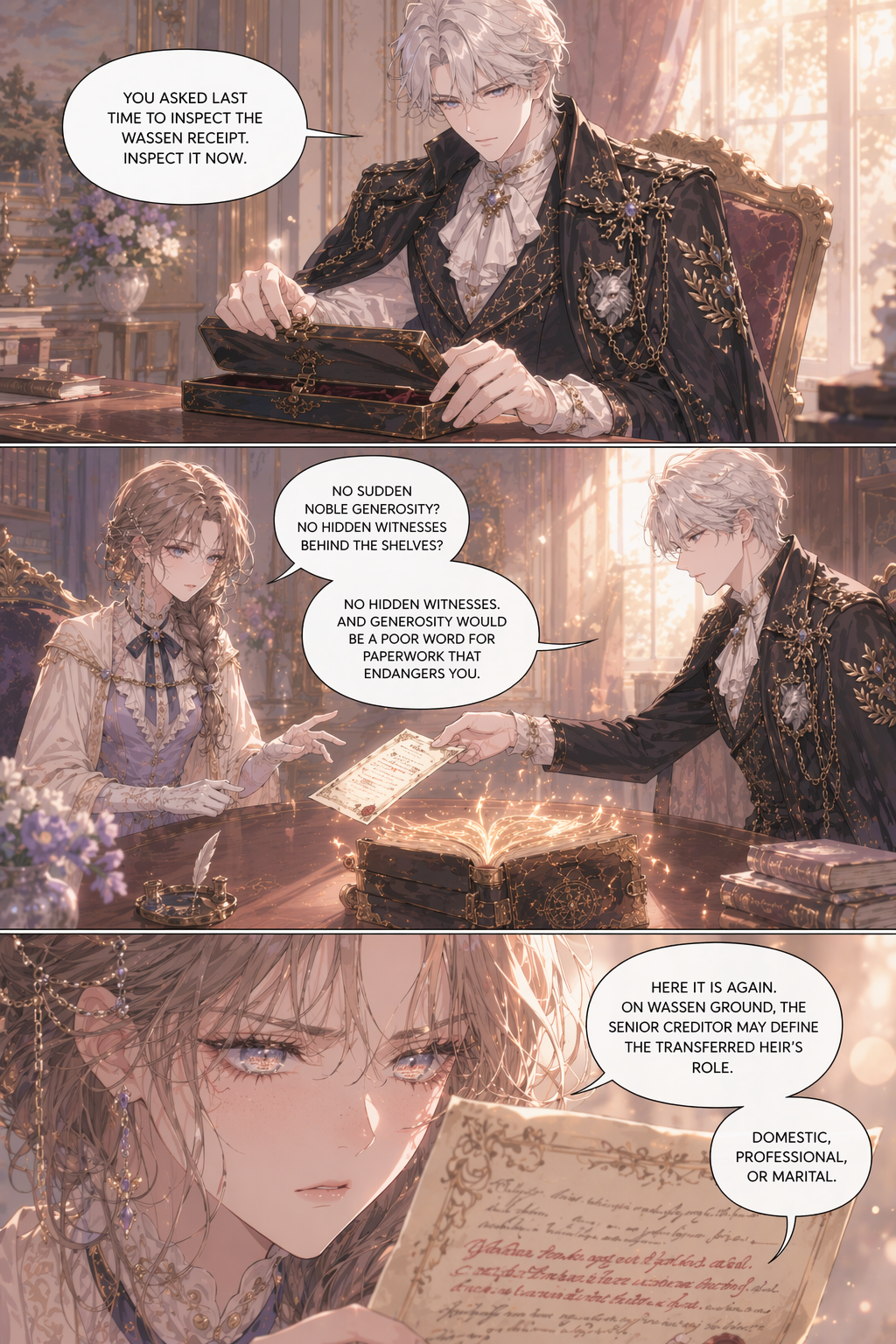
Heléne accuses Aurel by implication. Aurel corrects the central misunderstanding: he is not the earl from Odette's letter.

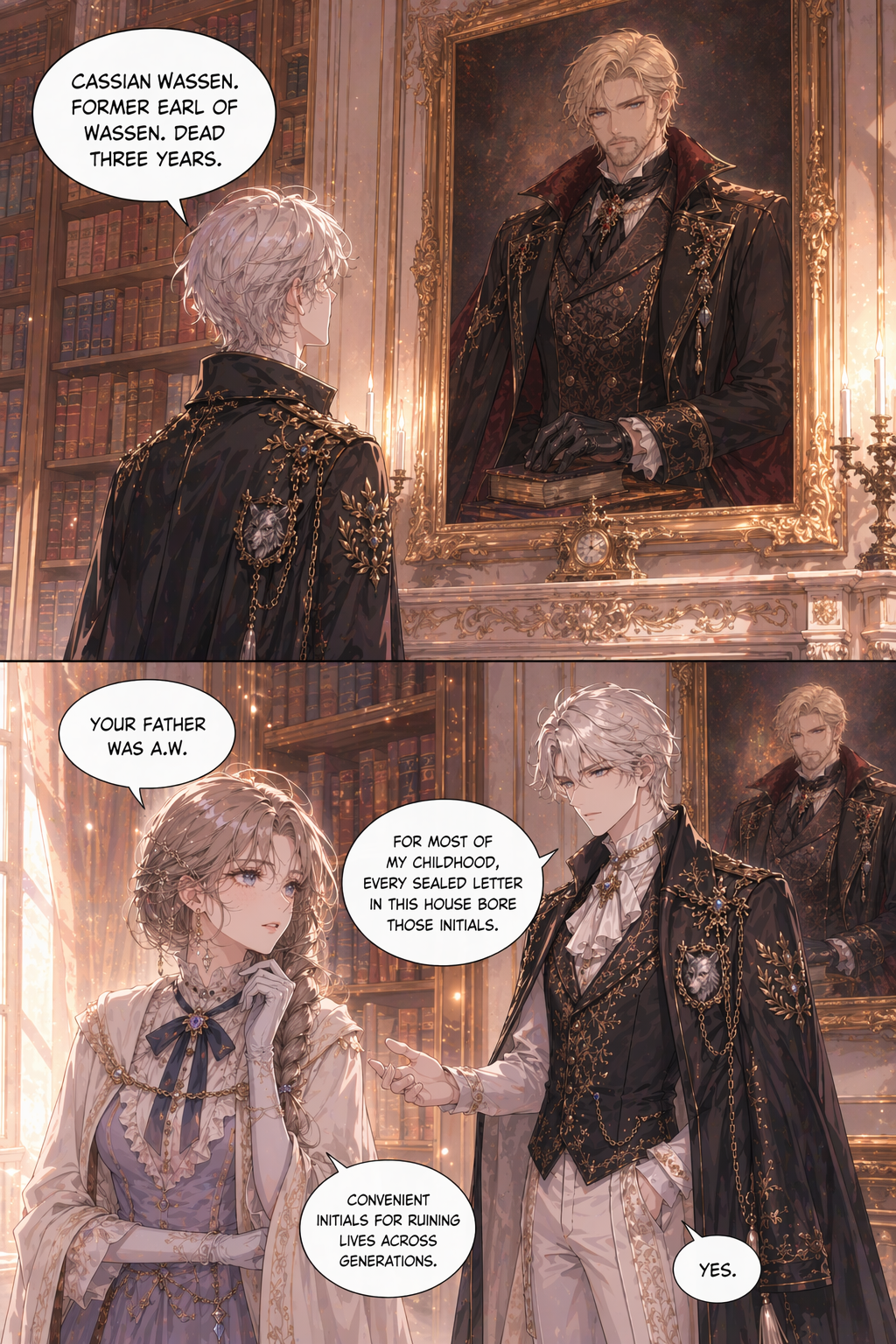
Aurel identifies Cassian Wassen as the man connected to Odette. Heléne connects the portrait from the hall to the debt.

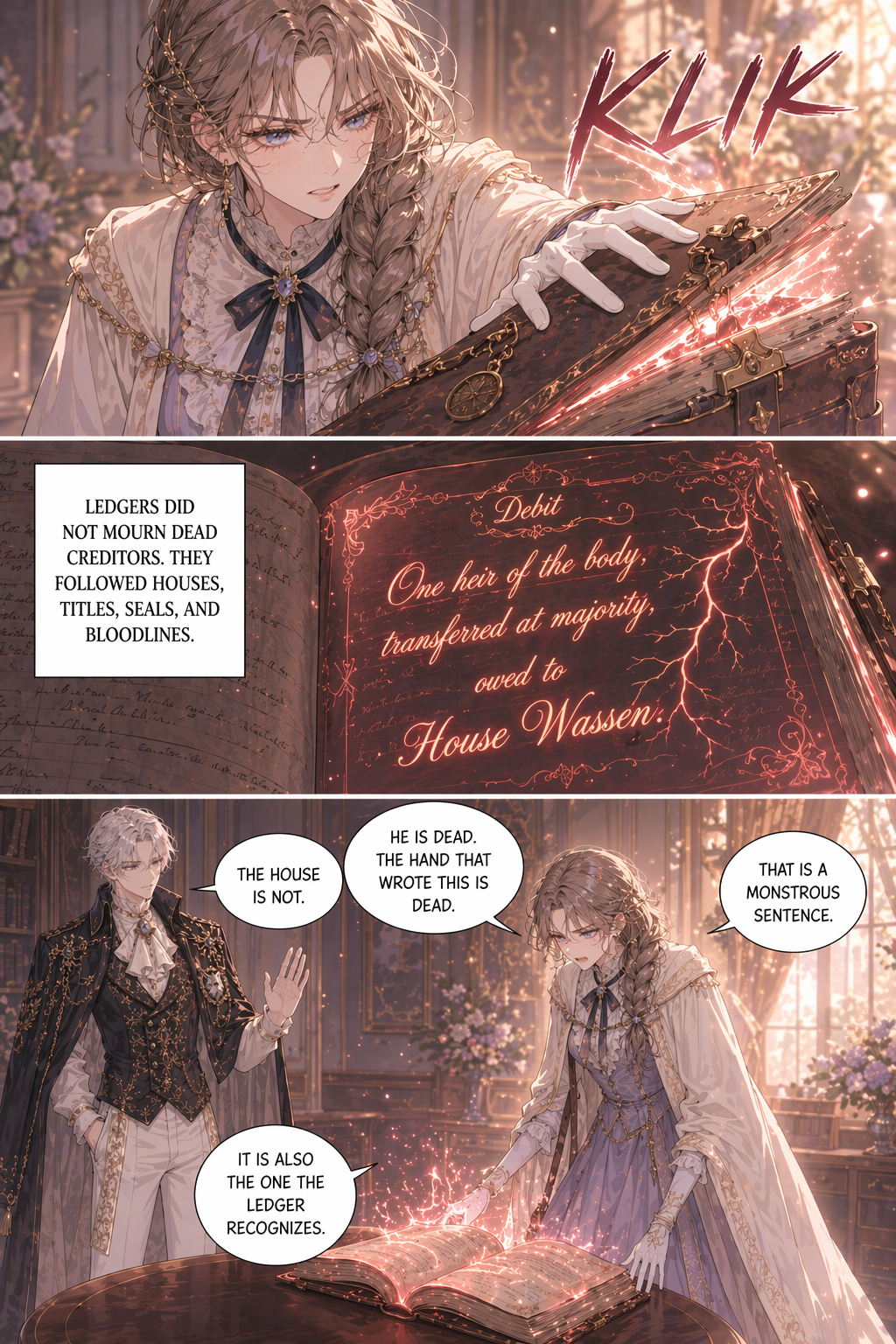
The Saint-Maur Ledger responds to the Wassen signet and confirms the debt attaches to the house, not only to the dead man.

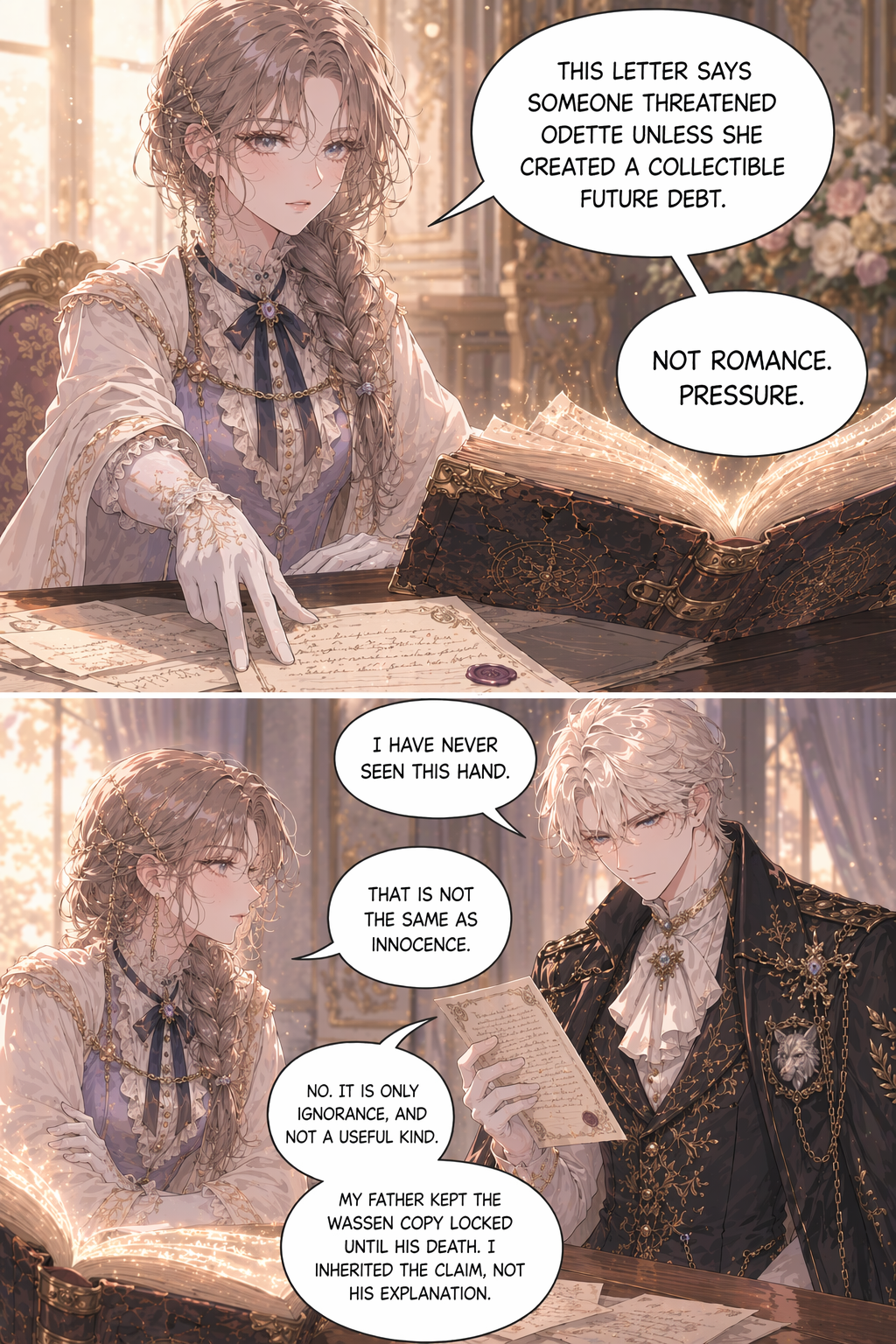
Heléne presses the blackmail angle. Aurel admits he did not know the full story and that his father hid the Wassen copy.

Aurel produces the Wassen receipt and lets Heléne inspect the dangerous clause herself.

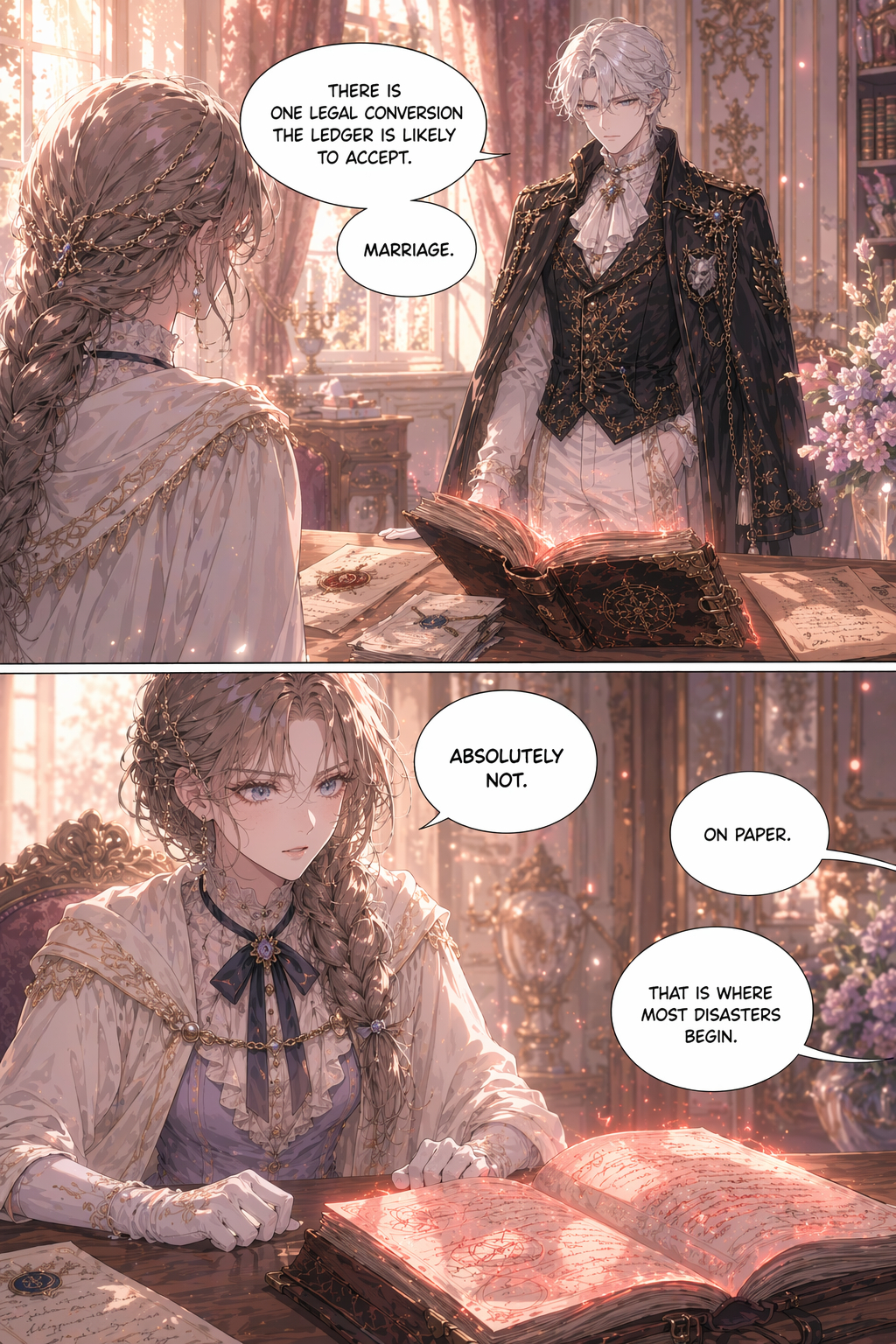
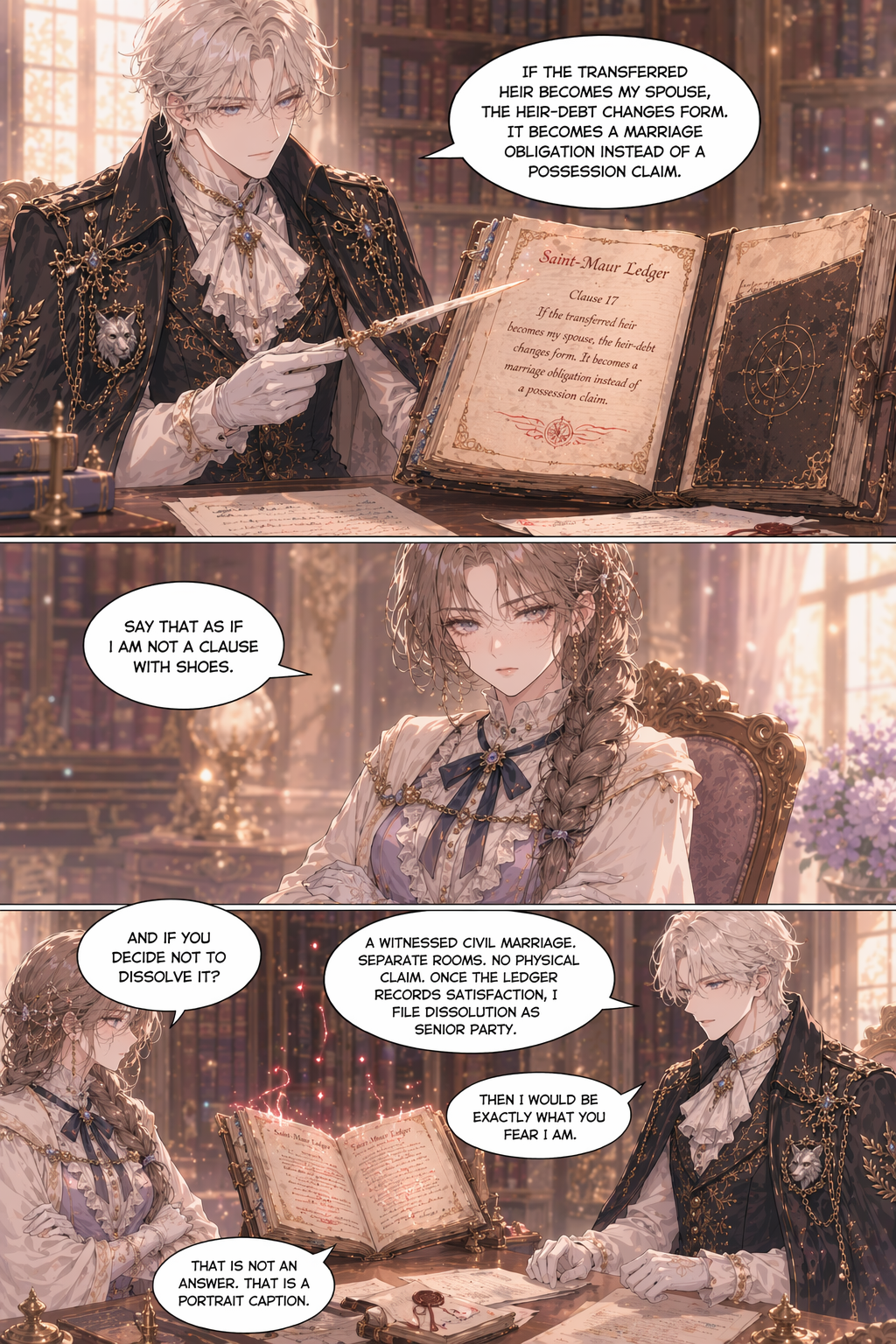
Aurel proposes marriage as a legal conversion, not a romance. Heléne reacts as if he has placed a knife politely on the table.

Aurel explains the mechanics: convert the heir-debt into a marriage contract, satisfy the ledger, then dissolve it legally. Heléne demands plain language.

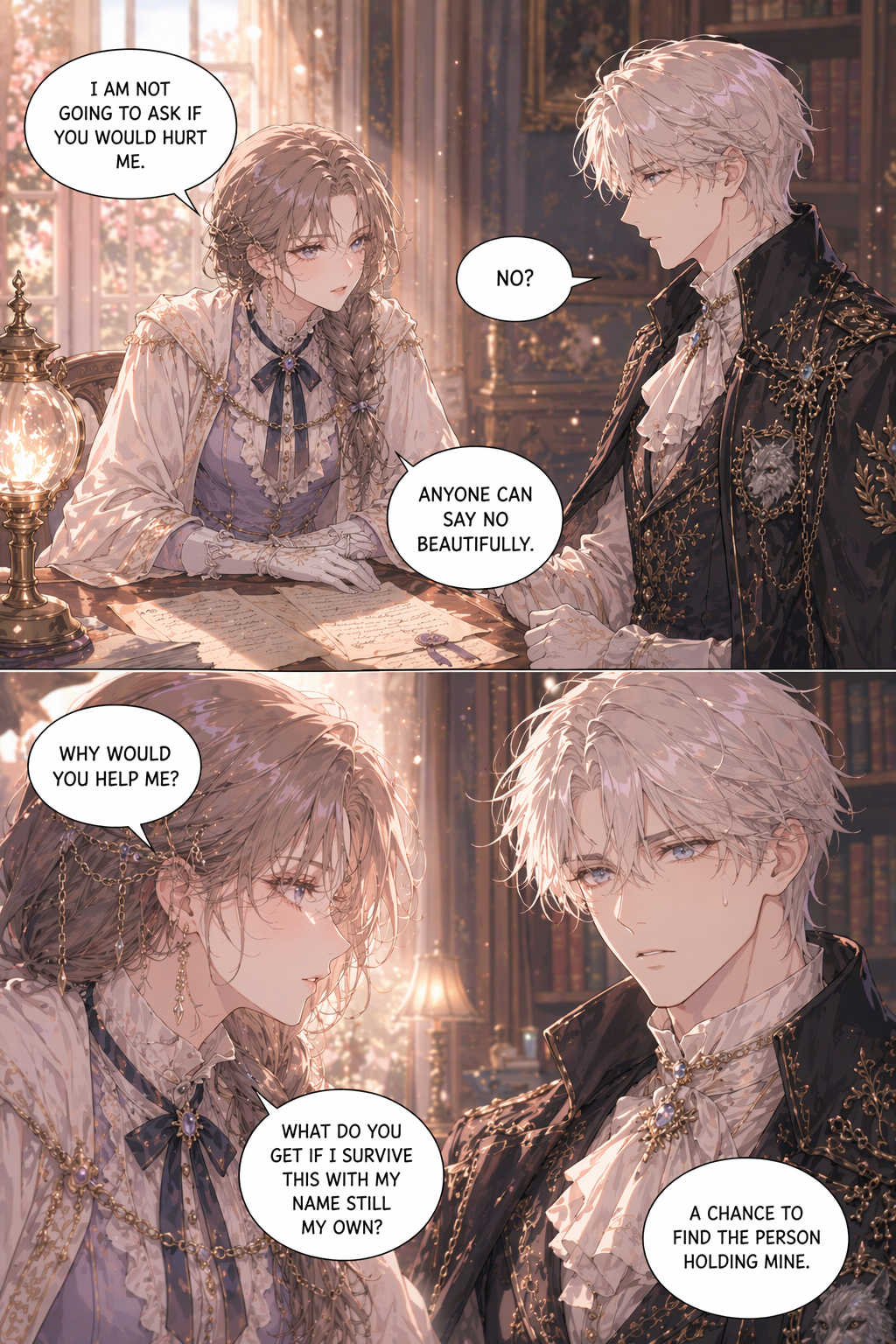
Heléne asks the crucial question: not whether Aurel would hurt her, but why he would help her.

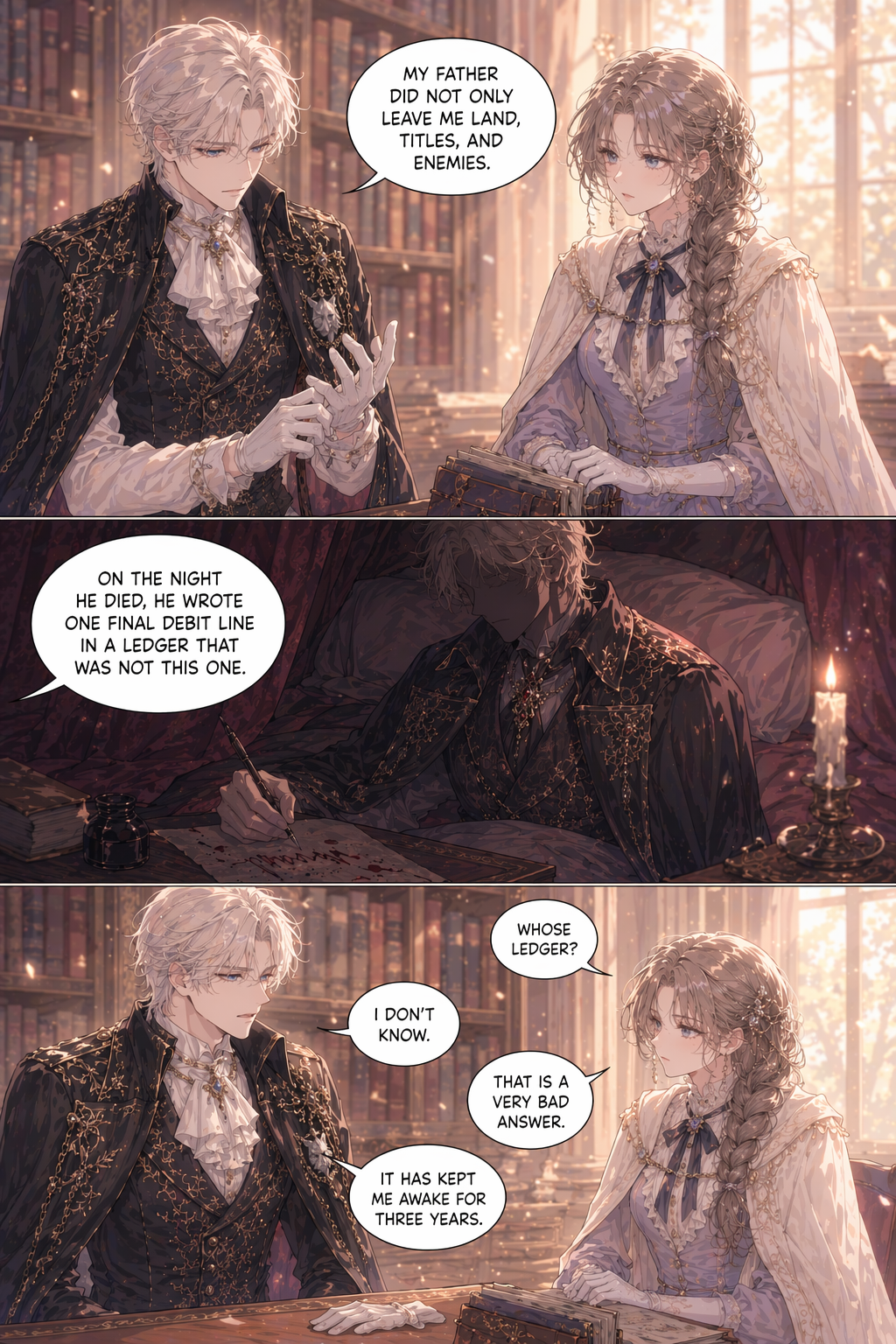
Aurel begins revealing his own debt. Cassian's last act is shown as Aurel's remembered image, not as a ledger memory.

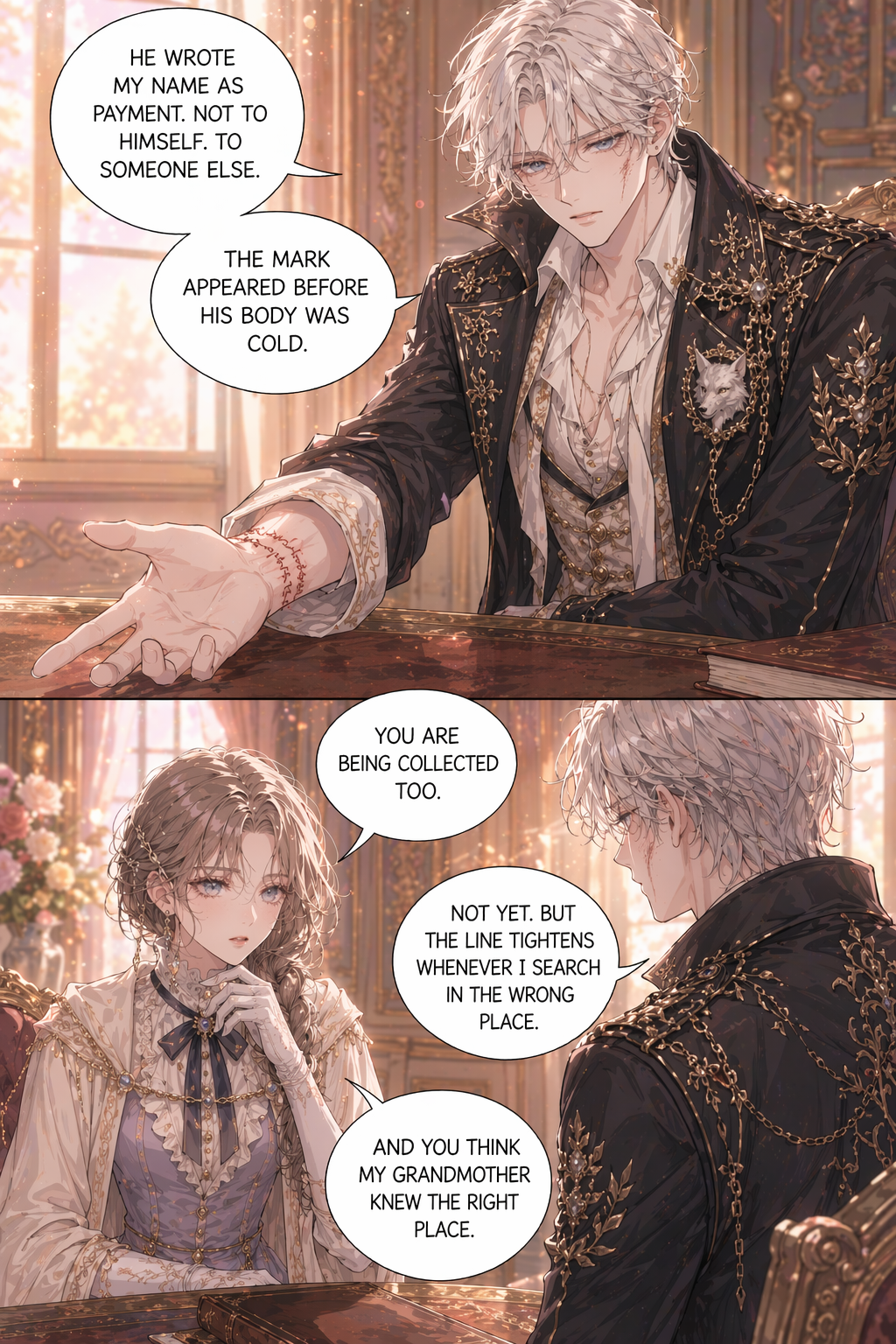
Aurel reveals the mark of his own ledger debt. Heléne sees that his offer is not charity.

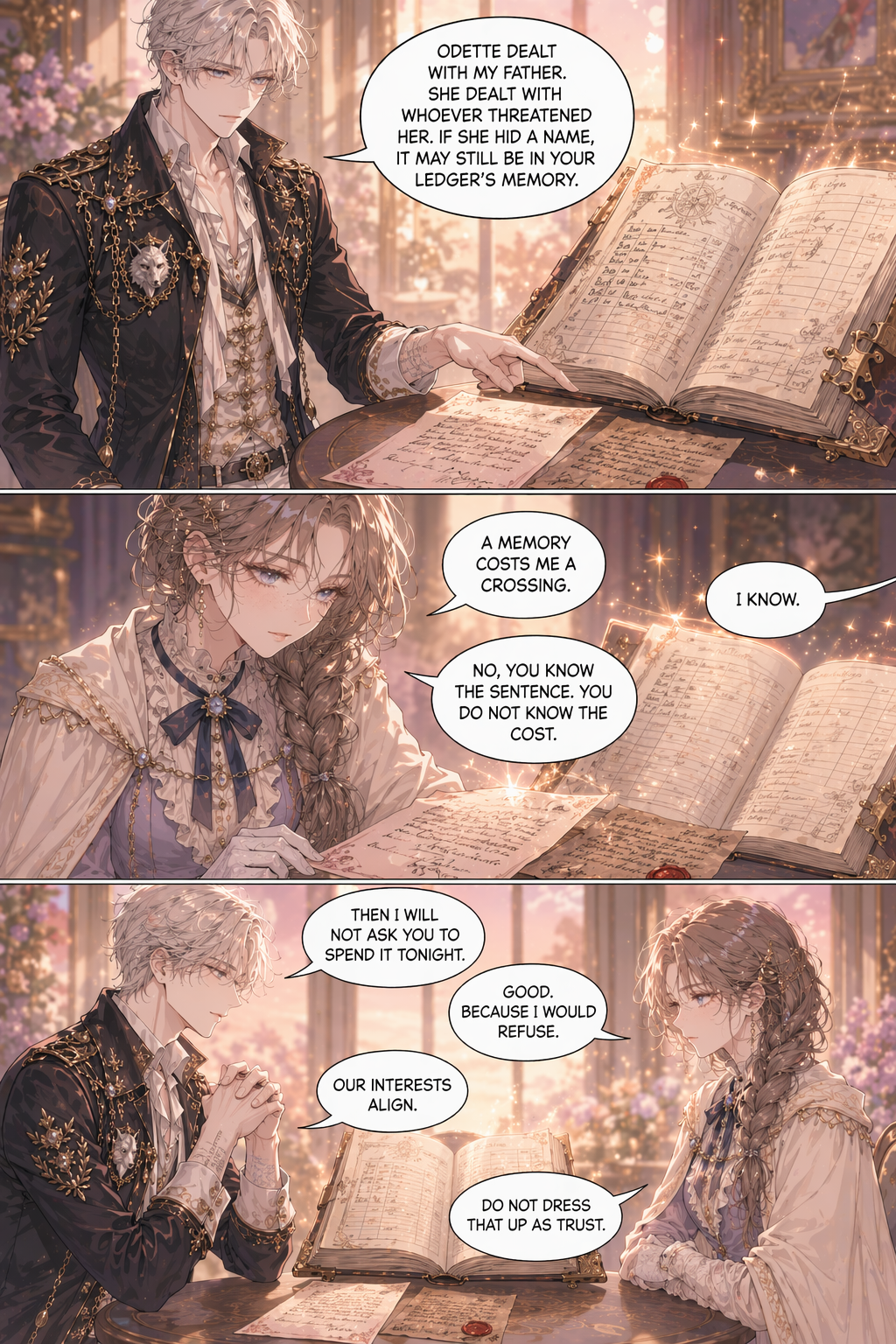
Aurel explains why Odette matters to his search. Heléne realizes their problems may share a hidden source, but refuses to call that trust.

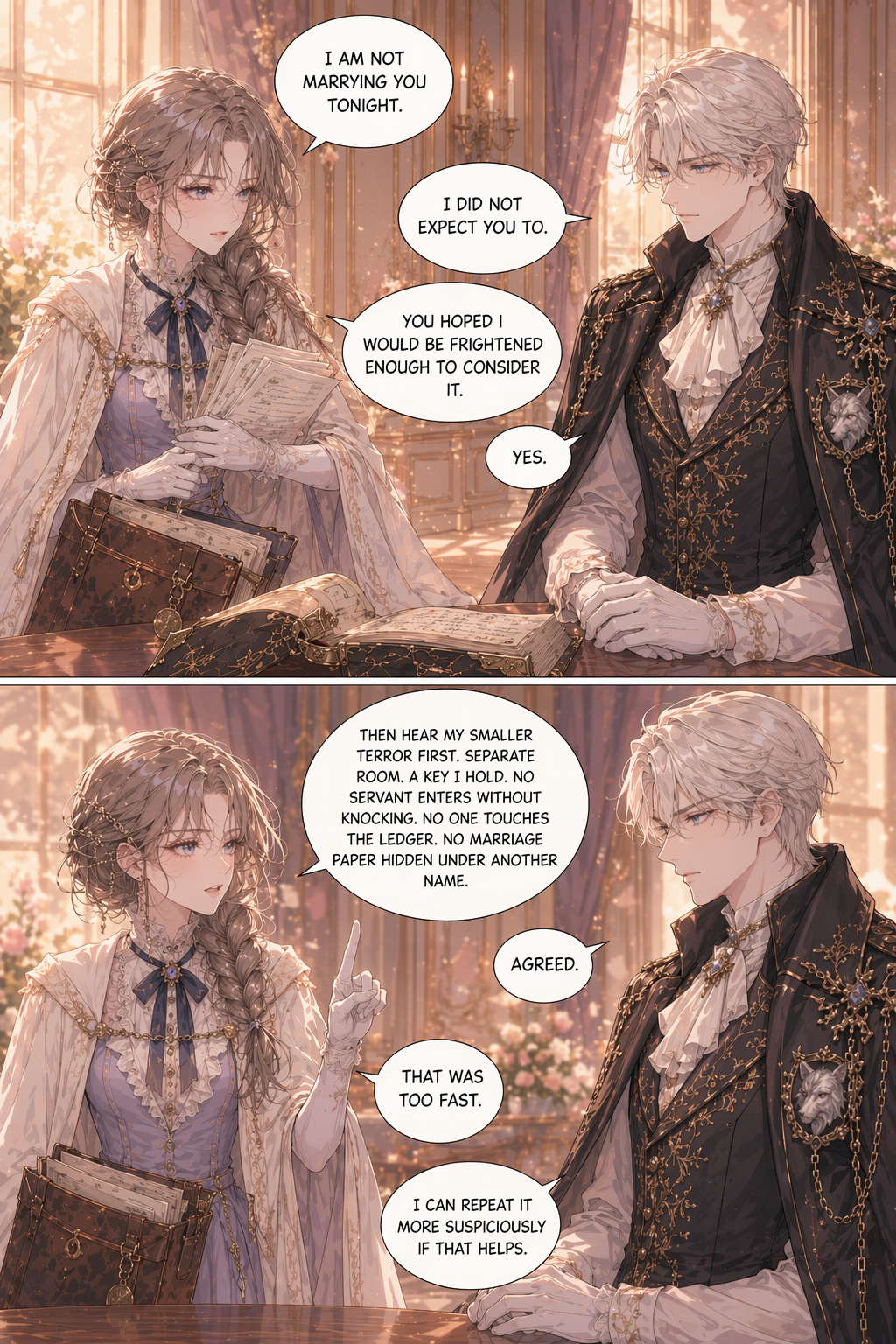
Heléne refuses to marry that night and sets strict guest conditions. Aurel accepts instead of pressing.

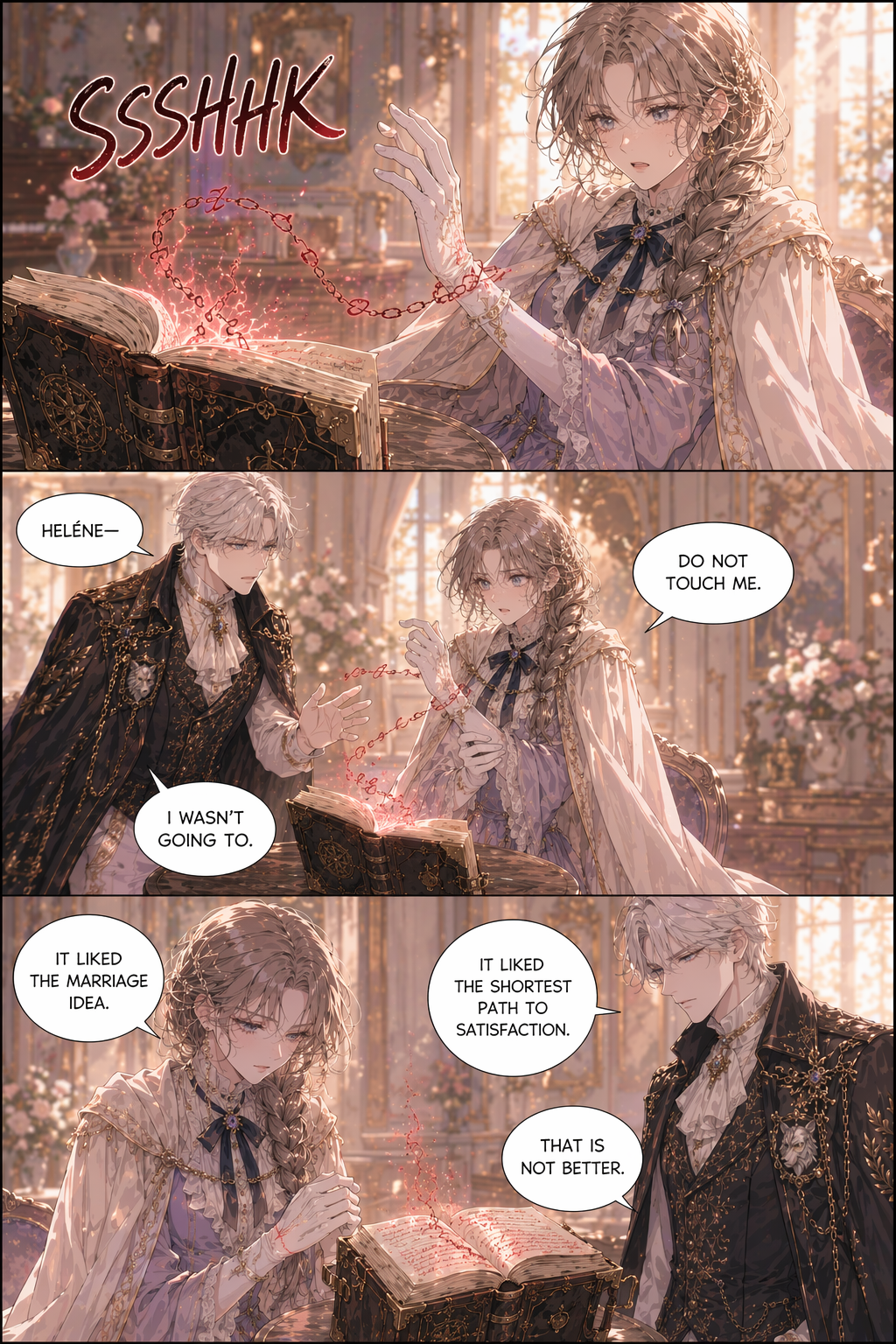
The ledger reacts to the proposed marriage conversion. Heléne experiences a physical reminder that the debt is already active inside Wassen estate.

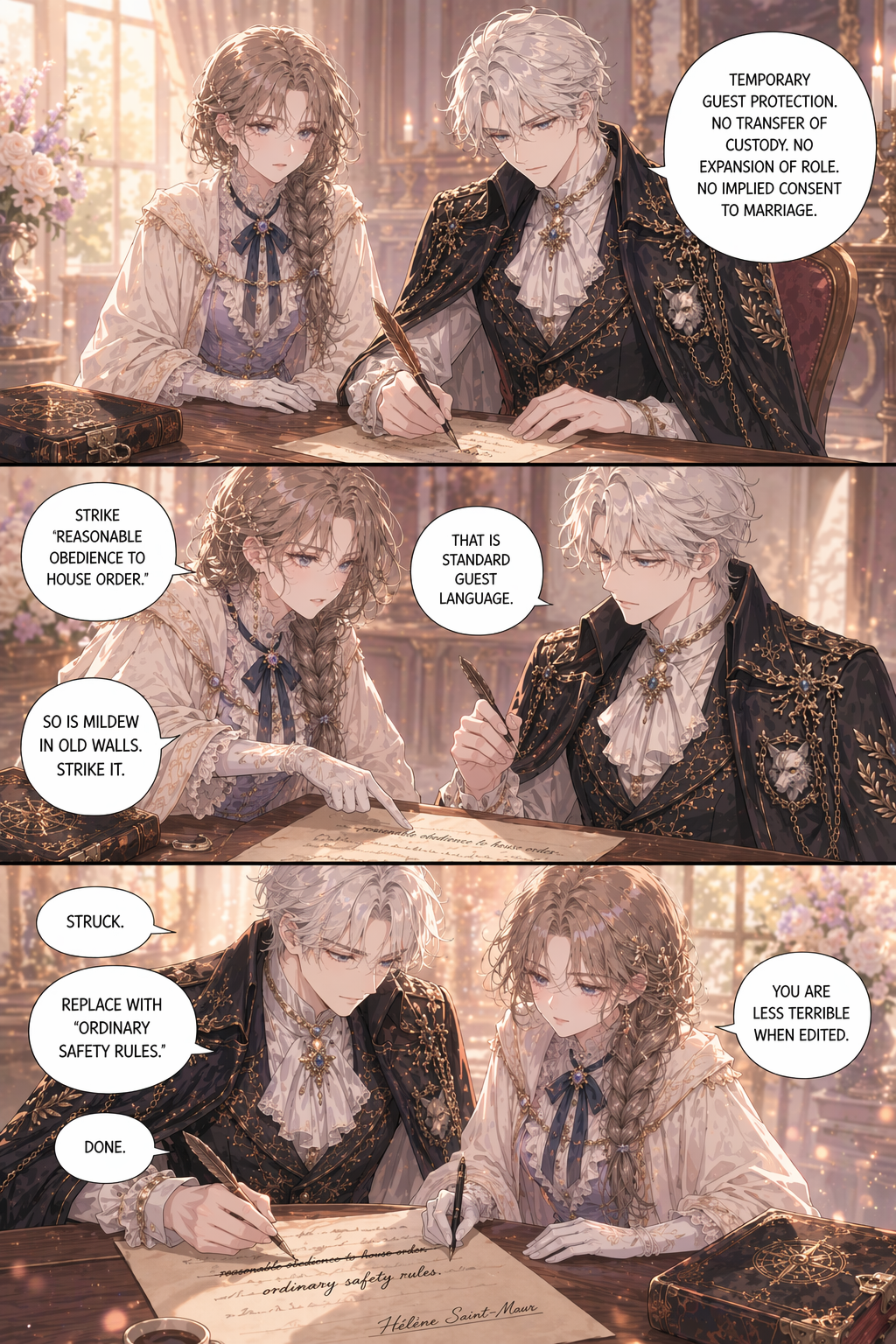
They draft a temporary guest memorandum. Heléne catches dangerous wording and Aurel strikes it out, proving he will at least negotiate plainly.

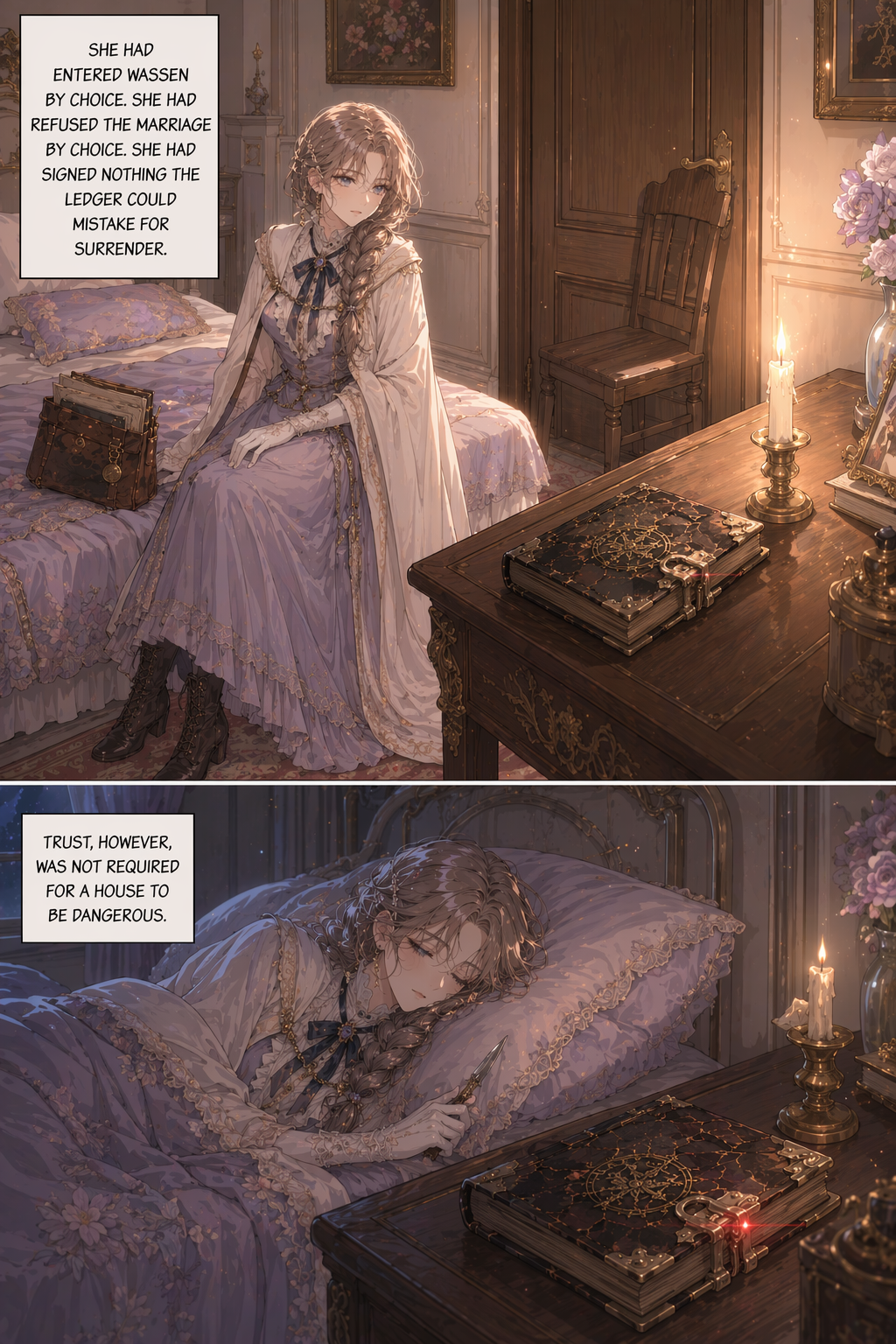
Heléne tries to rest in the guest room, still dressed and ready to move. The chair remains under the door handle.

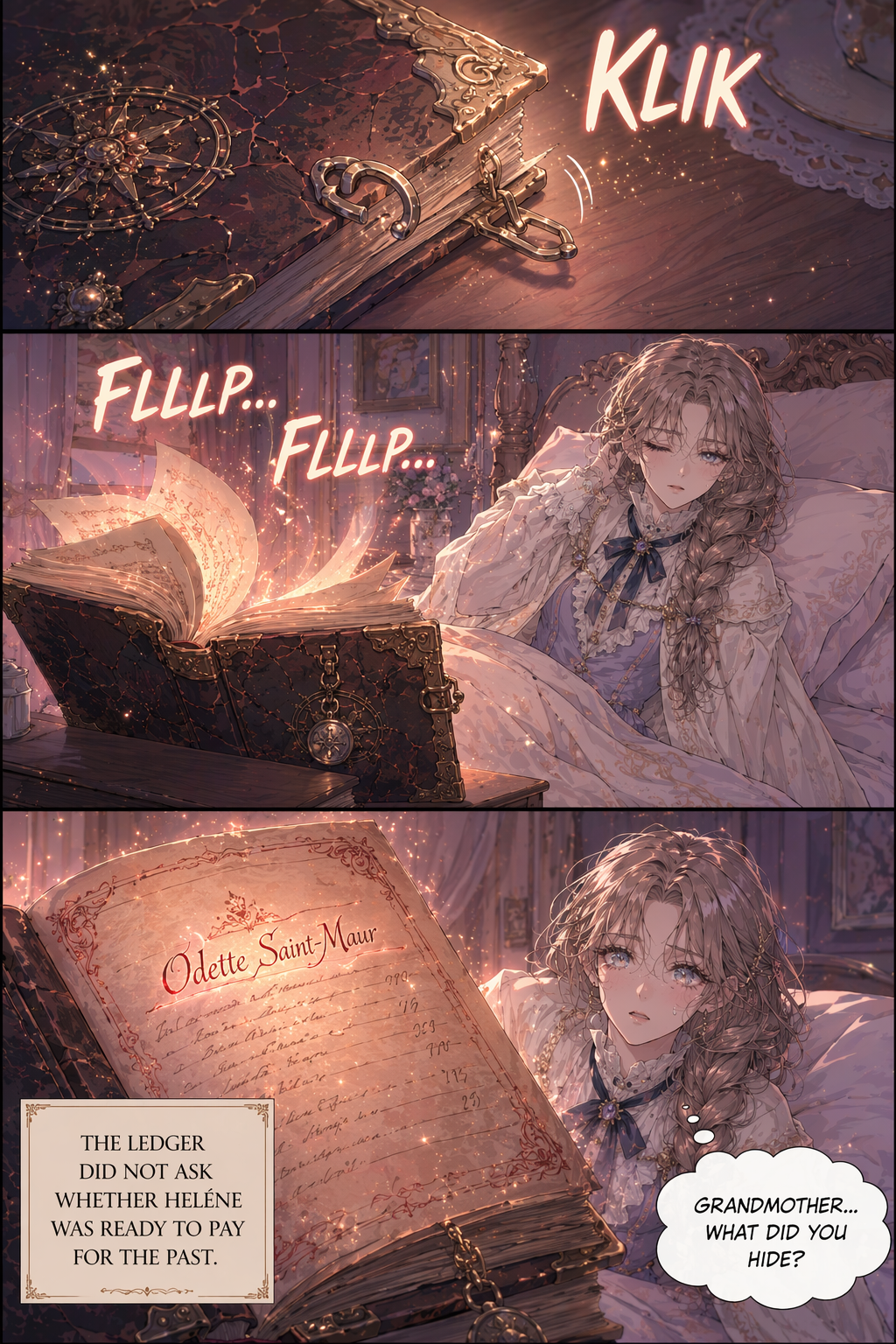
While Heléne sleeps, the Saint-Maur Ledger opens by itself to Odette Saint-Maur's name, setting up the next chapter's irreversible choice.
Chapter Comments
Comments
to leave a comment.