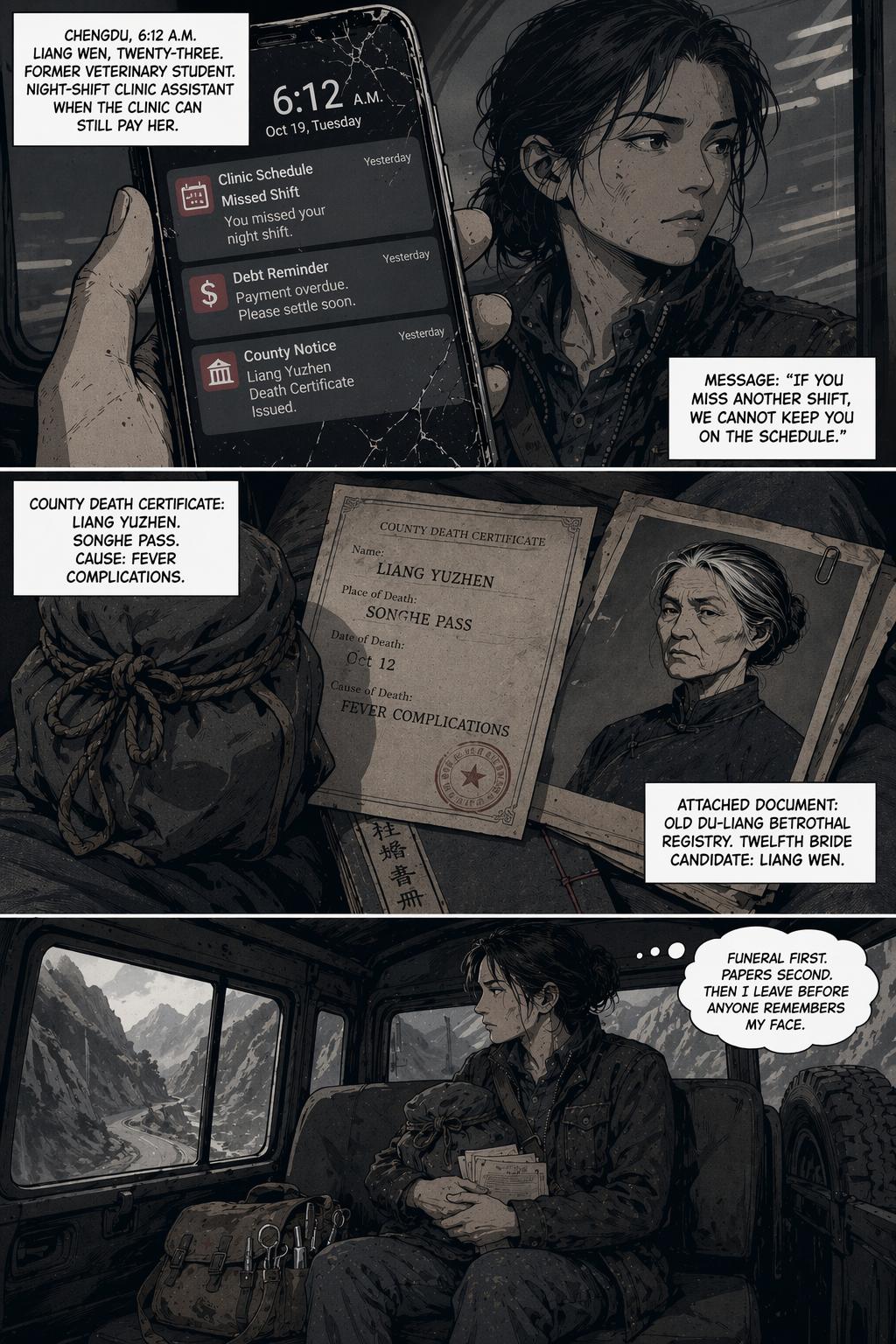
A mountain jeep climbs away from Chengdu toward Songhe Pass. The mood is cramped, practical, and exhausted.
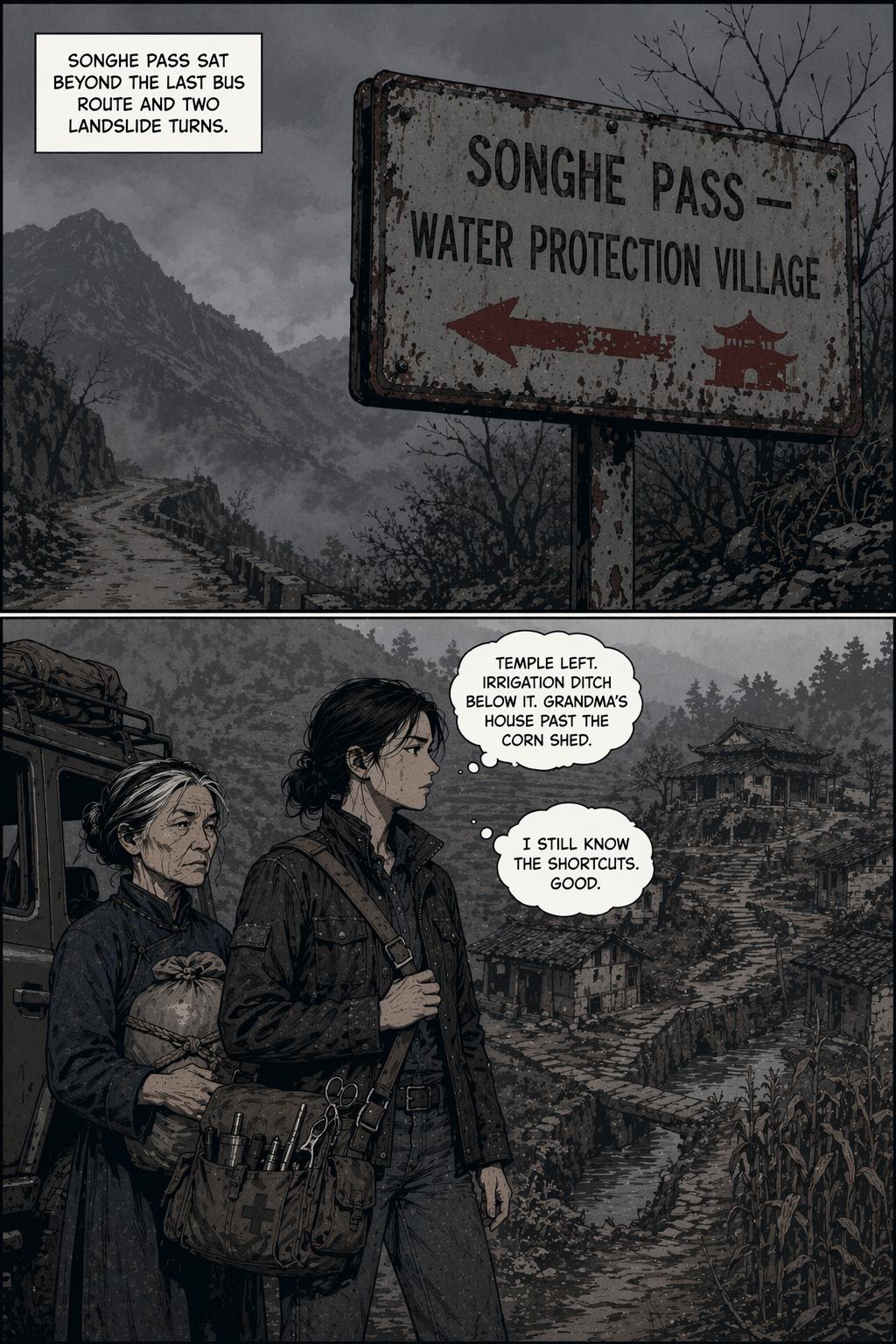
The road narrows into the mountain pass. The village seems abandoned at first glance.
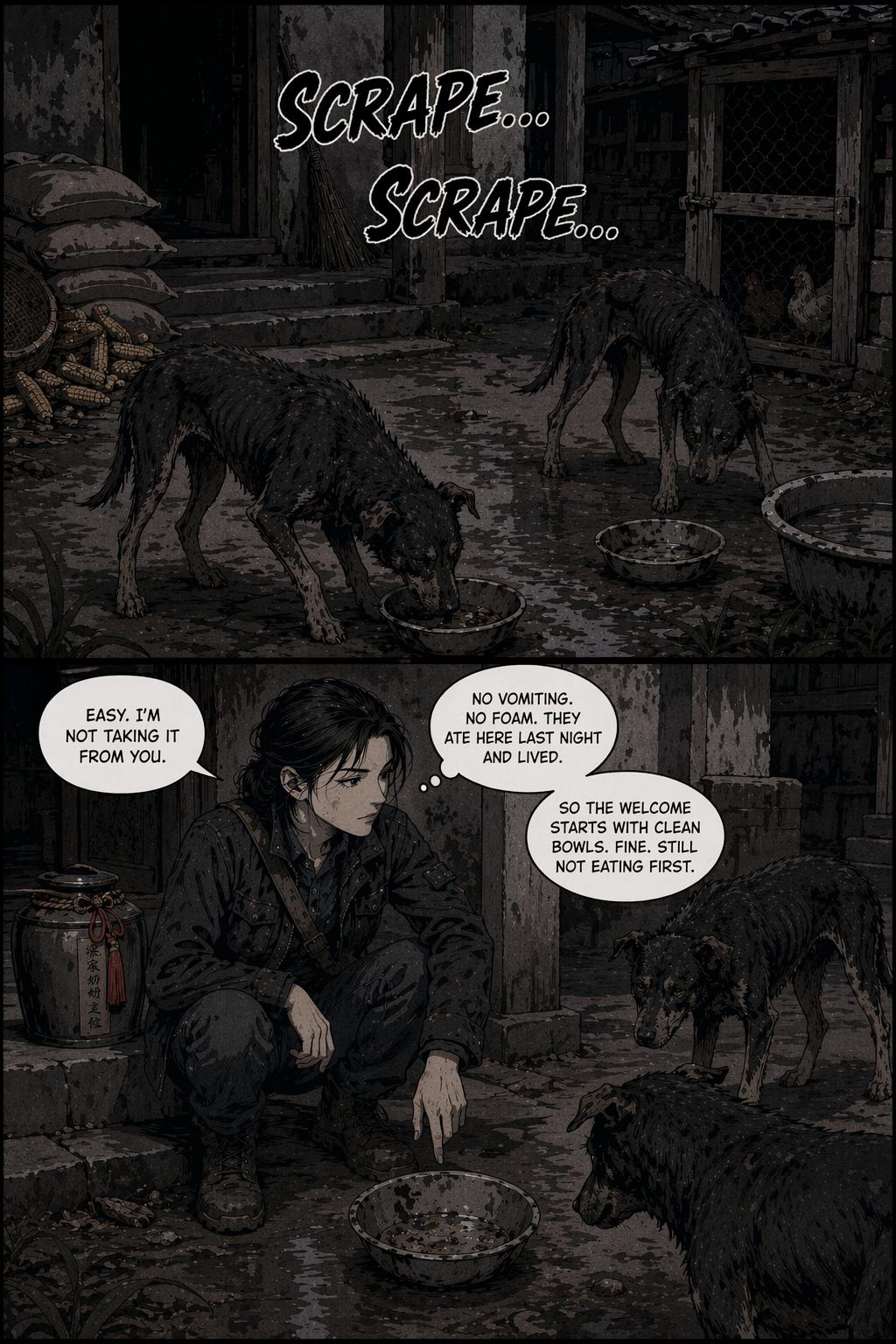
Wen reaches her grandmother's yard and immediately reads it like a clinic case and a childhood map.
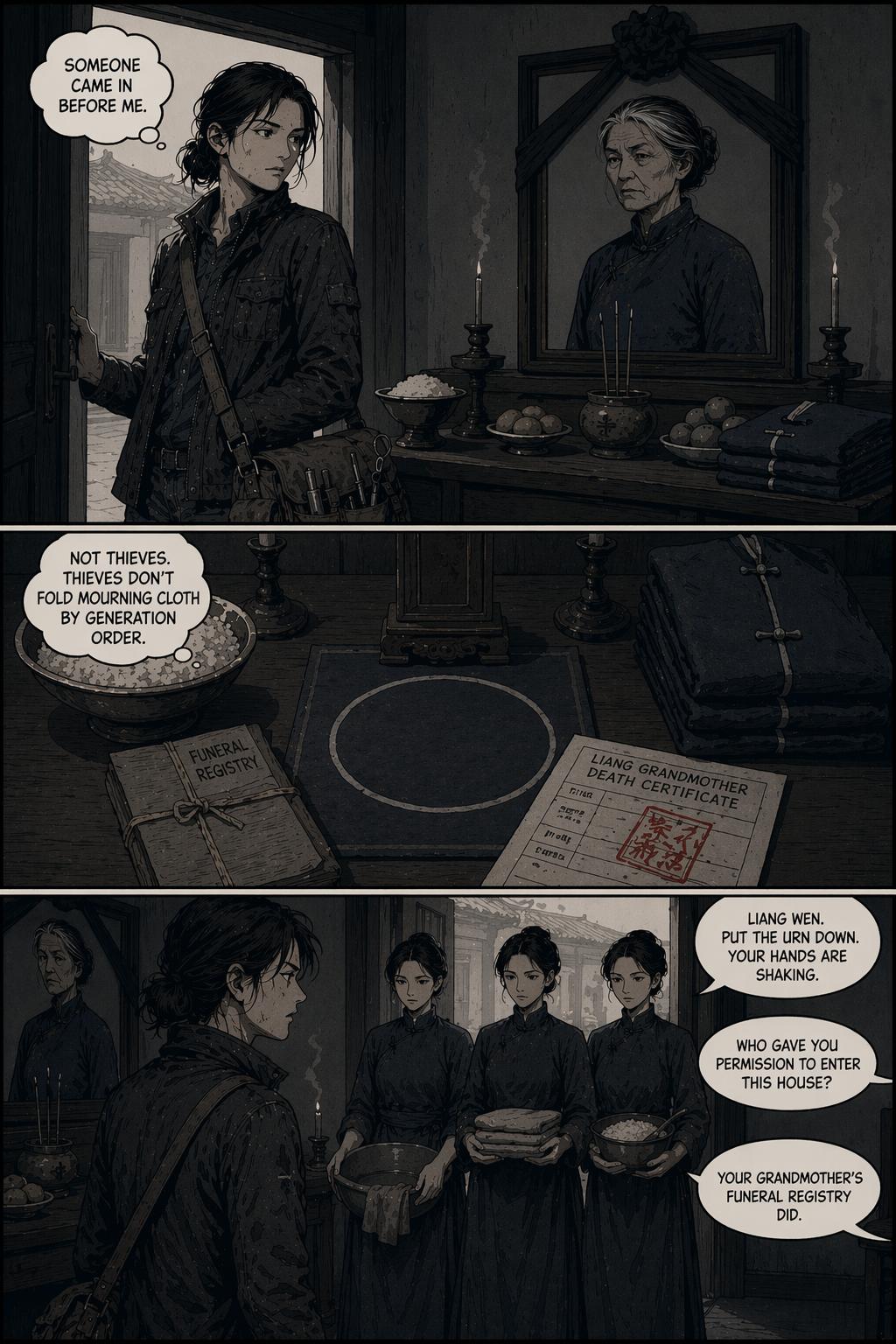
Inside the house, the funeral has been arranged before Wen arrived.
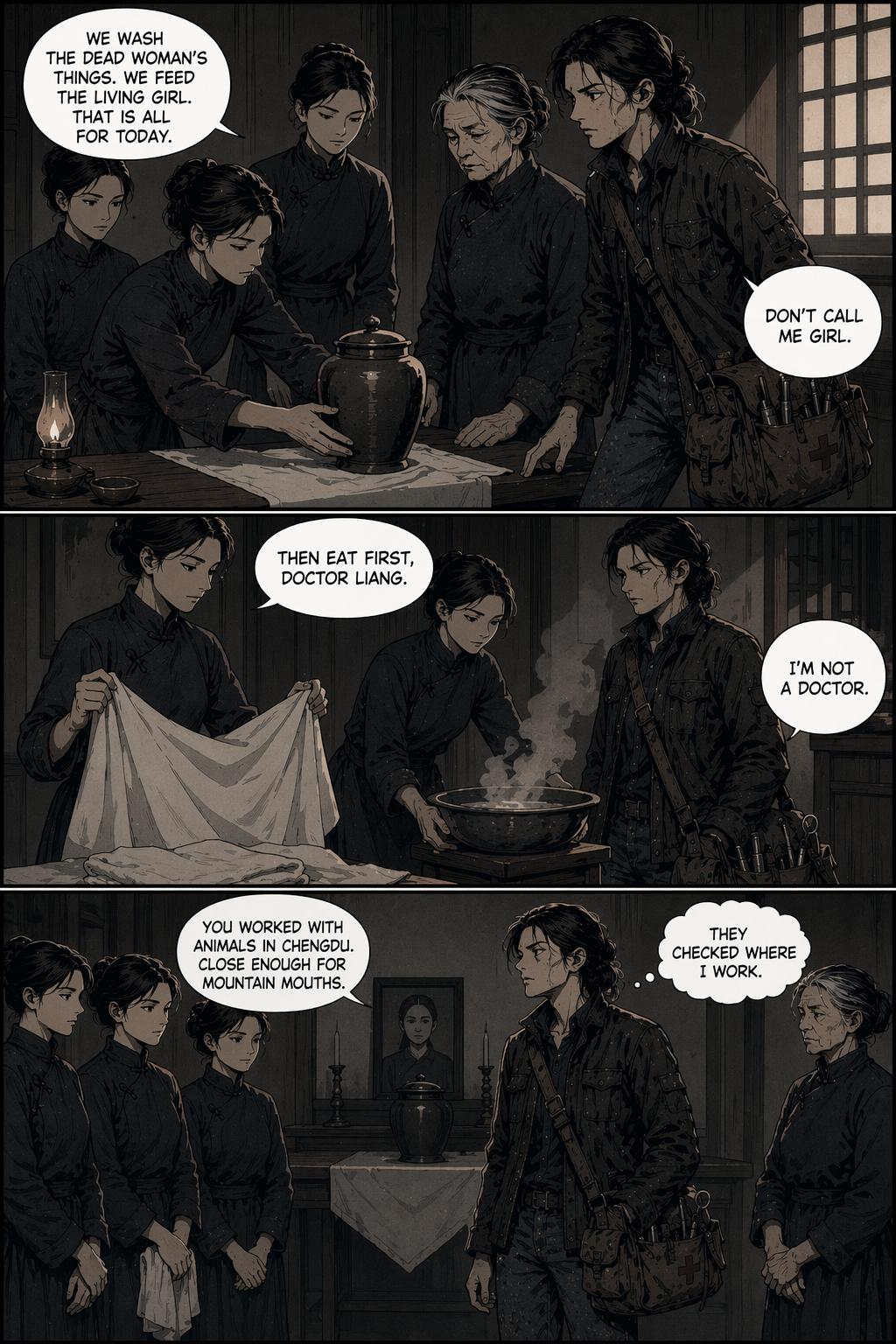
The Du women perform care instead of intimidation, making the situation more unsettling.
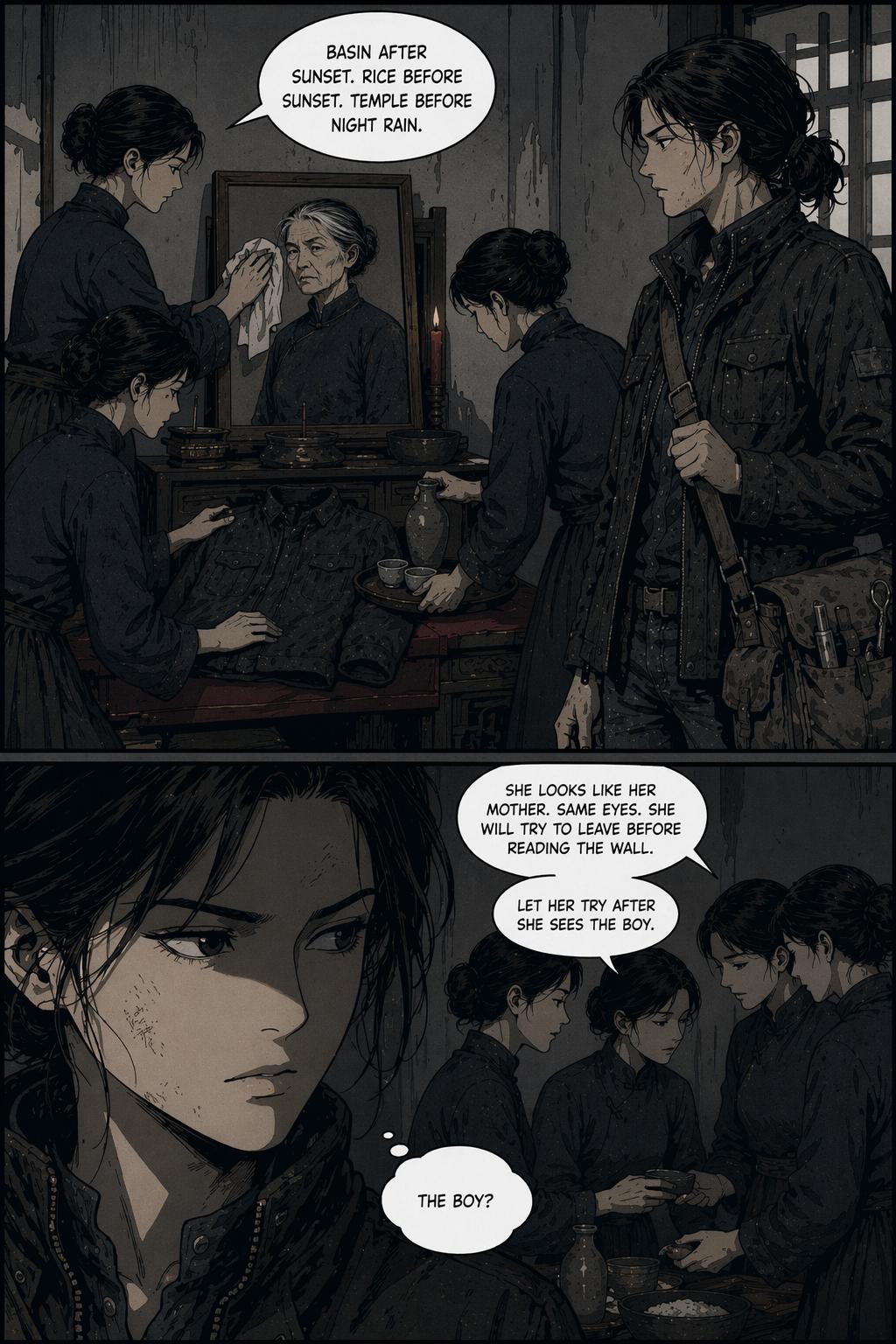
Wen discovers the women are speaking as if her future has already been scheduled.
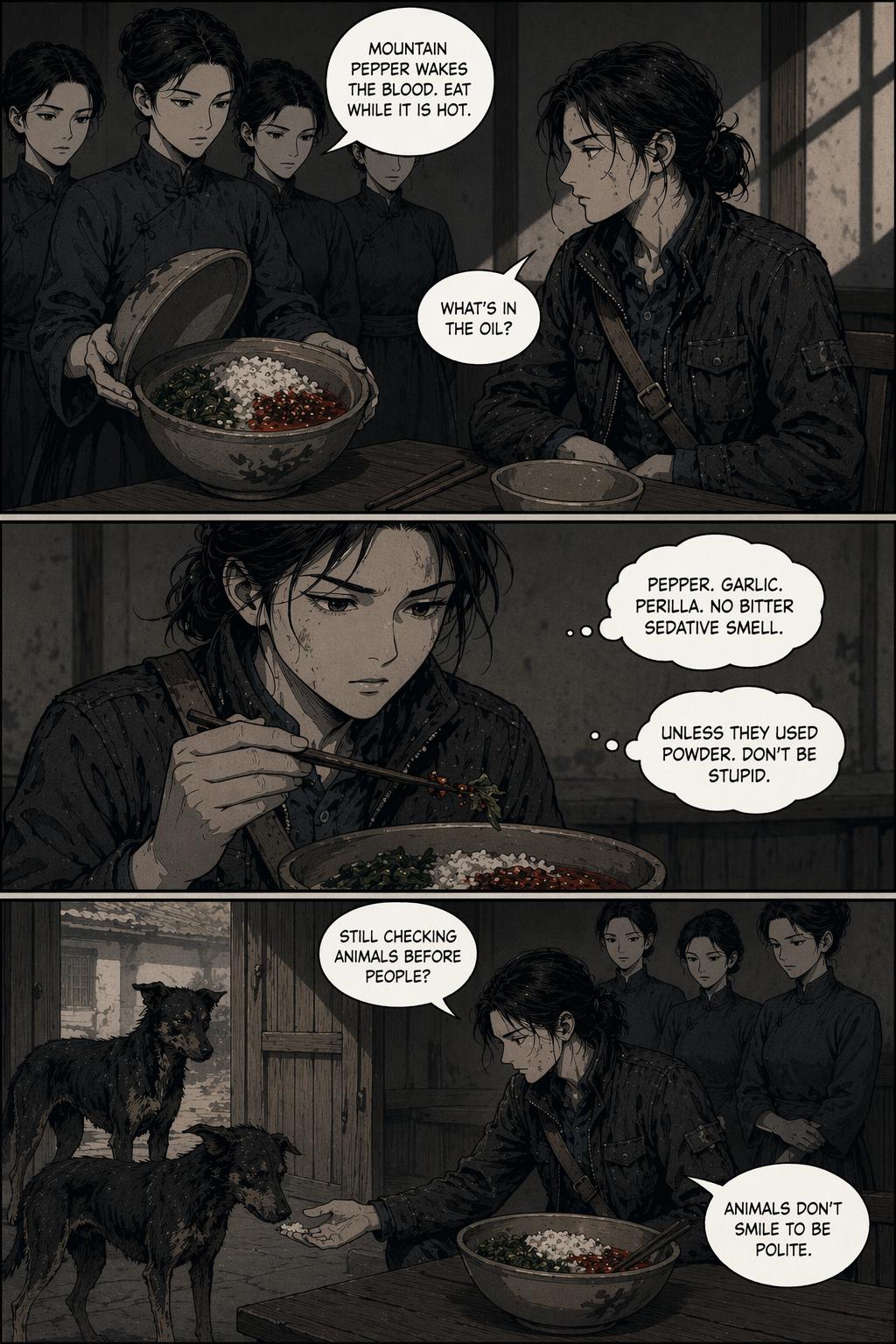
Food arrives as hospitality and as pressure. Wen's veterinary instincts make her study it before eating.
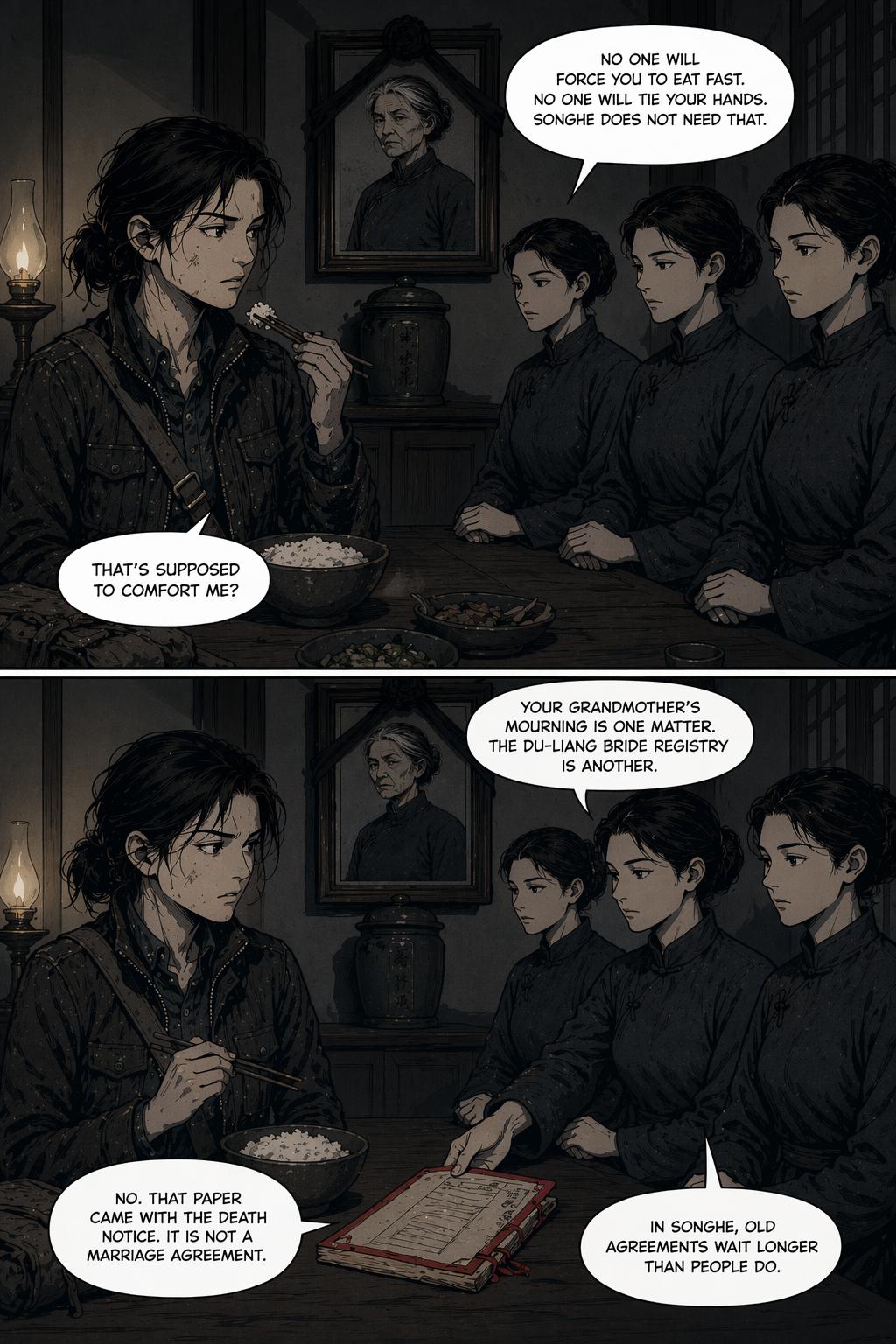
The women turn hospitality into procedure, introducing the betrothal as paperwork rather than romance.
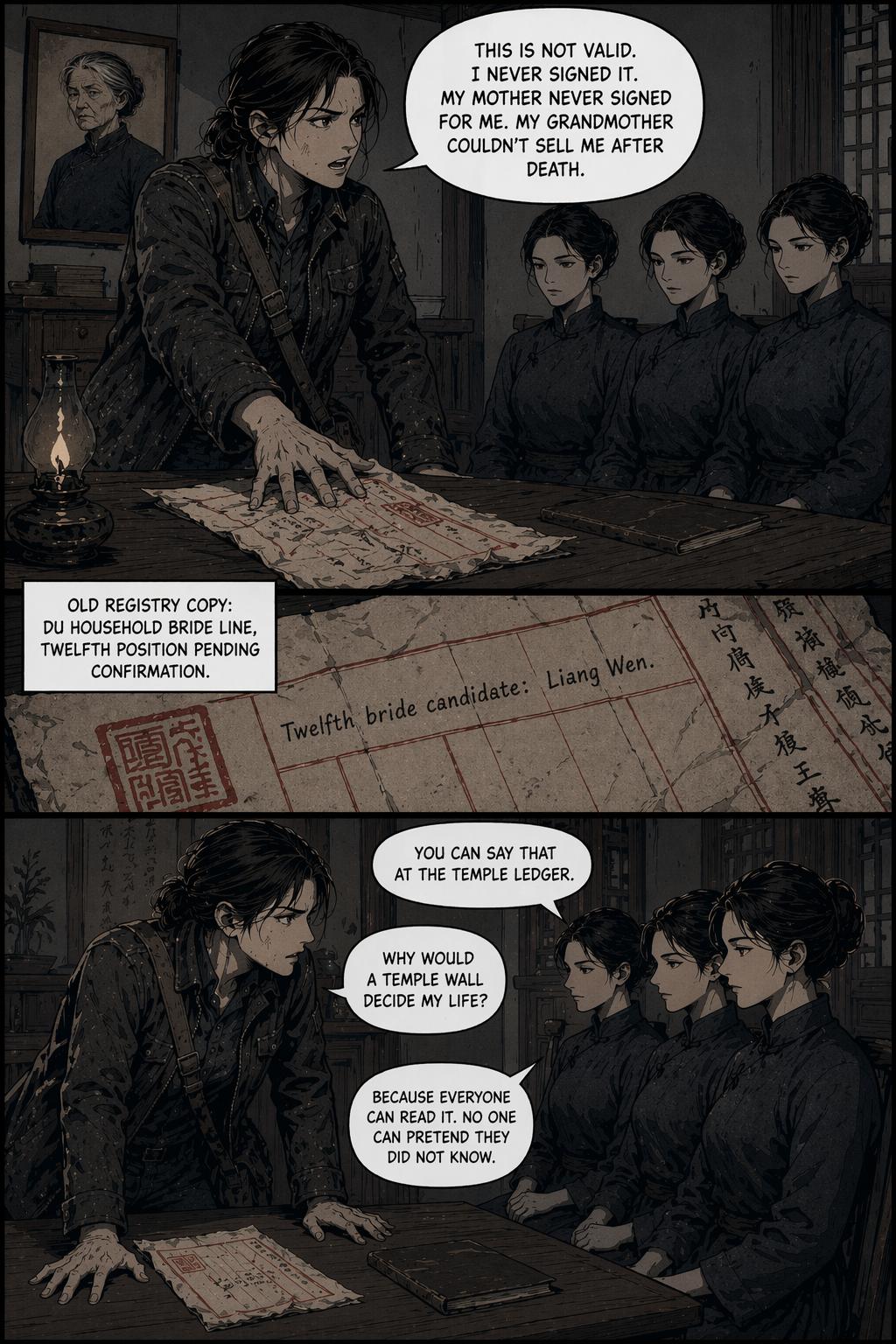
Wen pulls out the registry she received and tries to force legal clarity.
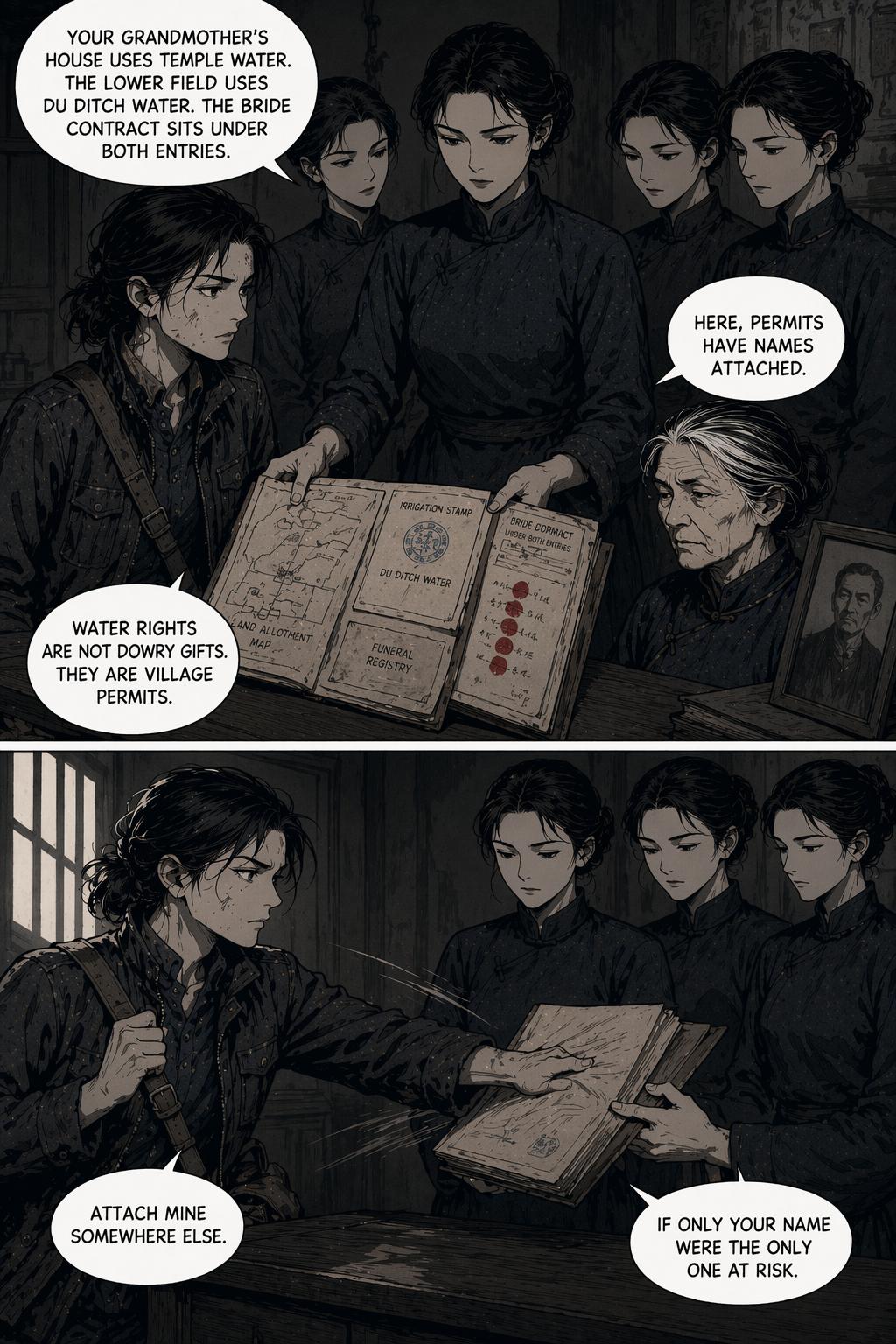
The Du women explain nothing mystical yet. They make the contract sound like village administration.
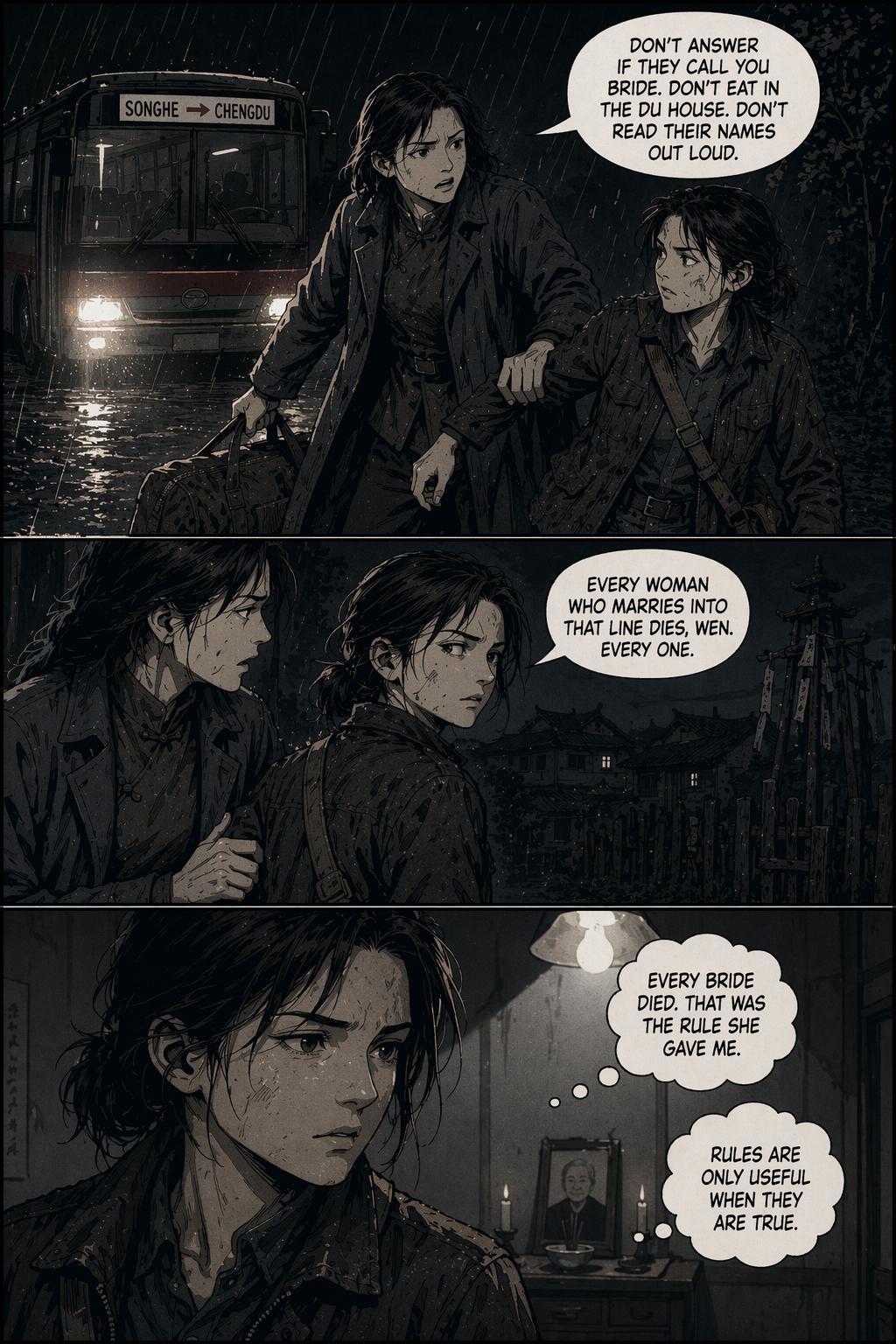
Wen remembers fleeing Songhe at fourteen with her mother and the story she was raised on.
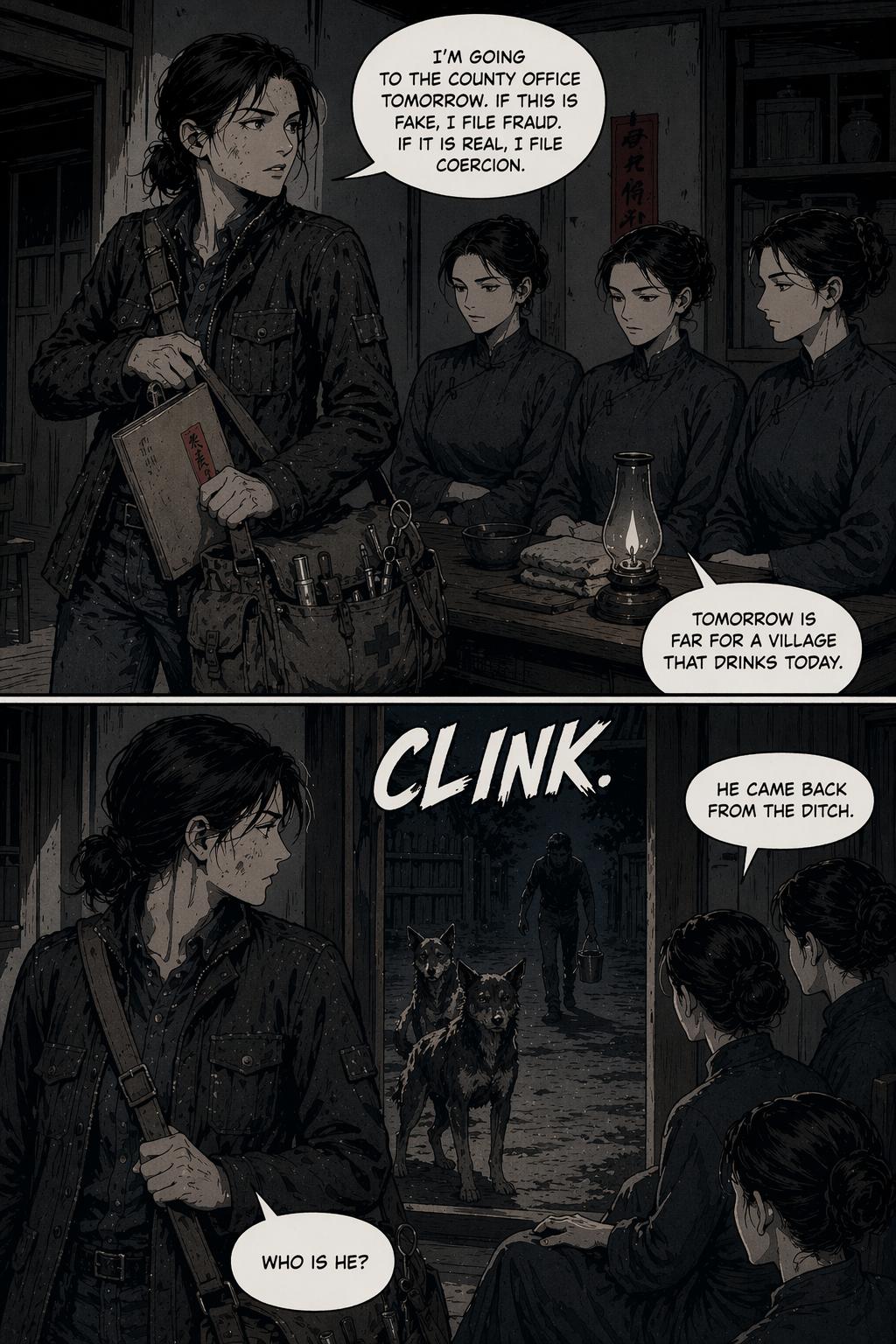
The hinted boy arrives before Wen can walk out.
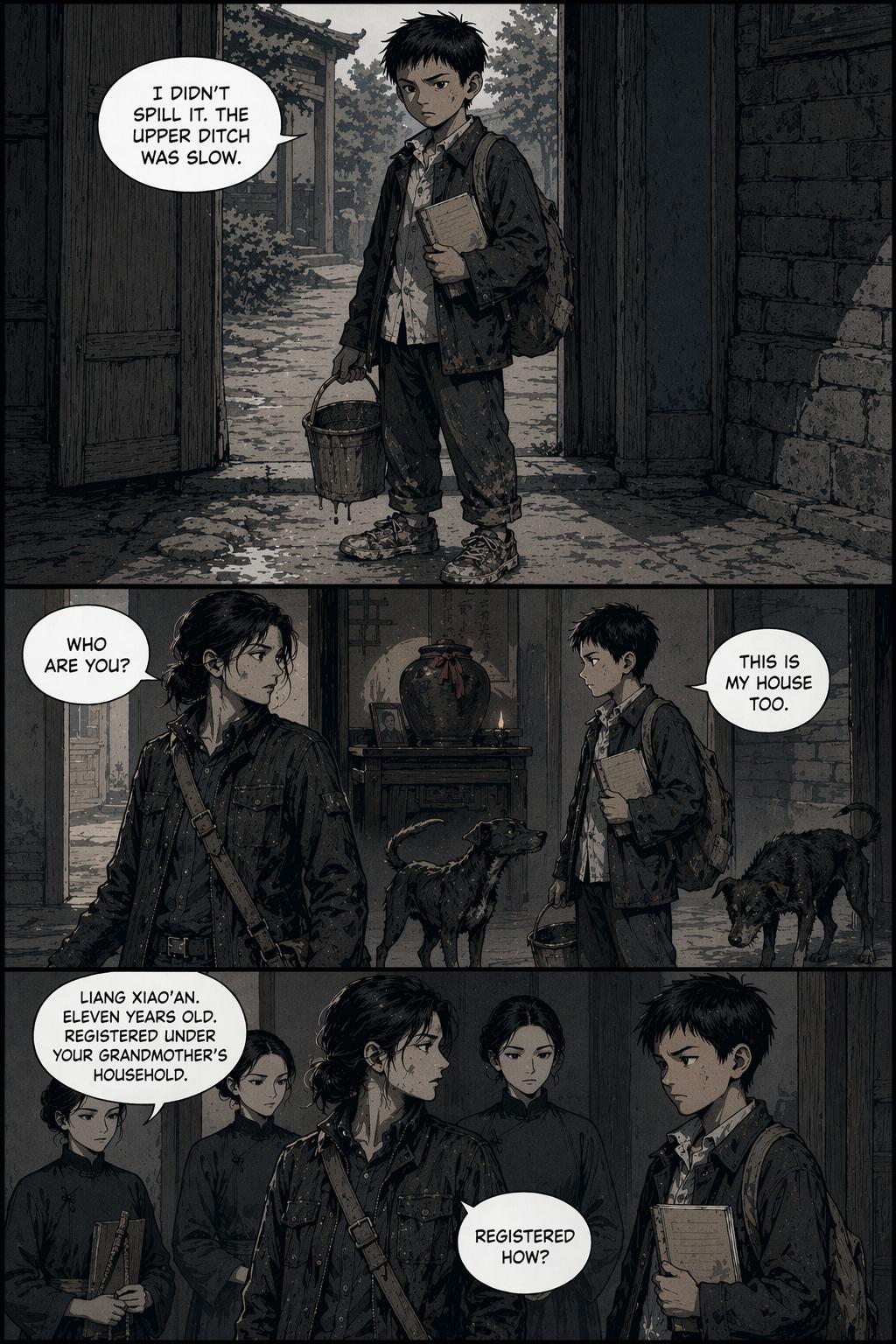
Wen sees Xiao'an for the first time, not as an abstract dependent but as a child doing farm work.
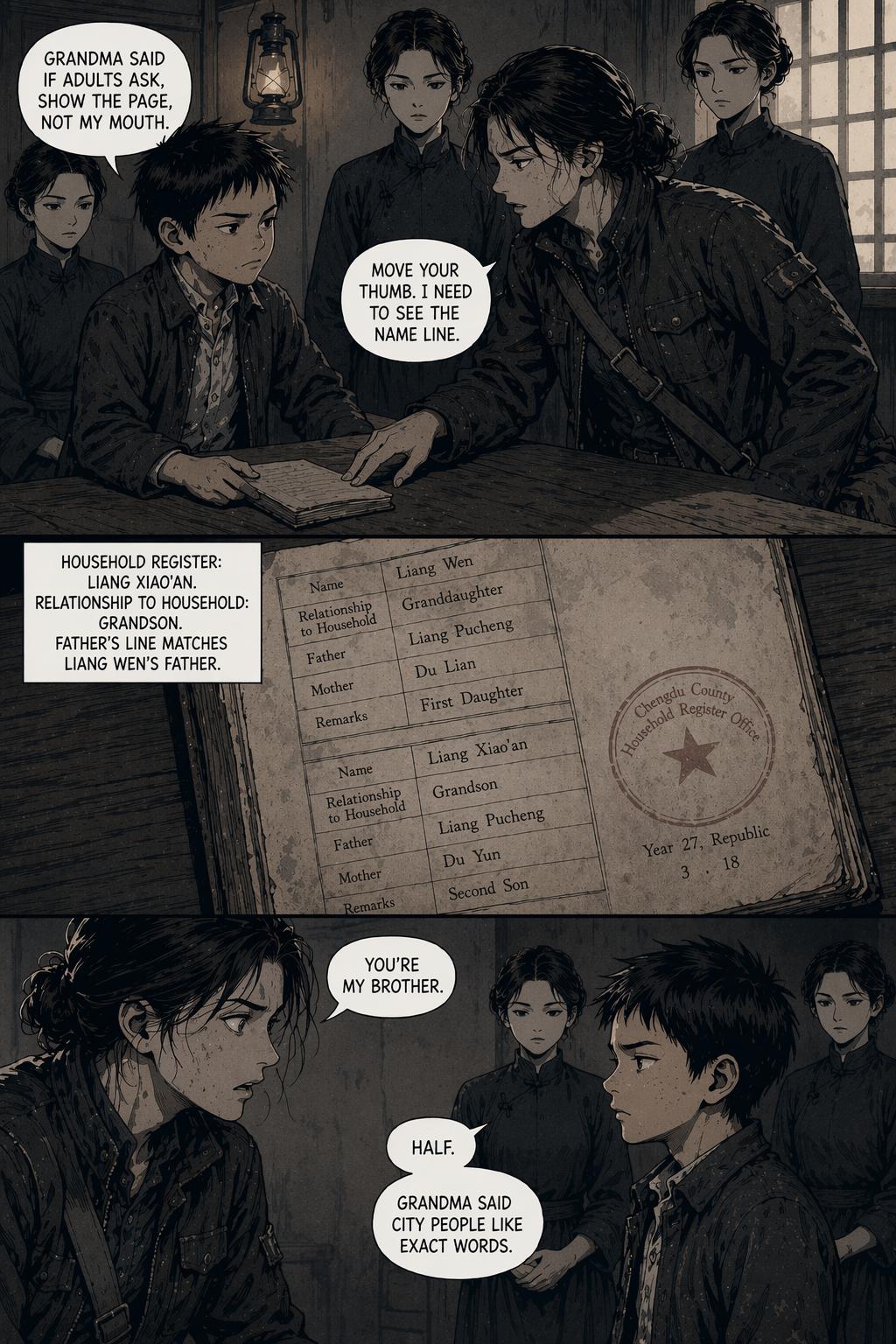
Wen reads the household register and realizes Xiao'an is not a neighbor's child.
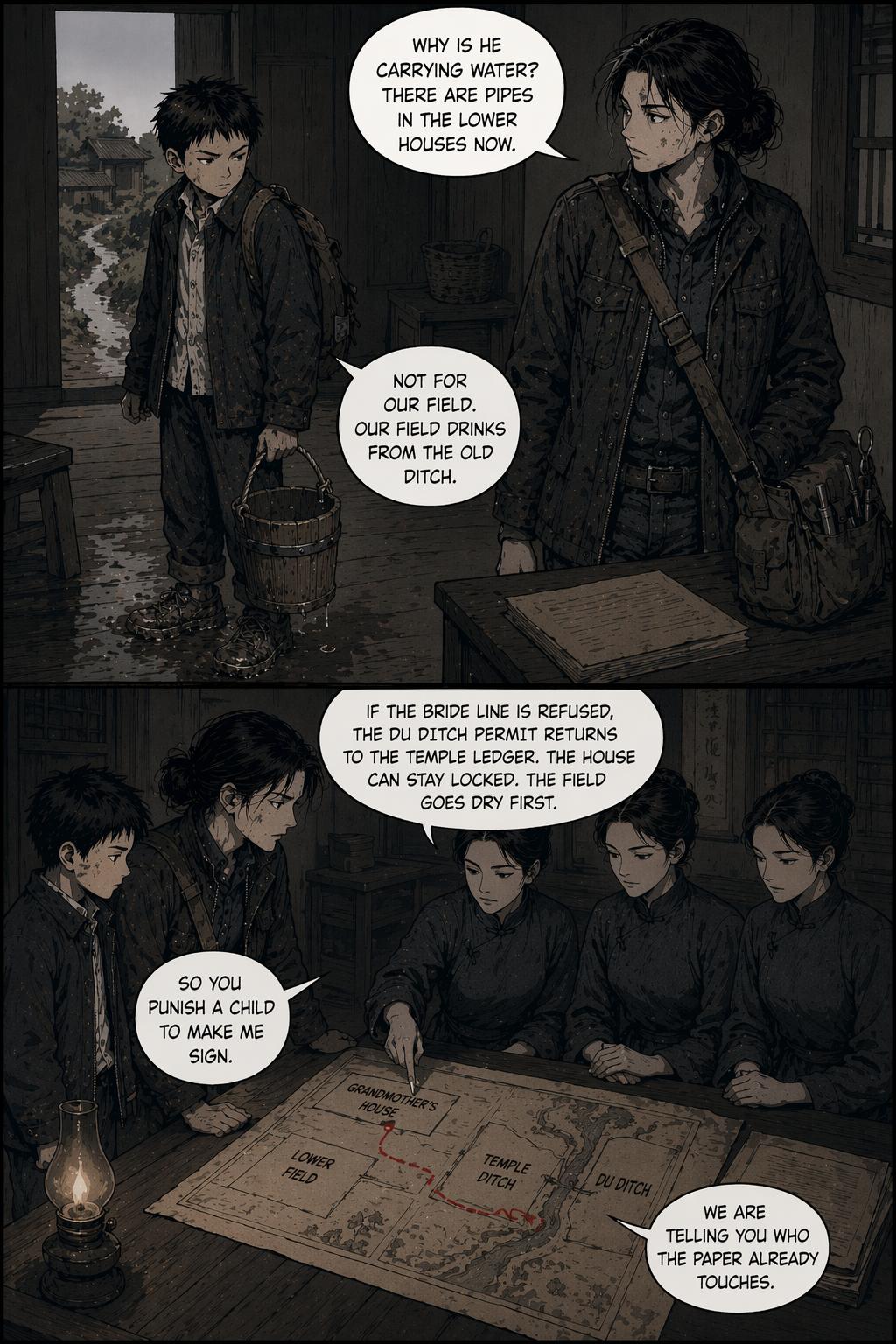
The abstract contract becomes a child's water pail and field allotment.
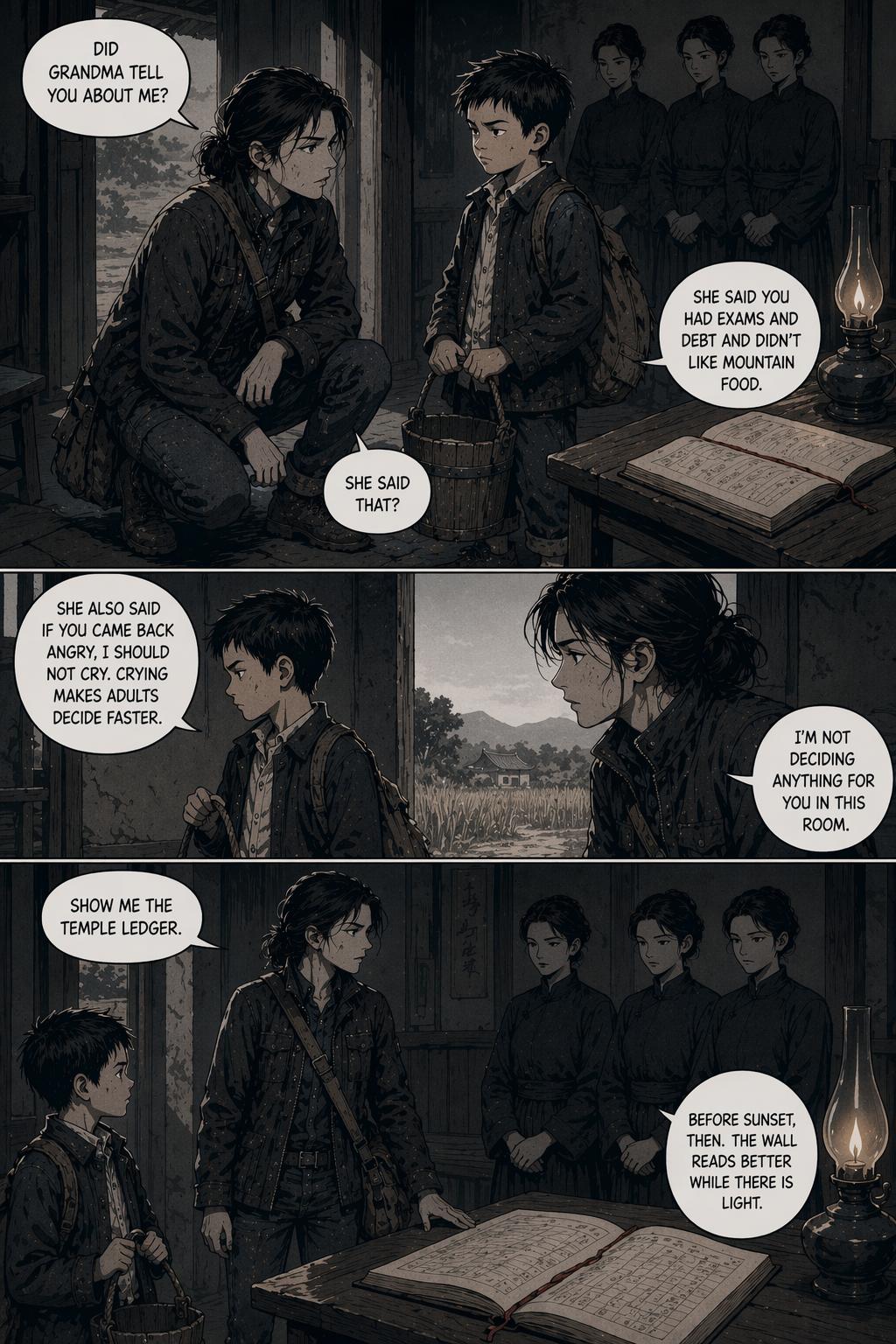
Wen tries to talk to Xiao'an directly, and his pride makes the threat sharper.
Chapter Comments
Comments
to leave a comment.