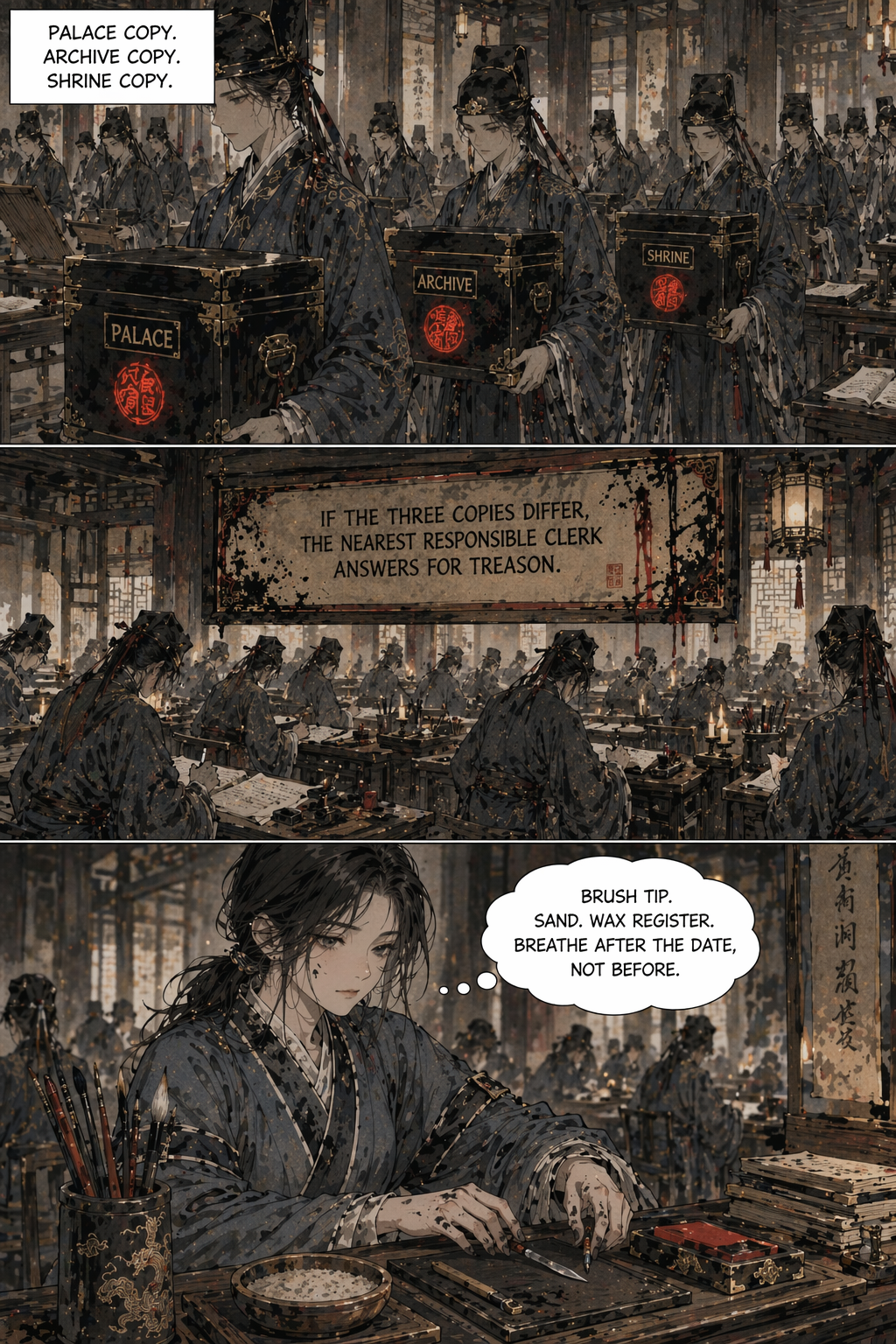
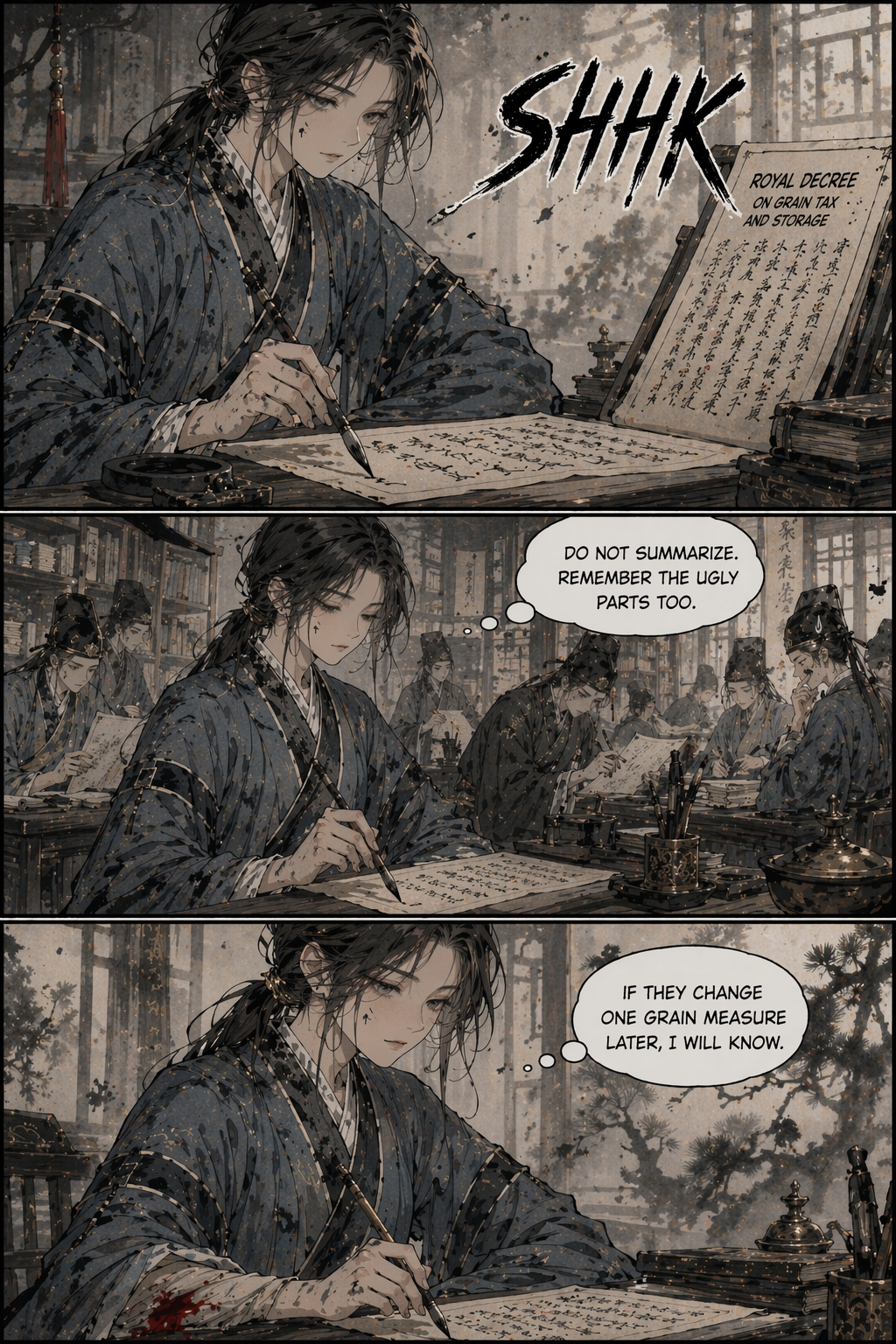
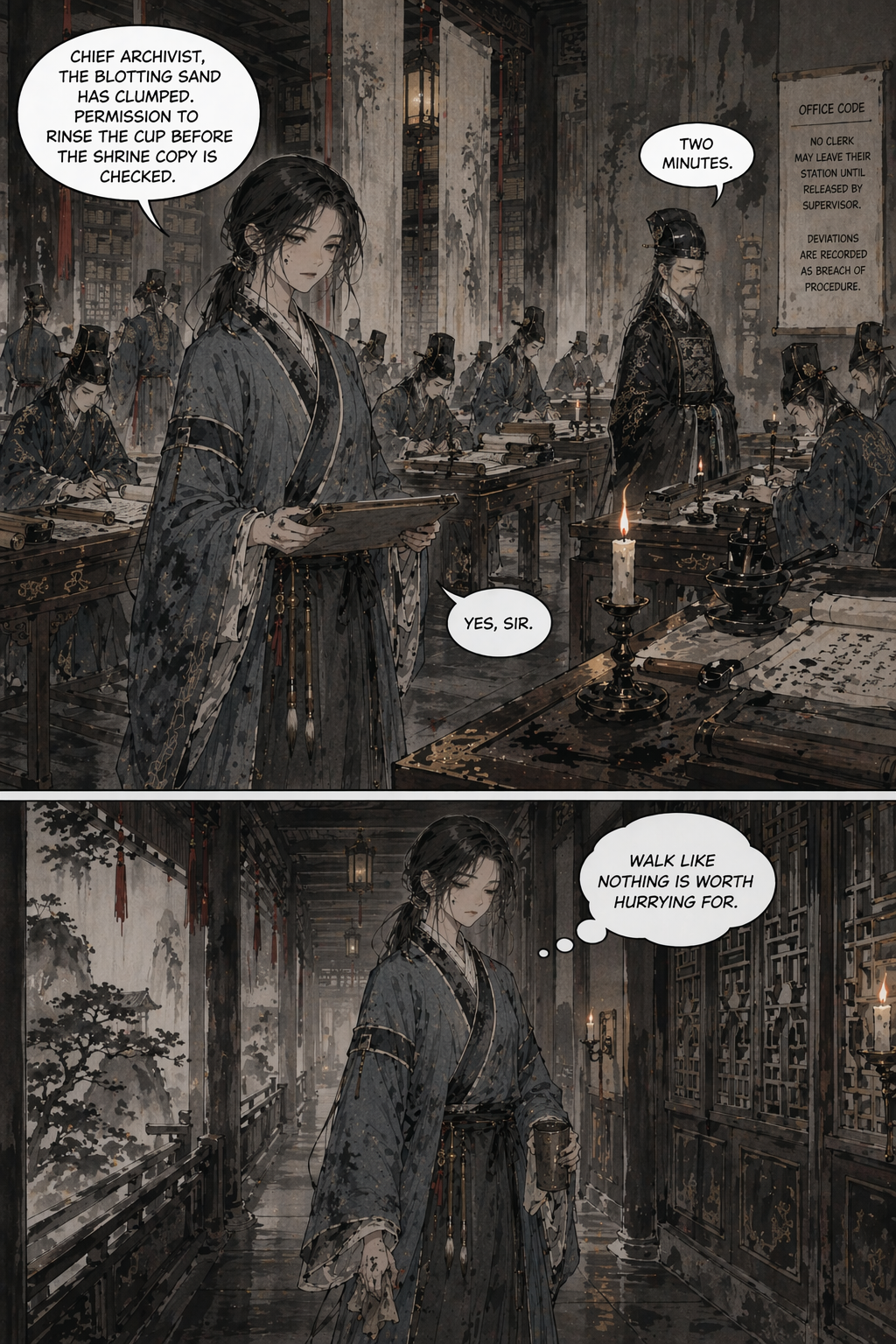
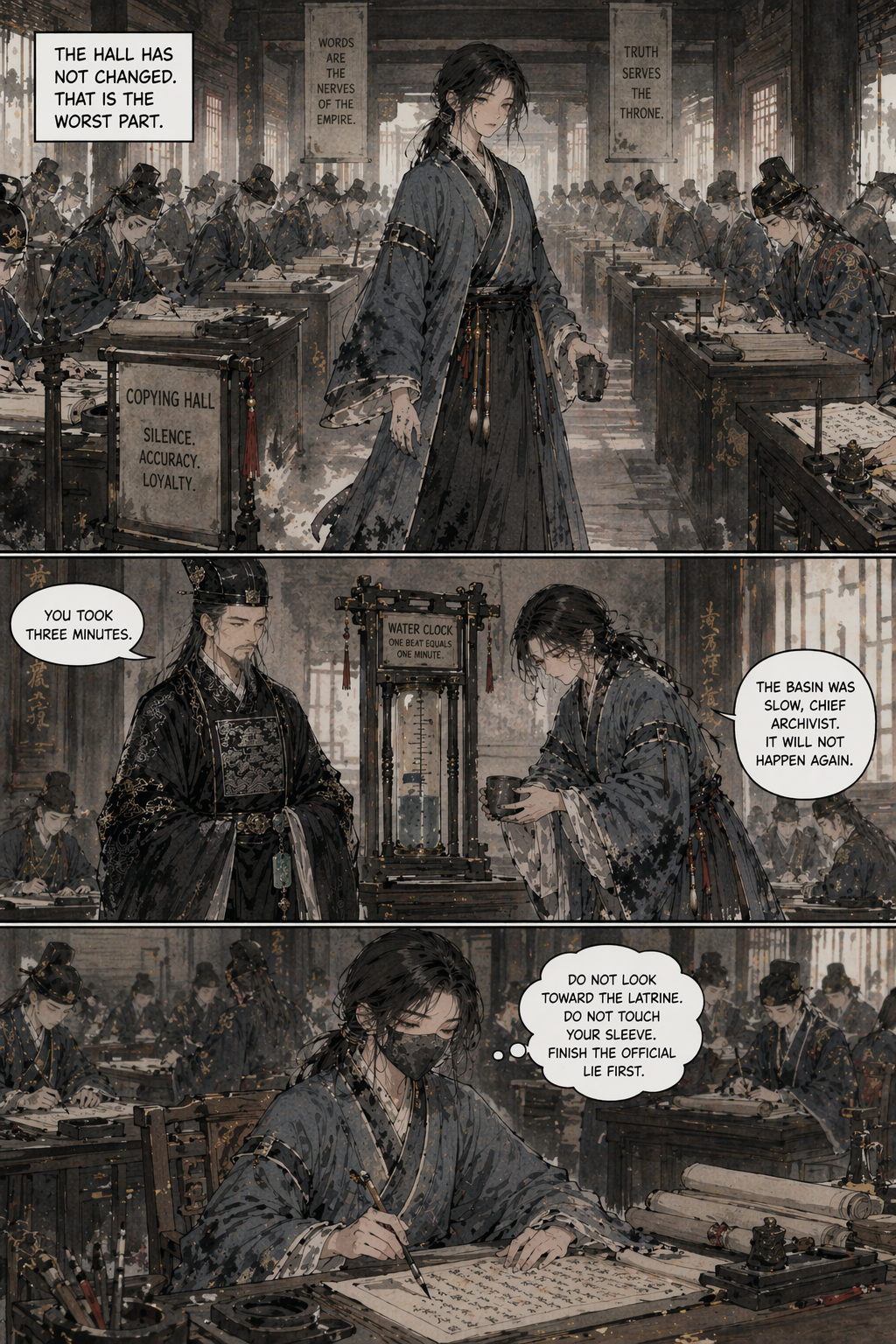
The copying hall begins work. The triplicate decree rule is shown as practical danger, not abstract ritual.

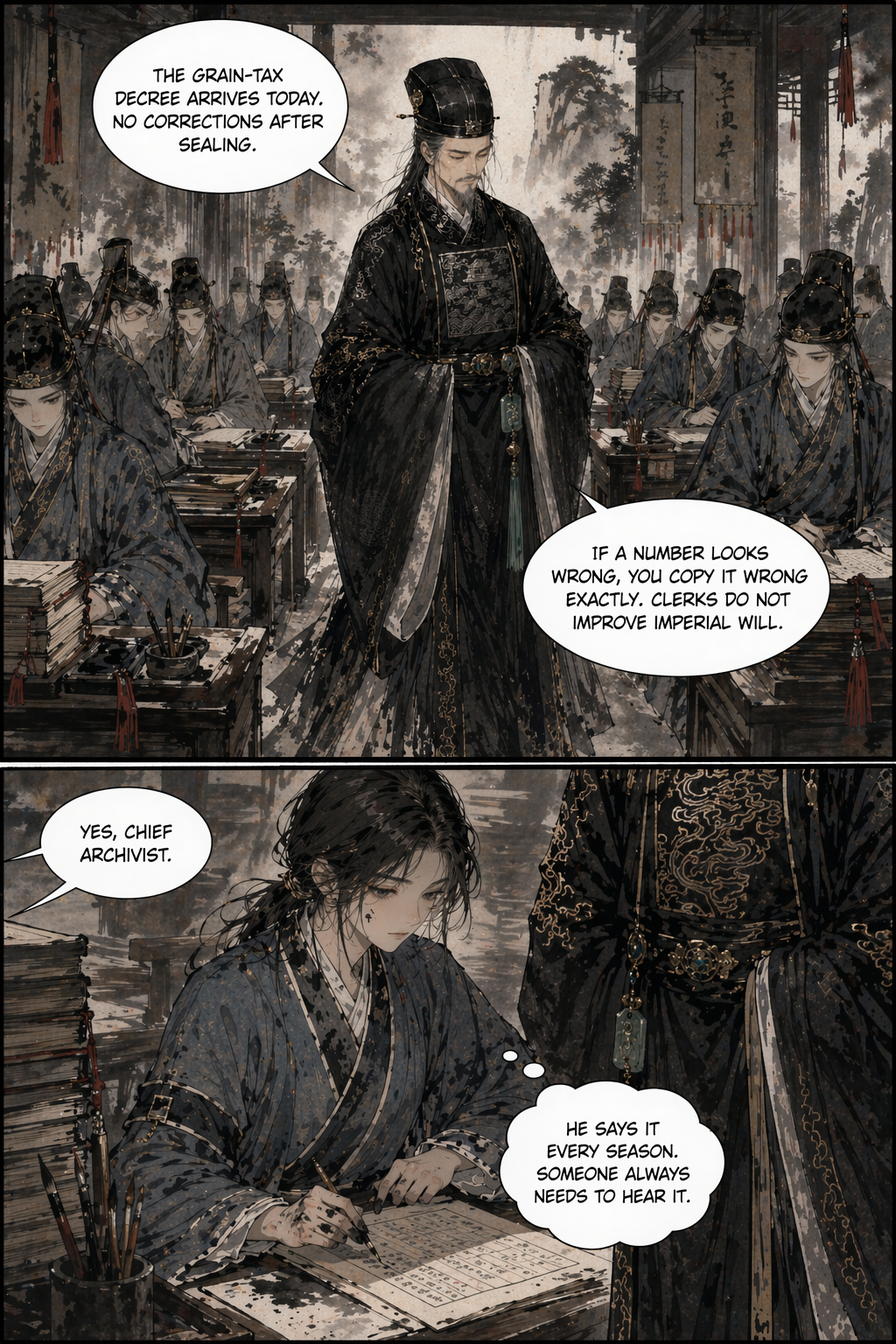
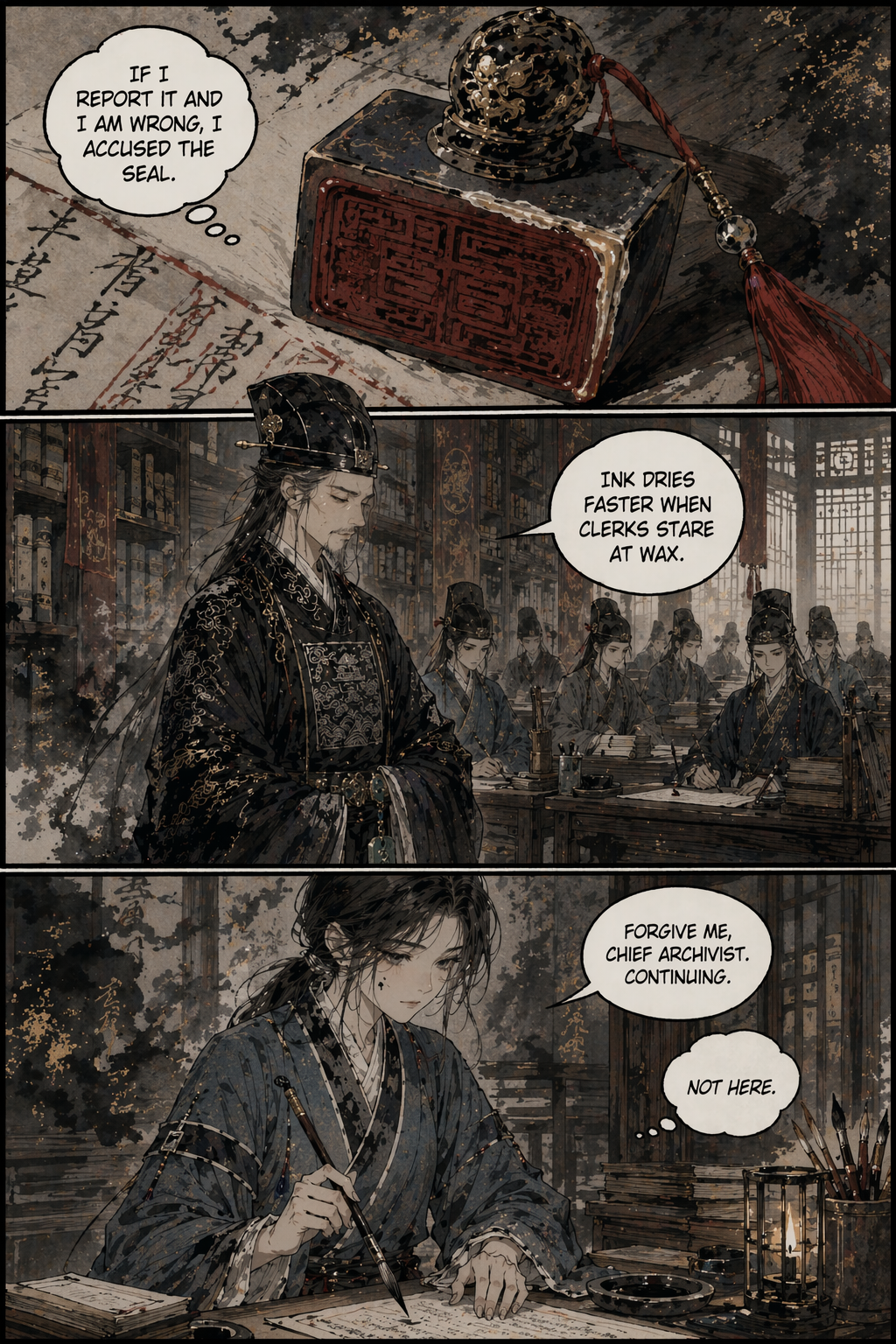
Chief Archivist Shen Qifeng oversees the room, making the stakes personal.

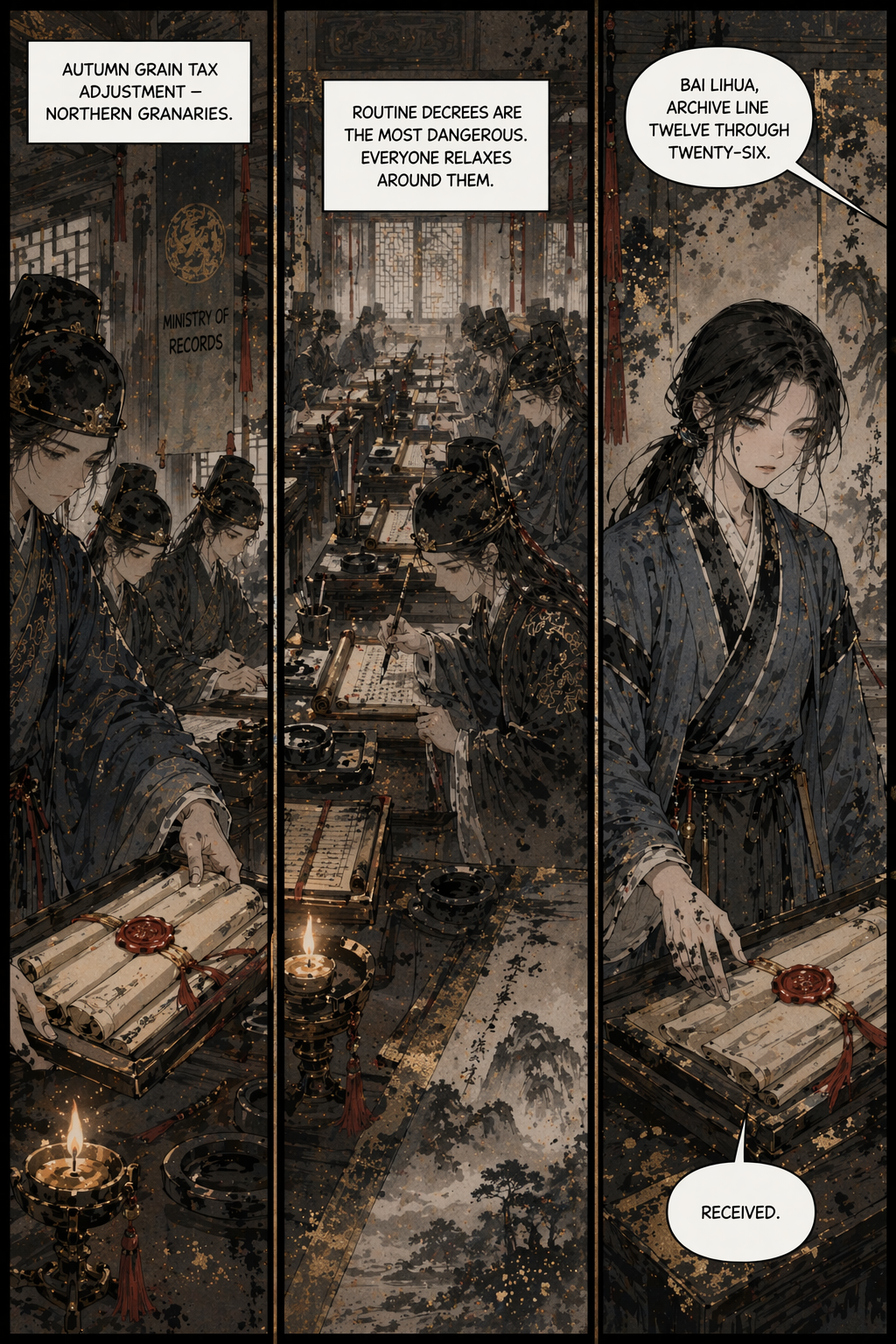
The routine grain-tax decree reaches Lihua's station.

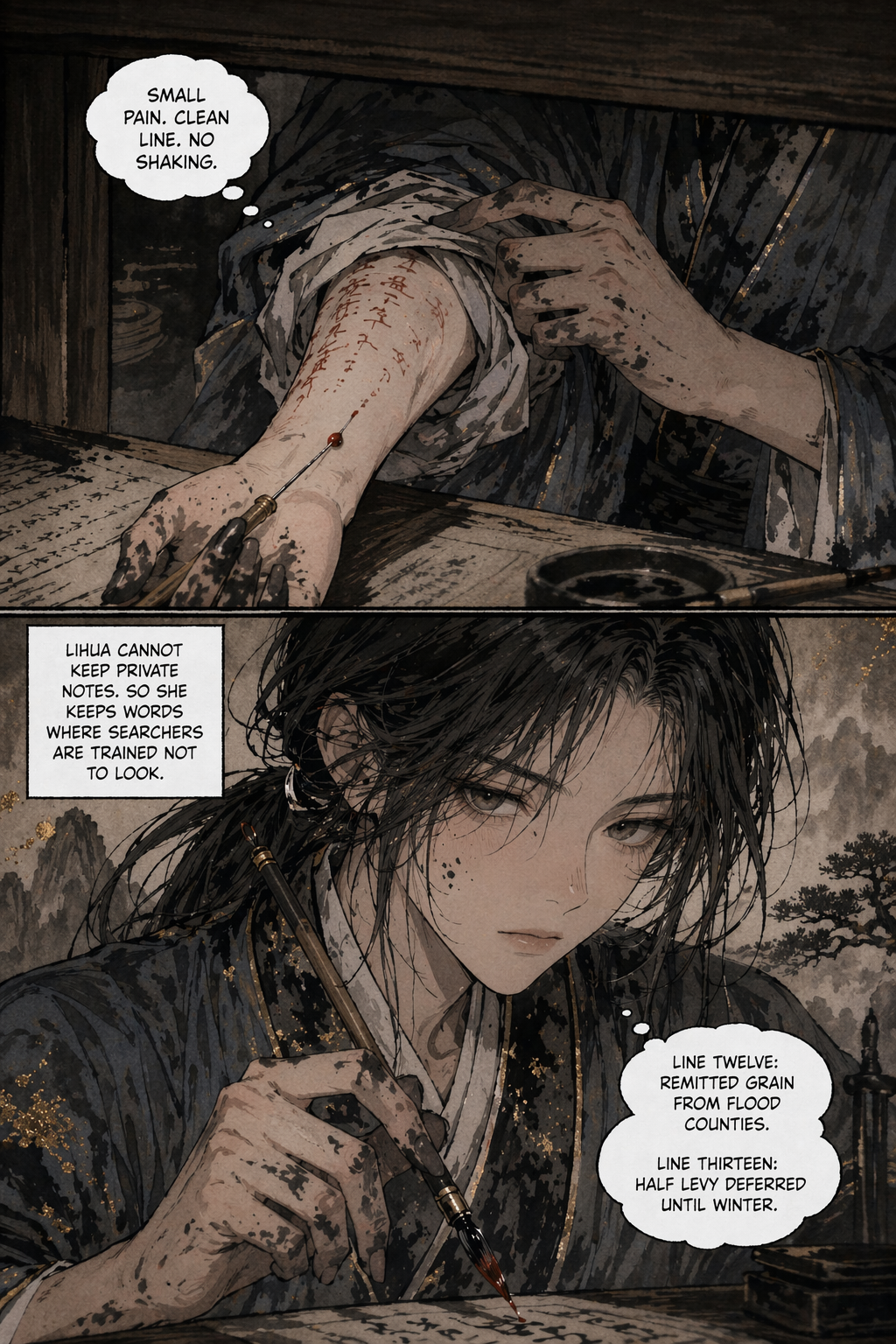
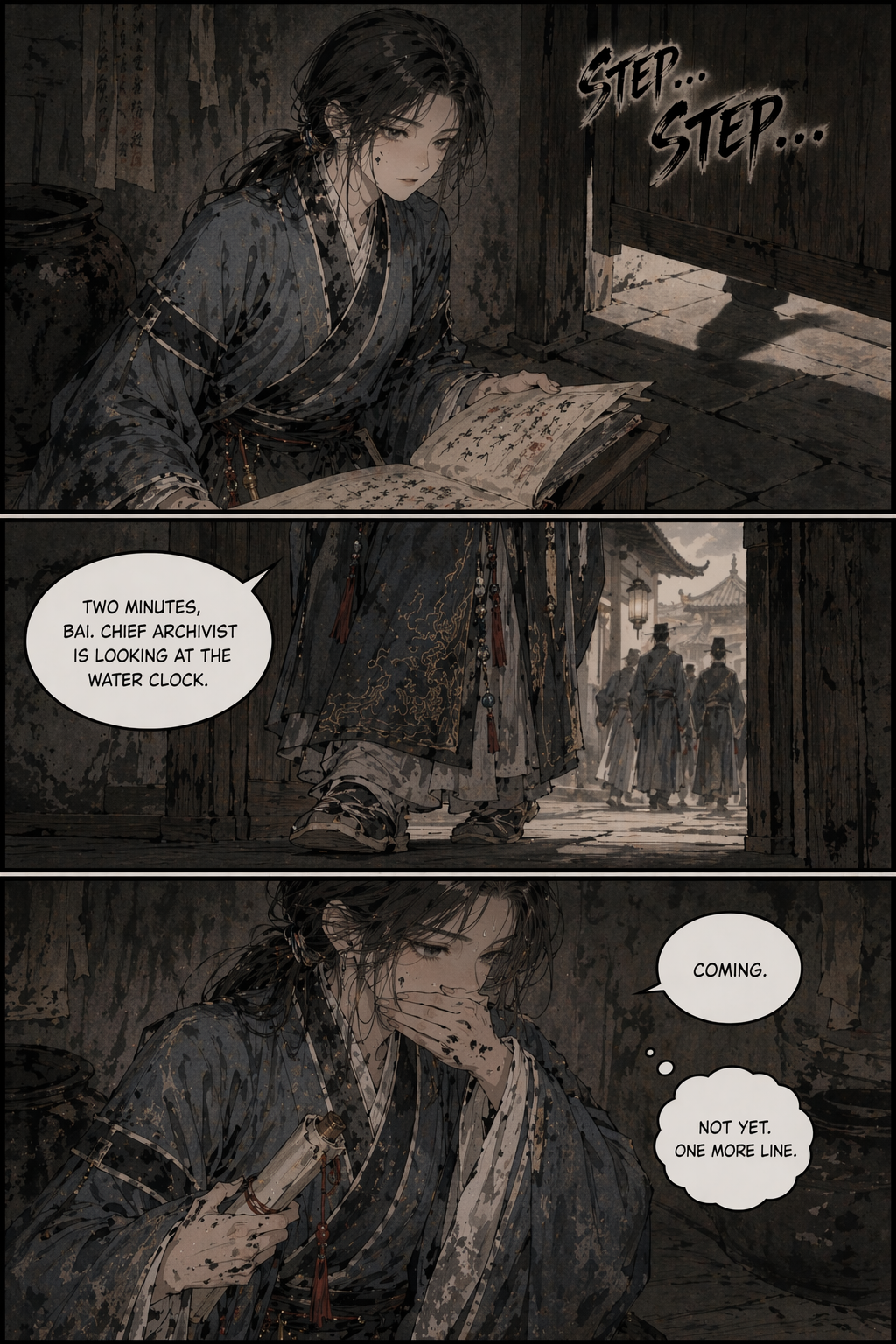
Lihua uses her hidden blood-copying method while appearing merely diligent.

Lihua copies the decree with perfect discipline while internalizing every clause.

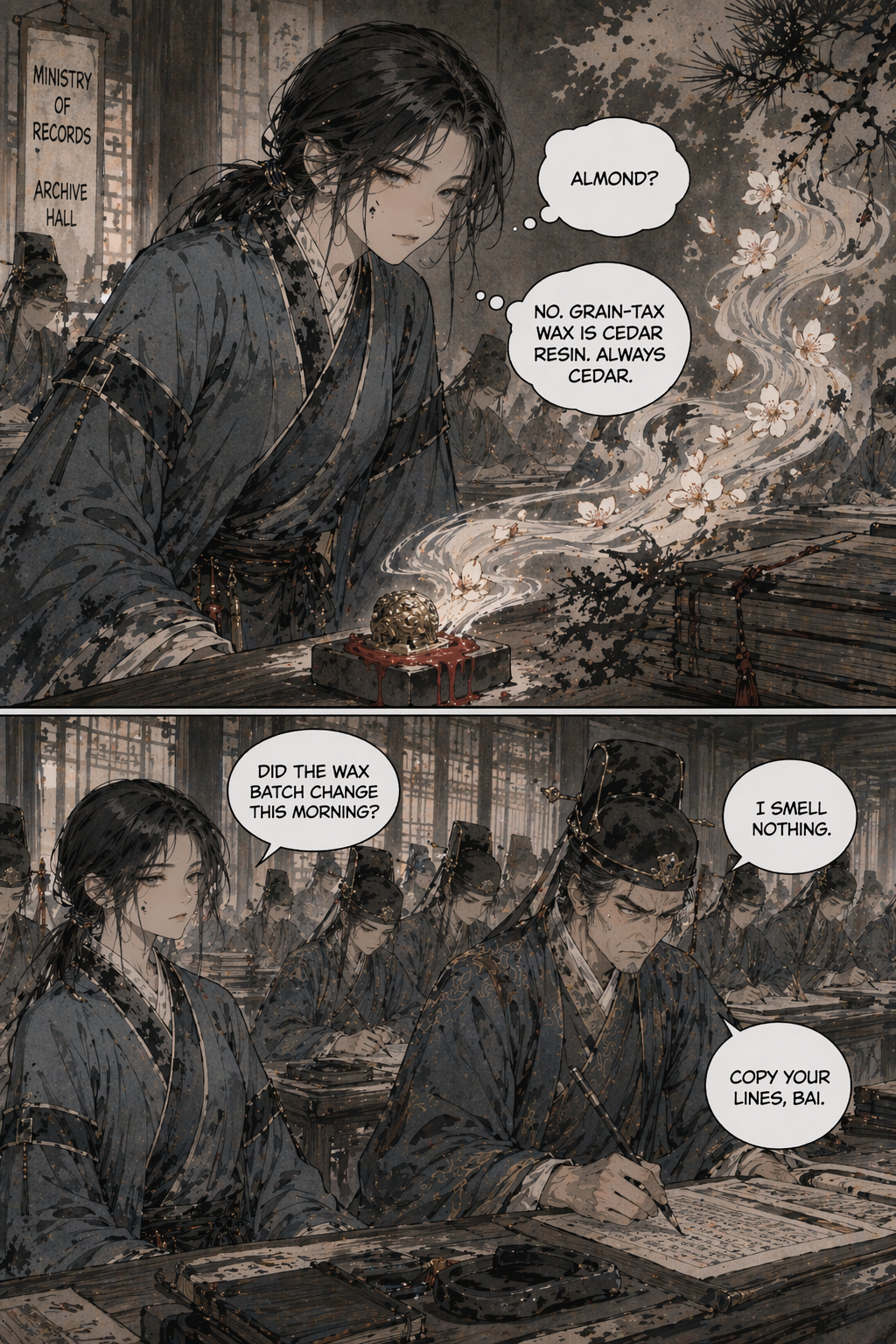
Lihua notices almond in wax that should smell of cedar, but the room's culture punishes noticing.

Lihua must decide whether the wrong scent is an error worth reporting, while Shen's presence makes any question dangerous.

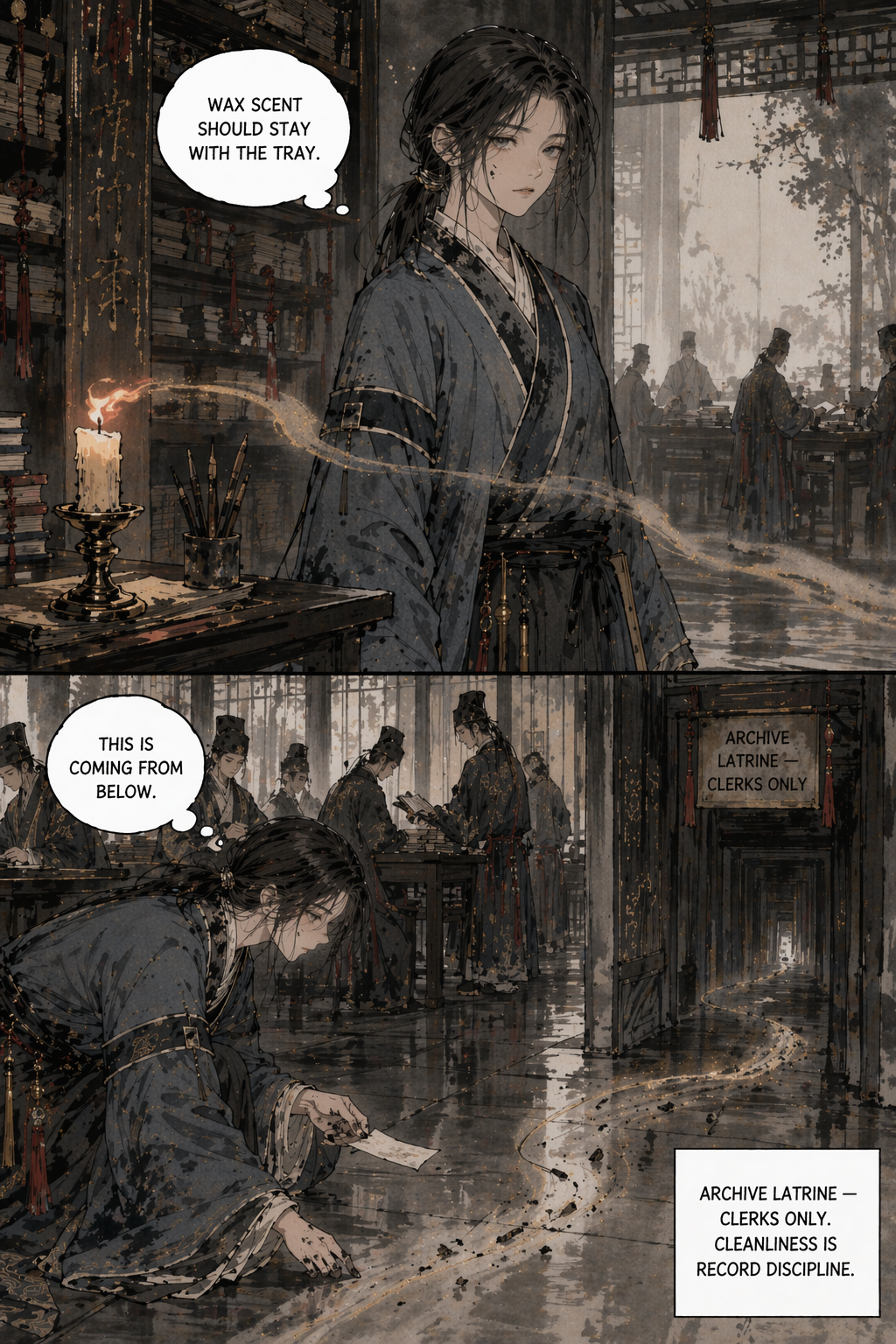
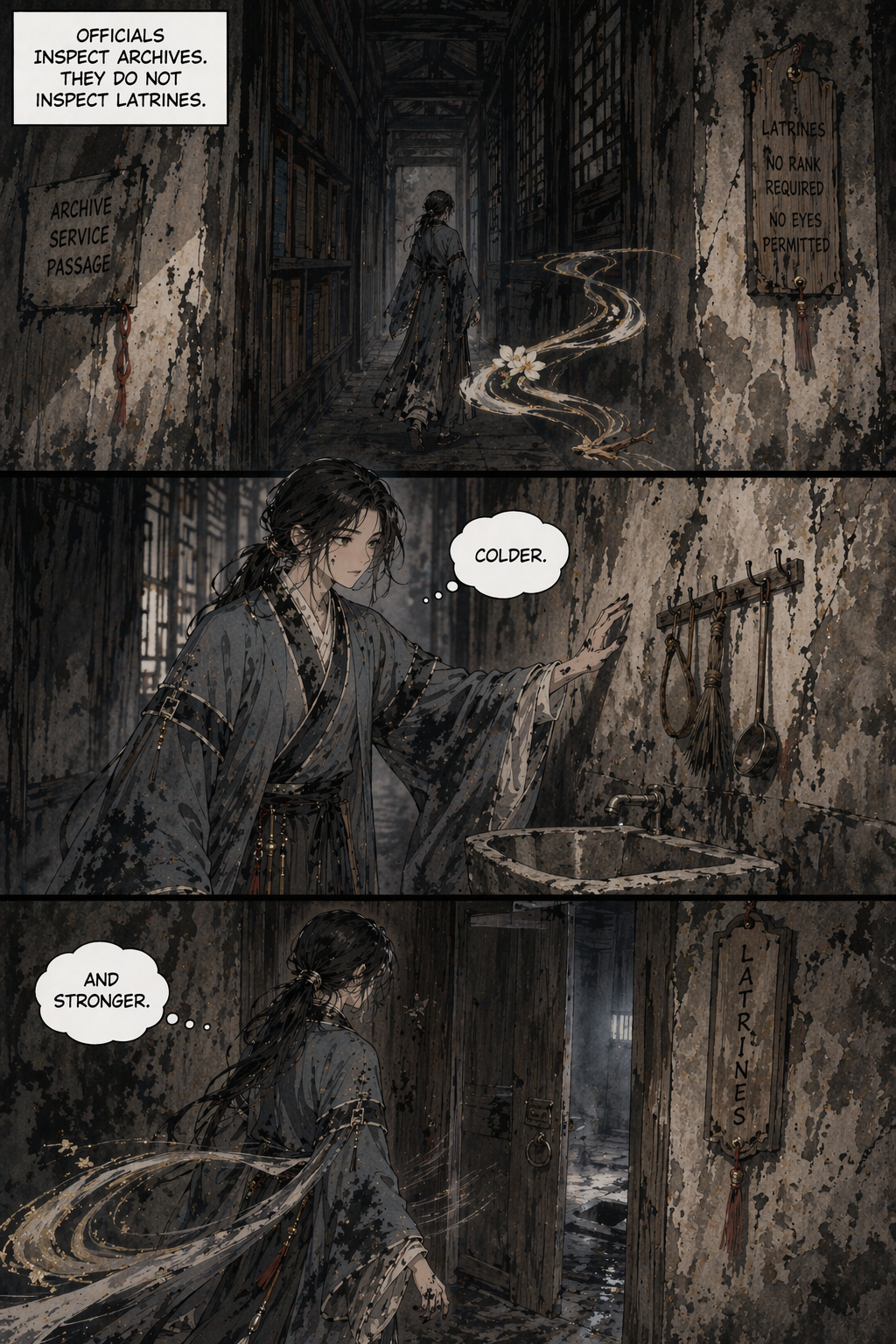
The almond scent is linked to a cold draft moving through the hall.

Lihua creates a mundane excuse to leave her station.

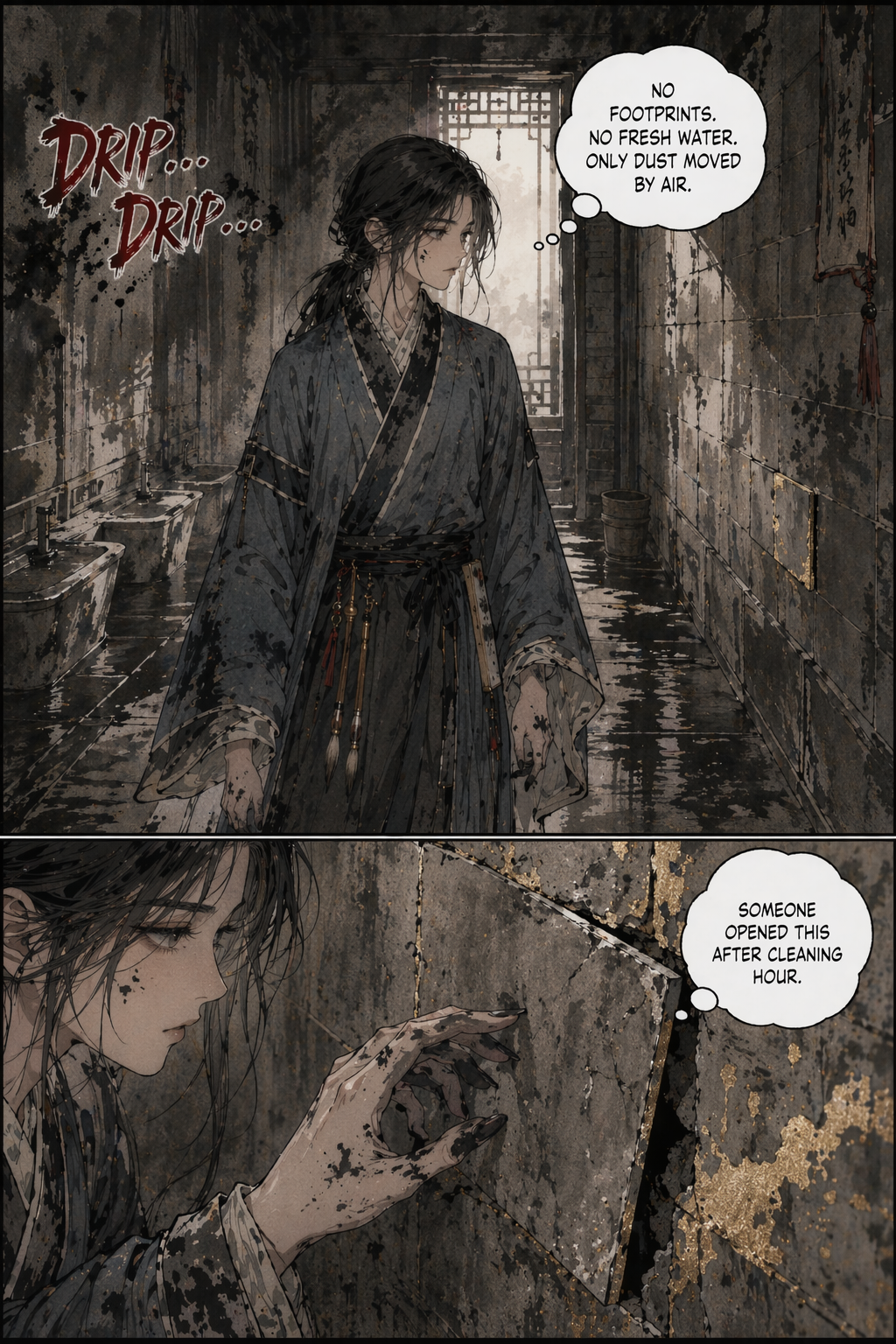
The archive latrine corridor shows where the palace hides what rank refuses to look at.

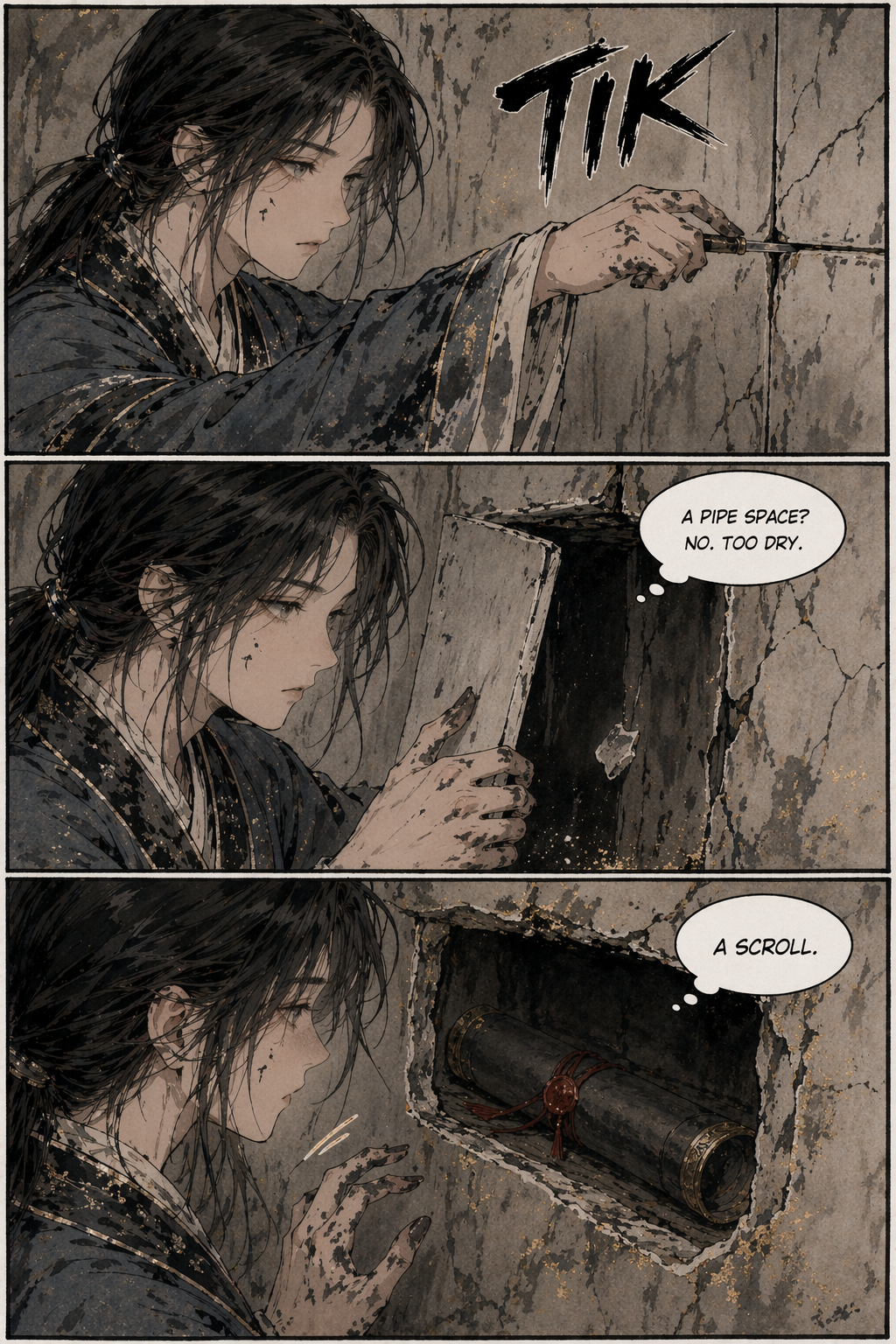
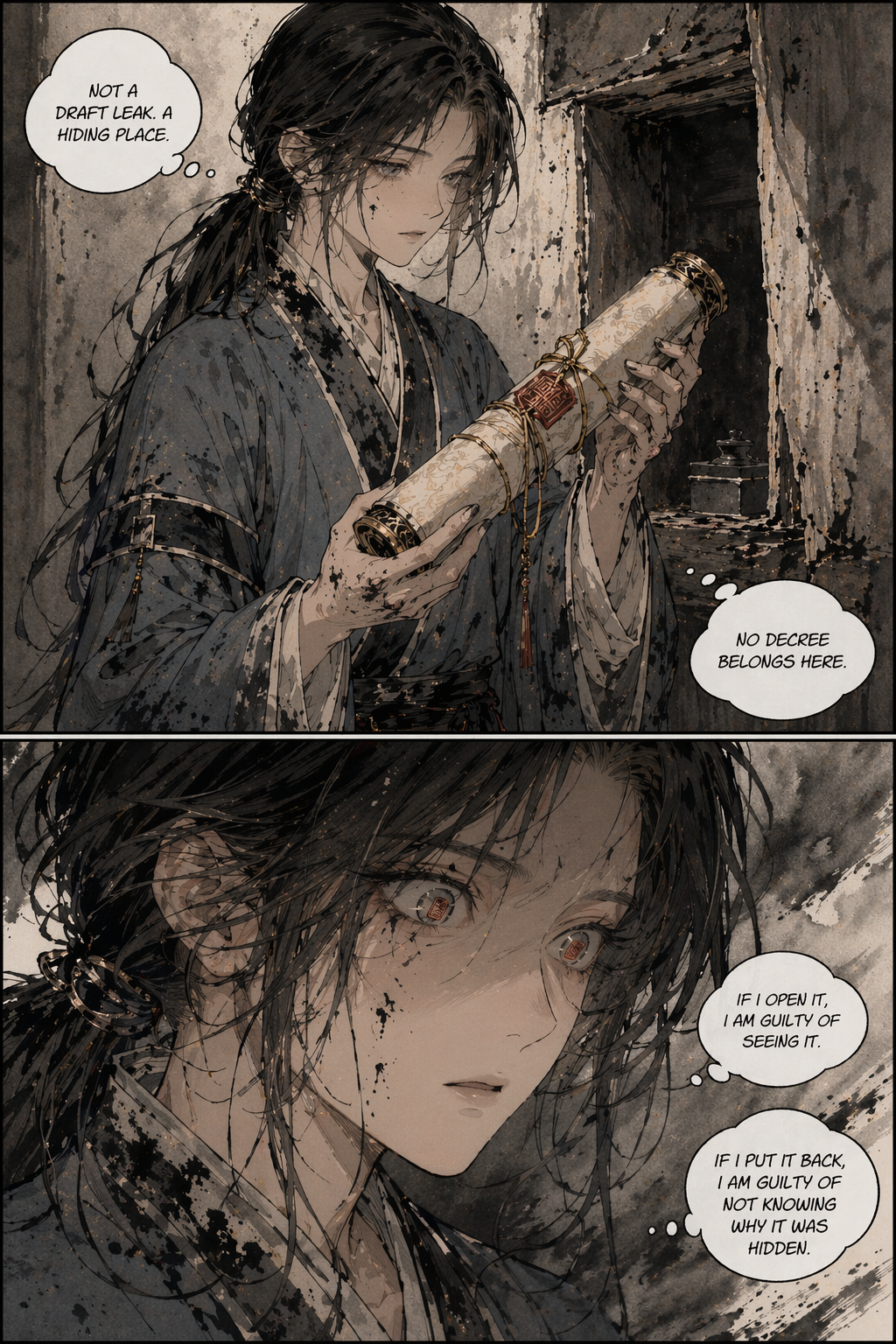
Lihua locates the source of the draft behind a cracked latrine wall tile.

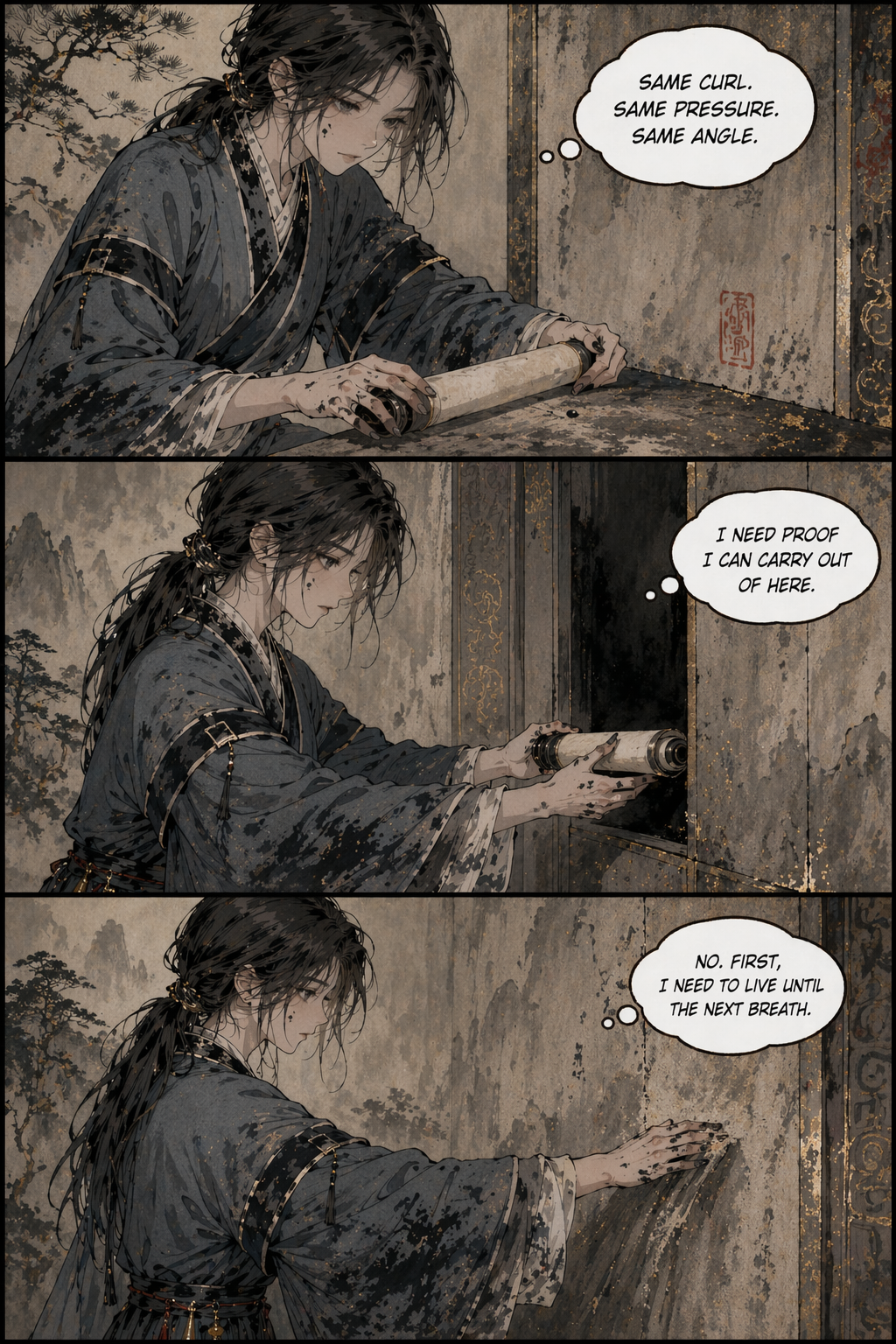
Lihua opens the hidden space without breaking the wall.

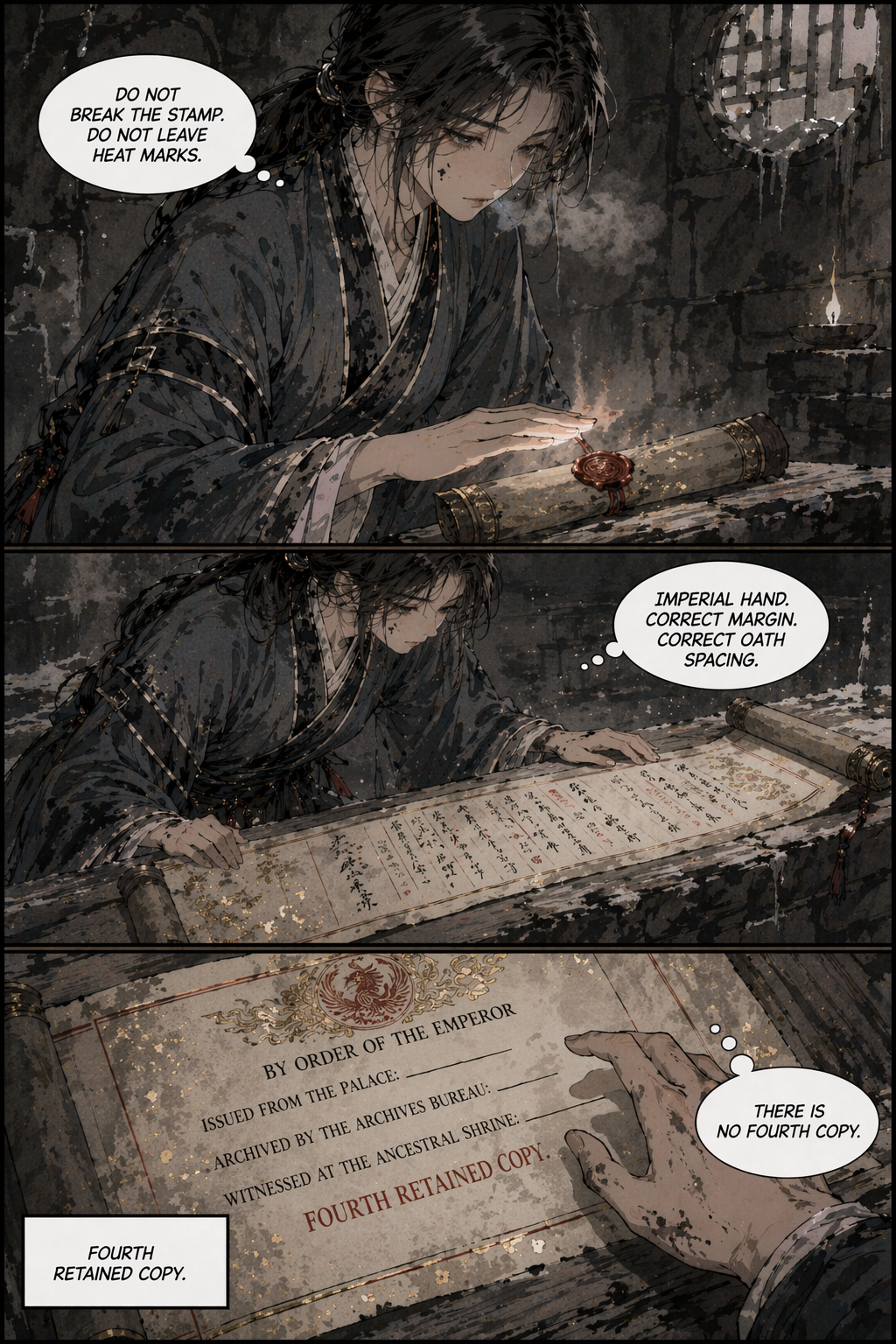
The hidden scroll is visibly official, making its very existence illegal.

Lihua opens the fourth copy and sees that it uses proper imperial form.

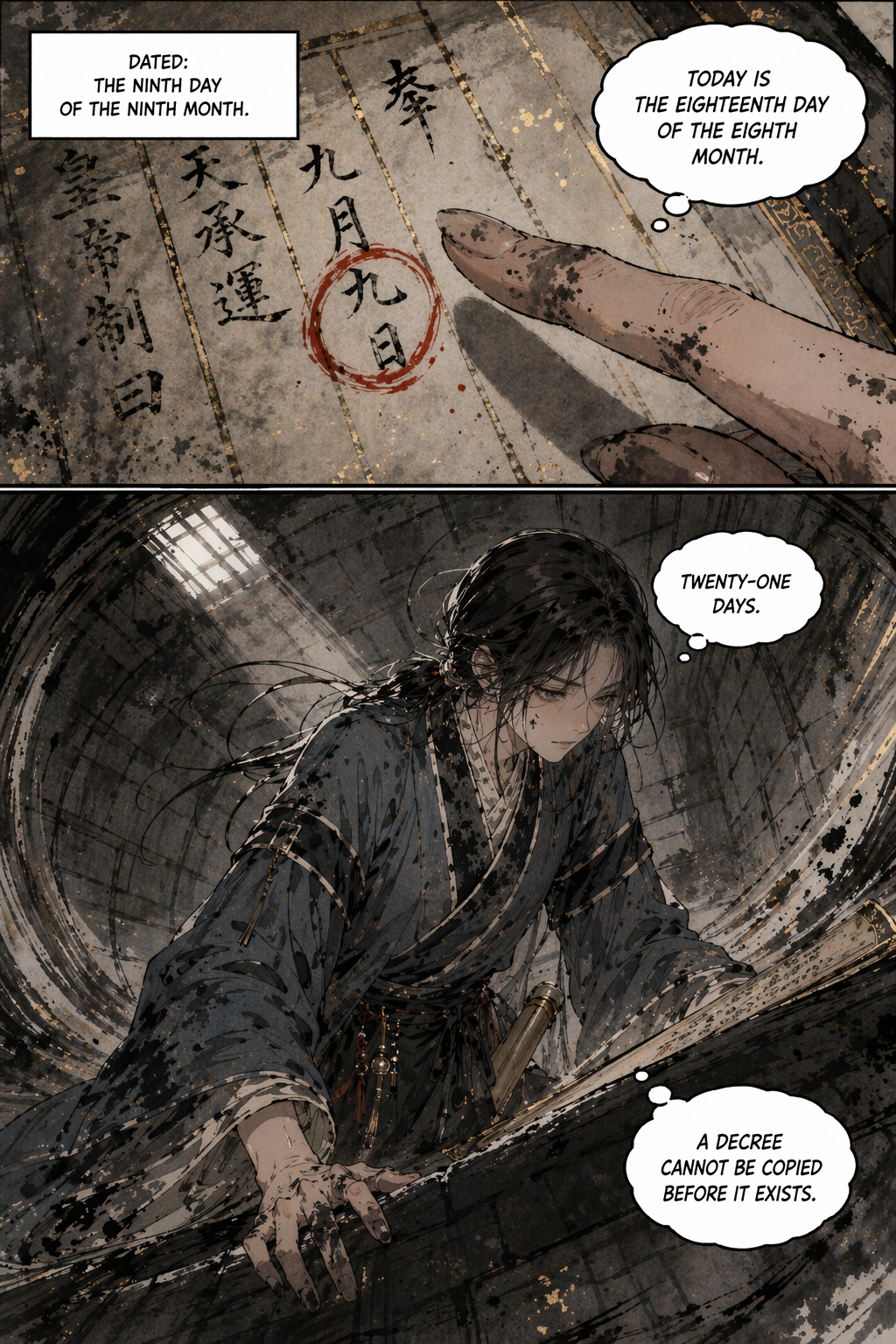
The scroll is dated three weeks in the future.

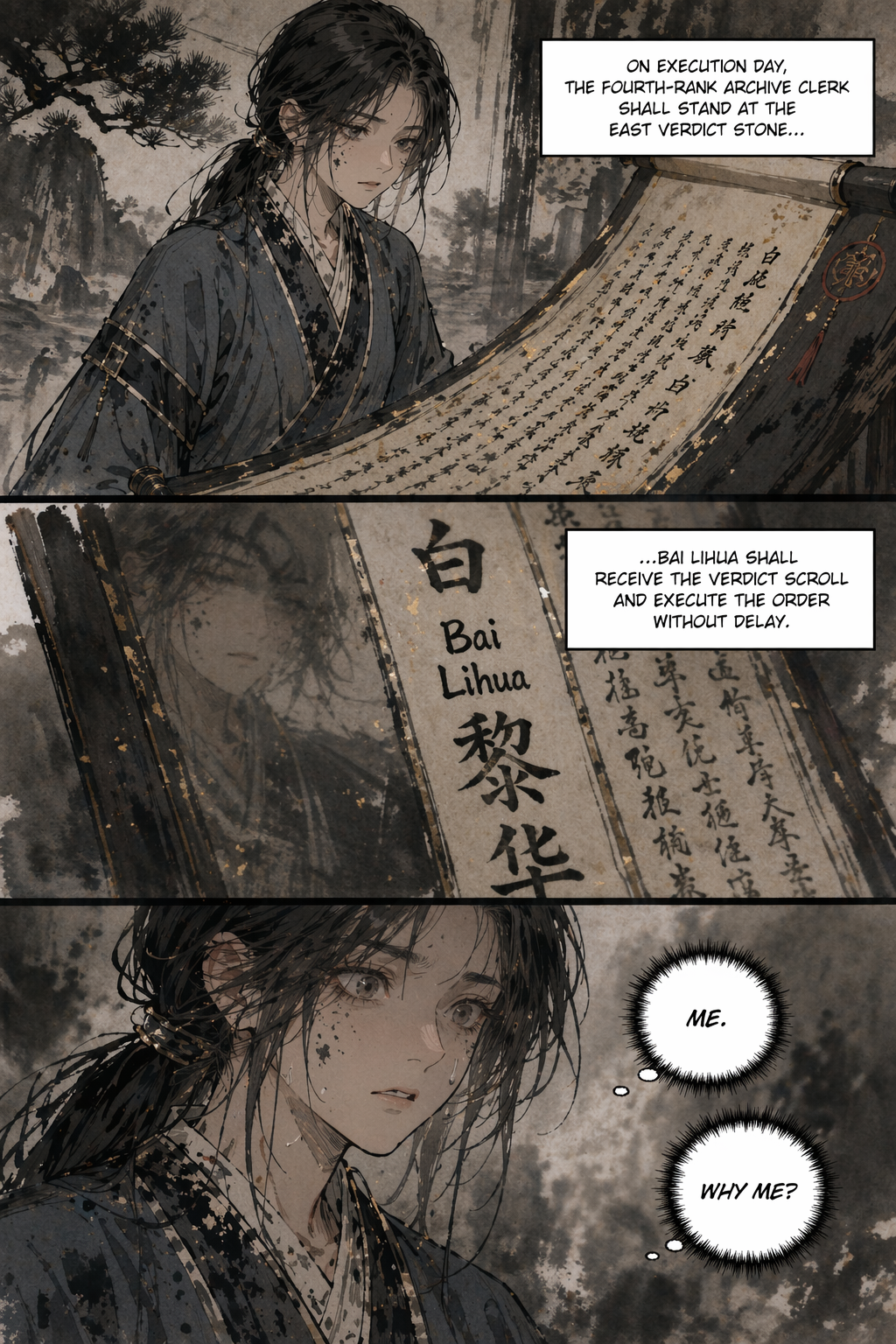
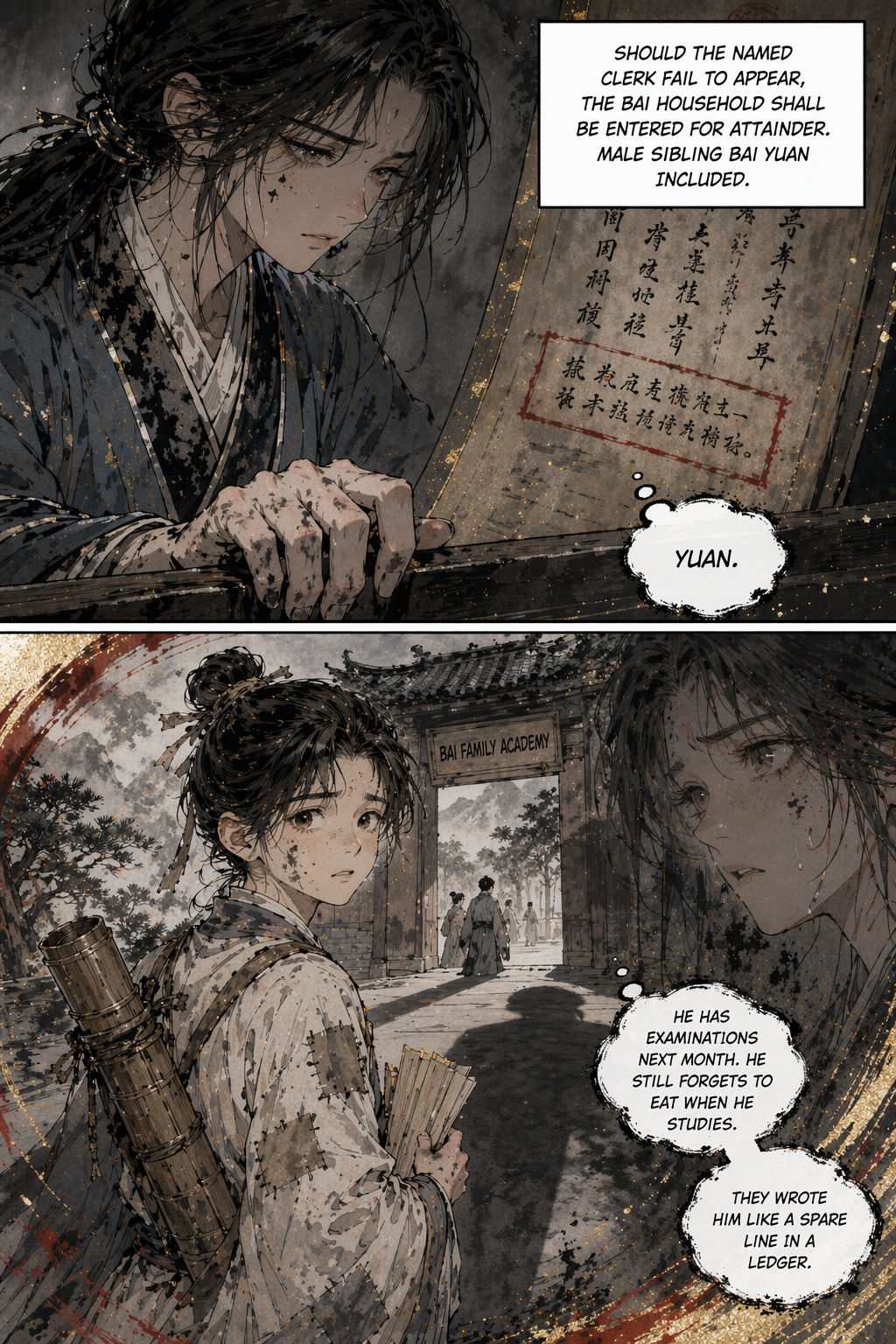
The hidden decree names Lihua as a future participant in an execution ritual.

The decree's collateral clause makes Lihua's younger brother part of the threat.

A sound outside forces Lihua to hide the scroll and control her breathing.

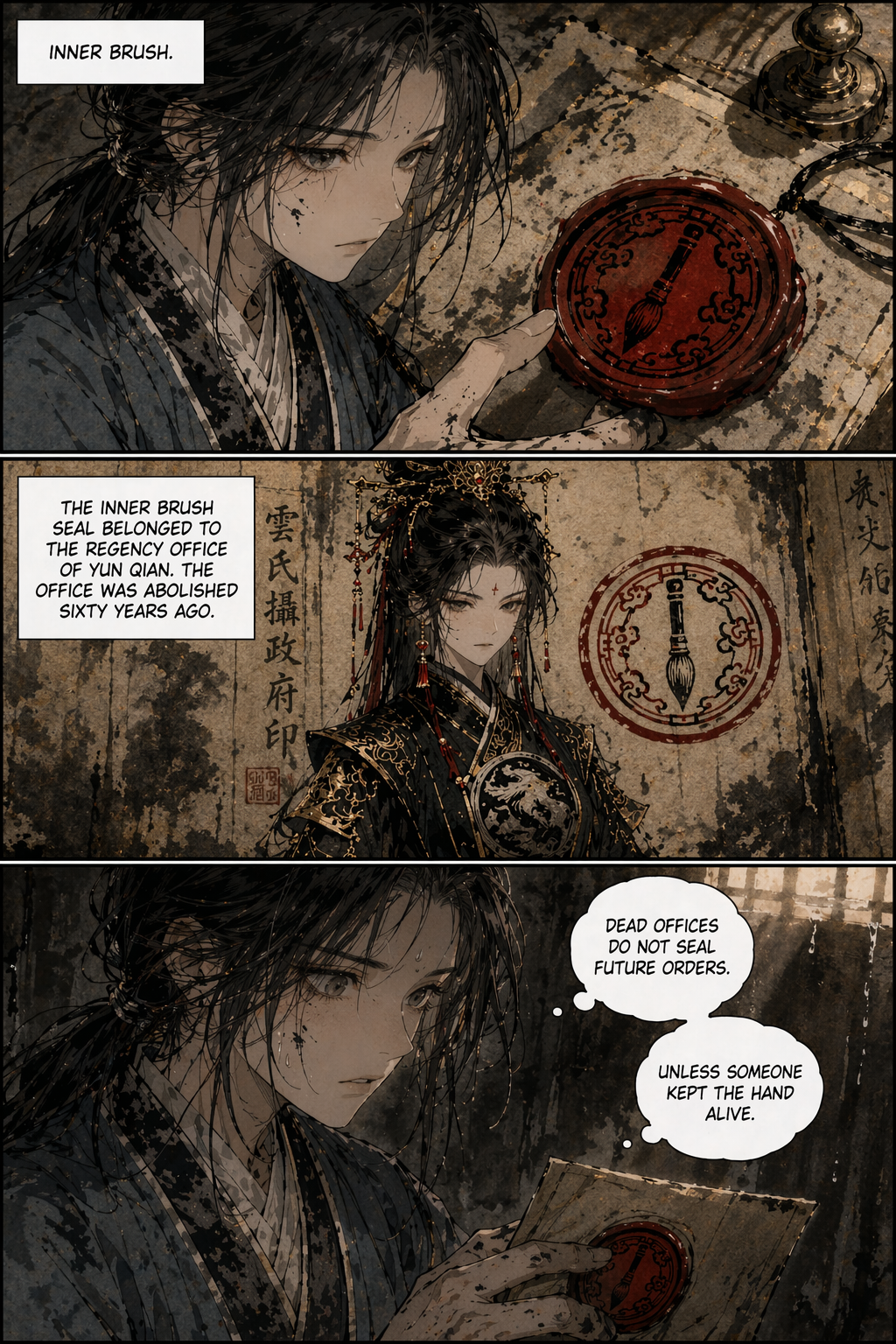
Lihua recognizes the forbidden seal as an obsolete regency mark tied to the dead Empress Regent Yun Qian.

Lihua returns the scroll and restores the wall to avoid immediate discovery.

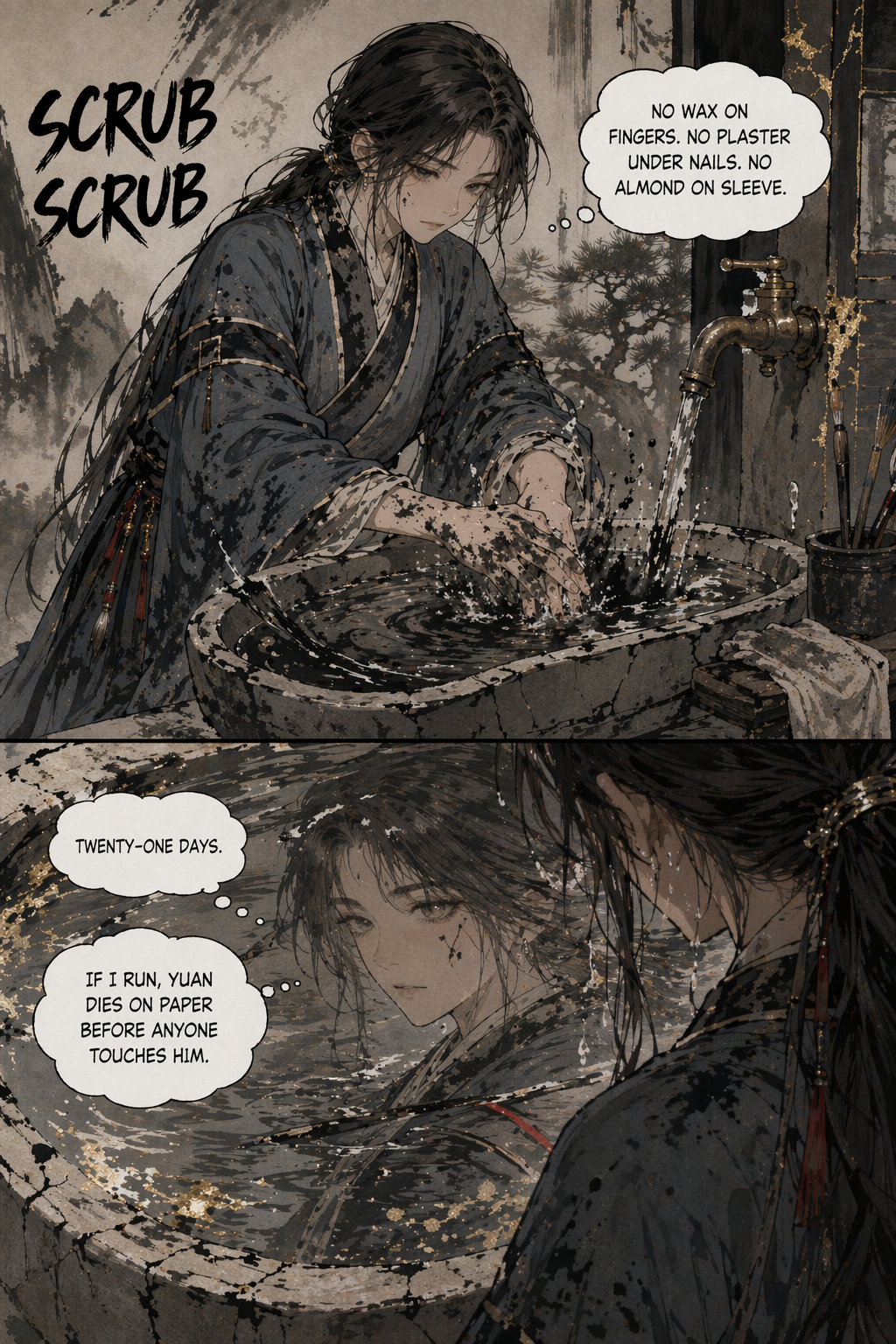
Lihua washes her hands and tries to remove all visible evidence, but the knowledge remains.

Lihua returns to the copying hall and hides the discovery in plain sight.
Chapter Comments
Comments
to leave a comment.