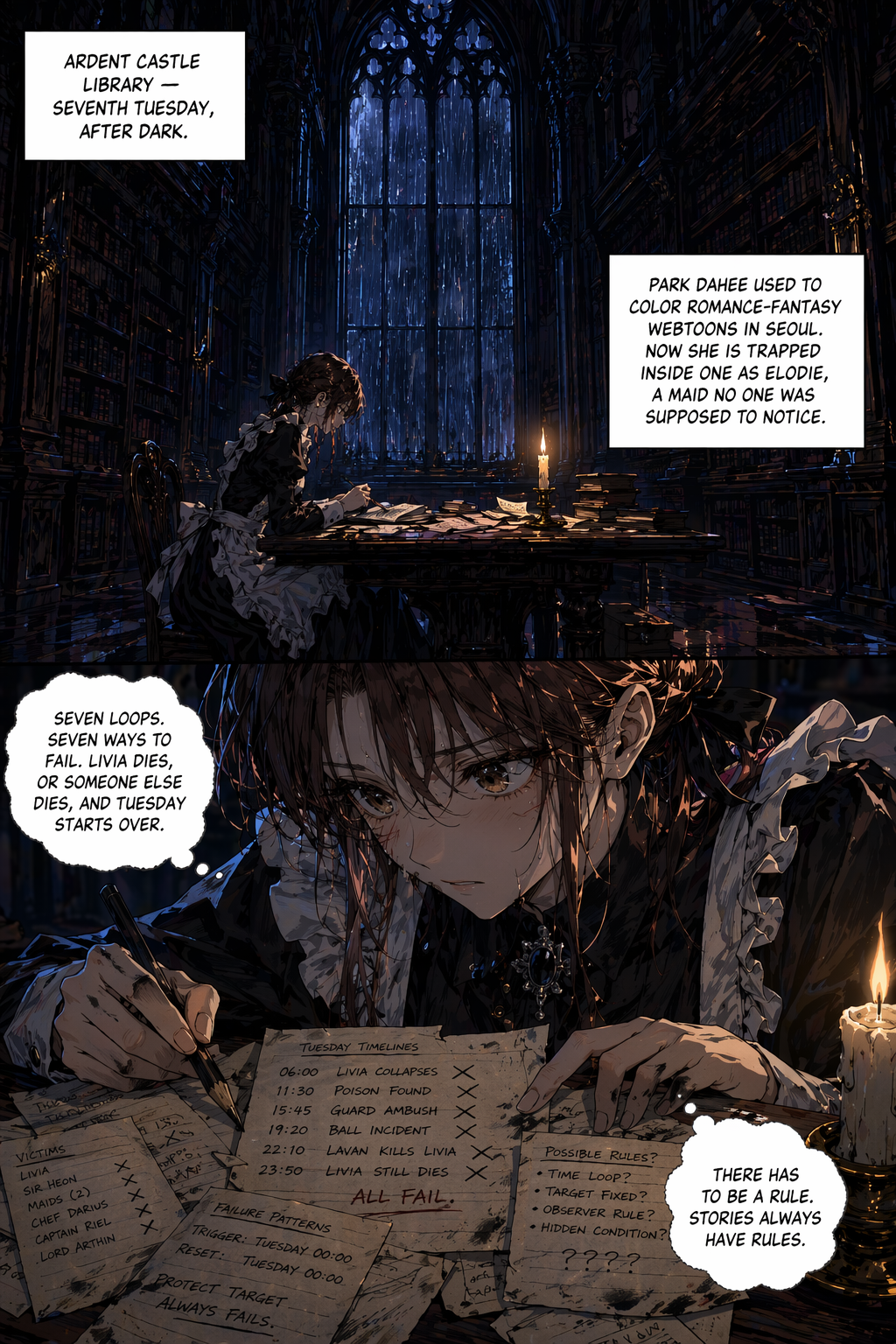
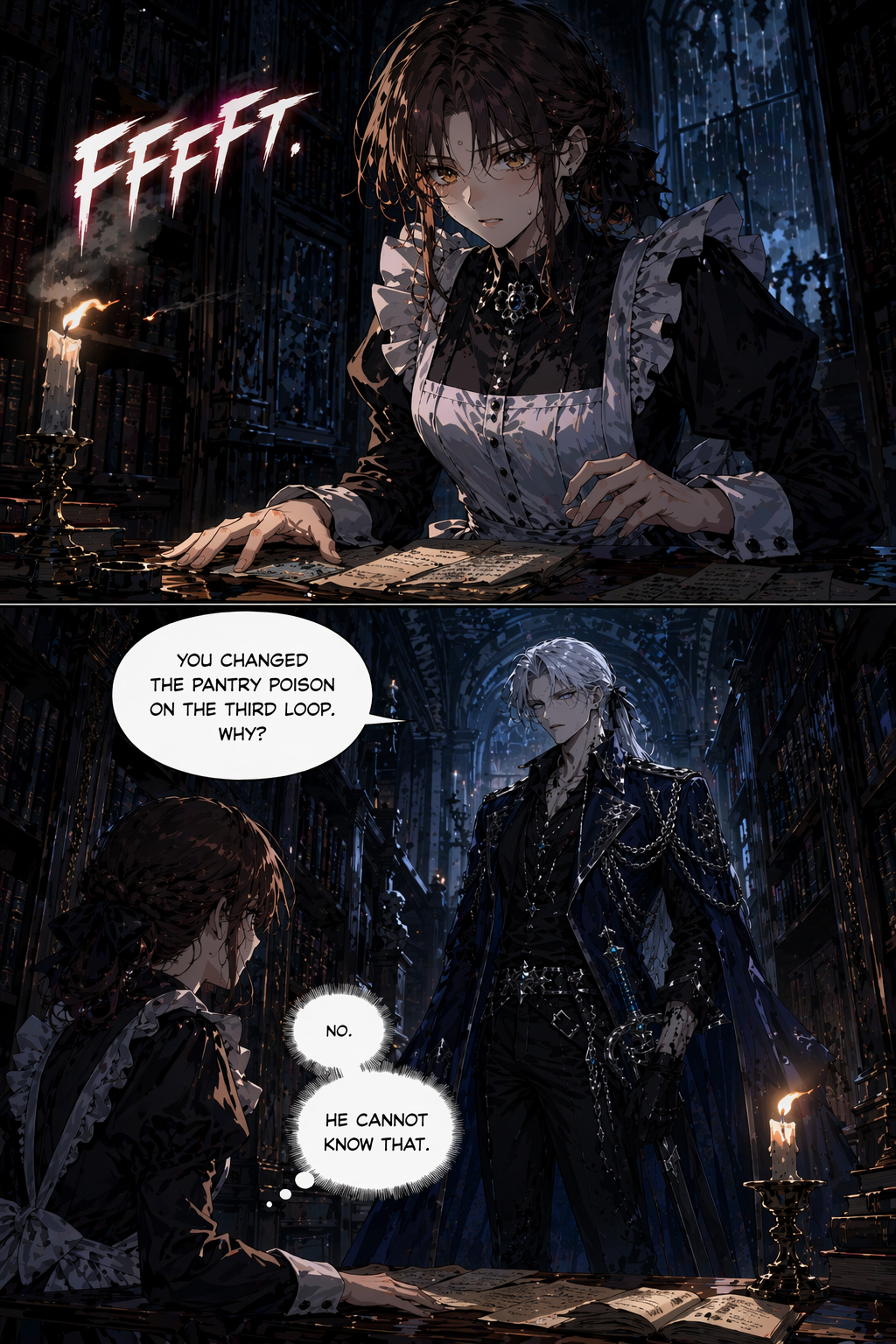
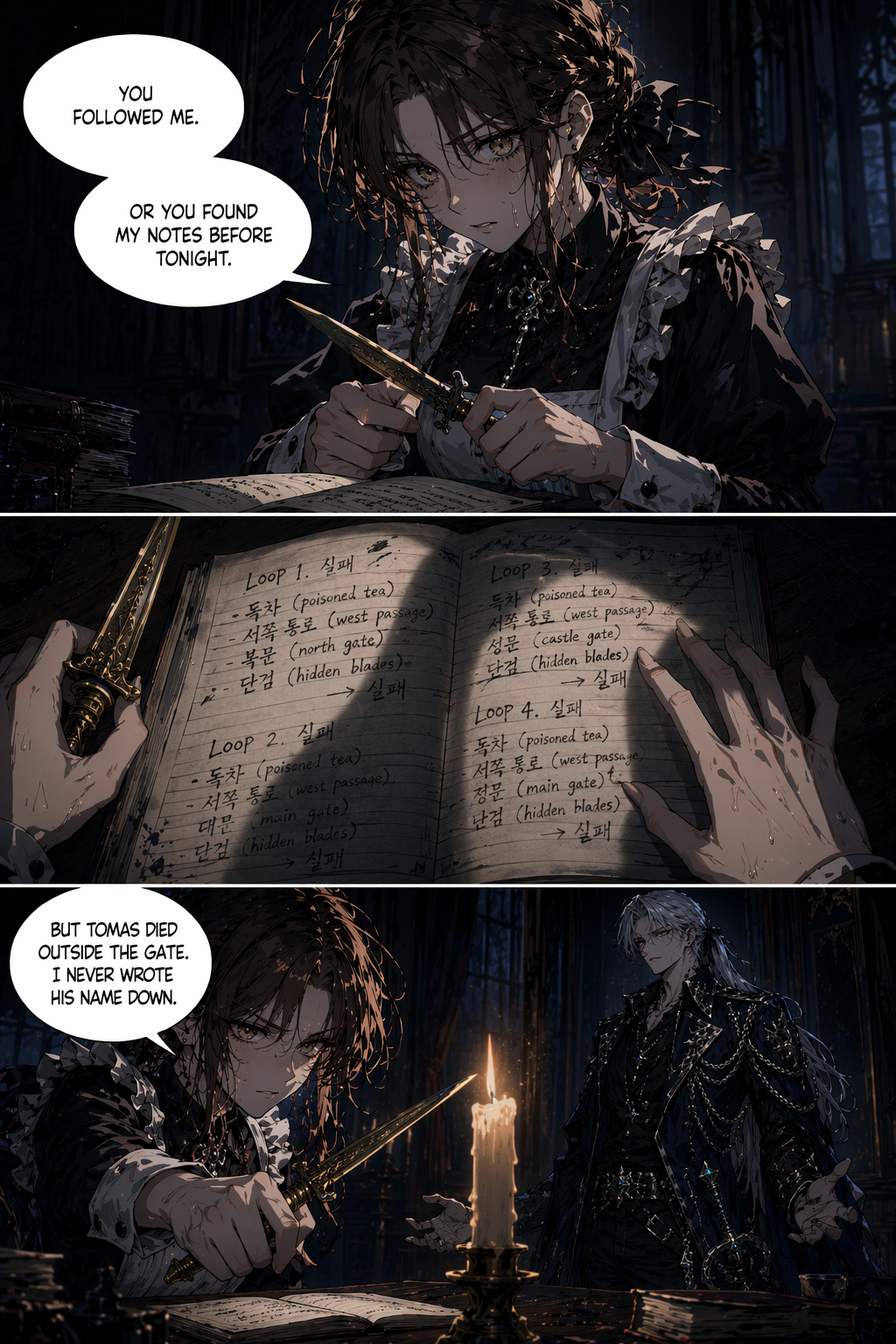
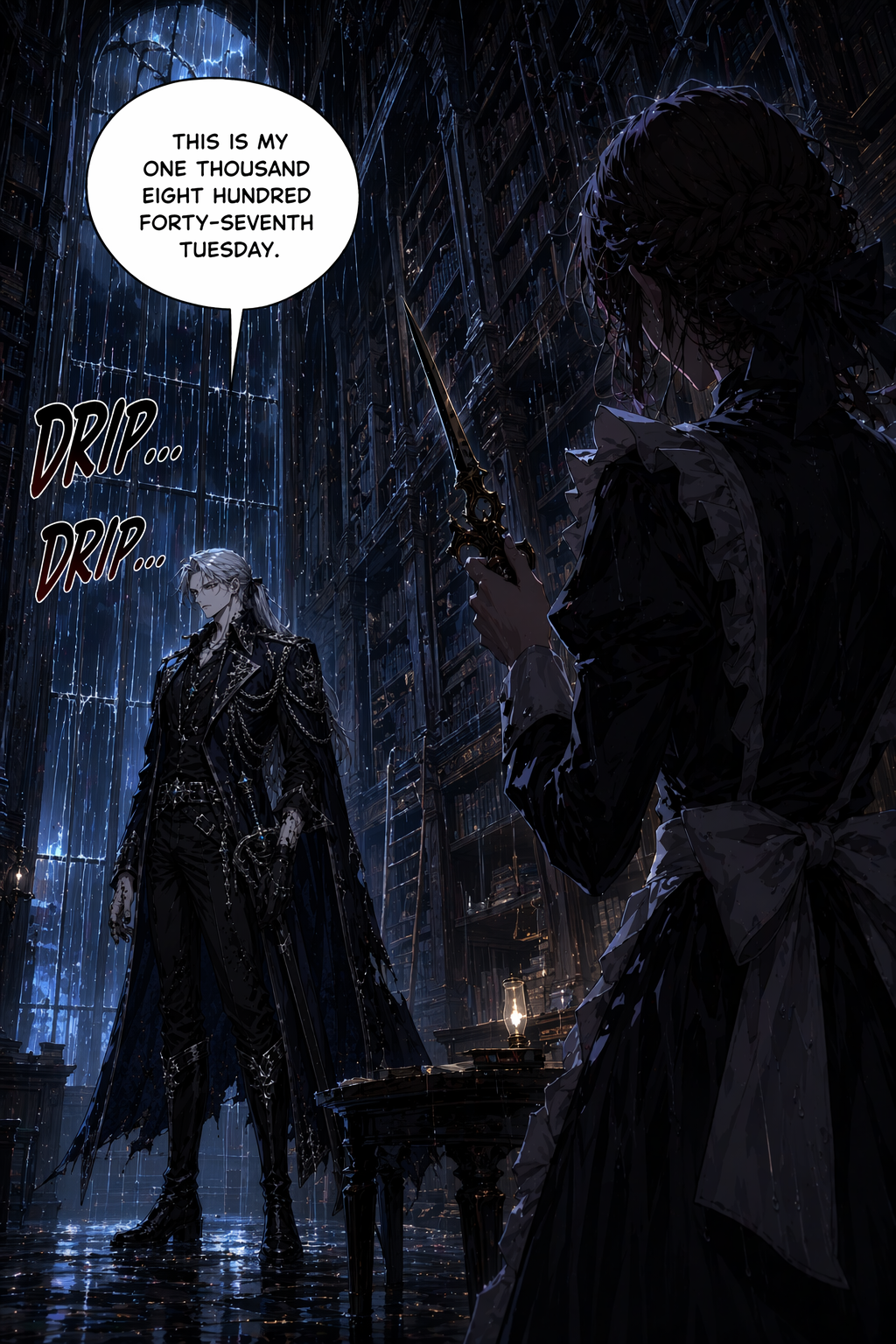
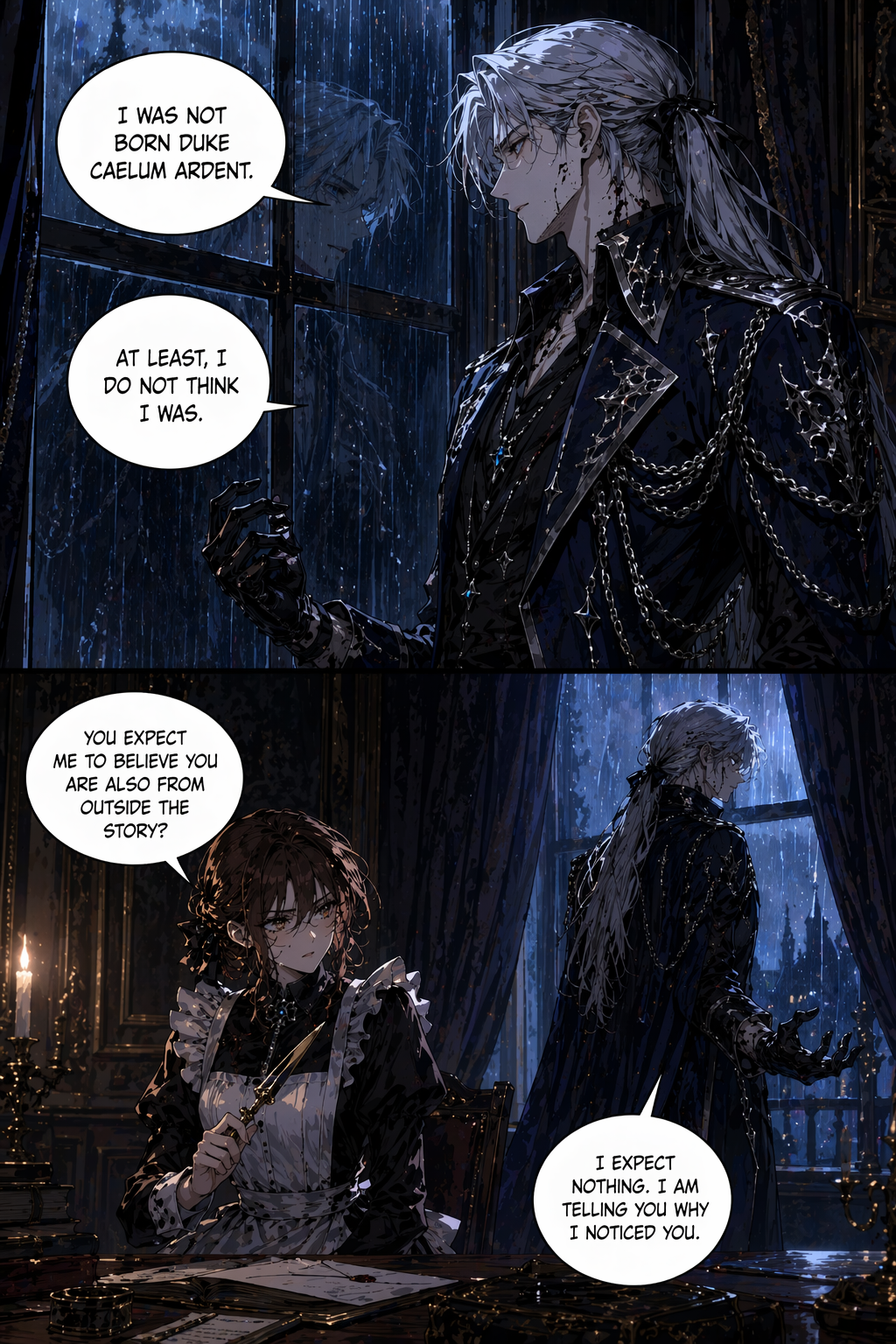
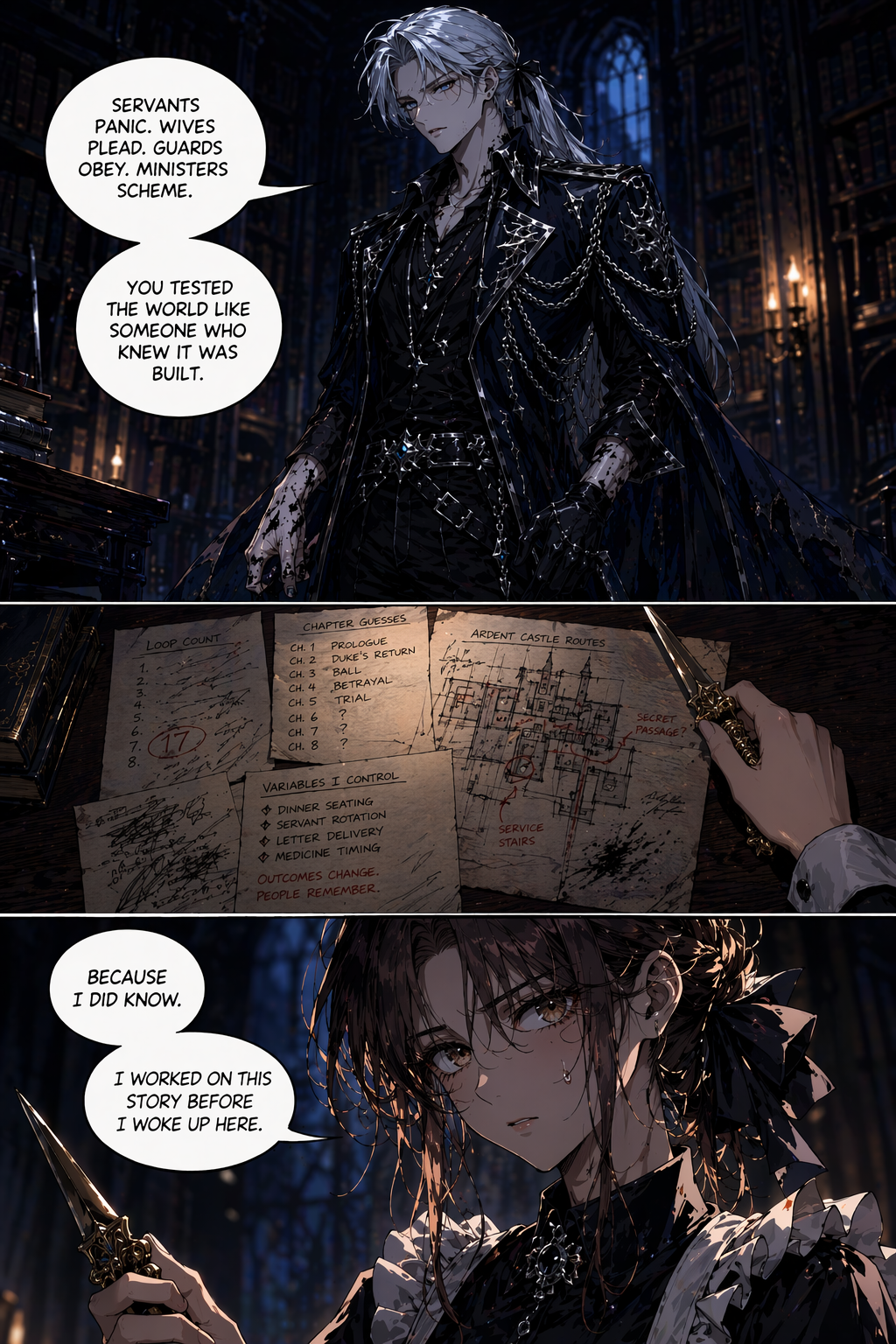
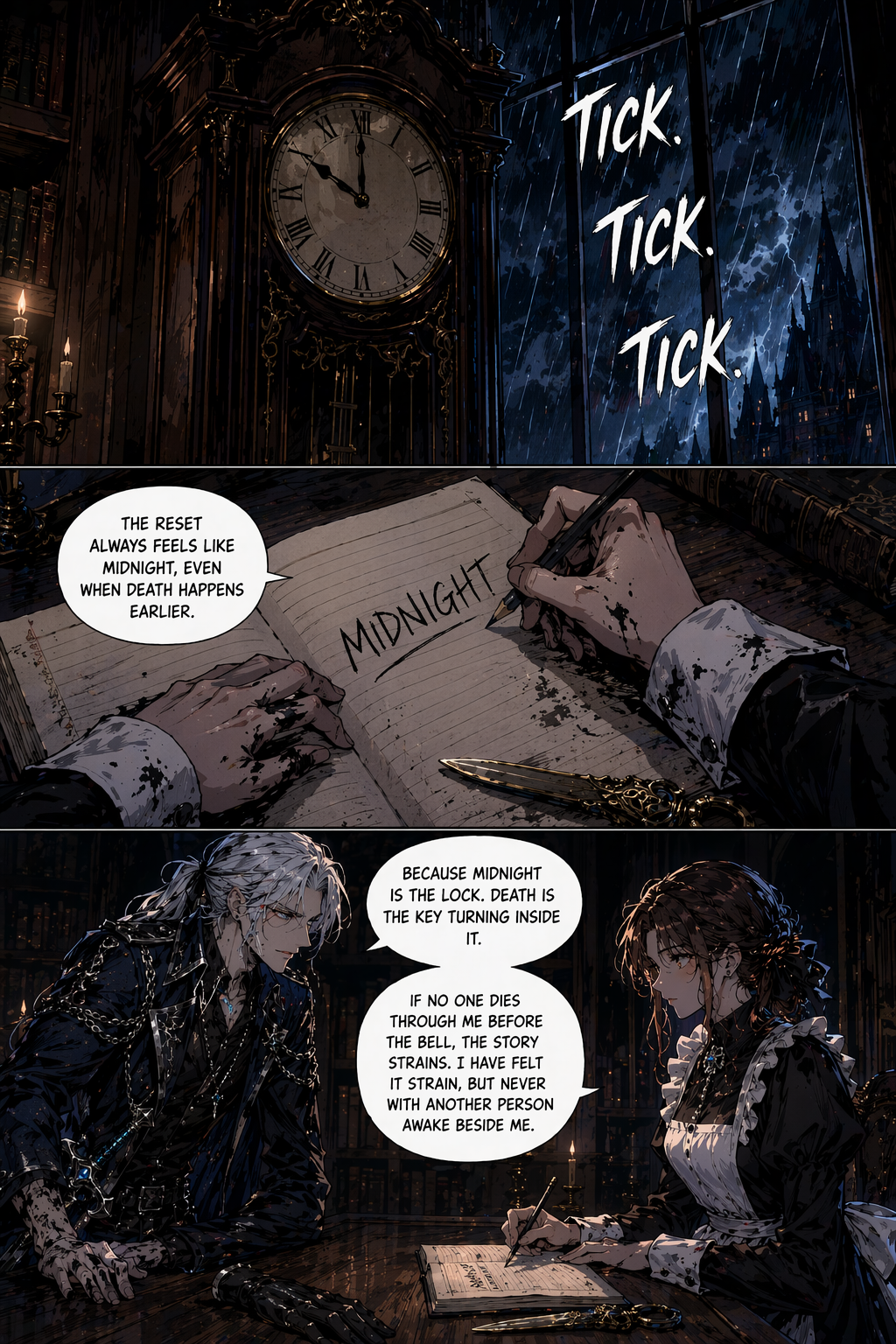
Night inside Ardent Castle’s grand library. Towering shelves disappear into darkness, rain lashes tall arched windows, and one candle burns on a reading table covered in stolen notes. Dahee hides alone after the seventh failed Tuesday, stil

Dahee senses someone in the library. Caelum stands between the shelves in his loop-worn uniform, not attacking, not announcing himself like a normal noble. His calmness makes the room feel smaller.

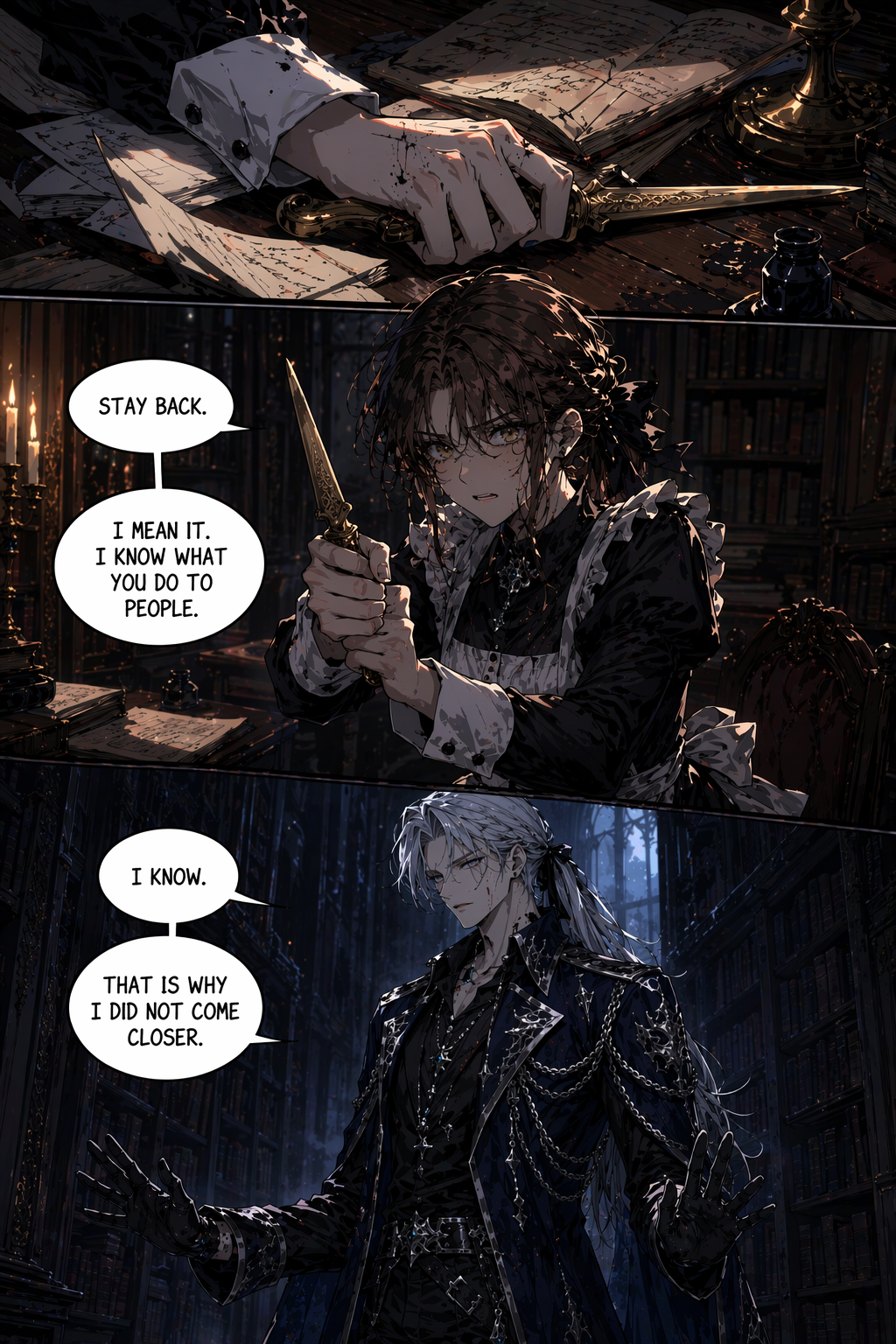
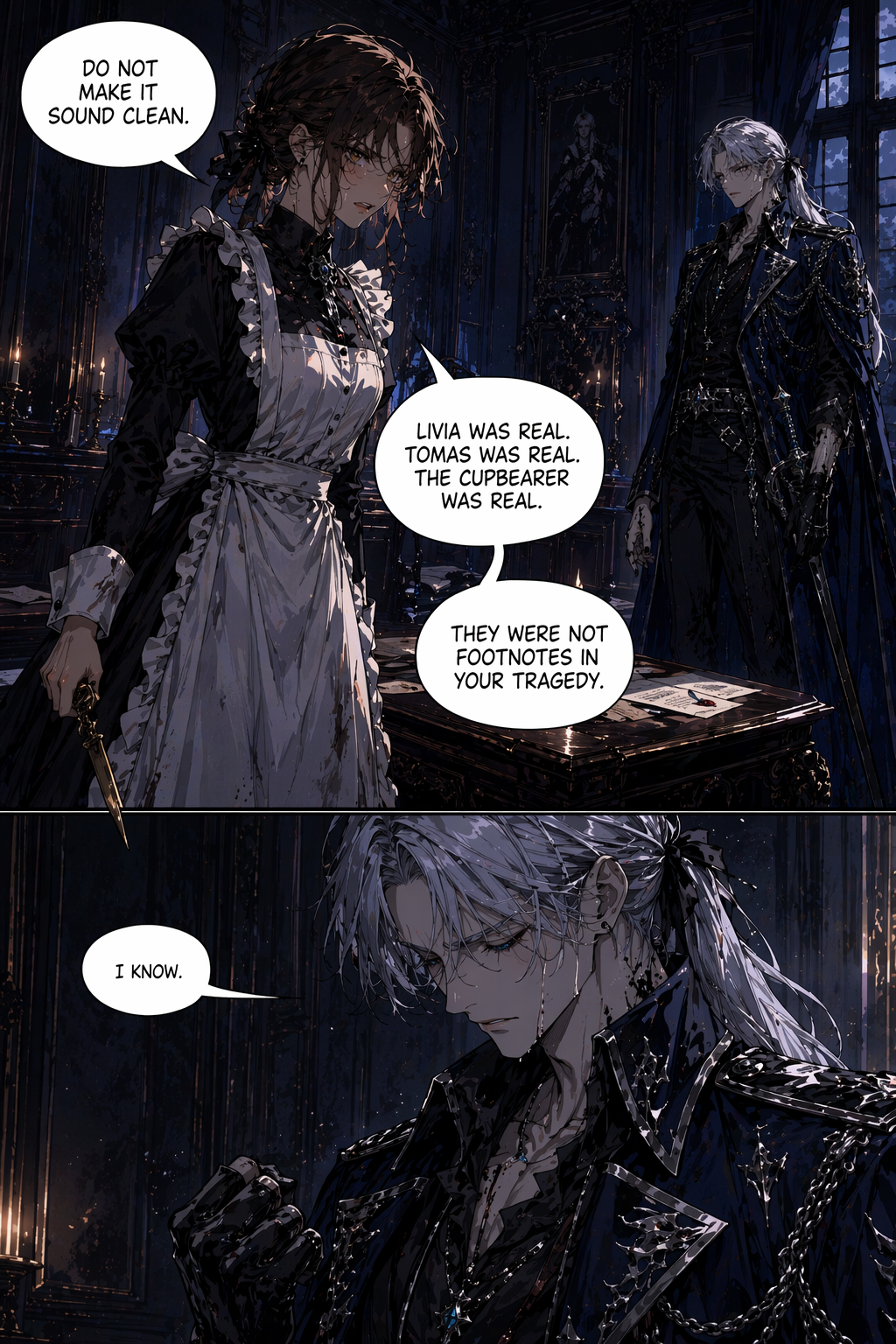
Dahee reacts like a cornered animal. She grabs the nearest thing that can pass for a weapon: a brass letter opener from the reading table. Caelum remains in the aisle, hands visible, sword untouched.

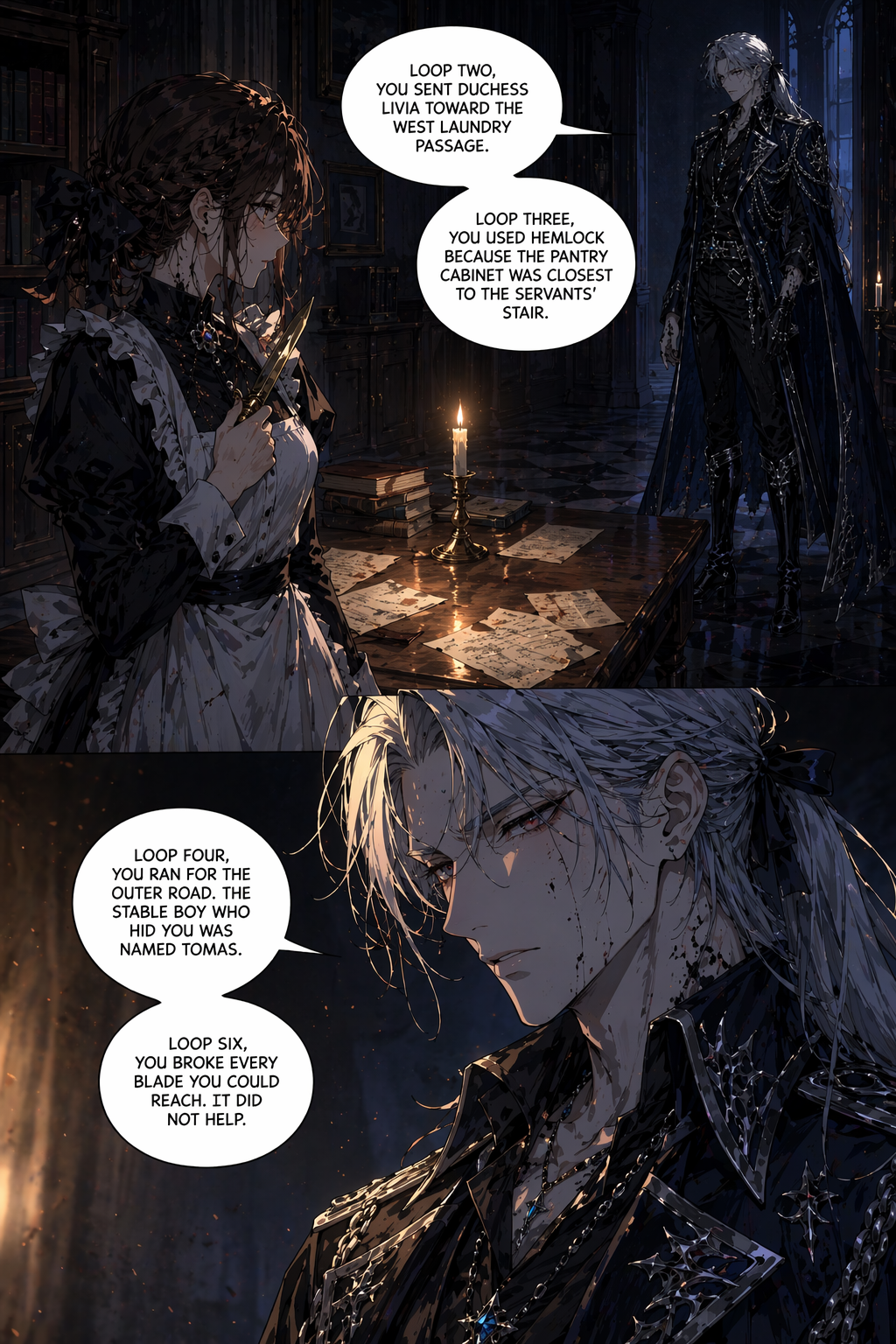
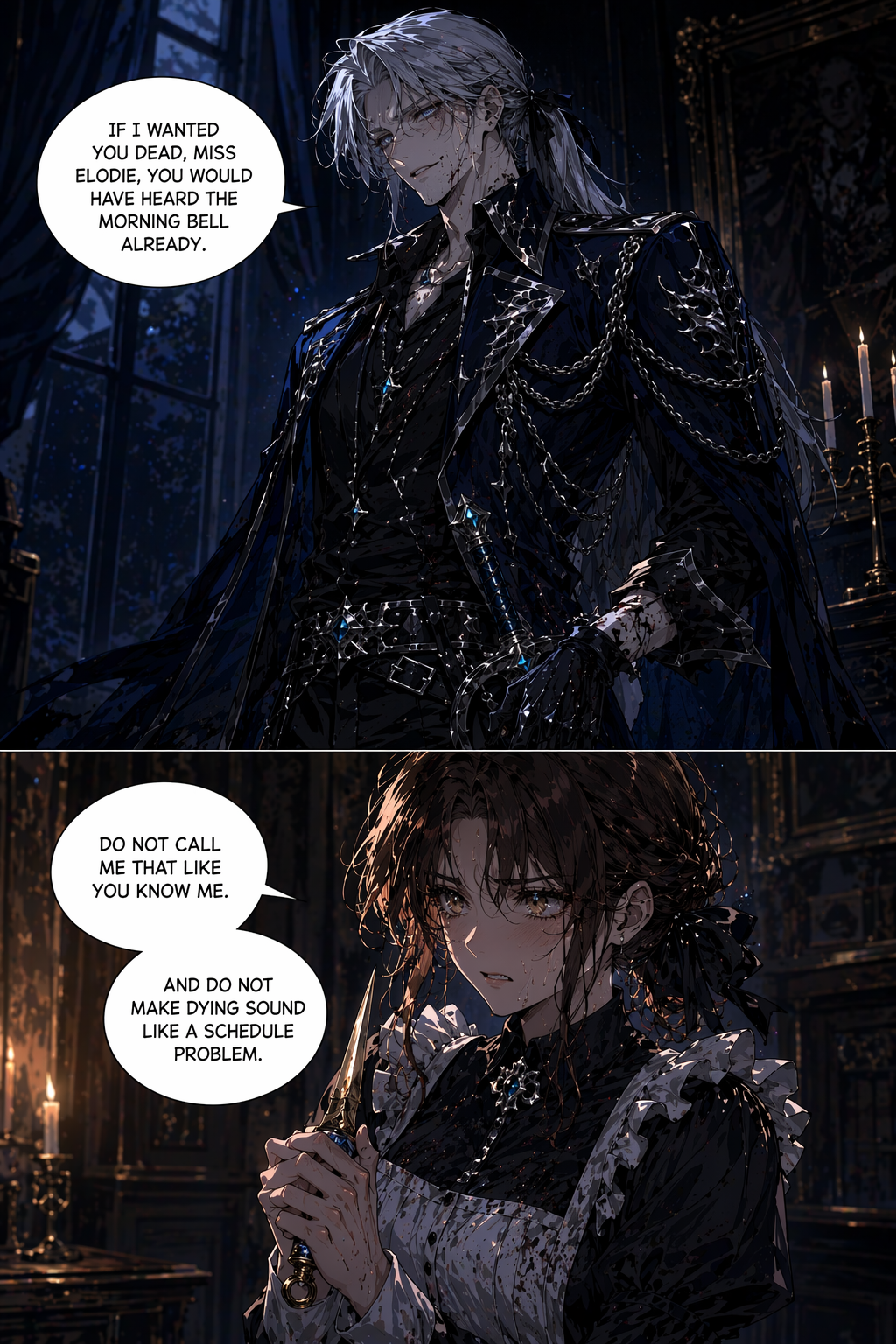
Caelum proves he remembers more than one loop. Dahee keeps the table and the candle between them while he recites her failed attempts in plain, impossible detail.

The details land one by one. Dahee tries to explain them as spying, but she knows some of them happened in timelines no one else should remember.

Caelum gives an answer that is both threat and proof. He still does not move closer, but his words make the loop feel immediate.

The library seems to stretch taller as Caelum finally states the number of loops he has survived. The rain and shelves frame him like a prison.

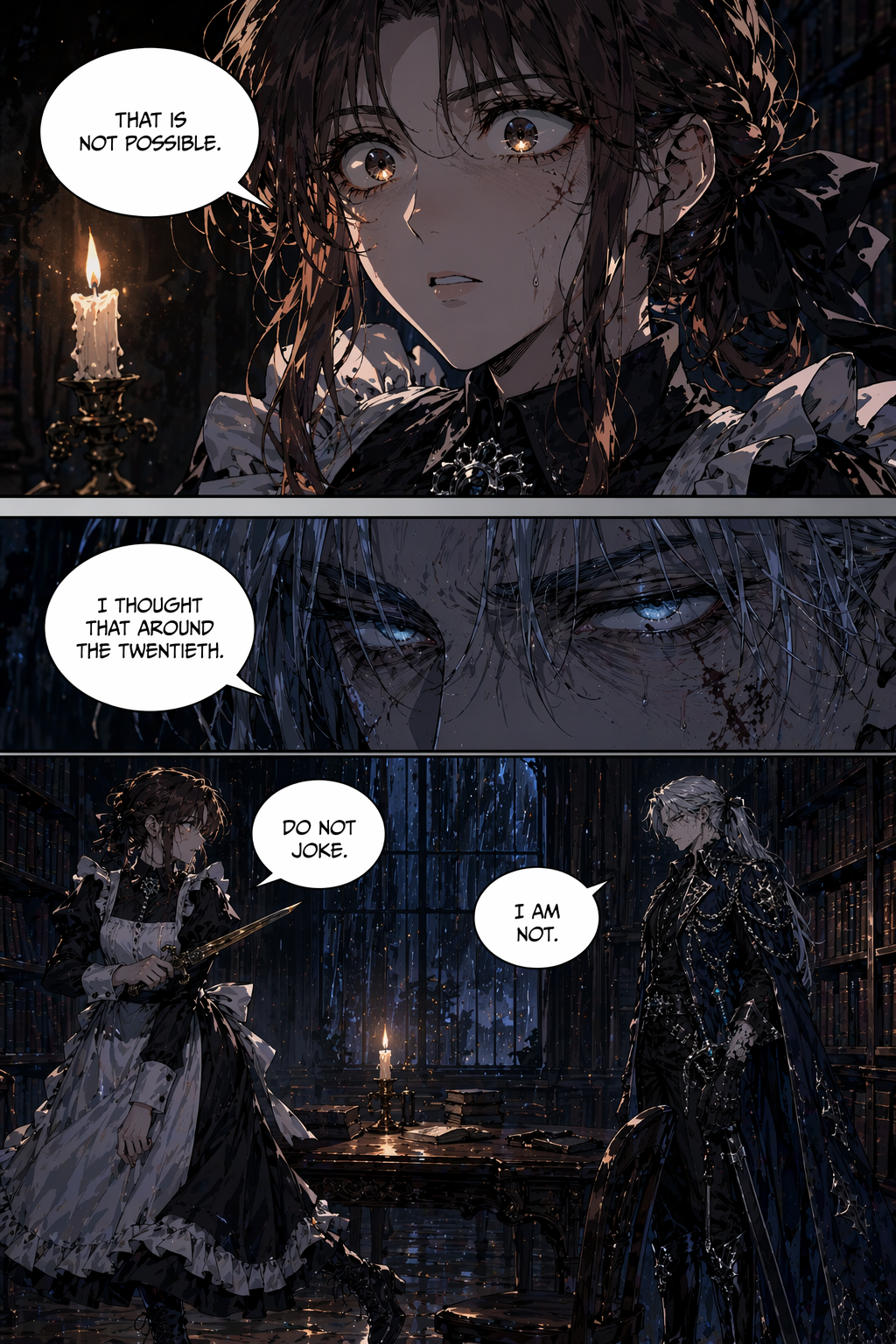
Dahee processes the impossible number. Her fear does not vanish; it sharpens into suspicion, because a murderer can also be tired.

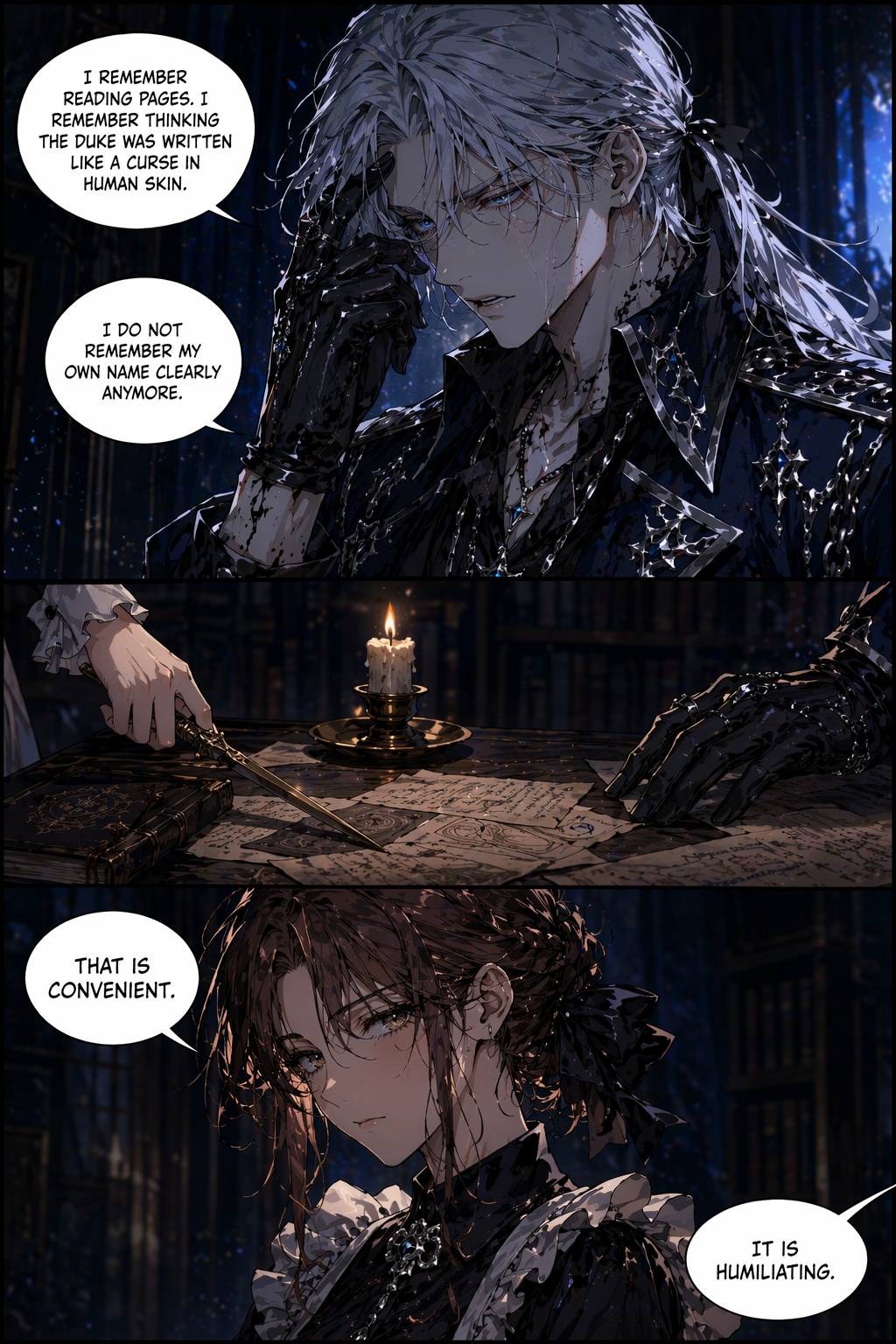
Caelum claims he was once like Dahee: an outsider who recognized the story. He cannot fully prove it, and the lack of proof makes the confession feel damaged rather than convenient.

Caelum explains what the loops have taken from him. Dahee listens because the details are too plain and too sad to sound rehearsed, but she keeps her weapon.

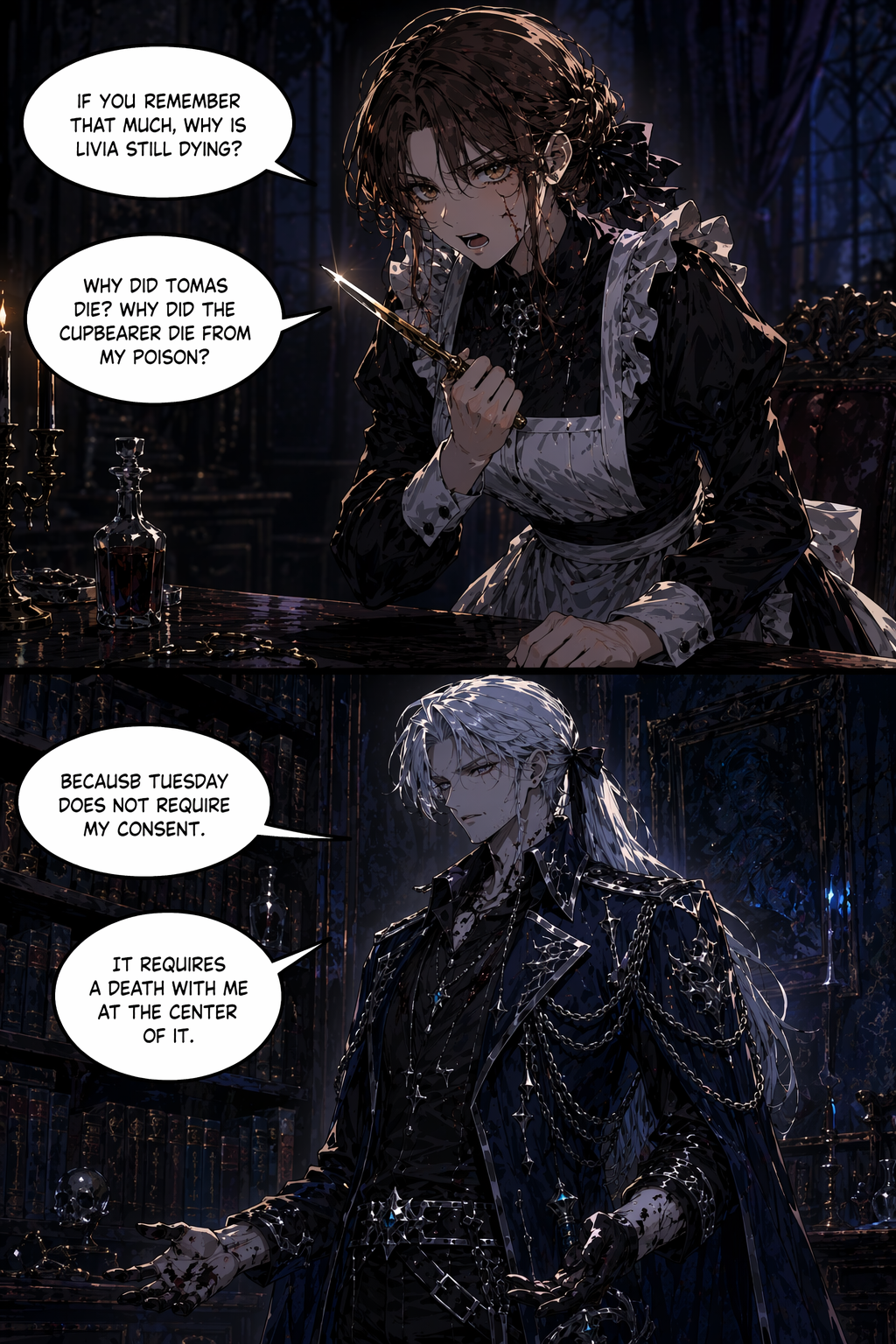
Dahee challenges the shape of Caelum’s story. If he knows so much, why has he not stopped the deaths? Caelum answers with the loop’s cruel mechanic.

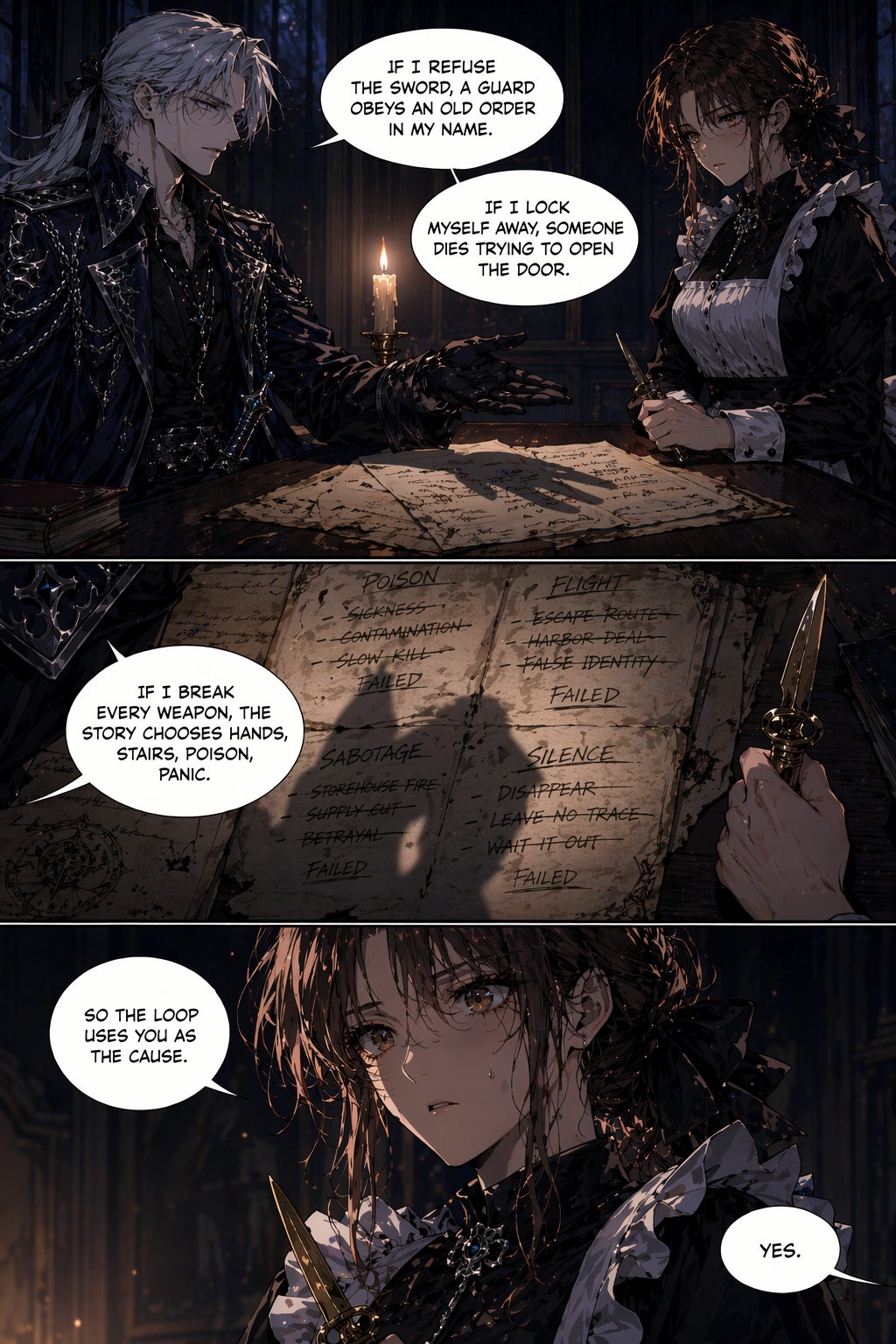
Caelum explains the rule in concrete terms. The loop does not need the duke to want murder; it uses his orders, his body, his title, or the fear around him until someone dies.

Dahee refuses to let Caelum hide behind mechanics. The victims were not abstract consequences. Caelum’s composure begins to crack when she names them as people.

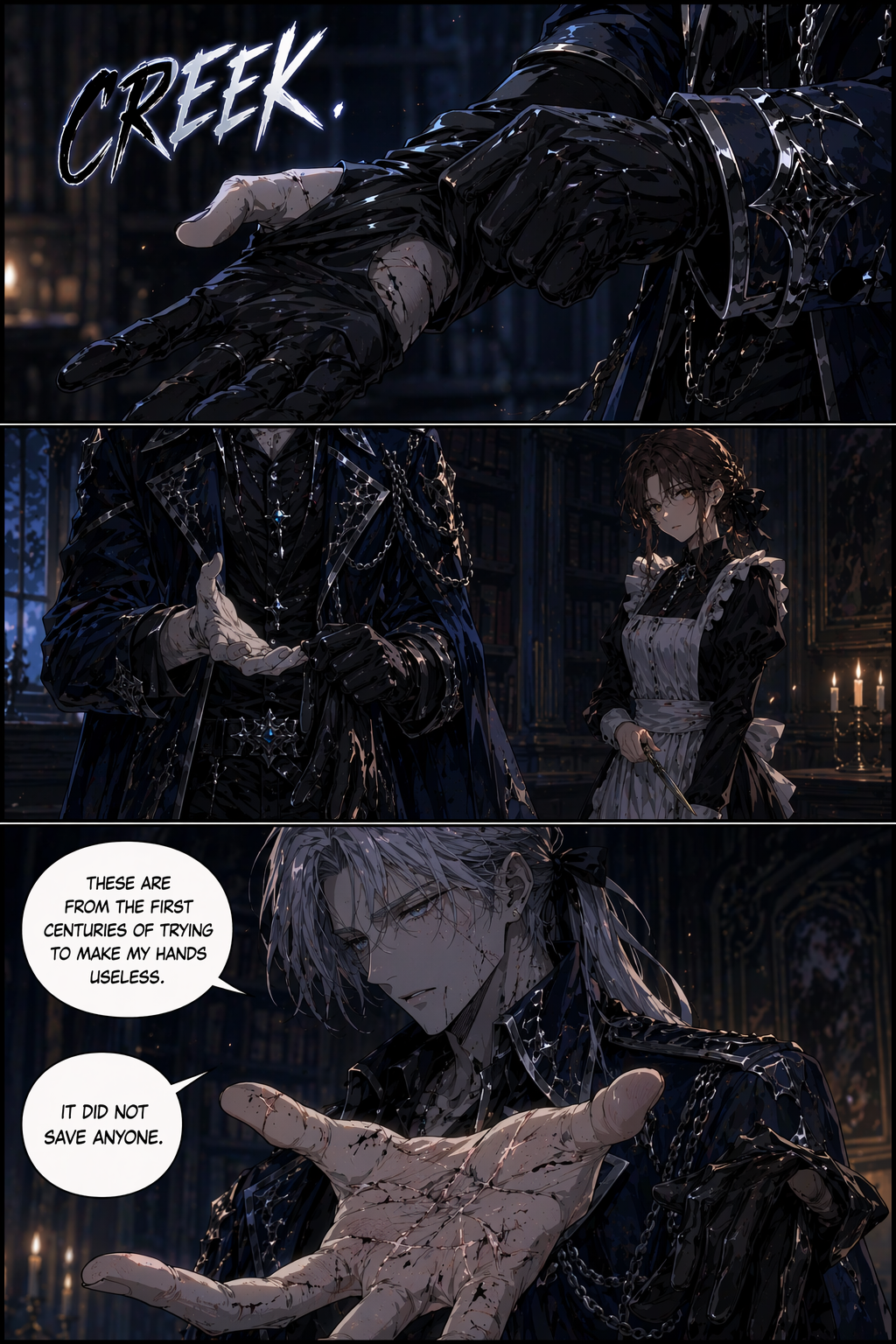
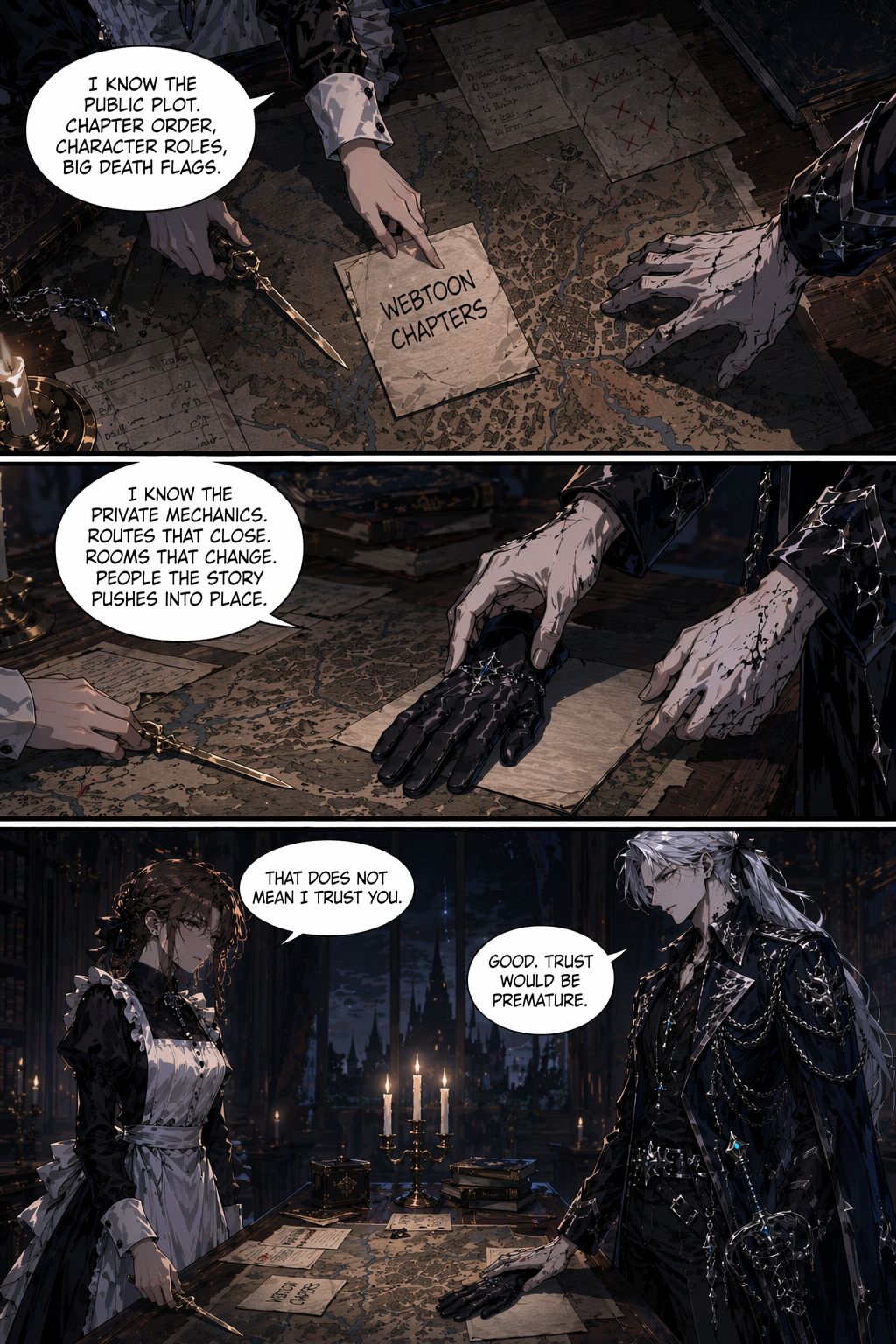
Caelum chooses to show proof of resistance rather than argue. He removes one glove with careful, almost ashamed movements.

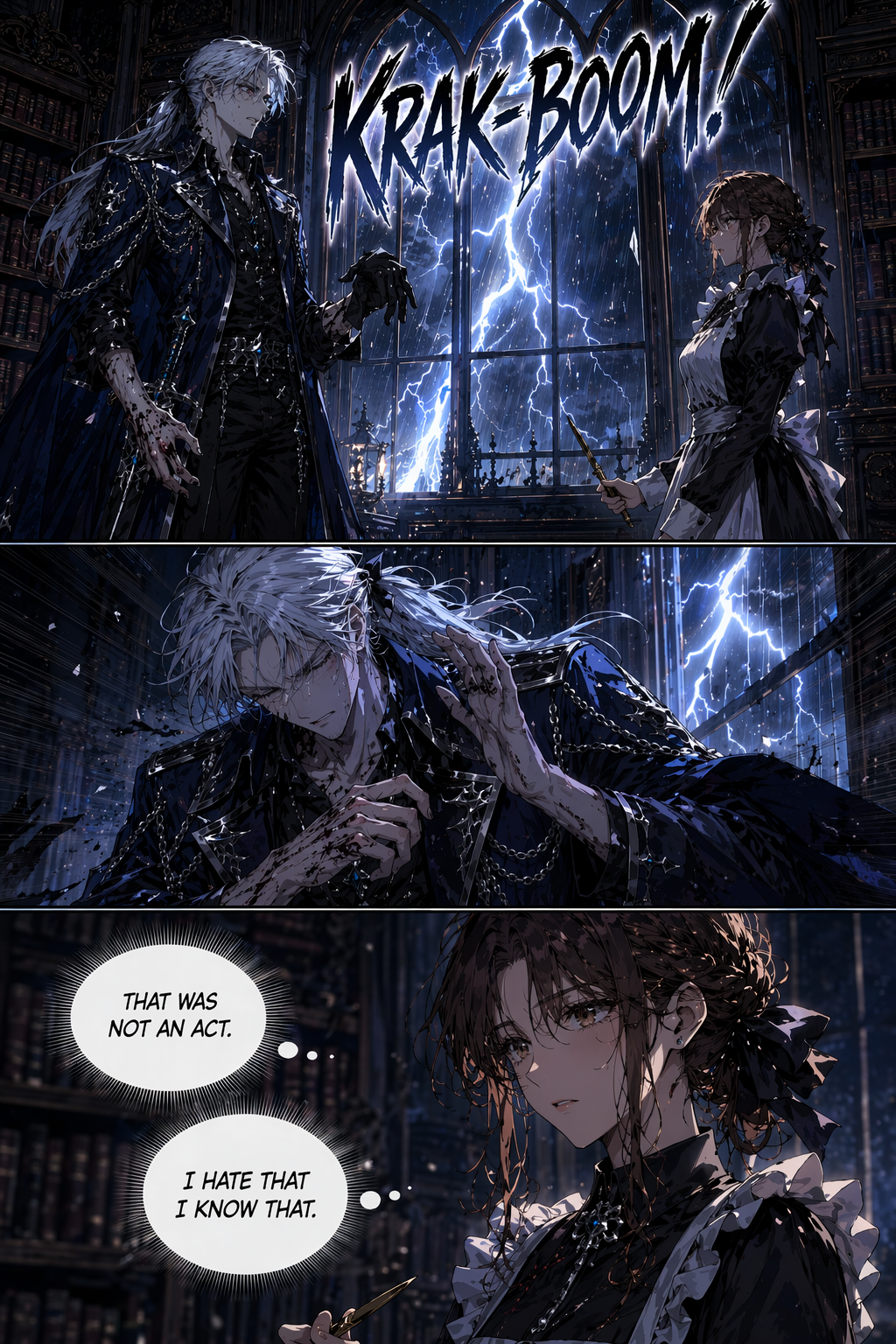
A violent thunderclap hits the windows. Caelum flinches before he can hide it, and Dahee sees terror where she expected only calculation.

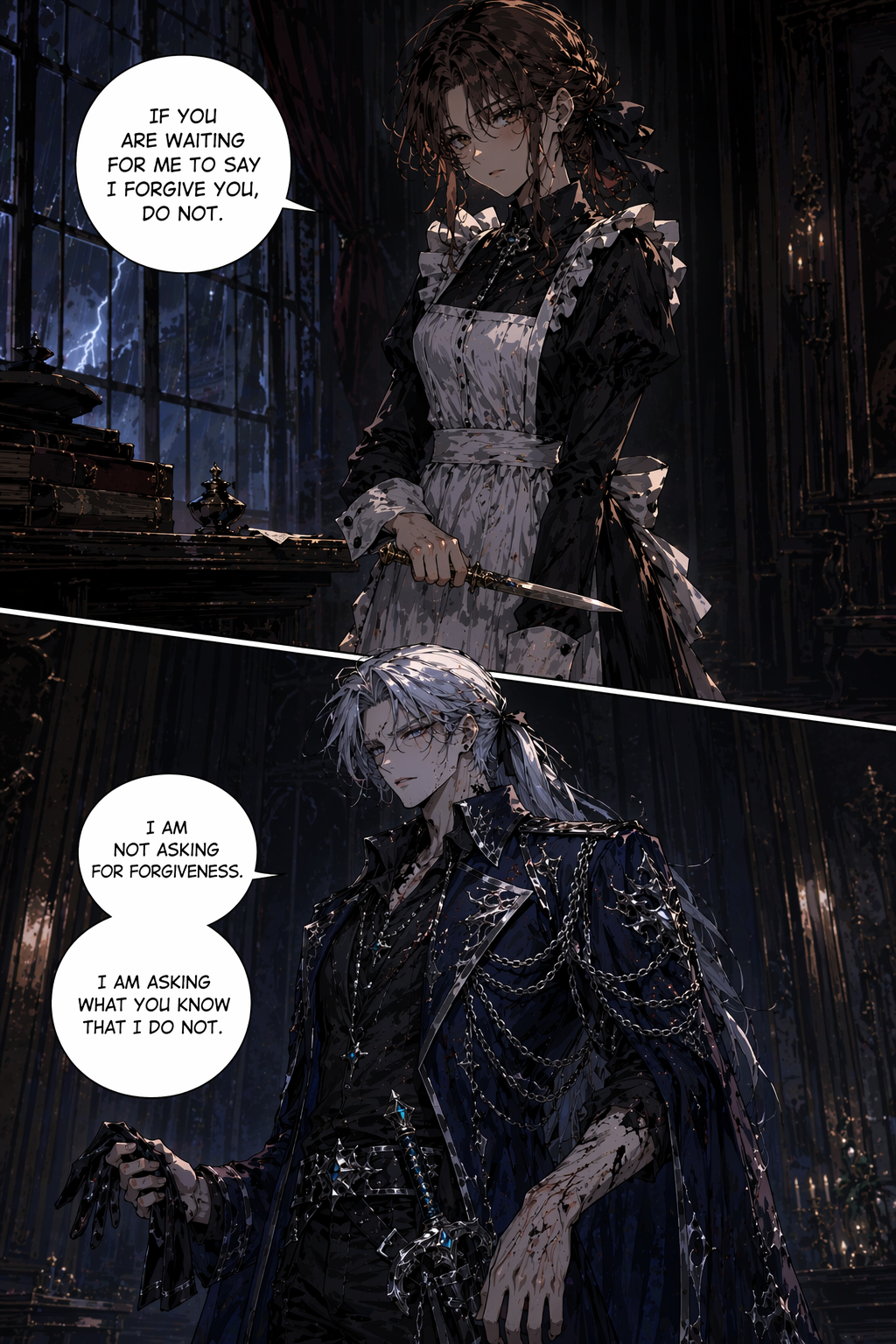
Dahee wants to keep hating him because hatred would be safer. Caelum does not ask for forgiveness; he asks for information.

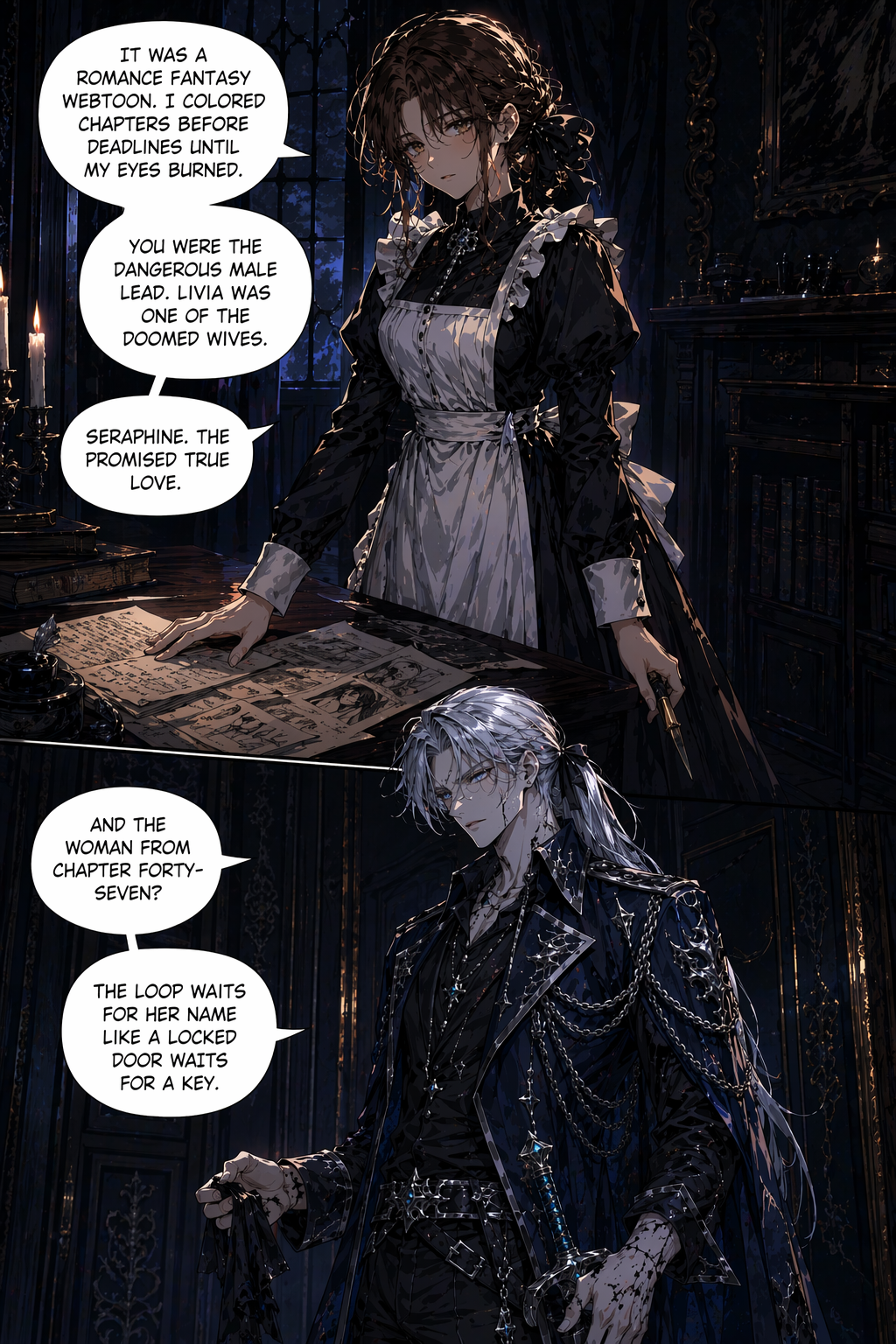
Caelum explains why Dahee matters. She changed the script in ways no servant had before, and more importantly, she remembered enough to adapt.

Dahee stops denying the shared impossibility. She explains that in her world this was a webtoon, and Caelum connects that to the loop’s repeated structure.

The library table becomes a battlefield map. Dahee and Caelum compare what each of them knows without yet trusting each other.

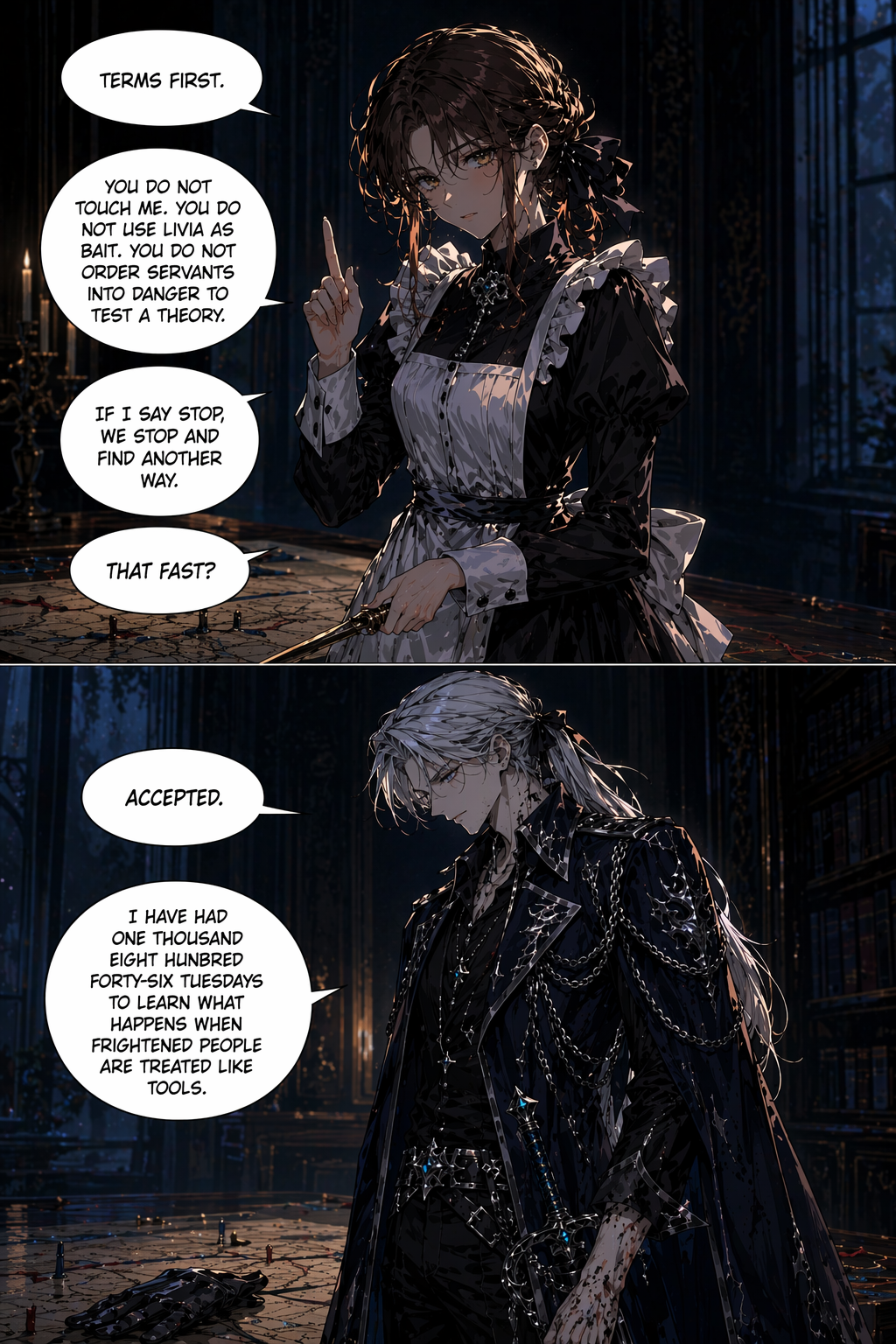
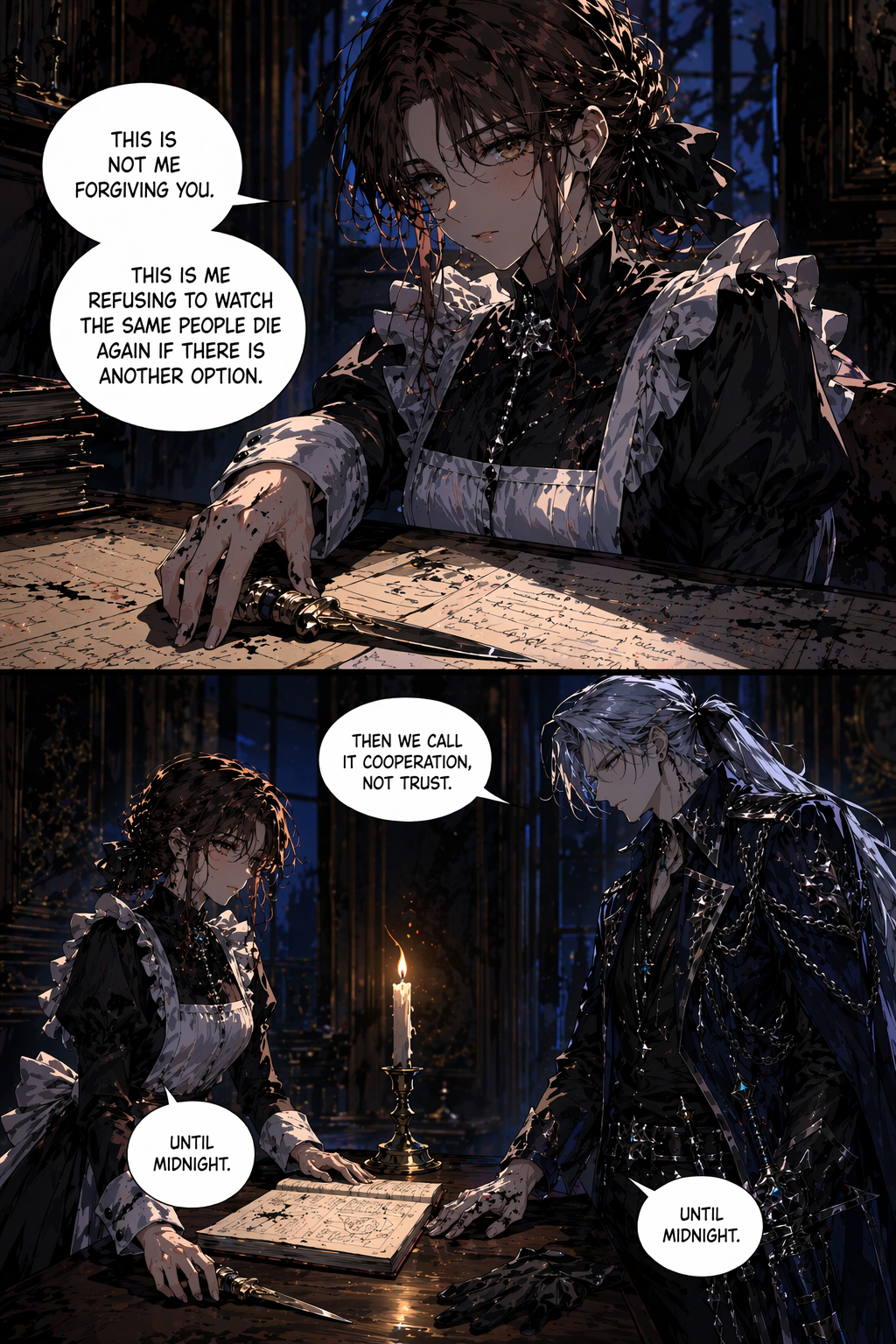
Dahee sets hard boundaries before any alliance. Caelum accepts them without bargaining, which unsettles her almost as much as resistance would have.

They identify the night’s immediate goal: survive until midnight without Caelum becoming the cause of a death. The pressure of the clock enters the scene.

Dahee lowers the letter opener onto the table but keeps it within reach. This is not trust; it is a temporary alliance made because doing nothing guarantees another death.

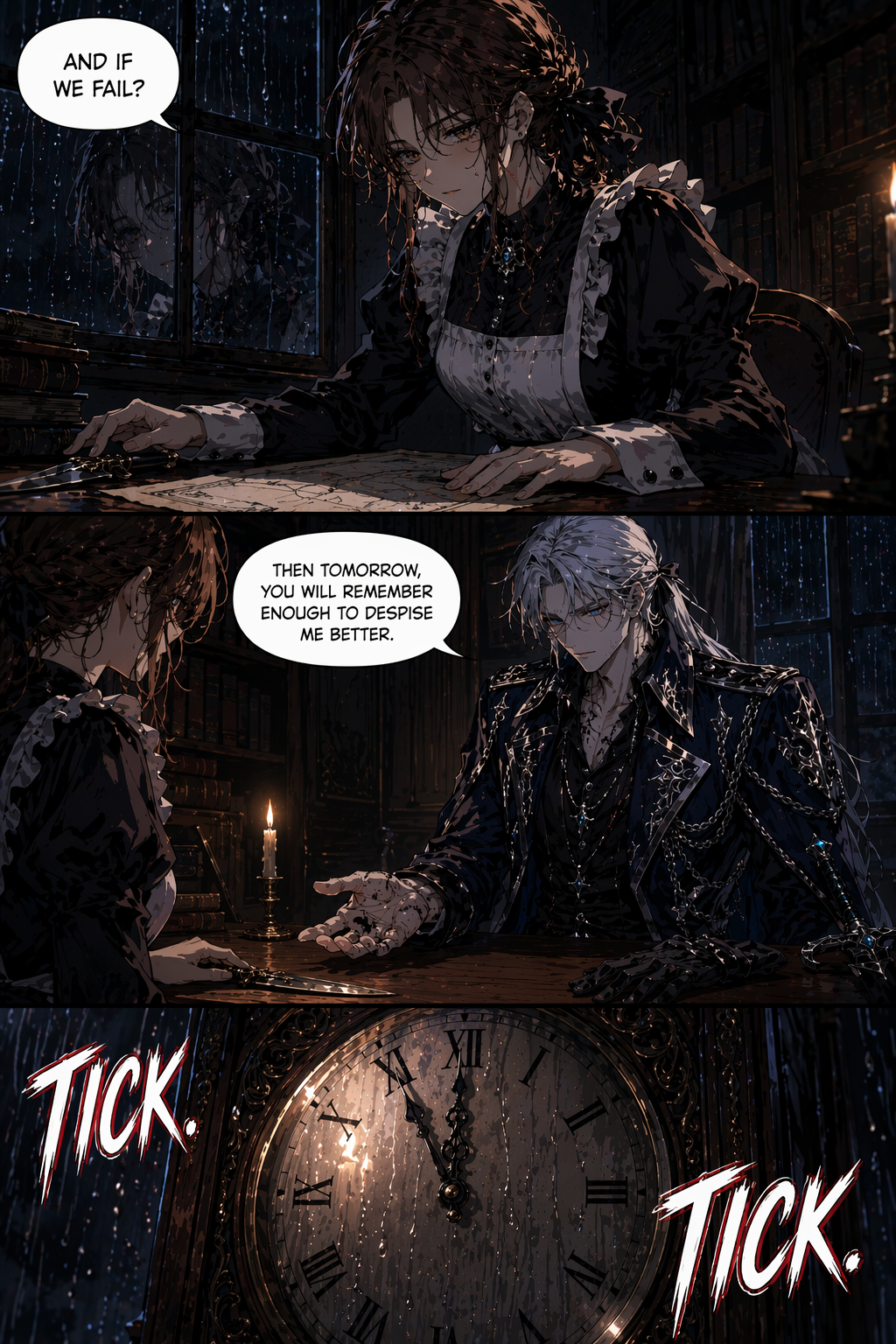
The bargain lands under the pressure of the ticking clock. Dahee asks the question neither of them can avoid, and Caelum answers with bleak honesty.
Chapter Comments
Comments
to leave a comment.